The Texas Commission on Environmental Quality along with Texas Parks and Wildlife has launched a new campaign to encourage everyone to Take Care of Texas’ environment. A new website contains materials that range from general information about environmental programs to specific, step-by-step instructions that address common environmental situations. To learn about ways to get involved, click here.
Archive for June, 2013
TCEQ Launches Take Care of Texas Campaign
Posted in Air Quality, Climate Change, Global Warming, Water, tagged environmental programs, TCEQ Launches Take Care of Texas Campaign The Texas Commission on Environmental Quality, Texas, Texas Parks and Wildlife on June 28, 2013 |
Warming climate makes good habitat for new aggressive mosquitos
Posted in Climate Change, Global Warming, tagged Aedes Albopictus, Asian tiger mosquito, mosquito, NBC Science, Texas on June 26, 2013 |
There’s a new pest invading many American towns, the Asian tiger mosquito.
According to NBC Science, this mosquito is as menacing as it sounds since it is effective at transmitting more than 20 diseases, and its success at spreading throughout the world is due to a warming climate, with eggs tough enough to survive a cold winter.
Click here to read the article.
Is Houston Cleaner Than Your Town?
Posted in Air Quality, Climate Change, Coal, Coal Plants, Energy, Global Warming, green jobs, Renewables, solar, wind, tagged climate change, coal plant, Energy, Global Warming, houston, public citizen texas, renewable energy, Renewables, solar, solar energy, solar power, Texas, wind, wind energy on June 22, 2013 |
Probably not overall, but the City of Houston has made a historic commitment – to buy half its power from renewable sources.
Houston was built around the oil and gas industries and has long suffered the consequences of being home to many of the nation’s most polluting refining and chemical manufacturing facilities. Purchasing clean energy for the City’s facilities won’t change all that, but it does represent a significant change in mindset.
In the absence of federal legislation to address the increasingly pressing problem of climate change, local action has become essential. At the very least, the energy used in public buildings – that taxpayers pay for – should be clean energy. Houston is taking a huge step in that direction.
Wind energy is already one of the cheaper energy sources in Texas and solar energy is becoming competitive, especially as prices increase with higher energy demand. These trends will be helped by large-scale investments like the one Houston is making.
Moving away from energy from coal-fired power plants will also help keep jobs growing in Texas. Luckily, this isn’t an issue of jobs vs. the environment. It’s an easy choice of supporting both. Kudos to Houston to for recognizing an opportunity to take a leadership role.
Talk to your local elected officials about using clean energy to power your public buildings.
Public Citizen’s Legislative Wrap-Up: Where We Made Progress & Avoided Backsliding
Posted in Air Quality, Austin Energy, Budget, Climate Change, Coal, Coal Plants, Diesel, Efficiency, Energy, Global Warming, Nuclear, pipelines, Radioactive Waste, Renewables, solar, Sunset, Tarsands, Texas Legislature, Utilities, wind, tagged Air Quality, Austin, Austin Energy, Clean Energy, climate change, Coal, coal plant, Energy Efficiency, Global Warming, Keystone Pipeline, Public Citizen, public citizen texas, renewable energy, Renewables, Rick Perry, solar, solar power, Texas, Texas Legislature, wind on June 17, 2013 |
With the regular session behind us and energy and environmental issues not likely to find a place in the special session, it’s a good time to look at what we accomplished.
Our wins came in two forms – bills that passed that will actually improve policy in Texas and bills that didn’t pass that would have taken policy in the wrong direction.
We made progress by helping to get bills passed that:
- Expand funding for the Texas Emissions Reduction Plan (TERP) by about 40%;
- Create a program within TERP to replace old diesel tractor trailer trucks used in and around ports and rail yards (these are some of the most polluting vehicles on the road);
- Establish new incentives within TERP for purchasing plug-in electric cars; and
- Assign authority to the Railroad Commission (RRC) to regulate small oil and gas lines (these lines, known as gathering lines, are prone to leaks); and
- Allows commercial and industrial building owners to obtain low-cost, long-term private sector financing for water conservation and energy-efficiency improvements, including on-site renewable energy, such as solar.
We successfully helped to stop or improve bad legislation that would have:
- Eliminated hearings on permits for new pollution sources (the contested case hearing process is crucial to limiting pollution increases);
- Eliminated additional inspections for facilities with repeated pollution violations;
- Weakened protections against utilities that violate market rules and safety guidelines;
- Eliminated property tax breaks for wind farms, while continuing the policy for other industries;
- Granted home owners associations (HOAs) authority to unreasonably restrict homeowners ability to install solar panels on their roofs; and
- Permitted Austin City Council to turn control of Austin Energy over to an unelected board without a vote by the citizens of Austin.
We did lose ground on the issue of radioactive waste disposal. Despite our considerable efforts, a bill passed that will allow more highly radioactive waste to be disposed of in the Waste Control Specialists (WCS) facility in west Texas. Campaign contributions certainly played an important roll in getting the bill passed.
We were also disappointed by Governor Perry’s veto of the Ethics Commission sunset bill, which included several improvements, including a requirement that railroad commissioners resign before running for another office, as they are prone to do. Read Carol’s post about this bill and the issue.
With the legislation over and Perry’s veto pen out of ink, we now shift our attention to organizing and advocating for a transition from polluting energy sources that send money out of our state to clean energy sources that can grow our economy.
We’re working to:
- Promote solar energy at electric cooperatives and municipal electric utilities;
- Speed up the retirement of old, inefficient, polluting coal-fired power plants in east Texas;
- Protect our climate and our port communities throughout the Gulf states from health hazards from new and expanded coal export facilities;
- Fight permitting of the Keystone XL and other tar sands pipelines in Texas;
- Ensure full implementation of improvements made to TERP; and
- Develop an environmental platform for the 2014 election cycle.
Our power comes from people like you getting involved – even in small ways, like writing an email or making a call. If you want to help us work for a cleaner, healthier, more sustainable future, email me at kwhite@citizen.org. And one of the best things you can do is to get your friends involved too.
Public Citizen bemoans Perry’s veto of Texas Ethics Commission Bill
Posted in Good Government, tagged Rick Perry, Texas, Texas Ethics Commission, Texas Railroad Commission, Veto on June 14, 2013 |
Texas’ governor is at it again. Just 15 minutes ago, dozen’s of bills went down in flames under the governor’s veto pen. This included a bill essential to providing more efficient enforcement of ethics violations in the Texas political process: the Ethics Commission sunset bill (SB 219), which passed by 97 percent in the House and 94 percent in the Senate.
Why veto such an overwhelmingly popular bill? It is because of a provision in the bill that would require members of the Railroad Commission to step down if they announce their candidacy for another office. This again demonstrates that the governor is more interested in protecting powerful politicians than protecting Texas residents.
Members of the Railroad Commission frequently seek higher office. Recently, two commissioners ran against each other for the same U.S. Senate seat. The commissioners, who serve more like judges than elected state officials, oversee complex oil and gas cases that require familiarity with the law and impartiality. When commissioners use their position as a springboard to run for another office, they often go absent from the commission, and the demands of campaigning reduce their ability to do their job. This portion of the legislation could have been used as a model for how to adequately reform the Railroad Commission, but instead the governor shot it down.
It is worth noting that 81-93 percent of the total campaign donations to the commissioners come from the oil and gas industry, which is overseen by the Railroad Commission. Perhaps that’s why in 2012, despite handling 82 contested cases, the commission didn’t deny a permit to an oil and gas company even once. Clearly, the industry doesn’t want to risk losing members of the Railroad Commission who have been carefully cultivated.
It is a bad sign for democracy when a single person can veto the will of almost an entire legislature, and when a sunset bill for an entire state agency is sunk because of just one provision that would inconvenience the oil and gas industry.
Click here to see other bills vetoed by the governor and his justification for some of them.
US Wildfire Season Upon Us Again
Posted in Climate Change, Global Warming, tagged arizona, California, Colorado, New Mexico, Texas, Wildfire on June 13, 2013 |
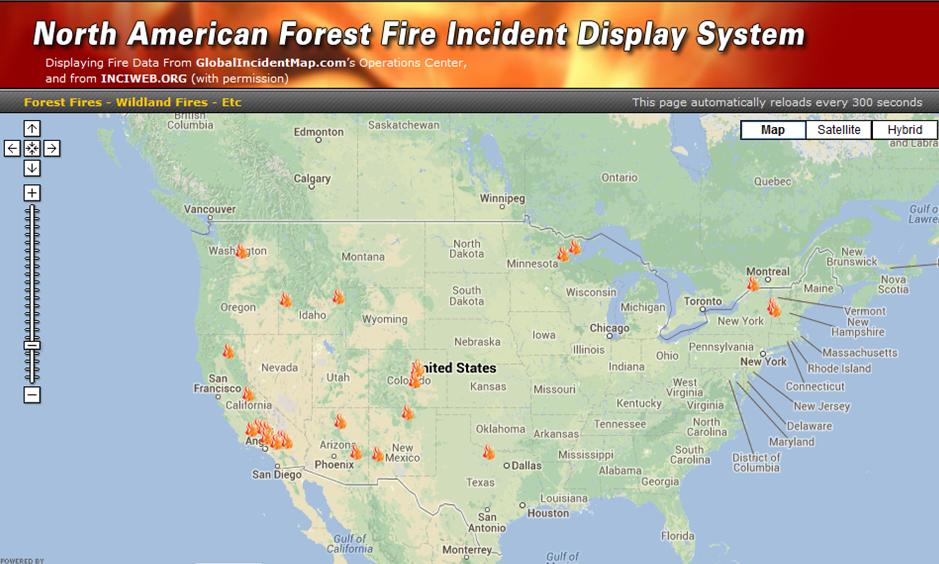
Fire season started early in California this year because the winter rains that usually tide this area over until July or August, barely materialized. Last year, the focus was on wildfires in Colorado and New Mexico. In 2011, Texas was a hotbed of drought and wildfire. Now, all signs point to a destructive 2013 season, given how parched the earth is in the southwest and west, and we are starting to see that materialize.
Typically, this would be the height of the wildfire season in the southwest – New Mexico, Arizona, parts of Colorado, but despite how dry it is and how hot it’s been, a lot of the region had been spared until the big fire started in Colorado this week near Colorado Springs.
According to several scientists on a Climate Nexus panel on Tuesday (Climate Nexus is a strategic communications group dedicated to highlighting the wide-ranging impacts of climate change and clean energy solutions in the United States), major wildfires could occur across the Southwest this year, including in Texas. Now that Texas is in its third year of drought, the state is likely to experience a longer fire season as a result of dry conditions and rising summer temperatures. High fire risk conditions raise the concern that Texas could again experience severe wildfires. Fires on Labor Day weekend in 2011 destroyed more than 1,600 Texas homes.
A draft report by the federal National Climate Assessment and Development Advisory Council (NCADAC) shows that in recent decades, the frequency of large wildfires and the length of the fire season have increased substantially. Earlier spring snowmelts and warmer spring and summer temperatures have increased the risk of fire in the Southwest. Fire models predict that more wildfires will occur in the future, with increased risks to communities throughout the region.
To see this interactive map click here
Hotter Summers, More Intense Storms and More Heat Related Deaths . . . Let’s Get Ready for Climate Change
Posted in Climate Change, Global Warming, tagged CDC, climate change, Texas on June 6, 2013 |
The Centers for Disease Control and Prevention warns climate change means we should continue to expect hotter summers and more intense storms that could knock power out for days — and kill people.
According to an article by NBC news, data on heat-related deaths suggest that public health officials have been underestimating them, as summers get longer and hotter due to climate change, and as storms that can cause widespread blackouts become more common and more intense. The latest numbers, part of the CDC’s weekly report in death and illness, list non-residents for the first time, a group that includes illegal immigrants, tourists, migrant workers and others. These groups suffer especially when it gets hot.
Forty percent of heat related deaths over the last 10 years were in just three states – California, Arizona and Texas, all border states in the south.
Weather experts stress that it’s impossible to say whether any individual storm or heat wave was caused by climate change. But is clear that climate change is contributing to changing patterns and that the sheer magnitude of these extreme weather events present a challenge to public health.
Climate predictions and observations are suggesting that the magnitude of extreme weather events is increasing.
Click here to read the entire article.