Feeds:
Posts
Comments

Archive for the ‘Air Quality’ Category

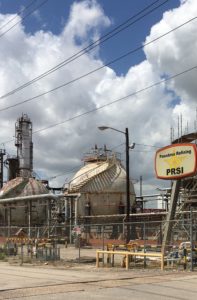
Plant in Point Comfort

Plant in Point Comfort

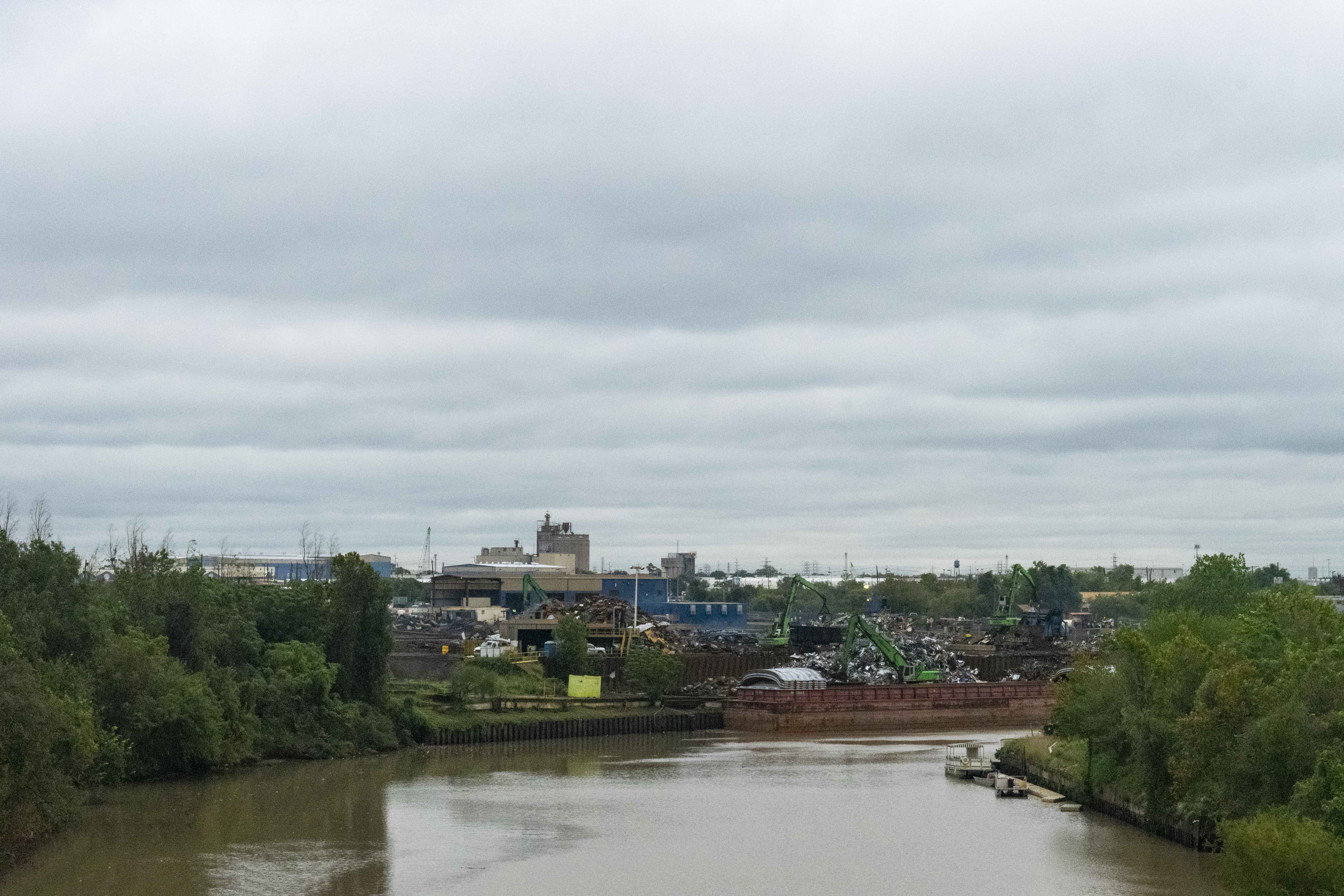
The Calhoun County Port is located an hour southeast of Victoria, Texas, and across the bay from Port Lavaca, in Point Comfort. In March, I took a trip to this port city and was astonished by some of the issues I found there.

The port has submitted documents to TCEQ for operating a bulk material handling dock.  Our coalition was told it will be used for coal imports, most likely for the plants there.  The permit application allows for the handling of coal and petcoke.  The main facilities there are Alcoa and Formosa plants for plastics.

I first noticed the lack of wildlife near the site.  On the Port Lavaca side of the bridge over the bay there are seagulls flying around, but in Point Comfort I did not see any wildlife.  No birds, insects, or even squirrels.  There was a deathly silence surrounding the area, broken only by the whirring of port-related trucks.  No one was fishing on the Point Comfort side of the bridge, while the Port Lavaca side was bustling with people fishing on piers.

On Texas 35 I saw a large elevated area that I first assumed would be used for a landfill.  There were Caterpillar bulldozers pushing around dirt up a 15 foot tall, mile-wide manmade hill.  However, it may also be a site of the coal import facility since it is right next to a ship dock.

I drove further and saw many TCEQ air quality permit signs, including for the Formosa plastics plant.  Some of the plants with TCEQ air quality permit signs were emitting some kind of steam.  At the end of the road was a large chute with huge piles of bauxite, the ore from which aluminum is made.

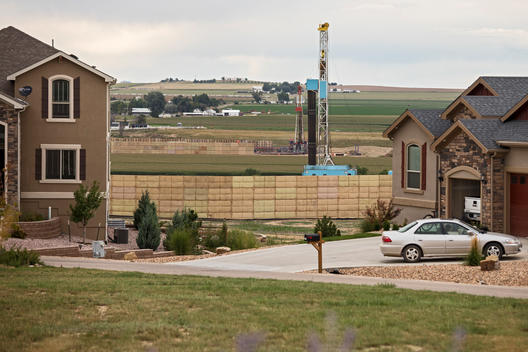
The residential areas were empty and had very few cars in front of them.  I wasn’t sure if that was because few people in the area had cars, but later on I was told that a lot of the residents died of cancer or the houses were condemned.  There were playgrounds right next to the plastics plant, but it is doubtful that Point Comfort was an area with a lot of children.

At the gas station as I was leaving I picked up a copy of the local newspaper, the Port Lavaca Wave.  On the front page was a news story about how Point Comfort was getting one more police officer in addition to the sheriff because the plant workers were driving too fast.  On a hunch I decided to look into the crime rate in the area and found something shocking.  There is a correlation between lead exposure and violent crime.  The violent crime rate in Port Lavaca is extremely high for a municipality of its size (11,405).  The violent crime rates are comparable to mid-sized cities like El Paso that are many times larger than Port Lavaca.

What I saw there was straight out of a nightmare, the result of when too little regulation and overpowering industry meet residential areas.  However, workers aren’t safe either, as there was a recent fire that resulted in injuries at the Formosa plant there.  These horrific industrial areas are not limited to isolated areas where people move out.  This is a common theme across the Gulf Coast in more populated areas like Plaquemines Parish near New Orleans, LA and Houston, TX.  In the face of disasters like the one in West, TX issues like these need to be raised to policymakers and community leaders to prevent the deaths of both persons and communities.

Read Full Post »

Smith’s Bill – HB1714 – Makes Perry’s Texas Even More of a Paradise for Polluters and is expected to be heard in the Texas House sometime on Thursday

Contact your representative (don’t know who that is . . . click here) and tell them to vote NO on HB 1714

On April 17th, an explosion at the West Fertilizer plant killed 15 people – mostly first responders, and injured hundreds more; that plant had been cited 5 times in 6 years by three enforcement agencies for failing to follow the law. Leaders of Texas’ environmental organizations called on state legislators to protect against the next environmental disaster by rejecting Rep Wayne Smith’s 1714 which would eliminate provision in Texas environmental law requiring more inspections and tougher enforcement for polluters who have poor record with the state or federal environmental agencies.

“Leadership needs to improve regulations, not weaken them further,” said Tom “Smitty” Smith, director of Public Citizen’s Texas office.  The Texas Legislature will consider HB 1714 by Representative Wayne Smith (R-Baytown) in the Texas House that would further weaken the permitting and enforcement processes.”

“HB 1714, would eliminate enhanced inspections of companies that have a history of environmental violations at a time when it is clear that the state and its citizens would benefit from having more scrutiny of companies that violate their permits. This bill would also reduce public disclosure of the state’s evaluation of company compliance histories, making it even more difficult to distinguish the bad actors from the good actors.”

“While the facility at West, TX may have been too small to have qualified for the enhanced inspections as the law is currently written,” continued Smith, “it begs the question, should we be weakening this oversight rather than enhancing it in order to prevent these types of tragedies?”

Years of state budget cuts and lax regulations have left communities at risk.

“The West Fertilizer incident shows how badly the TCEQ has failed to protect Texans under Governor Perry’s ‘paradise for polluters’ administration,” said Karen Hadden, executive director of the Sustainable Energy and Economic Development (SEED) Coalition.  The TCEQ failed to inspect the plant even after three state and federal agencies found five violations at that plant over the last six years. The plant was operating without the proper permits and failed to properly train their workers, label dangerous products or to develop a worst case accident plan.

“Texas has a program that is supposed to target companies that have poor compliance records with extra inspections. The West Fertilizer plant was “unclassified” – meaning the TCEQ didn’t take the time to look at the plant’s record. Had TCEQ inspected the West Fertilizer facility, we can only hope that they might have found the 270 tons of explosives at the site and 15 people might not have died.”

Budget cuts have real consequences. Over the last 4 years, funding for TCEQ has been cut back 34% and 295 employees have been laid off.

“TCEQ doesn’t have nearly enough inspectors for the number of facilities it is responsible for. Facilities are not routinely inspected and the agency’s response to complaints is far from adequate. In 2006, a nearby resident reported a gas leak at the West Fertilizer facility and it took the TCEQ 11 days to travel the 17 miles from Waco to West to follow up,” pointed out David Weinberg, executive director of the Texas League of Conservation Voters, and further illustrates TCEQ’s ineffectiveness.” (See westfertilizerinfo.com for TCEQ files)

As the events of the past two months have shown, the push to hasten the permitting process, weaken the regulatory oversight processes, and abandon due diligence and planning for both large and small industrial facilities has real life consequences.

Hadden said, “These disasters serve as a reminder of the necessity for strong and effective land use regulations, as well as proper enforcement systems to ensure public safety and prevent toxic releases into the environment.  Regulations that reduce the likelihood and size of industrial accidents protect workers, nearby neighborhoods and residents, and minimize the potential loss of life when accidents do happen, as they always will.”

“The Texas Legislature must act now to ensure existing and new regulations protect workers, communities and our state’s natural resources on which we all depend,” concluded Smith.

Contact your representative (don’t know who that is . . . click here) and tell them to vote NO on HB 1714.

Read Full Post »

A story in MyHealthNewsDaily by Lindsey Konkel says, according to a new study from Germany, children who live near a noisy road may be at an increased risk of hyperactivity.  Those in the study who were exposed to the highest noise levels at home showed 28 percent more symptoms  of hyperactivity and inattention than kids exposed to the lowest traffic  noise levels.

A growing number of studies are showing that environmental stressors, such as noise and chemical pollution, may affect children’s behavior and mental health by impacting a child’s brain during important developmental periods, increasing levels of circulating stress hormones or disrupting a child’s ability to sleep and concentrate.  Previous studies have linked pollution from traffic exhaust to behavior problems in kids.

For those living near high traffic and pollution areas, such as the Port of Houston, this among other health impacts of such an environment, should be taken into consideration as the Port looks to expanding.


Read Full Post »

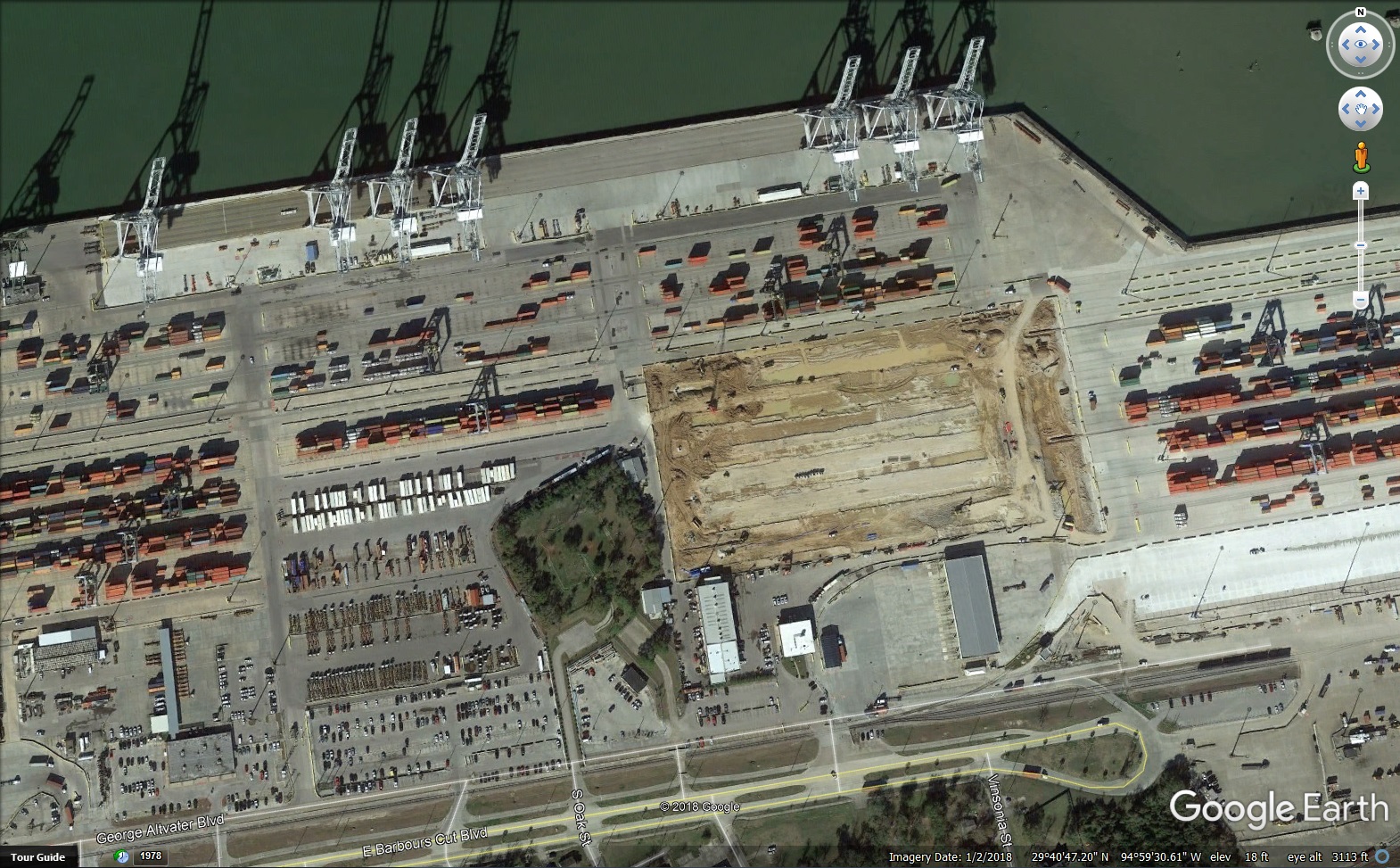
Hundreds of residents living near the Port of Houston attended a Town Hall meeting Thursday evening at Holland Middle School to learn about the changes coming to their communities with the expansion of the Port.

Residents filled the Holland Middle School auditorium to hear the preliminary results of neighborhood surveys and to share their concerns with local officials.

Residents filled the Holland Middle School auditorium to hear the preliminary results of neighborhood surveys and to share their concerns with local officials.

“For far too long, the voices of community members living with the health and safety impacts of the Port of Houston have been ignored in the decision making about the Port’s economic growth, routing of hazardous and heavy truck traffic, strategic positioning of pollution control devices, and disposal of hazardous wastes. The Healthy Port Communities Coalition was created in response to this void.” said Hillary Corgey, originally from the Houston area and representing Public Citizen at the meeting, “We seek to provide information and to give a voice to portside communities that have historically been left out of this decision making process as they organize to make their communities safer and healthier for all who live there.”

Preliminary results of Port Side Community Survey Released
The Coalition is currently conducting surveys in port-side communities to determine the full extent of port impacts on residents of these communities and to raise awareness about their causes. The preliminary results of this ongoing survey were discussed at the town hall.  Some notable early results include:

  • Port side community residents concerned about pollution from industries and port operations along the ship channel.
  • 61% concerned about ships and cargo equipment pollution.
  • 67% concerned about train and rail yard pollution.
  • 86% concerned about refinery and chemical plant pollution.
  • 82% concerned about 18 wheeler/truck pollution.
    • 89% concerned about local pollutions’ effects on their health and 54% of respondents do not have health insurance.
    • Cancer rates in these communities are more than 8 times the Texas average.
    • Children have twice the rate of asthma in these communities than other Texans.

The only good news, if you can call it that, while 54% of the respondents do not have health insurance, nearly 80% reported they have had a routine exam in the last two years.  What we don’t know is if this is high because of higher rates of disease.  Residents may have characterized more frequent trips to the doctor, the emergency room, or another clinic as “a routine” exam.

  • The survey also identified the need for job opportunities and job training.
  • 42% of households have an unemployed resident.
  • 81% said there is a need for job training.
  • 69% said there is not sufficient work in their area.

During the town hall, Patricia Gonzales, a mother of three from Pasadena and member of the Texas Organizing Project, spoke up saying, “All of my children have asthma, and after moving to Pasadena, I too have asthma.  We need to know what impact these changes will have on our health.”

“The Coalition is here to help port-side community residents speak with a unified voice on issues that affect their health and well-being,” said Adrian Shelley, Executive Director of Coalition member Air Alliance Houston. “These communities have borne the burden of Houston’s intense industrial development.”

Also attending the Town Hall meeting to listen to and address residents’ concerns were Bob Allen, the Director of Harris County Pollution Control Services Department, Marcus Woodring, Managing Director of Health Safety Security and Environment at the Port of Houston, Jerry Peruchini, chief of staff of Houston City Councilman Ed Gonzales, Edna Campos with Councilmember Melissa Noriega’s office, Rhonda Sauter of the Mayor’s Citizens Assistance Office, State Representative Mary Ann Perez, Linda Jamail with State Representative Ana Hernandez-Luna’s office, Marisol Rodriguez from Senator Sylvia Garcia’s office, and Myriam Saldivar from State Representative Armando Walle’s office.

“We recognize our constituents living near the port of Houston/ship channel area have to contend with issues not common to the rest of Houston and want to thank these residents for taking the time to make them known to us.  The survey will be helpful as we try to address the impacts of the port and its expansion on these communities; that’s why I’ve urged the Port Authority’s Chair to create a Community Advisory Board: said State Senator Sylvia R Garcia. “Such an advisory board would provide continuing communication and dialogue between the community and the Port’s leadership on this and other issues that impact all the Ship Channel area communities.”

The attendees were divided into groups to begin outlining the concerns of port community residents.

“We want to know what’s going on around us and how it will affect our everyday lives,” concluded Gonzales. “This town hall meeting is an opportunity for us to begin that conversation.”

“One of the recommendations posed to the residents living near the ports was to ask for community representation on the Port of Houston Authority Commission,” said Debbie Allen, a resident of Pleasantville and member of the Pleasantville Environmental Coalition. “While my neighbors in the community are concerned about local hiring for port jobs, job training for port jobs, environmental protection and access to healthcare, I believe representation on the Port Commission would give our communities a seat at the table so that we can begin addressing these issues.  One way this could be done is by putting this change into Representative Dennis Bonnen’s Port of Houston Authority Sunset Bill - HB 1642.”

###

The Healthy Port Communities Coalition is an open-ended collaboration that names among its members: Air Alliance Houston, Pleasantville Environmental Coalition, Public Citizen, Texas Environmental Justice Advocacy Services and the Texas Organizing Project.

Ryan Korsgard reports on Houston’s Channel 2

Concerns over Port of Houston cancer risks

Houston Univision45 coverage

Amenazada la salud de los residentes del puerto de Houston   

Read Full Post »

Gina_McCarthy_--_EPAWhile EPA nominee, Gina McCarthy is likely to be confirmed, the confirmation hearing on Thursday was dominated by a debate on the future of coal as a source of electric power in the U.S. according to a report by NBC News.

Click here to read NBC’s story on this confirmation hearing.

Read Full Post »

This is a guest submission by Riki Ott, PhD. Dr. Ott is a marine toxicologist, author, and former commercial fisher. She was one of the first people on the scene during the Exxon Valdez oil spill, when millions of gallons of crude oil were discharged into the pristine waters of Prince William Sound, Alaska. For 23 years, she has been the voice and face of efforts for justice.

She is the featured character in the award-winning film BLACK WAVE: The Legacy of the Exxon Valdez, a documentary that tells the tale of the battle between commercial fishers against the largest corporation in the world, Exxon-Mobil.

Line 1

In oil disaster after oil disaster, industry has repeatedly hidden the truth from federal agencies and the public about spill volume and extent of damages, including wildlife kills, ecosystem harm, and harm to worker and public health. This underreporting is done to minimize the spiller’s liability – often billions of dollars are at stake. If the oil industry is not held accountable for these costs, the costs are externalized and borne by the environment, local economies and businesses that depend on a healthy environment, individuals and families who suffer health consequences, and U.S. taxpayers.

Riki Ott, PhD is asking the press to pose critical questions rather than regurgitate industry press releases. The public depends on the press in order to be well informed and make important decisions. It is essential for the media to search for deeper explanations and more accurate information during incidents that threaten human health, wildlife, and the environment––and future energy choices.

Dr. Ott is offering this guide, based on her on-the-ground first-hand experience with the nation’s largest oil tanker spill (Exxon Valdez, 1989), offshore oil rig disaster (BP Deepwater Horizon, 2010), and on-land pipeline tar sands spill (Enbridge, 2010).

Line 1

WHEN WAS THE LEAK DISCOVERED?
Exxon says the leak was discovered on Friday afternoon. What are residents saying? People living nearby should have known immediately from the fumes when the leak occurred or once it spilled above ground. In the case of the Enbridge tar sands oil spill in the Kalamazoo River (July 2010), residents reported smelling and seeing oil two days prior to the date Enbridge claimed the spill occurred.

WHAT KIND OF OIL WAS SPILLED?
Media is reporting a crude oil or sour crude spill. This oil is sour (containing high concentrations of hydrogen sulfide) but more importantly, it is heavy bitumen crude – tar sands oil (sour by nature) that has been diluted with lighter petroleum distillates and other very toxic chemicals.1 These chemicals are often labeled proprietary due to their toxic nature.

WHAT ARE OTHER NAMES FOR TAR SANDS OIL?
“Tar sands oil” is a political red flag, so the industry also calls it “nonconventional oil,” “heavy bitumen crude,” “dilbit” (diluted bitumen), and more recently, “sour oil,” and “sour crude”. Don’t fall for it. What spilled is the essentially the same stuff that Enbridge spilled in Michigan (July 2010) and that would be coming down the Keystone XL: tar sands oil (bitumen crude oil) with diluents, or dilbit.

WHAT ARE THE HUMAN HEALTH RISKS OF EXPOSURE TO TAR SANDS OIL, DILUENTS, AND DILBIT?
Common symptoms of exposure to conventional crude oil spills are well known and established within the medical community and include respiratory problems, central nervous system dysfunction, blood disorders, and skin problems.2 Unfortunately, a body only has so many ways to say it’s ill and the symptoms for chemical illnesses mimic those for colds/flu, asthma, bronchitis, COPD, bad headaches, vertigo, dizziness, tingling feet and hands, fatigue, general malaise, immune suppression (sick all the time), bad looking skin rashes like MRSA, peeling palms and soles of feet (for people walking barefoot), ear and nose bleeds (gushers), bleeding hemorrhoids, and more.3

Tar sands oil is concentrated with heavy hydrocarbons, known as Polycyclic Aromatic Hydrocarbons (PAHs) or more commonly as ultrafine particles. Exposure to PAHs can cause the health issues listed above (and also listed as compensable injury on BP medical benefits settlement4)––and similar injury in wildlife.5

The diluents are industrial solvents, containing petroleum distillates and other toxic chemicals that that target and harm the same organs of the body as PAHs/oil––the respiratory system, central nervous system, skin, and blood. This means the body takes a double hit of toxic chemicals. Diluents contain chemicals that are teratogens (disturb development of or kill babies in the womb), carcinogens, mutagens, systemic poisons, and cause hemolysis (rupture of blood cells). Some people are more vulnerable than others to dilbit, especially children6, pregnant women, elderly, African Americans, and those with pre-existing illnesses.7 Diluents are industrial solvents and degreasers, like dispersants, that act as an oil delivery mechanism, pulling oil into the body. The emerging science from the BP Gulf disaster is finding that chemically-dispersed oil is more toxic than oil alone to wildlife and humans.

Since tar sands oil is concentrated with PAHs and VOCs/diluents, dilbit is far more toxic to humans and animals (wild and domestic) than conventional oil. The oil industry (and government) are trying to downplay the human health risks of exposure to tar sands and/or dilbit because this is extremely politically inconvenient information. It nonetheless is extremely dangerous.

WERE RESIDENTS INFORMED OF THESE HEALTH RISKS? PROPERLY EVACUATED?
No. Residents and the city are being misinformed about health risks. A recent statement released by Exxon said, “The air quality does not likely present a human health risk, with the exception of the high pooling areas, where clean-up crews are working with safety equipment.”

This is simply not true. Oil and petroleum distillates (ingredient of both dispersants and diluents) wrecked havoc with wildlife and people in the aftermath of the BP disaster8 and the Exxon Valdez disaster.9 Similarly, tar sands oil and diluents made people sick in Michigan,10 where residents of one trailer court and neighborhood along the oiled riverbank blame exposure to tar sands oil and fumes for illness outbreaks including eighteen deaths––and counting.11 Oil and diluents can cause short- and long-term harm to health if people are not forewarned (educated about chemical illnesses, exposure, symptoms, and treatment) and given protection.

Dilbit has a mandatory 1,000-foot evacuation zone. Was it uniformly enforced? In Michigan, people in richer areas were evacuated while people in poorer areas were either not evacuated or were forced to relocate when the city condemned public housing units.12 Enbridge housed workers in some of the homes it purchased, raising health concerns. If the home wasn’t safe for the original occupants, why was it safe for the workers? Unprotected workers and the general public are at risk of exposure and chemical illness. Children, elderly, pregnant women, people with pre-existing illnesses, and African Americans, in particular, and domestic animals should have been evacuated immediately.

The local department of health should issue Public Health Advisories, warning residents of the signs and symptoms of exposure, such as headaches, nausea, vomiting, dizziness, nose bleeds, and cold- and flu-like symptoms, among others. Occupational and environmental medicine (OEM) doctors should be on hand to diagnose and treat illnesses that family doctors are not trained to recognize. These specialty physicians should NOT be provided by the industry; the city should hire them and ask industry for reimbursement. People should be given baseline health exams before returning to homes they evacuated; their homes should be tested for air quality. Wood and fabric, for example, absorb oily fumes and will off-gas over time. The industry should pay if homes, furniture, clothes, carpet, toys, etc., need to be replaced.

WERE THE CLEANUP CREWS GIVEN AND WEARING ADEQUATE PERSONAL PROTECTIVE EQUIPMENT?
Photos from KTHV in Little Rock, AR, show backhoe operators and others with absolutely no protective gear at all. Compare what the cleanup crews are wearing with what EPA and other federal responders were wearing, especially during the early response. During the Michigan response, EPA crews wore respirators and Hazmat gear. Hazmat crews with protective equipment and workers or the general public without similar protection in the same area is a sign of trouble for unprotected persons – and disingenuous PR statements. In Prince William Sound, Alaska, Alyeska’s SERVS workers are trained, provided with, and required to wear personal protective equipment, including respirators, during oil spill response.

WHAT HAPPENS WHEN DILBIT AND/OR TAR SANDS OIL GETS IN CITY SEWERS?
Photos from KTHV in Little Rock, AR, show dilbut bubbling down into storm sewers. City wastewater treatment facilities are not designed to process and remove even small amounts of oil. Individuals are fined hefty amounts for releasing even a quart of oil into sewers. Tar sands oil is thick, sticky goo and the diluents are extremely toxic chemicals. ExxonMobil needs to detail how it plans to help municipalities clean out the sewers and the wastewater treatment system––without contaminating the city’s water supply. If it is too late to avoid contamination of the city’s water supply, how will industry provide safe water for city residents?

ARE TAR SANDS OIL AND DILBIT MORE CORROSIVE THAN CONVENTIONAL OIL?
Yes. Period. No debate. Bitumen blends are more acidic, thick, and sulfuric than conventional crude oil. DilBit contains 15–20 times higher acid concentrations and 5–10 times as much sulfur as conventional crudes. The additional sulfur and high concentrations of chloride salts cause corrosion that weakens and ages pipelines, especially when dilbit is pumped under high temperature and pressure. Tar sands crude oil also contains high quantities of abrasive quartz sand particles, much more than used by liquid sandblasters. (Keystone XL pipeline maximum capacity would mean over 125 pounds of quartz sand and alumino-silicates per minute. Common sandblasters use between 1.5 and 47 pounds of sand per minute.) Conventional crude oil does not contain quartz sand particles. Dilbit is also up to 70 times more viscous than conventional crude.13

Not surprisingly, tar sands pipeline spills occur more frequently than spills from pipelines carrying conventional crude oil because of diluted bitumen’s toxic, corrosive, and heavy composition. Between 2007 and 2010, pipelines transporting diluted bitumen in the northern Midwest spilled three times more oil per mile than the national average for conventional crude oil. Between 2002 to 2010, internal corrosion caused over 16 times as many pipeline spills per 10,000 miles in Alberta, Canada, where pipelines transport mostly dilbit, than in the US, where pipelines transport mostly conventional crude oil. Finally, in its first year, the U.S. section of Keystone 1, carrying diluted tar sands oil, had a spill frequency 100 times greater than the TransCanada forecast. In June 2011, federal pipeline safety regulators determined Keystone 1 was a hazard to public safety and issued TransCanada a corrective action order.14

WHY DOES INDUSTRY CLAIM THERE IS SO LITTLE RISK? WHO PAYS THE COST OF SPILLS?
The oil industry is aware of the higher risk of spills from transporting dilbit and the higher cost of spill response, based on the Enbridge tar sands spill in Michigan. To minimize liability, industry lobbyists successfully argued that dilbit was not conventional oil and therefore exempt from the Oil Spill Liability Trust Fund. Oil shippers pay into this fund, which is then used by the federal government for spill response. Now the shippers most likely to spill oil, those shipping diluted tar sands oil, do not pay into the fund. But the fund is still tapped for spill response. If the fund goes bankrupt, U.S. taxpayers would foot the bill––on top of the annual $375 million subsidy for saving the oil and gas industry from paying into the fund in the first place.15

WHAT DOES THE PRESS NEED TO DO?
The government and industry are pushing the press away from these scenes with claims of safety concerns. Really? Are the media crews different from the workers or residents? The media could obtain and wear the same safety gear worn by the federal responders, if this is truly government’s concern. The BP Gulf disaster set horrible precedent for media access16––and the media acquiesced instead of insisting upon, and fully exercising, their First Amendment rights. THE MEDIA IS NOT GETTING THE FULL STORY IF THEY ARE DENIED ACCESS TO THE SPILL SITE––and neither are the American people.

  • The ExxonMobil tar sands oil spill is very inconvenient for government, Congress, and industry. The U.S. State Department is taking public comment for the Keystone XL Pipeline until April 22. There will be a huge push by industry and the government to shut down the true risks and costs of transporting tar sands oil as inconvenient truths. It is the media’s job to accurately research and portray these risks to the public. In-depth research and reporting on the ExxonMobil tar sands spill in Arkansas would be a good start.

Line 1

ENDNOTES:
1 Lisa Song, A Dilbit Primer: How It’s Different from Conventional Oil, June 26, 2012, http://insideclimatenews.org/news/20120626/dilbit-primer-diluted-bitumen-conventional-oil-tar-sands-Alberta-Kalamazoo-Keystone-XL-Enbridge

2 Barry Levy and William Nassetta, The Adverse Health Effects of Oil Spills, Intern. J. of Occupational Health and Environ. Medicine, 17(2):161– Apr/Jun, 2011. http://www.ncbi.nlm.nih.gov/pubmed/21618948

3 See: series of Huffington Post blogs documenting emerging public health epidemic of chemical illnesses across the oil-impacted Gulf Coast at: http://www.huffingtonpost.com/riki-ott/; See also: on-line version of Sound Truth and Corporate Myths at: www.rikiott.com under reading for medical professionals.

4 BP-Plaintiffs Medical Benefits Class Action Settlement Agreement, Exhibit 8: Specified Physical Conditions Matrix, Table 1: Acute SPECIFIED PHYSICAL CONDITIONS, and Table 3: Chronic SPECIFIED PHYSICAL CONDITIONS. http://www.laed.uscourts.gov/OilSpill/4.pdf

5 Charles Peterson, Stanley Rice, Jeffrey Short, Daniel Esler, James Bodkin, Brenda Ballachey, and David Irons, “Long-term Ecosystem Responses to the Exxon Valdez Oil Spill,” 2003; 302:2082–2086. See also Riki Ott, Sound Truth and Corporate Myths: The Legacy of the Exxon Valdez Oil Spill (Dragonfly Sisters Press, Cordova, AK: 2004), available at: www.rikiott.com

6 http://globalaccessmedia.org/consequence-oil-part/

7 Sciencecorps, 2010, Gulf Oil Spill Health Hazards. http://www.sciencecorps.org/Gulf_Spill_Chemical_Hazards_Report.pdf

8 Dahr Jamail, “Gulf seafood deformities alarm scientists,” Aljazeera English, April 20, 2012, http://www.aljazeera.com/indepth/features/2012/04/201241682318260912.html; BP blamed for ongoing health problems,

http://www.aljazeera.com/indepth/features/2012/04/2012420725163795.html

9 Kim Murphy, LA Times, November 5, 2001. http://groups.yahoo.com/group/EVOS/message/33

10 Martha Stanbury et al., Acute Health Effects of the Enbridge Oil Spill, Lansing, MI: Michigan Department of Community Health, November 2010, http://www.michigan.gov/documents/ mdch/enbridge_oil_spill_epi_report_with_cover_11_22_10_339101_7.pdf; Dahr Jamail, “Pipeline of ‘poison’,” Aljazeera English, Oct. 17, 2011. http://www.aljazeera.com/indepth/features/2011/10/2011101151776808.html

11 Michelle BorlandSmith, Jackson, MI, pers. communication.

12 Michelle BorlandSmith, Jackson, MI, pers. communication.

13 NRDC et al., Tar Sands Pipeline Safety Risks, June 2011, on p. 6, http://www.nrdc.org/energy/files/tarsandssafetyrisks.pdf

14 Cornell University Global Labor Institute, The Impact of Tar Sands Pipeline Spills on Employment and the Economy, March 2012, http://www.ilr.cornell.edu/globallaborinstitute/research/upload/GLI_Impact-of-Tar-Sands-Pipeline-Spills.pdf

15 Erin O’Sullivan, “Toxic and tax exempt,” Oil Change International, April 2, 2013, http://www.earthisland.org/journal/index.php/elist/eListRead/how_tar_sands_spills_from_michigan_to_arkansas_cost_us_all/; Oil Change International et al., “Irrational exemption: Tar sands pipeline subsidies and why they must end,” May 14, 2012, http://ecowatch.com/2012/tar-sands-industry-remains-exempt-from-spill-liability-fund/ and http://priceofoil.org/wp-content/uploads/2012/05/Irrational-exemption_FINAL_14May12.pdf

16 http://www.nola.com/news/gulf-oil-spill/index.ssf/2010/07/media_boaters_could_face_crimi.html

Read Full Post »

You may have never heard of Property Assessed Clean Energy (PACE), but it has the potential to make a huge difference in adoption of distributed renewable energy systems, such as rooftop solar installations. PACE allows businesses to borrow money from local governments to work on energy efficiency and renewable energy projects in the buildings they occupy.

Since PACE is funding is loans, there is no real expense to the taxpayer.  On the other side of the coin, it allows businesses to spread out the costs of becoming more environmentally friendly over time, all while lowering their monthly utility costs.  This strategy is a win-win-win for Texans.  Business save money, the environment benefits, and it cost Texans nothing.

The Texas Legislature is currently considering legislation that would move PACE forward for our state.  Senate bill 385 has already cleared the hurdle of the Texas Senate, and now is pending in our House of Representatives. House bill 1094 is still waiting be voted out of the House Committee on Energy Resources.  The House should move forward to adopt this common sense measure.

As of 2013, 27 states and the District of Columbia have PACE legislation on the books to help combat harmful emissions from electric generation.  States from California to Wyoming have enacted PACE programs.  Generally, in these states, the financing terms are 15-20 years.  It works very much like taking out a home loan, or perhaps a better example would be a home improvement loan, but for commercial properties. Disbursing the payments over a longer period of time makes these efficiency upgrades affordable for a wider variety of business.  It also makes upgrades attainable for smaller businesses.

I urge fellow Texans to get in touch with their State Representative and tell him or her to support the PACE bills (HB 1094 and SB 385).  This is common sense legislation that benefits everyone.

Click here to find out who represents you. 

Read Full Post »

Today, the the Department of State released a Draft Supplemental Environmental Impact Statement (SEIS) for the new Presidential Permit application for the proposed Keystone XL pipeline.

The SEIS acknowledges that the construction of the controversial Keystone XL pipeline would create “numerous” and “substantial” impacts on the environment, but they are claiming that the project is a better than any of the alternatives, essentially clearing the project to go ahead.

The report concluded that the tarsands diluted bitumen (dilbit) that the pipeline will transport into and across the U.S. produces 17 percent more greenhouse gases than heavy crude oil refined on the Texas Gulf Coast. In addition, it said the construction phase of the project would result in carbon dioxide emissions equivalent to about 626,000 passenger vehicles operating for a full year.

The Draft Supplemental Environmental Impact Statement, once published by the EPA, starts the clock on the public comment period.  At this time, we expect the SEIS to be published sometime next week.  Our best guess is Wednesday.  From that point, the public will have 45 days to comment on the document, so let’s dust off our legal pads and pens and start drafting our comments.  Having spent three days on a bus and marching around the mall in Washington DC in freezing weather with many of you, I know you have a lot to say.

Comments can be addressed to the following mailbox: keystonecomments@state.gov.

Read Full Post »

Couldn’t make it to the rally in Washington D.C. to protest the Keystone XL pipeline? It’s okay, neither could we! So instead we’re going to have a rally of our own to show our support and to raise climate change awareness here in Austin. Please join us at 5th and Lamar (in front of Whole Foods) on Sunday, February 17th at 2 P.M. Wear a blue shirt (or a No K XL shirt if you have one) and bring an anti Keystone XL/climate change awareness sign. Let’s make a statement that we won’t tolerate dirty energy any longer.

Read Full Post »

According to a report yesterday by Terrance Henry of NPR’s StateImpact Texas (click here to read the article), the Las Brisas coal power plant proposed for Corpus Christi has not only been suspended, but Chase Power’s parent company, which was financing the project, has gone out of business.
wicked witch of the westLas Brisas was one of the last remaining coal plants still proposed for Texas. Now only one major coal plant is still being considered.  The White Stallion coal project in Matagorda County is also experiencing problems getting permitted and funding could be the final blow for this proposed plant too.  So we say to White Stallion, to quote the wicked witch of the West, “Just try and stay out of my way. Just try! I’ll get you, my pretty, and your little dog, too!”

Read Full Post »

Today, Energy and Commerce Committee Ranking Member Henry A. Waxman issued the following statement on new research from the Pembina Institute and Oil Change International, indicating that the Keystone XL pipeline will accelerate the reckless expansion of the tar sands industry and the climate impact of tar sands and the pipeline will be significantly worse than anticipated:

“The new reports show that TransCanada’s Keystone XL pipeline is the key that will unlock the tar sands.  If the pipeline is approved, the world will face millions more tons of carbon pollution each year for decades to come.  After Hurricane Sandy, devastating drought, unprecedented wildfires, and the warmest year on record in the United States, we know that climate change is happening now, we have to fight it now, and we must say no to this pollution pipeline now.”

To access the report released at the event, please visit:
Petroleum Coke: The Coal Hiding in the Tar Sands – Oil Change International
The climate implications of the proposed Keystone XL pipeline – The Pembina Institute

Read Full Post »

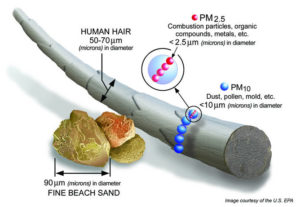
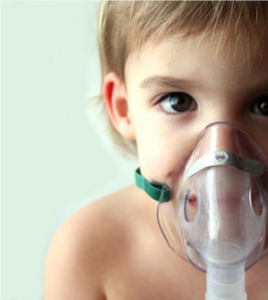
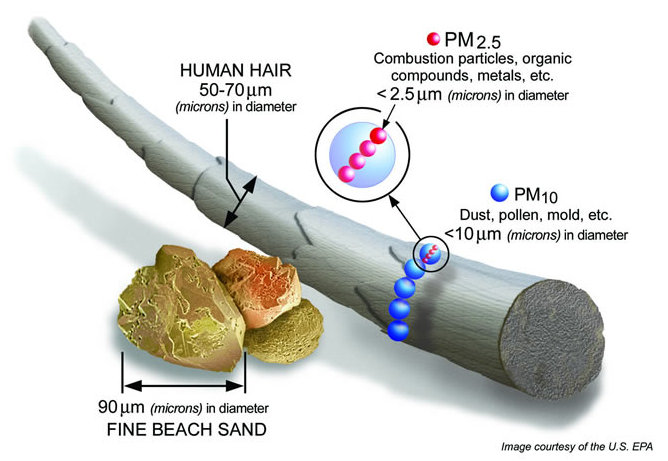
Fine particles in the air (particularly those smaller than 2.5 micrometers in diameter) cause a multitude of health problems, ranging from difficulty kid with asthma inhalerbreathing and asthma to heart attacks and premature death in people with heart or lung disease.  The question has been whether or not cleaning the air any further makes a difference.  This type of air pollution has decreased substantially since 1980, but only smaller gains have been made since 2000.

A new study by researchers at the Harvard School of Public Health shows that even the modest gains made in reducing particulate matter between 2000 and 2007 are adding years to people’s lives.  Life expectancies were shown to increase .35 years in 545 US counties.

Not everyone is equally impacted, so some demographics are reaping larger benefits through cleaner air.  The young, the old and those who exercise outdoors are most likely to be negatively impacted by fine particles in the air.

In Texas, our port communities endure especially high concentrations of particulate matter.  Public Citizen is working to force the Port of Houston clean up.  Replacing or retrofitting the old, highly polluting trucks that haul goods from the port to nearby warehouses would do a lot to improve the health of surrounding communities.  The Texas Emissions Reduction Plan (TERP) provides funds for just this purpose.  Those investments are saving lives, but are often underutilized by truck owners.

Read Full Post »

The House Committee on Environmental Regulation held a public hearing today to take invited testimony on an interim charge before the 83rd legislative session starts in January of 2013.  They examined the federal eight-hour ozone standard under the National Ambient Air Quality Standards program and its impact on the State Implementation Plan.  They were also looking to identify counties expected to be in non attainment, the state’s proposed designations of those counties, the time lines for meeting the applicable standard, and the status of the state’s ability to attain the standard.

  • Click here to see the presentation that went along with the testimony of Public Citizen’s Texas office director, Tom “Smitty” Smith.
  • Click here to watch the archived video of the hearing.
  • Click here to see the presentation that went along with the testimony of the Lone Star Chapter of Sierra Club’s interim director, Cyrus Reed.

Read Full Post »

Back in March, the Dallas Observer reported about the chance that Energy Future Holdings (EFH – formerly TXU) the state’s largest power generator, was verging on bankruptcy,  Our question then was – are Texas ratepayers going to have to pay for EHF’s bad bet?

Before and since then, there has been a lot of talk about how the EPA is threatening our ability to keep the lights on in Texas.  It was just last fall that Dallas based Luminant claimed that it would be taking 2 coal-fired generating units at the Monticello plant offline due to the cost of complying with newly proposed EPA regulations.

Now, with EPA’s Cross-State Air Pollution Rule off the table, Luminant is going to take the Monticello plant offline for the winter season anyway.  The reality of the energy market in Texas and across the U.S. is that coal isn’t the cheapest option anymore.

Now comes the Dallas Observer with a new article questioning EHF’s Luminant generation division’s claim that EPA regulations are going to be the cause of plant closures.

Brantley Hargrove writes:

Does Texas’ biggest electricity generator, Dallas-based Luminant, just have one hell of a poker face, or should we not read too much into Friday’s announcement that it will idle two units at its Monticello plant for six months? If you’ll recall, the company threatened to idle the units last summer, a time when record demand almost forced rolling blackouts. It claimed that an EPA rule designed to reduce the amount of harmful air pollution wafting across state lines was going to force the company to remove 1,200 megawatts from the grid, enough to power more than a million homes.

Texas politicos were quick to pile onto the agency’s “job-killing” regulations, which they said threatened the very integrity of the grid. “As expected, the only results of this rule will be putting Texans out of work and creating hardships for them and their families, while putting the reliability of Texas’ grid in jeopardy,” Gov. Rick Perry scolded from the presidential campaign trail.

“The rule will impose great costs on coal-fired power plants, causing some to shut down or curtail operations, threatening the state’s electrical capacity reserve margins needed to avoid power disruptions during times of peak demand,” Texas Commission on Environmental Quality director Bryan Shaw warned. “Such a scenario could lead to blackouts, which create serious health risks for Texans dependent on reliable energy.”

To hear them tell it, Texas was given a brief reprieve when a federal appeals court stayed the rule pending oral arguments. And when it tossed the Cross-State Air Pollution Rule altogether last month, the court’s decision was heralded as a decisive coup for Luminant and Texas electric reliability.

“EPA’s illegal micro-managing of state air-quality plans was so specific that immediately after the rule-making it was clear that coal-powered energy production at Texas-based plants operated by Luminant, a big utility, would have to be cut,” a Wall Street Journaleditorial opined. “Tuesday’s ruling means Luminant will be able to keep 1,300 megawatts of power online in Texas, which needs more electricity because unlike other parts of the U.S. in the Obama era it is growing.”

But no sooner had Texas Attorney General Greg Abbott crowed over his “defeat” of the “EPA overlords” than Luminant announced it would idle those two Monticello units anyway. Awkward. For between six or seven months, starting in December, they will sit dormant. Luminant spokesperson Allan Koenig blames low power prices. Monticello has been running below capacity as it is, he says. They’ll be back online in time for next summer’s heat wave. In the meantime, somehow, Luminant won’t lay anybody off.

What Koenig says about the power market is true: The price of electricity fell along with the price of natural gas back in 2008. Ever since then, their bottom line has gotten pinched, along with everyone else’s.

But Luminant is a special case, troubled by a unique predicament, causing some to wonder whether we can lay everything at the feet of the cruel market. The real problem came (as we examined in a March cover story, “Blackout Blues”) when private equity firm Kohlberg Kravis Roberts saddled the former TXU with tens of billions of dollars in debt. The bull electricity market KKR was betting on went bearish, and the newly reconstituted Energy Future Holdings’ already daunting mountain of debt became insurmountable. Analysts think the company’s preparing for an impending bankruptcy.

So, the coal-fired plants KKR expected Luminant to ride into profitability are now cheaper to shut down, particularly when seasonal electricity demand is low. That makes sense. It made sense, too, that as the generator navigated treacherous financial straits, costly pollution controls on aging, depreciating coal-fired units wouldn’t be the wisest investment. It’s one big expense they can’t currently afford. Nor can it afford to lose money by running a coal-fired plant.

It all causes one to wonder, though: Now that the threat of regulation has, albeit momentarily, passed, and the units it threatened to shut down because of clean air rules have gone dark anyway, what was the point of all that brinksmanship? Was Luminant playing a high-stakes game of chicken to ward off regulations by threatening to idle a plant it was going to idle regardless of the outcome? Luminant’s Koenig says the shut down is “in no way related” to last year’s regulatory standoff. “Federal regulation is very, very different from low power prices,” Koenig says. “We can’t control either, but we can respond to regulation and low power prices. The argument to me, it’s absolutely apples and oranges.”

Yet others in the industry say it’s all about the market. Always has been.

“These regulations will not kill coal,” John Rowe, until recently the leader of one of the country’s largest generators, told an audience at an American Enterprise Institute conference. “In fact, modeling done on the impacts of these rules shows that up to 50 percent of retirements are due to the current economics of the plant due to natural gas and coal prices.”

If fingers need to get pointed anywhere, point them in that direction, and at LBO architects that left the company all but incapable of navigating these choppy Texas waters.

We are wondering the same and believe market factors are impacting the coal industry more than the EPA and the current administration.

Read Full Post »

Today, the US Appeals Court in Washington, DC struck down an important pollution rule that would have protected up to 240 million Americans who live downwind from power plants that dump life-threatening pollution into our air like dangerous smog and soot.

The divided ruling to block the Cross State Air Pollution Standard is a setback for EPA’s efforts to protect the public health by implementing clean air standards.

EPA should appeal this decision. The Clean Air Act clearly provides the EPA authority to address this dangerous pollution. A higher court would likely overturn this dangerous decision that puts lives at risk.

EPA estimates that the Cross State Air Pollution Standard would have saved thousands of lives, improved air quality for more than 75 percent of Americans in 2014 alone, and provided vital clean air protections for millions of Americans across the Eastern United States, including:

  • Preventing states from allowing dangerous pollutants which are linked to heart and respiratory illnesses, to enter downwind states.
  • Saving up to 34,000 lives each year
  • Preventing 15,000 heart attacks each year
  • Preventing 400,000 asthma attacks each year
  • Providing $120 billion to $280 billion in health benefits for the nation each year

“Pollution from power plants is killing Texans and our climate,” said Tom “Smitty” Smith, the director of the Texas office of Public Citizen.  “This decision doesn’t mean that we don’t need to reduce power plant pollution and take action promptly.  In the end, failure to act will mean higher medical costs and continued reliance on out of state coal.”

The Cross State Air Pollution Rule (CSAPR) was designed to address smog pollution.  The federal court sent the rule back to the agency for revision and in the interim, told the EPA to administer its existing Clean Air Interstate Rule.  Oddly enough, the 2005 Clean Air Interstate Rule was ruled unlawful in 2008 by the same court that just overturned the new rule.

“Today’s decision only delays for a year at most a new transport rule. Smart utilities will use the temporary delay to develop plans to transition to renewables,” Smith continued. “The days of dirty coal are numbered and today’s ruling does nothing to change that fact.”

More about the Cross State Air Pollution Standard

The Cross-State Air Pollution Standard reduces the sulfur dioxide and oxides of nitrogen pollution emitted from coal-fired power plants across 28 eastern states. That pollution drifts across the borders of those states, contributing to dangerous — and sometimes lethal — levels of particulate (soot) and smog pollution in downwind states.

EPA issued the standard under the “Good Neighbor” protections of the Clean Air Act, which ensure that the emissions from one state’s power plants do not cause harmful pollution levels in neighboring states. While no one is immune to these impacts, children and the elderly are especially vulnerable. The Cross-State Air Pollution Standard would have provided healthier air for 240 million Americans in downwind states.

Nine states (Connecticut, Delaware, Illinois, Massachusetts, Maryland, New York, North Carolina, Rhode Island, Vermont), five major cities (District of Columbia, Baltimore, Bridgeport, Chicago, New York and Philadelphia), the American Lung Association, the Clean Air Council, Environmental Defense Fund (EDF), NRDC, Sierra Club, and major power companies (Calpine, Exelon and Public Service Enterprise Group) have all intervened in support of these vital clean air protections.

The litigation was brought by power companies, including AEP, Southern, DTE, GenOn, and Luminant. The state of Texas, the National Mining Association and the International Brotherhood of Electrical Workers supported their effort in parallel cases.

Read Full Post »

Older Posts »

Follow

Get every new post delivered to your Inbox.

Join 3,194 other followers