Feeds:
Posts
Comments

Archive for the ‘Diesel’ Category

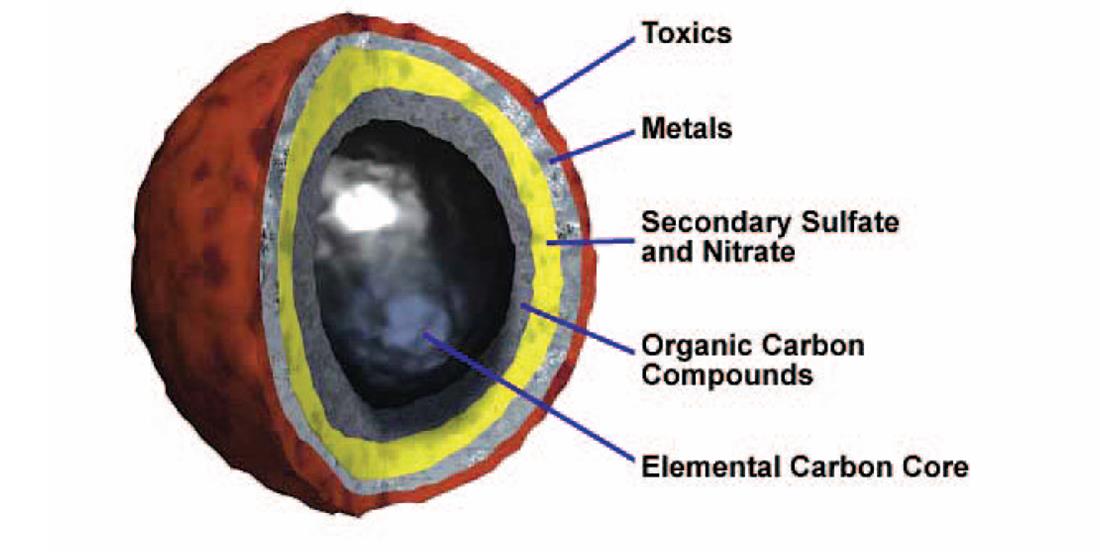
Fine particles in the air (particularly those smaller than 2.5 micrometers in diameter) cause a multitude of health problems, ranging from difficulty kid with asthma inhalerbreathing and asthma to heart attacks and premature death in people with heart or lung disease.  The question has been whether or not cleaning the air any further makes a difference.  This type of air pollution has decreased substantially since 1980, but only smaller gains have been made since 2000.

A new study by researchers at the Harvard School of Public Health shows that even the modest gains made in reducing particulate matter between 2000 and 2007 are adding years to people’s lives.  Life expectancies were shown to increase .35 years in 545 US counties.

Not everyone is equally impacted, so some demographics are reaping larger benefits through cleaner air.  The young, the old and those who exercise outdoors are most likely to be negatively impacted by fine particles in the air.

In Texas, our port communities endure especially high concentrations of particulate matter.  Public Citizen is working to force the Port of Houston clean up.  Replacing or retrofitting the old, highly polluting trucks that haul goods from the port to nearby warehouses would do a lot to improve the health of surrounding communities.  The Texas Emissions Reduction Plan (TERP) provides funds for just this purpose.  Those investments are saving lives, but are often underutilized by truck owners.

Read Full Post »

Perry Appointees Smitherman, Nelson, Anderson protect consumers from energy efficiency

There is a disturbing trend emerging in Texas. A once successful consumer-oriented program is floundering because of a deficit of perspective behind the dais at the PUC.

The Public Utility Commission of Texas proposed adopting an update to the state’s energy efficiency program that would cap the amount of money utilities could spend on programs that reduce the energy bills for homes and businesses.

Under the rule, utility expenditures on energy efficiency would be limited to one tenth of one cent per kilowatt-hour. That’s $0.001, which would amount to around a dollar a month for the average home. It’s worth pointing out that there are no cost caps for other energy resources, just the cheapest one.

This bears repeating: the PUC does not want utilities to spend more money to fund programs that make Texas homes more energy efficient and reduce their utility bills.

During today’s hearing, it was abundantly clear that Governor Perry’s appointees to the commission have folded to industry pressure and adopted the bizarre world view that energy efficiency costs consumers too much money. As evidence, in addition to only considering utility industry estimates on the cost of future efficiency resources, they frequently alluded to a report released this week by the conservative and industry-friendly Texas Public Policy Foundation which made unsubstantiated claims that the consumer benefits of energy efficiency programs could not only be less than currently estimated, but actually negative (page 3). (A more detailed critique of their report is coming).

At a workshop earlier this month, the commissioners only allowed industry representatives to present information. No consumer advocates, environmental groups, no academics were allowed to present and even the comments by ACEEE seem to have been ignored.

It’s now time for the Legislature to be the grownups in the room (more…)

Read Full Post »

Great news from the Edmunds.com Green Car Blog:

Southern California Port Pollution Drops Dramatically Under Clean-Truck Program

port-of-los-angeles.jpgA clean-trucks program at the ports of Los Angeles and Long Beach in California has shown quick progress, with an 80 percent decline in diesel emissions expected by the end of 2010 — a year ahead of schedule.

“This is the most successful effort to clean a port in the world,” said Los Angeles Mayor Antonio Villaraigosa. “I mean, think about it. Nobody thought it was possible to retrofit 5,000 trucks in a year, and we’re at 5,500 and growing.”

So far, the program has reduced diesel truck emissions at the Los Angeles port (pictured) by 70 percent compared with 2007 levels, Villaraigosa said. Long Beach has seen similar results, according to Mayor Bob Foster.

The program is part of a larger effort to reduce diesel emissions at the port complex, one of the major sources of pollution in Southern California. Increased rates of cancer, asthma and other serious health ailments for area residents have been attributed to port pollution.

Villaraigosa and Foster unveiled the promising figures during a briefing at the Port of Long Beach on Thursday, when U.S. EPA Administrator Lisa Jackson announced $26.5 million in federal grants for clean-air programs throughout Southern California.

This is really great news for our port cities, whose dirty air is tied at least partially to the pollution from the ports.  Diesel emissions also contain black carbon particles, which can have a much greater effect on the climate than CO2, methane, or any of the other greenhouse gases.  Also, as a particulate, it can get lodged in your lungs and cause all sorts of respiratory ailments.  Cutting black carbon should be a major goal, and one which the Ports of LA and Long Beach seem to be tackling very well.

Farbeit from me to advocate that Texas ever in any way should try to be like California, (*smirk*) but this shows that specific programs designed to tackle specific problems can be very effective.

LA and Long Beach Together– Now You Know You’re In Trouble…”

Read Full Post »

Do you like clean air?

Do you like clean air for KIDS?

Seems like the rest of the state does, too.  According to TCEQ, a program to retrofit school buses around the state has been able to retrofit 2300 buses statewide. Even more amazing was the demand for the program exceeding its allotment by 40%, meaning for every 3 school buses we wanted to fix, we could only fix 2.   However, that means that for tens of thousands of kids, they are now riding in much better buses, and those school districts who gut put on the waiting list just have to wait for more money from the Legislature to get their buses clean, too.

A demonstration of how much pollution is prevented on a school bus

Local ISDs, schools, parents, and kids love this program because of how much it reduces toxic air pollution from our buses, and does so without taking money out of the classroom.  Local businesses and residents should love it because it is making their communities cleaner.  This is a win for air quality, a win for school districts, and most importantly, a win for children’s health.

More video, a press release, and gory details after the break: (more…)

Read Full Post »

…ye who enter the Turk plant.Turk Site

Last Thursday in Hope, Arkansas there were two meetings. One was widely attended, the other was not… mostly because hardly anyone had heard of it.

They hadn’t heard of it because it snuck in under the wire, with barely (if at all) the proper notices and alerts. It was a quorum court meeting, and on the agenda was a motion to approve a bond issuance “not to exceed” $185,000,000. Aside from one dissenting voice of sanity, the motion was passed.

It was passed without allowing anyone to comment, and upon only one reading.

Hempstead County and Arkansas Electric Cooperative Corporation are now investors in the Turk Coal Plant, meaning residents and taxpayers are now on the hook for nearly 200 million dollars.

Why do they need this public backing? Coal’s dirty little secret is that it is on the way out, and everybody knows this. Power plants are constructed with a budget to pay off the cost of the plant over 20 or 30 years. Coal will soon become so economically unviable that these plants will be forced to close, leaving taxpayers and bondholders to pick up the check. How incredibly irresponsible.

Meanwhile, across town at the University of Arkansas Community College at Hope, I and a few hundred other people were cramming ourselves into the library to listen and submit comments to the Arkansas Department of Environmental Quality (ADEQ). They were holding a public hearing regarding mercury and other HAPs that the Turk plant will be emitting.

Employees from the plant were there, wearing florescent yellow t-shirts that said “Support Turk” on them. I wonder how many of those “employees” were contractors: temporary workers who don’t even live in Hempstead County, or possibly even Arkansas. Adding evidence to my suspicions was a documentary film maker present at the hearing who had filmed most of them leaving the plant earlier that day.

There was one local employee of SWEPCO who did give comments, and spoke at length about how much they all needed the plant because he had six kids and he needed his job with SWEPCO to take care of them.

He got the loudest applause of anyone the entire evening.

This same, poor, hard-working employee so concerned with supporting his kids has no concern for the destruction coal is wrecking on the futures of those same children. And not just the future of their health, but their economy too. Carbon legislation is going to happen during the next president’s term, and it will make coal so expensive that many coal plants will have to be shut down. Why, then, are we building new coal plants?

(Read the Entire Original Post on Coal Block)

EDITOR’S NOTE: This reminded me a lot of a BBC special I saw about Chinese coal plants and how the people knew the coal was making them sick but felt they needed the jobs.  Watch it below.  ~~Citizen Andy

(BBC report on a coal plant in China)

Read Full Post »

When I think of cliché images from grade school, I think of two things—apples and big, yellow school buses. Apples aside, school buses are a typical part of the grade school experience. Unfortunately, school buses are also some of the oldest and most polluting vehicles on the roads today.

School buses emit toxic soot, which can lead to asthma, bronchitis, headaches—and over time—cancer, heart disease and premature death for those exposed to diesel pollution. Children are among those most at risk of the hazards of diesel exhaust. While thousands of kids ride school buses every day in the state of Texas, nearly 90% of Texas’ 37,000 school buses emit unhealthy toxins into the bus cabin. In fact, these air toxins are up to four times higher inside the bus cabin than pollution levels outside the school bus.

Luckily, the Texas Commission on Environmental Quality (TCEQ) received $8.8 million from the EPA to provide grants to Texas’ school districts. These districts can use this money to purchase anti-pollution equipment, such as particulate filters, to reduce the level of toxic emissions released from the buses.

Check out this video where the Ohio Environmental Council (OEC) tests the tail pipes of a retrofitted bus with a conventional bus. The retrofitted bus has a diesel particulate filter (DPF) which reduces diesel soot by as much as 90%.


-Cyndi Goodson, Intern

Read Full Post »

Follow

Get every new post delivered to your Inbox.

Join 3,143 other followers