Feeds:
Posts
Comments

Archive for the ‘natural gas’ Category

It wouldn’t be a Texas legislative session without some truly backwards bills.  Today we have House Bill 2026 by freshman Representative Sanford of Collin county that would eliminate our state renewable energy goals.

BeachWindIn 1999, the state of Texas made a commitment to renewable energy in the form of the renewable portfolio standard (RPS).  That decision played a major role in spurring the development of the wind industry in Texas.

We have now exceeded the renewable energy goals established in the 2005 update to the RPS and Texas has more wind energy capacity than any other state.[1]  On the surface that may seem to indicate that the RPS has been 100% successful and is no longer needed, but that isn’t the case.

One of the major reasons for establishing the RPS was to encourage diversification of our energy sources, which ultimately makes us more resilient to physical and economic forces that can impact the availability and price of energy sources.  While wind energy has increased from zero percent when the RPS was first established to around ten percent today, other renewable energy sources are still largely absent from our energy portfolio.

With more solar energy potential than any other state, Texas should be the center point of the solar industry as well.[2]  Instead we are lagging behind states with far less solar resources, such as New Jersey and Pennsylvania,[3] and are paying the price in missed opportunities for job growth and new generation capacity that can produce during peak demand.

Solar companies invest in California and other states, because smart policies created attractive markets in those places.  California has 1,505 solar companies compared to Texas’ 260. Even New Jersey has more, with 382.[4] Texas should be doing more, not less to attract solar businesses to our state.

SolarInstallProjections showing that we won’t have enough electricity to meet demand by 2020.[5]  The maximum wholesale price of electricity has been set to triple by 2015, without even determining what the cost to consumers will be.  There have been workshops and meetings to consider the prospect of implementing a capacity market in Texas, which would raise costs even more.  But little time has been spent considering simpler, cheaper solutions such as expanding efficiency and demand response (where customers get paid to reduce there energy usage for short periods of time when demand is high) and getting more solar capacity built in Texas.  Solar is most productive when we need it the most – on hot, sunny afternoons.

The RPS should be retooled to focus on solar and other renewable energy resources that are most capable of producing during peak demand.  Millions of dollars could be saved in the wholesale electric market if we had more solar panels installed.[6]

Solar, like wind, also has the benefit of needing very little water to operate.  Solar photovoltaic (PV) installations need an occasional cleaning to keep performance high, but the amount of water need is minimal in comparison to fossil fuel options.  Coal-fired generators need billions of gallons of water to operate each year[7] and while natural gas-fired generations consume less water than coal-fired generators, they still use more than solar, even without accounting for the millions of gallons of water used to extract the gas with hydraulic fracturing.[8]  Including more renewable energy in our portfolio will make our electric grid less vulnerable to drought[9] and will free up water supplies that are desperately needed for human consumption and agriculture.

Abandoning the RPS now would send a terrible signal to renewable energy companies that are deciding where to establish their businesses.  Our state made a commitment that isn’t set to expire until 2025 at the earliest.  There is no good reason to abandon the policy now.  We should be moving in the opposite direction of what is proposed in HB 2026.  Instead of giving up on a policy that has been successful, we should be looking at ways to build on that success and benefit our state.


[1] AWEA. “Wind Energy Facts: Texas.” Oct 2012. http://www.awea.org/learnabout/publications/factsheets/upload/3Q-12-Texas.pdf.

[2] NREL. “U.S. Renewable Energy Technical Potentials: A GIS Based Analysis.” July, 2012. Pg. 10-13. http://www.nrel.gov/docs/fy12osti/51946.pdf.

[3] SEIA. Solar Industry Data. http://www.seia.org/research-resources/solar-industry-data#state_rankings.

[4] SEIA. State Solar Policy. http://www.seia.org/policy/state-solar-policy.

[5] “Report on the Capacity, Demand, and Reserves in the ERCOT Region.” Dec 2012. Pg 8. http://www.ercot.com/content/news/presentations/2012/CapacityDemandandReservesReport_Winter_2012_Final.pdf.

[6] Weiss, Jurgen, Judy Chang and Onur Aydin. “The Potential Impact of Solar PV on Electricity Markets in Texas.” The Brattle Group.  June 19, 2012. http://www.seia.org/sites/default/files/brattlegrouptexasstudy6-19-12-120619081828-phpapp01.pdf.

[7] “Environmental impacts of coal power: water use” Union of Concerned Scientists http://www.ucsusa.org/clean_energy/coalvswind/c02b.html

[8] http://www.ucsusa.org/clean_energy/our-energy-choices/energy-and-water-use/water-energy-electricity-natural-gas.html

[9] Wu, M. and M. J. Peng.  “Developing a Tool to Estimate Water Use in Electric Power Generation in the United States.” Argonne National Laboratory – U.S. Department of Energy. http://greet.es.anl.gov/publication-watertool.

Read Full Post »

No Bailout for Energy Future HoldingsEnergy Future Holdings, formerly TXU, of Dallas might be looking for a handout – from you.

Back in January, Moody’s changed Energy Future Holdings Corp’s rating outlook to negative and made it impossible to ignore what anyone who had been paying attention to the company’s quarterly reports already knew: Energy Future Holdings is on a path heading towards bankruptcy.  Now there are rumors floating around that the company may ask the Texas Legislature to approve a public or ratepayer-funded bailout.

Neither option would benefit majority of Texas citizens and we urge everyone to sign our petition in opposition to any bailout proposal for Energy Future Holdings

You might wonder how the profitable TXU end up as the failing Energy Future Holdings.  The answer is twofold.

First, in Texas, electricity prices are set based on the price of natural gas.  When natural gas prices were high, this meant that coal-fired power plants could reap additional profit.  This made TXU an attractive acquisition because the company owned many coal-fired power plants.  But now, natural gas prices have plummeted and those same coal-fired power plants, especially the oldest and most inefficient, are dragging Energy Future Holdings down.  The private equity investors made a big bet on the wrong energy source.

The second problem is that Energy Future Holdings was acquired in a leveraged buyout.  What that means is that instead of the investors paying the full amount to buy TXU, they financed the deal partially through loans to the company.  While the company has done a good job of staving off the day of reckoning by refinancing many of those loans, many are approaching maturity and additional refinancing options are limited by the negative prospects for the company.

So, while TXU was a profitable company with relatively low debt, Energy Future Holdings is an unprofitable company (because of low natural gas prices) with massive debt (because of the leveraged buyout) that is approaching maturity.  This isn’t a good combination and some people are going to lose money on the deal (many already have).  However, those losses shouldn’t be placed on Texas taxpayers or ratepayers.

Tell your state representatives and senators that you oppose bailing out failed corporations.

Most of us have to live with the consequences of our bad decisions.  Help us make sure that Wall Street and private equity firms must do the same.

Read Full Post »

StateImpact is a collaboration among NPR and local public radio stations in eight pilot states to examine issues of local importance. The project seeks to inform and engage communities with broadcast and online news about how state government decisions affect people’s lives.

In Texas, a collaboration between local public radio stations KUT Austin, KUHF Houston and NPR with reporters Mose Buchele, Terrence Henry and Dave Fehling traveling the state, the focus will be on reporting on how energy and environmental issues affect you.  Click here to read their reports or listen to them on NPR member stations.  Below are links to just a few of the stories StateImpact – Texas has reported on recently.

Read Full Post »

Public Citizen was lucky enough to have been invited to the release of the new study Flowback: How Natural Gas Drilling in Texas Threatens Public Health and Safety.  We had to split the press conference into three different pieces to get them uploaded, but here we get started with Sharon Wilson and State Rep. Lon Burnam of Ft Worth.

[http://www.youtube.com/watch?v=5byZatNW85o]

After that, several other folks dealing with the health impacts of hydraulic fracturing stepped up to the mic: Calvin Tillman, the Mayor of Dish, TX, a city at the heart of the frack debate, Tammi Vajda a resident of Flower Mound and Sister Elizabeth Riebschlaeger who lives on the Eagle Ford Shale, who absolutely brought the house down.

The final clip features my remarks, which you can mostly fast forward through to get to  Alyssa Burgin of the Texas Drought Project.

We heartily recommend you read the report and call your legislators about the problems Texas faces with fracking. And special thanks to Donna Hoffman at the Sierra Club who took this video.  You can check out their blog at texasgreenreport.wordpress.com

###

By promoting cleaner energy, cleaner government, and cleaner air for all Texans, we hope to provide for a healthy place to live and prosper. We are Public Citizen Texas.

Read Full Post »

A new study from Cornell Professor Robert Howarth shows that natural gas from shale beds extracted through hydraulic fracturing or “fracking” has the same effect on the climate as burning coal, tarnishing one of the natural gas industry’s major claims of being a less polluting and more climate friendly fossil fuel.

A megawatt of electricity from a natural gas power plant will generally produce anywhere from 1/3 to 1/2 of the greenhouse gas emissions, specifically CO2, compared to a megawatt from a coal plant.  And since coal plants have rightfully been targeted as the biggest climate polluters the natural gas folks have been positioning themselves as the cheaper, cleaner alternative.

Not so fast, since methane, the main component of natural gas, is also a greenhouse gas that the EPA rates as having 20 times the heat-trapping capacity of CO2.  Since so much methane is released into the atmosphere during the fracking and drilling process, Howarth’s study questions that assumption, implying the climate benefits are minimal, if they even exist.  From The Hill:

More broadly, many gas supporters see domestic reserves as a “bridge” fuel while alternative energy sources are brought into wider use.

Howarth’s study questions this idea.

“The large GHG footprint of shale gas undercuts the logic of its use as a bridging fuel over coming decades, if the goal is to reduce global warming,” the study states.

But [natural gas industry spokesmen] also note that gas has other advantages over coal as an energy source, due to its lower emissions of conventional pollutants including nitrogen oxides and sulfur dioxide.

The study cautions that the research is not meant to justify continued use of oil and coal, but rather to show that using shale gas as a substitute might not provide the desired checks on global warming.

Howarth and Cornell engineering Prof. Anthony Ingraffea, who also worked on the study, acknowledged uncertainties in the nexus between shale gas and global warming in a presentation last month.

“We do not intend for you to accept what we reported on today as the definitive scientific study with regard to this question. It is clearly not. We have pointed out as many times as we could that we are basing this study on in some cases questionable data,” Ingraffea said at a mid-March seminar, which is available for viewing on Howarth’s website.

“What we are hoping to do by this study is to stimulate the science that should have been done before, in my opinion, corporate business plans superceded national energy strategy,” he added.

This is an incredibly important discussion to have, especially given the impacts that fracking is having on our air, water, health, and our state budget.

UPDATE: The Texas Energy Report got some good response from around the Capitol and we couldn’t help include it:

“Sounds like the coal industry may have funded it,” joked Sen. Troy Fraser (R-Horseshoe Bay), author of Senate Bill 15, which would create a 20-year energy and environmental policy council for Texas.

“The direction they’re going is exactly opposite of what we hear that natural gas is cleaner with less greenhouse emissions. We’ve always worked under that premise,” said Fraser who is also chair of the Senate Natural Resources Committee.

***“I would like to see it. I don’t know what they’re drawing their conclusions on. I would say it’s interesting – significant I don’t know,” said Rep. Jim Keffer, chairman of the House Energy Resources Committee.  “We’ll have to take a look at it. I’m sure there’ll be another side.”

Keffer is the author of a bill to require oil and gas companies drilling for shale gas to disclose the contents of chemicals they inject into the ground with water and sand during fracking. Fracking involves high-pressure injections of water into the ground to fracture rock formations and release gas.

The Environmental Defense Fund of Texas, which has embraced Keffer’s bill as the most significant fracking disclosure measure in the nation, said more work is needed to determine the air quality implications of fracking.

“Though we have questions about the study’s emissions estimates, it nevertheless highlights the importance of getting better data,” said Ramon Alvarez of the EDF.

###

By promoting cleaner energy, cleaner government, and cleaner air for all Texans, we hope to provide for a healthy place to live and prosper. We are Public Citizen Texas.

Read Full Post »

Texas oil and gas officials will plead with House Appropriations Committee members next week that the industry needs its $1.2 billion annual tax break, more than children need fully funded schools or the elderly need nursing homes to stay open.

The committee will take testimony on April 14 from industry representatives and others on the controversial tax break for producing “high-cost” shale gas. The tax incentive has been for a controversial drilling method known as fracking in which rock formations are broken with high-pressure water injections. It has come under fire in recent weeks as lawmakers grapple with a budget shortfall estimated at $27 billion.

As it would happen, Public Citizen will be participating in a press conference that same morning of Thu Apr 14, at 10am, on the South Capitol steps, with great folks actually living up on the Barnett Shale and who have been documenting the health impacts. If you’d like to show up to show solidarity both for folks living with drilling and to support getting rid of this corporate welfare tax loophole in favor of fixing our budget deficit, feel free to come by.

For folks living in the Barnett Shale region of the state, leaving this tax break in place would just add insult to injury.  Many in North Texas are grappling with environmental impacts from the natural gas drilling that they believe are adversly impacting their water, their air quality and their health.  To suffer the economic impacts of cuts to vital and important services while giving this highly lucrative industry a corporate welfare “tax break” would be too much to ask of these Texas citizens.

The state has been giving out this ‘high-cost’ gas exemption to wells that only cost $24,000 and above to drill, while a leaked interim report from the Legislative Budget Board that was never published shows that eliminating the oil and gas industry’s tax break would bring in $2.4 billion to the state per budget cycle.

It is going to be an interesting hearing.

Read Full Post »

In another effort to stave off critics who call a $1 billion annual tax break for high-cost gas producers in Texas outrageous, a study paid for by the industry has emerged intended to scare folks into believing that for every $1 the state spends in tax breaks it gets back about $4 in related economic activity and that will disappear if we take their tax break away.

Former Deputy State Comptroller and current lobbyist Billy Hamilton has produced an industry-backed study for the American Natural Gas Alliance on what they claim the impact of the withdrawal of the tax incentive would have on Texas.   The  industry is rightly concerned that the tax break would come under attack as the state tries to close a $27 billion budget gap.

Hamilton’s analysis concludes that ending the tax break would result in an immediate loss in 2012 of 35,000 and $3.8 billion in economic output, estimating Texas would lose 94,400 jobs each year and $10.4 billion each year in economic output.

The industry has been saying for some time that if Texas dumps this tax break, states like Pennsylvania will get the driller’s business, but Texas has the largest reserve of natural gas in the nation and it is hard to believe the industry would pull up stakes to move elsewhere.  It is not like they aren’t making plenty of money here in Texas.  And the state hasn’t seemed concerned that they are losing renewable energy manufacturing jobs by not providing that industry with tax breaks/incentives, so no sympathy here.

Worthy of discussion here is exactly who is getting these state tax cuts, and according to the Houston Chronicle, it’s mostly companies from out of state.

Not surprisingly, the top five firms that saved the most as a result of the exemption represent the largest oil and gas producers in Texas:

Oklahoma-based Devon Energy, saved $113.8 million in fiscal year 2010 under the exemption. Devon reported net earnings last year of $4.6 billion.

Next on the list was XTO Energy Inc., a subsidiary of Exxon, which saved $113.2 million on its “high cost” gas operations in Texas. XTO reported $2 billion in net earnings last year. Others who received top financial benefits were: Canadian-based EnCana, which saved $60.6 million, Oklahoma-based Chesapeake Energy, which saved $59.4 million and Enron spin-off EOG Resources of Houston, with $58.6 million in savings.

These tax breaks really amount to little more than subsidies of some of the most profitable companies around. It would be one thing if these were Texas companies, but when Texas taxpayers are subsidizing Oklahoma and Canadian companies, something is very, very wrong. We can expect the corporate welfare queens to cry when their gravy train is threatened, but their protected status at the Legislature, thanks to millions in campaign contributions to Texas politicians, insures that they won’t actually be in danger of cuts.  Not like our schools, or grandma’s nursing home. Perhaps if our teachers and the elderly were represented by out of state special interests who can dip into their huge profits to bribe donate to politicians, they could be safe from cuts, too.

If, in fact, there are no sacred cows as the legislature tries to deal with the budget deficit, then this tax break needs to be on the table too.

Read Full Post »

Map of Texas highlighting counties served by t...

Texas counties served by AACOG

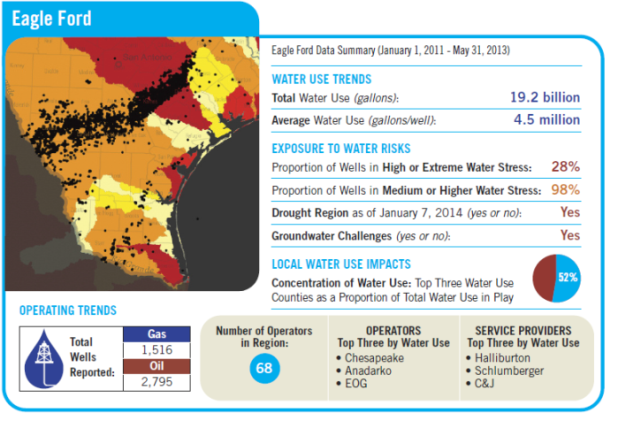
San Antonio, which sits just north of what many say is one of the largest oil and gas reserves in the country known as the Eagle Ford, is a heart beat away from violating federal air quality standards for ground-level ozone. It seems it is only a matter of time before the increased emissions from the Eagle Ford could drift up on prevailing winds, pushing the area out of compliance.

With drilling expected to increase over the next decade, those responsible for this region’s air quality say the increased pollution could make it difficult to remain under federal limits.  In the past decade, San Antonio’s ozone levels have decreased by 13 percent while its population has increased 13 percent, managing to stay just ahead of federal standards.  However, once a region falls out of compliance, efforts to get back in are time-consuming, politically unpopular and expensive.

It is going to be a tough contest for the environment to compete with the hype about the economic benefits (which always fail to take into account the economic costs to the region for these types of activities – increased health care costs, decreased quality of life costs, and the cost of coming back into compliance with federal air quality standards).

According to a study by the Center for Business Research at the University of Texas at San Antonio and commissioned by America’s Natural Gas Association:

Activity in the Eagle Ford in 2010 alone generated more than $2.9 billion in total revenue, supported roughly 12,600 full-time jobs and provided nearly $47.6 million in local government revenue.

Last year there were 72 active oil leases, some of which may have more than one well, and 158 producing gas wells.

However, the number of drilling permits issued by the Texas Railroad Commission, which regulates the state’s oil and gas industry, has reached 1,132 as of February. In just one year, the output of crude oil, condensate and other liquids nearly quadrupled to 3.9 million barrels.

And the boom has just begun; the UTSA study forecasts that 5,000 more wells could be drilled by 2020.

So far, no regulatory agency has begun comprehensive air monitoring in the Eagle Ford area, meaning there’s no baseline to measure any increased pollution.

Models for other regions of the country show drilling and related emissions can increase ground-level ozone significantly and the sheer volume of drilling that’s expected over the next decade, will require Alamo Area Council of Governments (AACOG) to add a new category, for drilling and recovery, into its air pollution forecasting models.

The San Antonio Express News writes about the area:

The Eagle Ford shale covers a swath roughly 50 miles wide and 400 miles long, from Maverick and Webb counties sweeping north and east up to Leon and Houston counties, but not including Bexar County. Unlike other large shale formations that have recently been tapped, the Eagle Ford includes a good deal of oil, mostly along the northern reach.

Because oil prices are high and natural gas prices low at the moment, there’s more activity in the oil region at this time, industry analysts say.

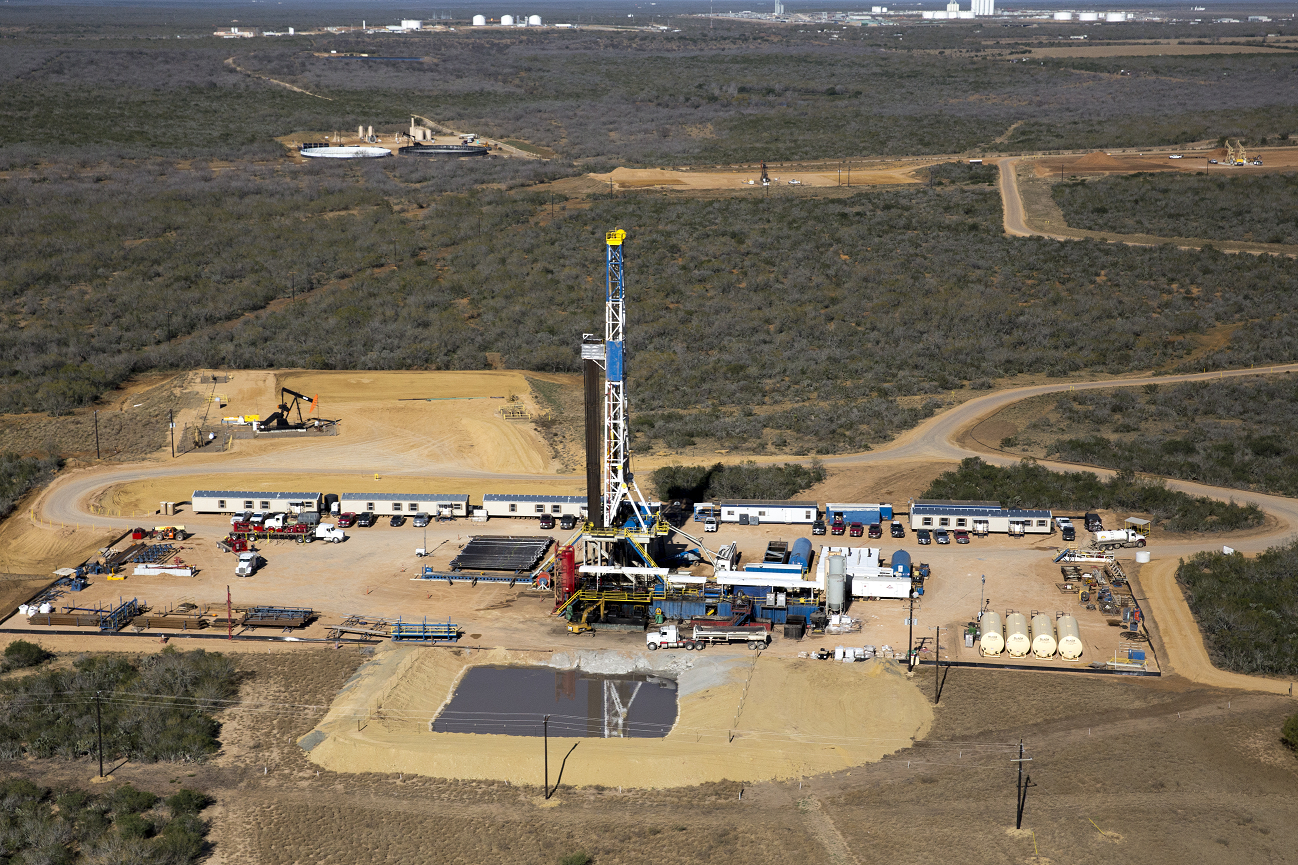
Drilling has occurred in South Texas for decades, but the oil and gas trapped in the deeper, dense rock layers once were too expensive to reach. Advances in drilling technology, most notably hydraulic fracturing and horizontal drilling, have allowed an unprecedented amount of hydrocarbons to be extracted.

“Fracking,” as it’s known, forces millions of gallons of water, mixed with sand and a variety of chemicals, into shale formations, forcing open fissures to allow the natural gas and oil to escape. Horizontal drilling allows for one hole to be drilled vertically, then one or more pipes to branch out into the shale.

Together, these techniques have spawned a natural gas boom in the country, with some industry experts estimating a 100-year supply of a fuel that burns more cleanly than coal and could help push the country toward energy independence.

In other parts of the country the boom is well under way, and as drilling has increased, so have complaints about its environmental impacts, most notably drinking water contamination.  While it remains unclear whether fracturing has contaminated drinking water, the EPA last month agreed to study the entire life cycle of the gas production process, to determine how it can affect drinking water supplies.

While water has gotten the lion’s share of the attention thus far, air quality concerns also are increasing and seem to be the area of most concern to San Antonio as they look toward increased drilling activities in the region.  Let’s hope they can stay ahead of this new boom.

Read Full Post »

Are desperate school boards having to make decisions about the fiscal health of their districts now vs the long-term health of their charges in the future?

Mike Norman, the editorial director of the Star-Telegram/Arlington and Northeast Tarrant County, writes about the precarious lab rat position of citizens in the Barnett Shale.  Click here to read his editorial.

Read Full Post »

The Texas Supreme Court, the state’s highest civil court, will hear a controversial case over whether a company that plans to build pipeline to carry carbon dioxide and natural gas from Louisiana to site south of Houston qualifies as a “common carrier,”  giving it the power of eminent domain. That means if they want to come through your property and you don’t want to sign the offer they make on your property, they can begin condemnation procedures to just take your property for what they think it is worthAnd that just ain’t right.

The case is scheduled for oral arguments before the Texas Supreme Court on April 19th.  At issue is whether the  Jefferson County trial court ruled incorrectly when it said Denbury was a common carrier (meaning besides the company’s private, for-profit use, the line would be available for public use as well) and therefore could force private landowners to sell right-of-way so the 320-mile stretch of pipe could be built.

The appeals court upheld the trial court.

The industry is watching the case closely, and so should you, as lawmakers this session are considering emergency legislation that would strengthen the position of private property owners in eminent domain cases.  If the Supreme Court rules in the company’s favor and the legislation is passed, we could see a whole network of new pipelines snaking across areas of northeast and east Texas as natural gas companies expand their fracking projects and with a Canadian company pushing the tar sands pipeline from Western and Central Canada, down through the middle of the country on its way to crude refineries in the Houston area.  And they’ll be singing:

So Lord help the sister, who comes between me and my pipeline terminus.

To see the court documents filed in the case, click here.

###

By promoting cleaner energy, cleaner government, and cleaner air for all Texans, we hope to provide for a healthy place to live and prosper. We are Public Citizen Texas.

Read Full Post »

Even CSI is talking about fracking

According to the Fort Worth Star Telegram, the Barnett Shale natural gas fields of Denton and Wise counties are one of five finalists to be considered for a case study as part of the Environmental Protection Agency’s (EPA) examination of hydraulic fracturing.  

That is not a competition I would want to win, but if I were facing possible contamination of drinking-water supplies from oil and gas industry operations in areas where drilling and hydraulic fracturing have already occurred, I’d want to know what the extent of that pollution was.

Nevertheless. a Texas organizer for the Earthworks Oil and Gas Accountability Project, expressed concern Wednesday about the study, stating she felt EPA would be using “people as guinea pigs.”  She called for the leaders in those Texas communities to consider placing a moratorium on hydraulic fracturing until after the study is complete (like that is going to happen–sadly probably not) and use some other community for the study. (more…)

Read Full Post »

Drilling companies injected more than 32 million gallons of fluids containing diesel into the ground during hydraulic fracturing operations from 2005 to 2009, according to federal lawmakers.  About a third of the 32 million gallons was straight diesel fuel, with 49.8% of the 32.2 million gallons of fluid containing diesel injected into Texas wells.  Texas lead the 19 states using diesel as a fracking fluid, followed by Oklahoma at 10% of the 32.2 million gallons.

Hydraulic fracturing is a drilling technique that involves pumping millions of gallons of water mixed with sand and chemicals into underground formations to release greater quantities of gas and oil. The technique dates back several decades, but it has drawn new scrutiny from the public and regulators as its use has grown in recent years.

Concerns include the potential for the chemicals to get into drinking water or for natural gas to migrate into water wells.  While the industry says that such an incident rarely happens and can easily be avoided, some homeowners near Fort Worth would probably wouldn’t buy that claim.

Most hydraulic fracturing fluid uses water as its primary component, but in formations where water is absorbed too easily – such as in certain kinds of clay – diesel is used as an additive.

The EPA and industry agreed in 2003 that diesel wouldn’t be used in hydraulic fracturing jobs in coal bed methane formations, because drilling in those formations tends to be closer to drinking water sources.  At this time, none of the companies that used diesel as a fracking fluid could provide data on whether they performed hydraulic fracturing in or near underground sources of drinking water.

Lawmakers are asking the EPA to look at diesel use in its study into the safety of hydraulic fracturing.

###

By promoting cleaner energy, cleaner government, and cleaner air for all Texans, we hope to provide for a healthy place to live and prosper. We are Public Citizen Texas.

Read Full Post »

After Lt. Gov. David Dewhurst‘s remarks, made during his session-opening luncheon just a week ago,  about his plans to push for “regulatory and fiscal incentives” to phase out the heavy-polluting coal plants that were built back to the 1970s and replace them with natural gas plants, the Lt. Governor is now back pedalling saying he’s NOT pushing for fast shutdown of Texas’ aging or inefficient coal-fired power plants.  Instead, he wants to gradually increasing the use of cleaner-burning, Texas natural gas through market-based incentives.dewhurst (coal vs gas)

Dewhurst backed off his earlier stance after the Dallas Morning News suggested the plan would mean lights out for Texas, since those old plants account for some 8,300 megawatts.

Coal vs gas could be yet another controversy as the 2011 session heats up. There’s pressure from the EPA and elsewhere for Texas to lower its pollution levels, and the feds show little sign of backing away from their efforts to regulated greenhouse gas emissions.

One thing is obvious, Dewhurst doesn’t want to caught in crossfire of the coal vs. gas battle.  Instead, he is falling back on standard industry language, meant to placate everyone.  “In order to meet our current energy demands and fuel our economy, Texas will continue to rely on the use of coal, wind, nuclear and solar power, in addition to natural gas, as part of our diversified energy portfolio.”

Oh for the days when occasionally a politician would take a position – right or wrong, popular or unpopular – and stand by it.

###

By promoting cleaner energy, cleaner government, and cleaner air for all Texans, we hope to provide for a healthy place to live and prosper. We are Public Citizen Texas.

Read Full Post »

Barnett Shale

The Texas Railroad Commission (RCC) will hold a special hearing January 10th to look into the complaints of methane in two Parker County drinking water wells that prompted the U.S. Environmental Protection Agency (EPA) this week to order a natural gas drilling company to take steps to remediate the problem.  The RRC has not yet  posted the starting time or place but we will let you know as we hear more.

Both the Railroad Commission and Range Resources, which drilled the Barnett Shale gas wells near the two homes affected by the methane-laden water, accused the EPA of acting in haste when they issued an order of remediation late Tuesday.  Both the RRC and Range Resources claimed there was insufficient evidence to blame drilling operations for the situation.  But critics of the drilling operations in North Texas suggested that the Railroad Commission was acting more as a booster than a regulator of the natural gas industry.

In its emergency order, the EPA said that its testing suggests that the gases found in the water and gases from Range’s wells “are likely to be from the same source.” The EPA also pointed out that there were no reports of methane in either of the two water wells that were drilled in 2002 and 2005 until after Range sunk its nearby gas wells in 2009.

In the Railroad Commission’s response to the EPA order, all three commissioners suggested the federal agency was needlessly overstepping its authority. And the commission included a detailed timeline showing the progress of its own investigation into the affected drinking water wells.

If you live in the Barnett Shale region and are concerned, we urge you to attend this hearing.  We will post details about the hearing as soon as they are available.

If you are concerned that the RailRoad Commission is not being protective of the health and well-being of Texans, consider attending the Sunset Advisory Commission‘s hearing on the RRC and the Texas Commission on Environmental Quality next week, December 15th.  See our earlier blog for details.

###

By promoting cleaner energy, cleaner government, and cleaner air for all Texans, we hope to provide for a healthy place to live and prosper. We are Public Citizen Texas.

Read Full Post »

With states scrambling to align their own rules with U.S. EPA‘s new regulations, which are set to take effect on Jan. 2, 2011 and require regulators to start issuing Clean Air Act permits next year for large stationary sources of greenhouse gas emissionsTexas is now the lone holdout, according to an analysis  by the  National Association of Clean Air Agencies (NACAA). Click here to see a copy of the analysis. (more…)

Read Full Post »

Older Posts »

Follow

Get every new post delivered to your Inbox.

Join 3,136 other followers