Feeds:
Posts
Comments

Archive for the ‘Nuclear’ Category

Thirty-seven clean energy groups submitted a formal petition for rulemaking to the federal Nuclear Regulatory Commission seeking adoption of new regulations to expand emergency evacuation zones and improve emergency response planning around U.S. nuclear reactors.  If you would like to sign on as a co-petitioner, click here.

Calling on the NRC to incorporate the real-world lessons of the Fukushima nuclear disaster, the proposed rules would expand existing emergency evacuation zones from 10 to 25 miles around nuclear reactors and establish a new zone from 25-50 miles around reactors for which utilities would have to identify and publicize potential evacuation routes. Another improvement would require utilities and state and local governments to practice emergency drills that includes a natural disaster that either initiates or occurs concurrently to a nuclear meltdown. Currently, utilities do not have to show the capability to conduct an evacuation during a natural disaster—even though, as seen at Fukushima, natural disasters can cause nuclear meltdowns. The petition would also expand the “ingestion pathway zone,” which monitors food, milk and water, from 50 miles to 100 miles around reactors.

Click here to find out how close you live to a nuclear power plant in the United States.

“80% of the airborne radiation released from Fukushima went directly over the Pacific Ocean,” explained Michael Mariotte, executive director of Nuclear Information and Resource Service, which initiated the petition. “Even so, the Fukushima evacuation zone extended more than 25 miles to the northwest of the site, and the NRC and U.S. State Department both recommended that U.S. citizens within 50 miles of Fukushima evacuate. Such evacuations could not be effectively conducted in the U.S. under current emergency planning regulations. We need to be better prepared and we can’t rely on favorable wind patterns to protect the American people.”

The NRC has relied primarily on the 1979 Three Mile Island accident and subsequent computerized accident simulations to support its emergency planning rules. But first at Chernobyl in 1986, and now at Fukushima, the real world has trumped any possible simulation. The fact is that far too many Americans live near nuclear reactors, but outside existing emergency planning zones. Based on real-life experience, these people need better protection.

“There is no invisible lead curtain surrounding nuclear power plants. We need to incorporate lessons learned from previous nuclear disasters. At the very least, we should stop pretending that emergency evacuation zones of 10 miles are adequate, and expand planning to include residents living within 50 miles of a nuclear power plant,” said Eric Epstein of Three Mile Island Alert in Pennsylvania. “On Friday, March 30, 1979–while school was in session–Governor Thornburgh recommended a ‘precautionary evacuation’ for preschool children and pregnant women living within five miles of Three Mile Island. The targeted population was estimated at 5,000, but more than 144,000 central Pennsylvanians from 50 miles away fled the area–further proof that a radiological disaster is not a controlled field trip.”

Indian Point, 24 miles from New York City, sits at the epicenter of the most demographically dense area of any nuclear reactor in the nation.  Even under normal conditions, traffic is congested and regional infrastructure is highly stressed.  During the severe snow, rain and wind storms of the past few years, large swaths of the region have been brought to a near standstill.  And yet the NRC ignores all these realities, preferring to play with its computer models.  This is a dangerous game.

In light of the recent activities around nuclear plants both in the United States and in Japan it had become obvious that new Emergency Planning Zones need to be implemented. Japan is still experiencing unfolding occurrences that are taking place outside of their projected protected zone. The United States must move to protect her citizens who are in these dangerous pathways.

A third of the population in the U.S., or roughly 120 million people, lives within a 50 mile radius of a nuclear reactor. Current emergency planning rules require utilities to develop and exercise emergency evacuation plans within a 10 mile radius around reactors. The “ingestion pathway” currently consists of an area about 50 miles in radius and focuses on actions appropriate to protect the food ingestion pathway.

At Fukushima, and earlier at Chernobyl, interdiction of contaminated food and liquids has occurred further than 100 miles from the accident sites.

Japan is already acting to improve its emergency response capability, in the event nuclear reactors ever are allowed to operate there again. Prior to the disaster at Fukushima, the emergency planning zones for nuclear emergencies in Japan was between 8-10 kilometers (5-6 miles). The zone is now being expanded to 30 kilometers (18 miles). The actual Fukushima evacuation zone was a 20 kilometer (12 mile) radius around the site, although areas to the northwest had the heaviest radiation measurments on land.

The full text of the petition is available here: http://www.nirs.org/reactorwatch/emergency/petitionforrulemaking22012.pdf

Read Full Post »

Among the recommendations for managing the current stockpile of spent nuclear fuel — approximately 65,000 tons of waste stored at about 75 operating and shut-down reactor sites around the country — is a plan to move the waste to temporary storage sites.

Public Citizen rejects this plan. In the absence of a permanent and viable solution, we and more than 200 other organizations advocate safeguarding the waste where it is generated.

Tell your representative in Congress to reject efforts to move radioactive waste to temporary dump sites.

The temporary dump plan is flawed for several reasons:

  • It would put tons of lethal radioactive waste on our highways, rails and waterways. An accident in transit could put whole communities at risk.
  • It would condemn a few targeted communities to being radioactive waste dumps for the whole country. Past attempts to place temporary dumps targeted Indian reservations and poor communities of color by offering substantial financial incentives.
  • The temporary dumps could become permanent if no suitable geological repository site is found.
  • It does not address an existing critical vulnerability of nuclear waste storage: almost all reactor fuel pools are filled to capacity. Fuel that is cool enough to move is stored in outdoor casks. Both types of storage are vulnerable to accidents, attack and natural disasters, as shown so clearly by the Fukushima nuclear disaster.

To better safeguard this waste, we advocate hardened on-site storage — a plan that calls for emptying the waste storage pools and placing the irradiated rods in high-quality outdoor casks fortified by thick bunkers and berms.

Ideally, we should stop generating nuclear waste, but while it continues to accumulate, we must implement smart safeguards to protect people and the environment from the immediate risks associated with high-level radioactive waste.

Tell your representative to increase nuclear waste safety at reactor sites.

Read Full Post »

The Nuclear Regulatory Commission is reporting that a “small” amount of radioactive gas may have leaked at the San Onofre Nuclear Generating Station in Southern California.

The San Onofre plant is on the Pacific Ocean coast near San Clemente north of San Diego. It consists of two units, No. 2 and No. 3. No. 1 was shut down permanently in 1992. It is one of two nuclear plants that generate electricity in Southern California; the other is the Diablo Canyon plant in San Luis Obispo County.

The Unit 3 reactor at the plant was shut down Tuesday night after a possible leak was detected in one of the unit’s steam generator tubes.  The company and federal regulators say the release would not have posed a safety risk for the public, but we’ve heard that before (can you say TEPCO/Fukushima/the Japanese government one year ago?) so we will keep an eye on this one.

Unit No. 2 at San Onofre was already offline for maintenance and refueling.  In September, the failure of a major tranmission line between Arizona and California caused the Onofre reactors to go offline automatically.

And folks carry on about renewables being unreliable.

Read Full Post »

Waste Control Specialists LLC (WCS) is seeking several amendments to its Radioactive Material License # R04100 from the Texas Commission on Environmental Quality (TCEQ).  Five of the amendments request design changes to the Compact Waste Disposal Facility (CWF) and the Federal Waste Facility (FWF) for commercial and federal low-level radiactive waste disposal. The other two amendment applications set forth new Waste Acceptance Criteria that includes rates and contract considerations and new pavement design considerations.

Just as important, TCEQ is considering revising language and definition for waste of international origin, acceptance criteria, reporting of inventory and liability coverage as well as the issued TCEQ waste water permit.

TCEQ is accepting public comments and requests for a public meeting.  These can be submitted by mail to:

the Office of the Chief Clerk
MC 105
TCEQ
P. O. Box 13087

or electronically at www.tceq.state.tx.us/about/comments.html by December 17th.

If you need more information about the license application or the licensing process, please call the TCEQ Office of Public Assistance at 1-800-687-4040.

We will post the link to the amendment applications as soon as we are able to find them.  TCEQ recently migrated its database and the links no longer work.  Makes finding materials to base written comments on a bit more complicated.

Read Full Post »

StateImpact is a collaboration among NPR and local public radio stations in eight pilot states to examine issues of local importance. The project seeks to inform and engage communities with broadcast and online news about how state government decisions affect people’s lives.

In Texas, a collaboration between local public radio stations KUT Austin, KUHF Houston and NPR with reporters Mose Buchele, Terrence Henry and Dave Fehling traveling the state, the focus will be on reporting on how energy and environmental issues affect you.  Click here to read their reports or listen to them on NPR member stations.  Below are links to just a few of the stories StateImpact – Texas has reported on recently.

Read Full Post »

Access news

ACCESS News! A program about being a better citizen (Presidents included).

What happens when the President of the United States runs afoul of the law? What is a grand jury? Is the future of nuclear energy dead? Is our water supply properly managed?

The Director of Public Citizen’s Texas office, Tom “SMITTY” Smith, discusses impeachment, grand juries, nuclear energy, water supplies, and more on ACCESS News.

New episode of ACCESS News airs on KLRU-PBS TV in Austin, Texas on Sunday, October 30, 2011 at 1:00pm   

Click here if you miss it and want to watch Smitty online.

ACCESS News – If it happens in Austin, it’s happening everywhere . . . or should be

Read Full Post »

An Atomic Safety and Licensing Board (ASLB) panel will conduct an evidentiary hearing Oct. 31 in Rockville, Md., in the South Texas Project Combined License (COL) proceeding. The ASLB is the independent body within the Nuclear Regulatory Commission that presides over proceedings involving the licensing of civilian nuclear facilities, such as nuclear power plants.

This evidentiary hearing will consider a contention (or challenge) originally scheduled to be heard in August but deferred due to the unavoidable absence of an expert witness. The Board has also asked all the parties’ attorneys to be prepared for oral argument on a new proposed contention related to the Fukushima Dai-ichi accident in Japan, although the Board is not certain if such oral argument will be necessary. The hearing will begin at 9:30 a.m. EDT in the Atomic Safety and Licensing Board Panel Hearing Facility, Room T-3B45 in the NRC’s Two White Flint North Building, 11545 Rockville Pike in Rockville.

The session is open for public observation, but participation will be limited to the parties admitted to the proceeding (several public interest groups, the applicant – Nuclear Innovation North America (NINA) – and NRC staff). Early arrival at the NRC’s main visitor entrance in the One White Flint North Building is suggested to allow for security screening for all members of the public interested in attending. NRC policy prohibits signs, banners, posters or displays in the hearing room at any time during the proceeding.

The South Texas Project COL application was submitted Sept. 20, 2007, seeking permission to construct and operate two new nuclear reactors at an existing site near Bay City, Texas. The ASLB granted intervenor standing to the Sustainable Energy and Economic Development (SEED) Coalition, the South Texas Association for Responsible Energy, and Public Citizen, and found they had submitted admissible contentions that challenge the COL application. The contention that will be addressed on Oct. 31 involves the question of whether the application and NRC review properly accounts for energy efficient building code rules in assessing the need for power.

Individuals or groups not admitted to the proceeding can submit “written limited appearance statements” to the ASLB. Anyone wishing to submit a written statement may do so by email to hearingdocket@nrc.gov, by fax to 301-415-1101, or by mail to: Office of the Secretary, Attn. Rulemaking and Adjudications Staff, U.S. Nuclear Regulatory Commission, Washington, DC 20555-0001. In addition, copies of written statements should be sent to the Chairman of the Licensing Board by e-mail to Michael.Gibson@nrc.gov and Jonathan.Eser@nrc.gov; by fax to 301-415-5599, or by mail to: Administrative Judge Michael M. Gibson, Atomic Safety and Licensing Board Panel, Mail Stop: T-3F23, U.S. Nuclear Regulatory Commission, Washington, D.C. 20555-0001.

Documents related to the South Texas Project COL application are available on the NRC website. Documents pertaining to the ASLB proceeding are available in the agency’s electronic hearing docket. More information about the ASLB can be found at the NRC website.

Read Full Post »

Gov. Rick Perry has replaced all six of the Texas commissioners who sit on the Texas Low-Level Radioactive Waste Disposal Compact Commission reappointing only two previously serving commissioner.  The TLLRWDCC commissioner terms were modified by Senate Bill 1605 as part of the 82nd Legislature giving Perry the ability to replace commissioners whose positions he didn’t like with new commissioners.

The appointees were:

  •  Eric J. Doyal of Houston, a senior associate at Capital Point Partners. He is appointed for a term to expire Sept. 1, 2013.
  • Andrews County Judge Richard H. Dolgener, Dolgener was first appointed in 2008 and is appointed for a term to expire Sept. 1, 2015.
  • Milton B. Lee II of San Antonio, a registered professional engineer and retired CEO of CPS Energy who left amid the shakeup following the municipally owned utility’s failure to disclose a dramatic price increase in the estimated cost of two new nuclear reactors to the City Council before a major bond vote.  He is appointed for a term to expire Sept. 1, 2013.
  • Linda Morris of Waco, a licensed medical health physicist and the Department Chair of the  Environmental Health & Safety Technology Department at Texas State Technical College. She is appointed for a term to expire Sept. 1, 2017.
  • John Matthew Salsman of College Station, a certified health physicist and the director of Environmental Health and Safety at Texas A&M University. He is appointed for a term to expire Sept. 1, 2017.
  • Robert Wilson of Lockhart, an attorney and partner at Jackson, Sjoberg, McCarthy and Wilson. He is re-appointed for a term to expire Sept. 1, 2017, and will serve as chair of the commission for a term to expire at the pleasure of the governor.

Read Full Post »

California solar energy company Solyndra had its offices raided  last week by federal agents as part of an ongoing investigation into their bankruptcy and federal loan guarantees they’d received form the Department of Energy. Some critics have cried foul, trying to show how federal money spent on emerging technology is a waste. Others  have tried to disparage solar energy itself, trying to show the industry is not ready for prime time. In fact, these allegations couldn’t be further from the truth.

However, it does bring up important questions about the Obama administration, ethics, and the influence of campaign contributions. This is entirely a self-inflicted wound, a bone-headed mistake if not an ethical problem, and is the type of landmine the White House needs to avoid. There is another, similar trap they need to avoid touching in the Keystone XL tar sands pipeline, where Big Oil’s big money tendrils and the revolving door are even more frightening than those from Solyndra.

The first charge against Solyndra is the wastefulness of the federal loan guarantees that it received and the loan guarantee program in general.  Well, if solar was the only industry getting this aid, that might be something. But given the incredibly large amounts given in federal subsidies to fossil fuels compared to solar, that is not the case. Indeed, direct subsidies for nuclear in recent energy legislation adds up to over 13 billion (that’s with a b, kids) and recent loan guarantees for nuclear construction are over $60 billion, $18 billion of which have already been allocated in Georgia.  This amounts to a pre-emptive bailout of the nuclear industry, especially since the CBO estimates those loans will have a 50% default rate.

Other critics have gone after Solyndra because they say solar isn’t ready for prime time– while, in fact, it shows the opposite. Solyndra was pioneering a new method of making photovoltaic cells and got buried under the onslaught of cheap solar imports from China.  Their process, which you can see below, courtesy BusinessWire, is very different from traditional photvoltaic arrays.

Their technology just didn’t get cheap quickly enough compared to traditional PV manufacturing, largely from Chinese imports. But in the silver lining to that otherwise not as nice cloud, those same cheap Chinese imports have meant a huge boon to American manufacturing who provide many of the materials and heavy equipment needed to manufacture PV.

Meanwhile, because of that change, solar has reached grid parity in terms of its costs.  Grid parity means that the cost of producing electricity through a pv cell is less than or equal to the average cost of electricity.  Other companies are making huge solar breakthroughs. Solyndra, unfortunately, was not one of them. But this is market economics, and this is what we expect, nay, desire from our entrepreneurs.

Meanwhile, the Department of Energy, undeterred, has announced two more loan guarantee programs for solar innovation. Meanwhile, the Department of Defense is getting on the solar train, too, with a Solar City program that will provide clean energy to the homes of 160,000 of our troops and their families. I can’t think of a better way to commemorate 9/11 than with true energy independence being given to some of the most deserving among us.  Now, let’s just do it for all of our military, veterans, firefighters, police officers, teachers, and other public servants. But 160,000 homes to start with is pretty darn nice.

But why Solyndra is troublesome is because it appears undue influence may have been exerted to get them these loan guarantees.  One of Solyndra’s top investors was also a bundler for the Obama campaign responsible for tens of thousands of dollars in campaign donations.  A commitment to the highest ethical standards that the Obama Administration guaranteed when they took office meant they should have done extra due diligence on giving any loan guarantees to anyone with any sort of money connection to the White House. Every i dotted, every t crossed– special treatment, but special treatment to insure they weren’t receiving funds because of political donations. Indeed, they should have been held to a much higher standard than their peers.

This is an entirely self-inflicted wound on the part of the Obama Administration. It should have been avoided, and questions not only the ethics of those in charge but the rationality. Surely they should have seen this coming.

If they didn’t, here’s a warning sign for you: Keystone XL. The pipeline, proposed by Canadian company Transcanada, would bring the world’s dirtiest oil from the Alberta tar sands to refineries in the Houston area along the Texas Gulf Coast. They are currently doing their best to get the pipeline approved, including a slick PR campaign, push-polling in areas around where the pipeline would be and promising jobs if the pipeline is built, and using Washington’s revolving door of lobbyists, staff, and political consultants. Dirty money, dirty campaign, dirty tactics, dirty ethics. In fact, knowing that Secretary of State Hillary Clinton would be the final decider on whether the State Department issues the permit or not, Transcanada hired her former campaign operative Paul Elliot to be their chief lobbyist, among other hires with ties to the Obama campaign and administration.

Clinton and Obama approving Keystone XL would be another avoidable landmine for the White House. Unfortunately, this landmine has much more dire consequences if approved, as it would signal both Business as Usual in Washington with Big Oil getting their way, the end of any veneer of ethics or being serious about campaign finance by the Obama Administration, and. . .oh, “game over” for the planet because of runaway climate change.  More on this later.

Read Full Post »

According to the Fox news station in Salt Lake City, UT, controversy has arisen about EnergySolutions’ plans to dispose of what they call blended radioactive waste at its Clive Facility in the west desert of Utah.

There are three classifications of waste: A, B and C, all radioactive. Only the lowest level, type A, is allowed in Utah, but Energy Solutions says it’s found a way to blend and store the waste safely by mixing higher-level class C waste with low-level waste and labeling it class A – are you buying this, cause I’m pretty skeptical and it just sounds like fiction to me.  This magic would take place at a facility in Tennessee according to EnergySolutions.

EnergySolutions may have found a legal loophole that would allow them to store higher level radioactive waste at the Clive facility, but ultimately, the Utah Division of Radiation Control will decide whether the blended waste can be disposed in Utah.

In the meantime, William Dornsife, executive vice president of WCS, the Texas company building a radioactive waste disposal facility in Andrews County, Texas is telling Utah to bring it on. He wants the waste to go to Texas, not Utah.

Texas is licensed to take class A, B and C waste without the blending alchemy that EnergySolutions is proposing, and there is a lot of money at stake — potentially hundreds of millions of dollars.  WCS and billionaire Harold Simmons are salivating at the opportunity to spend what they probably see as the political capital with which they walked away from the 82nd Texas legislative session earlier this year to rake in the profits at the expense and liability of the Texas taxpayer.

Face it Texas, we are now the radioactive waste capital of the country.

Read Full Post »

Despite the fact that NRG/Toshiba (formally know together as NINA) has been unsuccessful in their multi-year efforts to expand by two units, the South Texas “Nuclear” Project (STP) – the process for their Combined License (COL) is proceeding. 

An Atomic Safety and Licensing Board (ASLB) panel will hear oral argument and conduct an evidentiary hearing, beginning Aug. 17 in Austin, Texas which will begin at 9:30 a.m. CDT, in Room 2210, Building F of the Campus of the Texas Commission on Environmental Quality, 12100 Park 35 Circle in Austin. The session is open for public observation, but participation will be limited to the parties admitted to the proceeding (Sustainable Energy and Economic Development Coalition, the South Texas Association for Responsible Energy, Public Citizen, the applicant – Nuclear Innovation North America (NINA) – and NRC staff).

The ASLB is the independent body within the Nuclear Regulatory Commission (NRC) that presides over proceedings involving the licensing of civilian nuclear facilities, such as nuclear power plants.

The South Texas Project COL application was submitted Sept. 20, 2007, the first such application in the United States in nearly 30 years.  STP was seeking permission to construct and operate two new nuclear reactors at the site near Bay City, Texas.  The ASLB granted intervenor status and an opportunity for a hearing to the Sustainable Energy and Economic Development Coalition, the South Texas Association for Responsible Energy, and Public Citizen. The groups have submitted objections, or contentions, challenging the COL application, most recently regarding the question of whether NINA meets NRC requirements prohibiting foreign ownership, control or domination of a nuclear facility in the U.S.

Over the past four years, this project has experienced:

  • An increase in their estimate to build the new units from 5.6 billion dollars to over 18 billion dollars
  • A major pull back by their local partner, San Antonio’s CPS from a 50% ownership to 7%
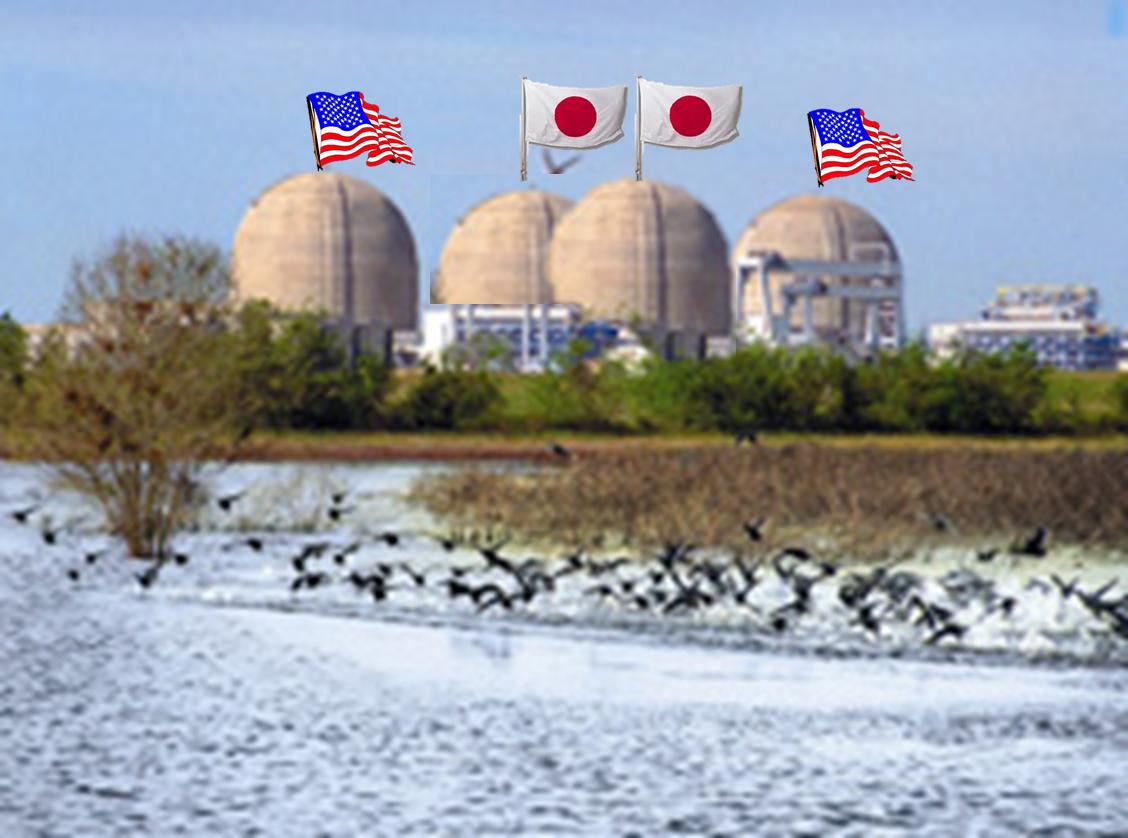
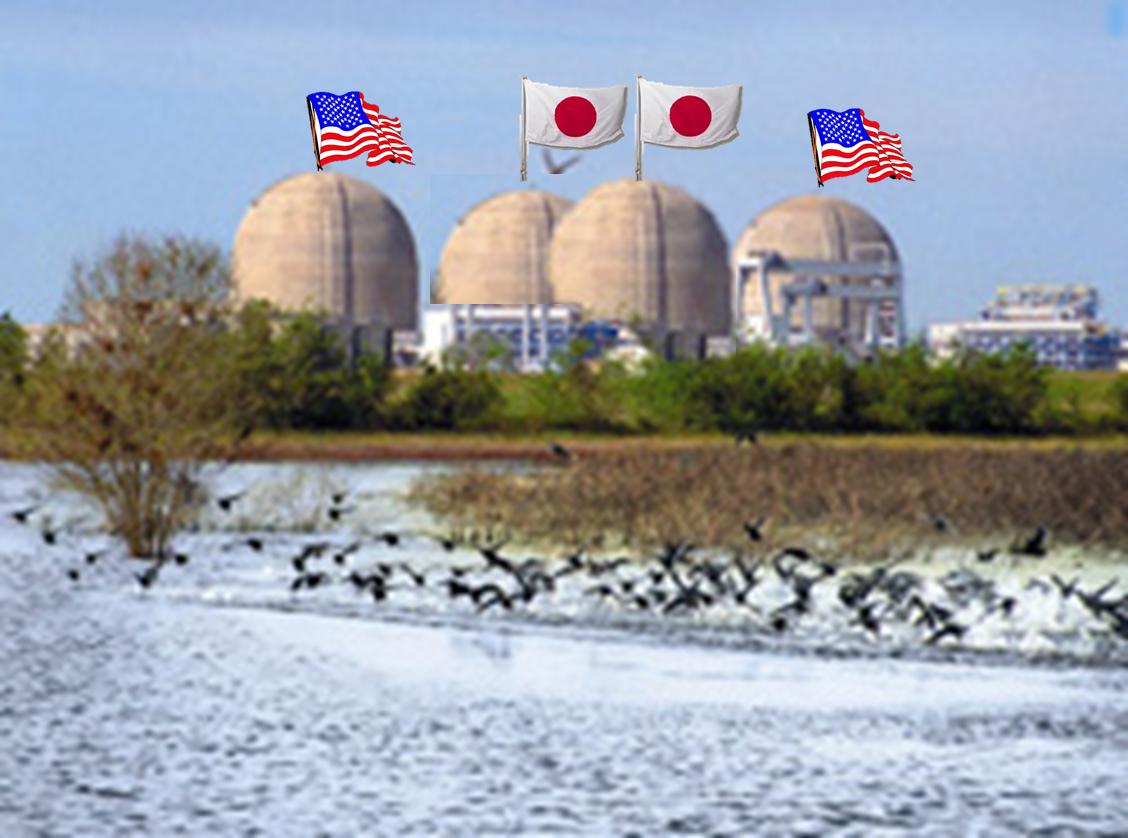
  • A struggle to find new partners with the only interest from TEPCO – the operators of the doomed Fukushima Dai-ichi plant and the Bank of Japan,
  • The melt through of the Fukushima Dai-ichi plant following the earthquake and tsunami that devastated Japan’s eastern coast and subsequently caused the meltdown of the nuclear industry throughout the world.

We would encourage any interested to attend.  Early arrival each day is suggested to allow for security screening for members of the public attending. NRC policy prohibits signs, banners, posters or displays in the hearing room at any time during the proceeding.

Individuals or groups not admitted to the proceeding can submit “written limited appearance statements” to the ASLB. Anyone wishing to submit a written statement may do so by email to hearingdocket@nrc.gov, by fax to (301) 415-1101, or by mail to: Office of the Secretary, Attn. Rulemaking and Adjudications Staff, U.S. Nuclear Regulatory Commission, Washington, DC 20555-0001. In addition, copies of written statements should be sent to the Chairman of the Licensing Board by e-mail to Michael.Gibson@nrc.gov and Jonathan.Eser@nrc.gov; by fax to (301-415-5599), or by mail to: Administrative Judge Michael M. Gibson, Atomic Safety and Licensing Board Panel, Mail Stop: T-3F23, U.S. Nuclear Regulatory Commission, Washington, DC 20555-0001.

Documents related to the South Texas Project COL application are available on the NRC website. Documents pertaining to the ASLB proceeding are available in the agency’s electronic hearing docket. More information about the ASLB can be found at the NRC website.

NOTE: Anyone wishing to take photos or use a camera to record any portion of a NRC meeting should contact the Office of Public Affairs beforehand.

Read Full Post »

Although flood concerns at Nebraska’s two nuclear power plants have subsided for the time being, the Nuclear Regulatory Commission (NRC) has announced short and long term plans that will examine and possibly affect flood safety at both reactors.  The NRC is schedule to be in Omaha starting July 27th examining flood control at the Fort Calhoun Station.

Fort Calhoun Nuclear Plant during the height of the flood after a 2000 foot long water filled barrier berm failed

In the meantime, the NRC issued a memo yesterday announcing that the Fort Calhoun nuclear power plant will be receiving additional oversight from the Nuclear Regulatory Commission because of problems associated with the reactor protection system at the plant that was uncovered during a scheduled test on June 14, 2010.  At that time, one of four electrical contacts failed in a system used to “trip” or automatically shut down the reactor. The condition appears to have existed for 63 days before it was discovered.  This means the condition was in place before flooding was a concern at the plant,  Fort Calhoun has been shut down since April 7th for a refueling outage, and remained shutdown after June 6 when concerns about flooding along the Missouri River began.  The emergency status abated with the river cresting June 23rd .

While the NRC says the failure did not pose a danger to public health or safety, because other means existed to perform that safety function if necessary and the operator of the plant has replaced the defective electrical component, it does appear that had the plant been operating when the flooding occurred, emergency shutdown might have been compromised.

The NRC preliminarily determined that the violation was “yellow,” meaning it has substantial safety significance (NRC evaluates performance at nuclear power plants with a color coded process which classifies regulatory findings as either green, white, yellow or red, in order of increasing safety significance) and has since downgraded it to white.

Read Full Post »

Had a nuclear power plant meltdown in your neighborhood and need to check radiation levels?  Well, there’s an iphone app for that.

Crazy as it may sound, Safecast, a global project created after the March 11th earthquake and tsunami that caused the Fukushima Daiichi nuclear plant disaster in Japan, has been building a radiation sensor network comprised of static and mobile sensors actively being deployed around Japan.  To facilitate deployment of small handheld devices, and Japan being Japan, the project also developed iGeigie – a portable Geiger Counter with an iPhone dock.

Don’t know how you would get one (and wouldn’t it make the perfect gift for the person who has everything), but you have to admire the technology advancements that could give us such a device in a few short months.

Read Full Post »

The Texas Low-Level Radioactive Waste Disposal Compact Commission will meet Saturday, August 20, 2011, at 10:30 AM in the James Roberts Center, 855 Hwy 176 East, Andrews, TX 79714.  Don’t know yet what they will have on their agenda, but they say it will be posted in the Texas Register and on the Commission website when available.

Click here to read more about legislation that passed this session, opening the state wide to accept radioactive waste from around the country and giving Waste Control Specialists, the operator of the Texas waste site, carte blanche for much of the regulation of this site.

Have Questions?  Contact the Texas Low Level Radioactive Waste Disposal Compact Commission

http://www.tllrwdcc.org
Telephone: 512-820-2930
Mailing Address:
TLLRWDCC
3616 Far West Blvd., Ste. 117, # 294
Austin, Texas  78731
NOTE:  This is a mailing address only and not the physical location of the Commission.

Read Full Post »

In their ongoing effort to accomplish a cold shutdown by January, Tokyo Electric Power Co (Tepco), the beleaguered operator of the crippled Fukushima Daiichi nuclear-power plant said it had resumed the use of recycled water to cool the reactor cores this weekend, a week after its first attempt was suspended due to leaks that developed within minutes of starting up the recycled water system.

Tepco has installed a tank to store 1,000 metric tons of decontaminated water to complete the recycling system, stabilizing the water source for cooling the Nos. 1-3 reactors, eliminating the need to use fresh water from an outside source to cool the reactors, and creating even more irradiated water, which then requires storage or disposal.

Establishment of a closed cooling system is essential to stabilizing the Daiichi reactors and getting the reactors to cold shutdown, which is defined as lowering the temperature of the fuel rods to below 100 degrees Celsius—water’s boiling point—and keeping it there.

If Tepco’s current efforts are successful, they hope to increase the flow of water and bring down the reactor-core temperatures, which currently hovers between 100 and 160 degrees Celsius.

Even if the recycling system works smoothly, Japan is still left with the problem of how to dispose of the radioactive sludge being created during the filtering process.  Japan, like Texas, has a disposal site for low-level radioactive waste, but there are no guidelines for disposing of the type of sludge now being created, which is expected to total 706 metric tons.

In the meantime, work at the complex is being hampered by the unseasonably hot weather.  There have been 17 reported cases of heatstroke at the plant in recent weeks.

And if that wasn’t enough

Tepco also faces other issues as senior members of Japan’s government developed secret plans to break up the nuclear plant operator, according to reports uncovered by Reuters.

The plan would bring nuclear operations of Tepco under government control, and force Tepco to sell its power distribution business.  Only the power-generation operations that use thermal and hydraulic power plants would remain as the company’s business cutting Tepco’s size to one third of its current operations.

I guess a really, really big mistake costs industry really, really big.

Read Full Post »

« Newer Posts - Older Posts »

Follow

Get every new post delivered to your Inbox.

Join 3,162 other followers