Feeds:
Posts
Comments

Archive for the ‘Radiation’ Category

The Nuclear Regulatory Commission has reported that a reactor at Three Mile Island, the site of the nation’s worst nuclear accident, shut down unexpectedly on this afternoon when a coolant pump tripped and steam was released.  Right now they are saying the plant is stable with no impact on public health or safety.

Still, this is a story we should follow.  The following news outlets have stories as of 5:50pm CT and will probably add updates as they become available.


Read Full Post »

Somewhere between Pecos and Odessa in southwestern Texas, Halliburton has lost a seven inch radioactive rod used in natural gas fracking.

Workers discovered the rod was missing on September 11th.  A lock on the container used to transport the radioactive rod was missing, along with the rod inside. Trucks have retraced the route of the vehicle, but have had no luck tracking it down so far.

This rod contains americium-241/beryllium which the health department says is not something that produces radiation in an extremely dangerous form. (Not sure what that means – I mean who even knew they used radioactive rods for fracking) But it’s best for people to stay back, 20 or 25 feet. (Seriously, what does this mean?)  Apparently you would have to have it in your possession for several hours before it is considered dangerous.

The National Guard has been asked to step in and help search for the missing rod, so if you are out driving in that 130 mile area and find a seven inch stainless steel cylinder about an inch in diameter, marked with the radiation warning symbol and the words ‘Do Not Handle’, well . . . DO NOT HANDLE, stay back at least 20 feet, and call the National Guard.

Read Full Post »

As Japan commemorates the anniversary of the Hiroshima atomic bomb attack, Japanese officials are developing new energy policies that will guard the safety and the livelihood of the Japanese public in the wake of the devastating Fukushima nuclear accident.

Sixty seven years ago today, on Aug. 6, 1945, nearly 140,000 people were killed by the first atomic bomb used in warfare. Three days later the United States dropped another bomb in Nagasaki that killed 70,000 more.

In March 2011, Japan was devastated by an earthquake and tsunami which crippled Tokyo Electric Power Co.’s Fukushima nuclear plant and sent it into meltdown.  This caused radiation to spew over large areas from which more than 160,000 people had to flee. Every one of Japan’s nuclear plants were shuttered in the months following the world’s worst nuclear crisis since Chernobyl in 1986.  This is a country that now knows, all too well, the devastation of nuclear power both in war and in peacetime.

Two of the nation’s reactors resumed operations in July, but the Fukushima disaster has turned public sentiment against the country’s dependence on nuclear power.

According to NBC News, a recent parliamentary investigation concluded that past energy policy reliance on opinions of industry experts, bureaucrats and politicians had bred collusion and blindness when it came to ensuring nuclear reactors’ safety.

Now Japan is conducting citizen debates to look at options for the role of nuclear power in their generation mix, and expects to compile a draft of its new energy policy by the end of August.

Read Full Post »

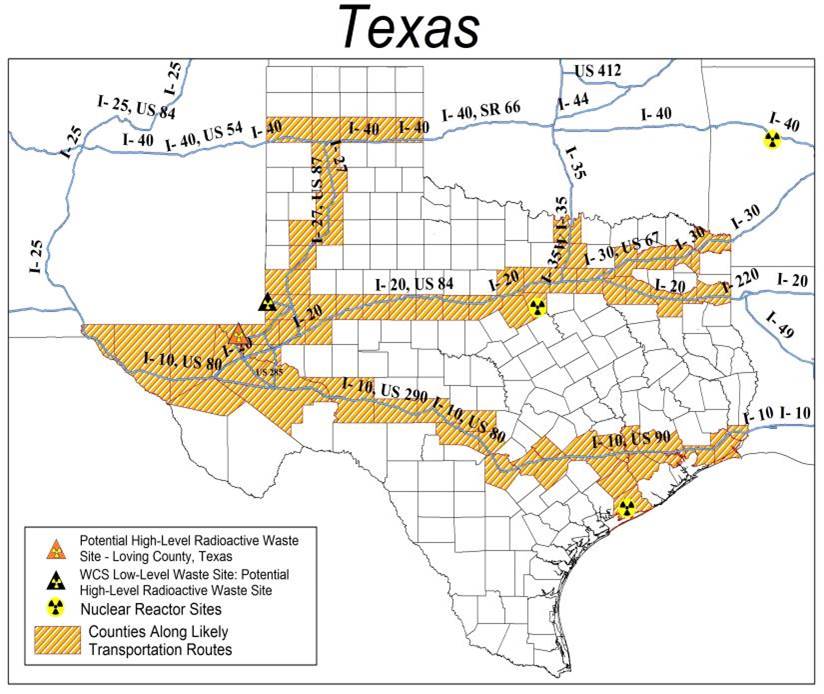
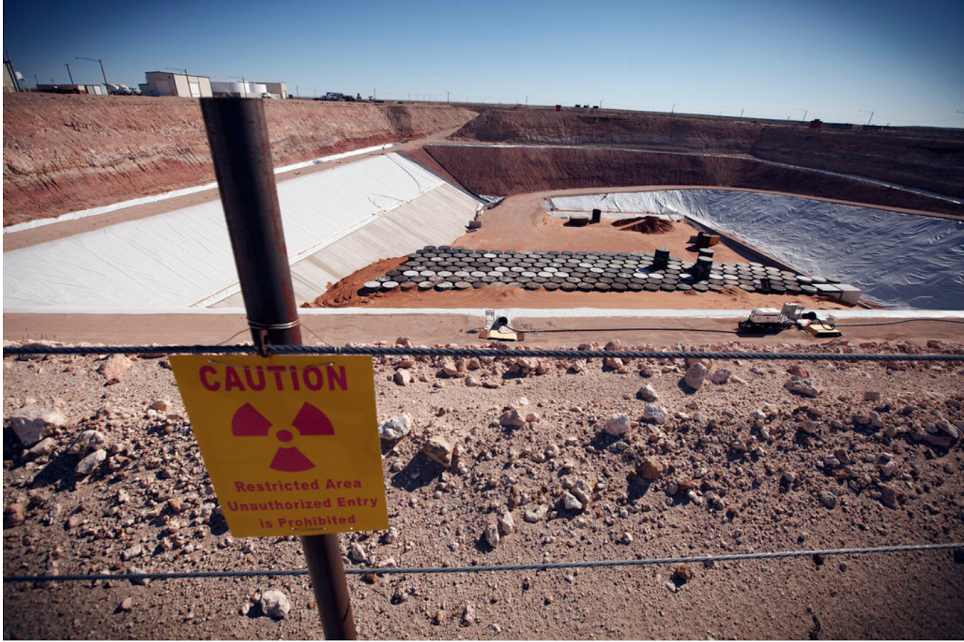
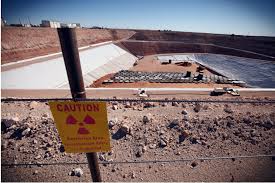
Harold Simmons built a West Texas dump for radioactive waste that is bigger than 1,000 football fields, paid out hundreds of thousands of dollars in campaign contributions and got a permit for it in Texas, and is now working to fill it.

To turn it into a profitable enterprise, the Texas billionaire has now hired lobbyists to urge the Obama administration to expand the types of nuclear waste, including depleted uranium, the dump can accept and award his company disposal contracts.

Click here to read the Bloomberg story on the influence of money on this regulatory issue.

Click here  and here and here and here, to read earlier blog posts about Harold Simmons, his Texas political contributions and the WCS radioactive waste dump.

Read Full Post »

The Nuclear Regulatory Commission is reporting that a “small” amount of radioactive gas may have leaked at the San Onofre Nuclear Generating Station in Southern California.

The San Onofre plant is on the Pacific Ocean coast near San Clemente north of San Diego. It consists of two units, No. 2 and No. 3. No. 1 was shut down permanently in 1992. It is one of two nuclear plants that generate electricity in Southern California; the other is the Diablo Canyon plant in San Luis Obispo County.

The Unit 3 reactor at the plant was shut down Tuesday night after a possible leak was detected in one of the unit’s steam generator tubes.  The company and federal regulators say the release would not have posed a safety risk for the public, but we’ve heard that before (can you say TEPCO/Fukushima/the Japanese government one year ago?) so we will keep an eye on this one.

Unit No. 2 at San Onofre was already offline for maintenance and refueling.  In September, the failure of a major tranmission line between Arizona and California caused the Onofre reactors to go offline automatically.

And folks carry on about renewables being unreliable.

Read Full Post »

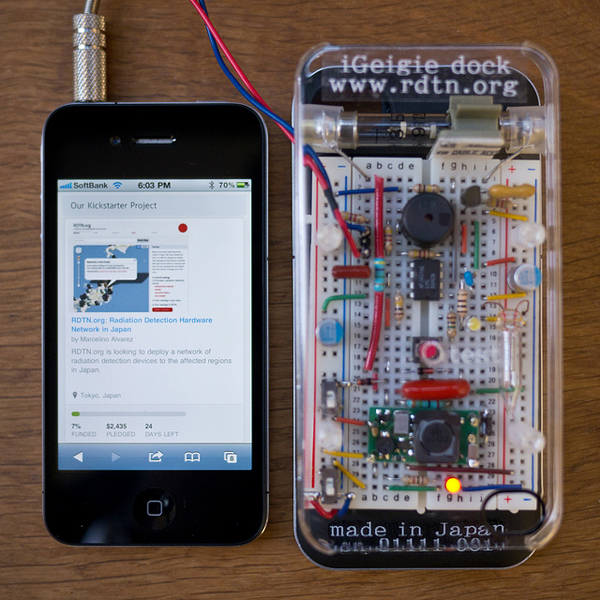
Had a nuclear power plant meltdown in your neighborhood and need to check radiation levels?  Well, there’s an iphone app for that.

Crazy as it may sound, Safecast, a global project created after the March 11th earthquake and tsunami that caused the Fukushima Daiichi nuclear plant disaster in Japan, has been building a radiation sensor network comprised of static and mobile sensors actively being deployed around Japan.  To facilitate deployment of small handheld devices, and Japan being Japan, the project also developed iGeigie – a portable Geiger Counter with an iPhone dock.

Don’t know how you would get one (and wouldn’t it make the perfect gift for the person who has everything), but you have to admire the technology advancements that could give us such a device in a few short months.

Read Full Post »

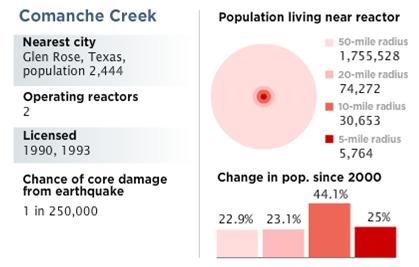
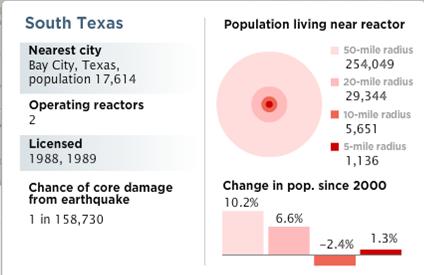
According to an Associated Press investigative report, three-quarters of the nation’s commercial nuclear power sites have had tritium leaks (a radioactive form of hydrogen), often into groundwater from corroded, buried piping and the number and severity of the leaks has been escalating as the reactors age, even as federal regulators extend the licenses of more and more reactors across the nation.  Leaks from at least 37 of those facilities contained concentrations exceeding the federal drinking water standard — sometimes at hundreds of times the limit.  Click here to read the entire AP story.

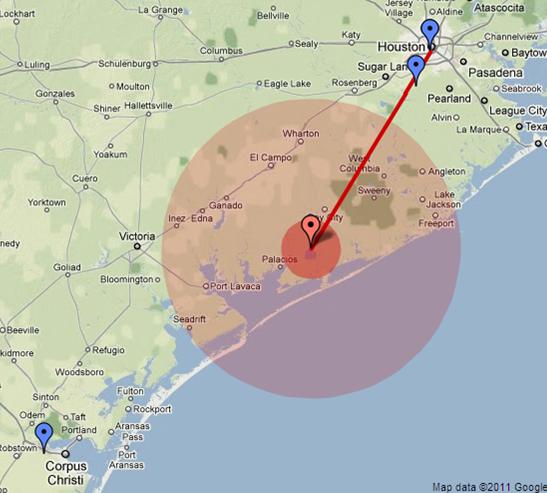
Population near aging Texas nuclear plants.

Comanche Peak

South Texas Project


Read Full Post »

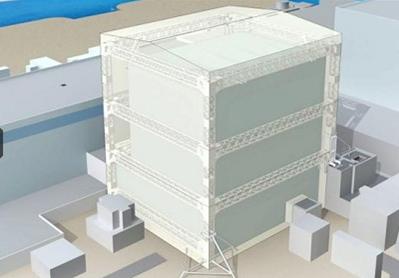
The Shroud of Fukushima

Artist rendering of the Shroud of Fukushima

According to the London Telegraph, Tokyo Electric Power Co (Tepco) has announced that they will start construction of a shroud over the No. 1 reactor at the ill-fated Fukushima Dai-ichi power plant where a hydrogen explosion destroyed the walls and roof of the reactor building on March 12, the day after the cooling system was knocked out by the Japanese earthquake and the tsunami that it triggered.

The shroud will stand 177 feet high and be 154 long with a roof that can be opened to give cranes access to the interior. It will also be fitted with filters that, over time, will scrub the air inside the building of radioactivity, enabling workers to enter the plant.  The frame of the shroud will be put together off-site and once in place, it will be covered with polyester fiber panels coated with a resin designed to prevent further radiation leaking into the atmosphere – at least that’s the plan.

Tepco is using the operation at the No. 1 reactor to test the construction methods and effectiveness of the shroud.  In truth, they are not sure how effective the temporary cover may be in limiting emissions of radiation from the reactors and spent fuel pools, but it will at least prevent more rainwater entering the buildings and becoming contaminated with radiation.  If it proves effective they have plans to build similar covers over the No. 3 and No. 4 reactor buildings, which were also damaged by explosions after the tsunami.

Eventually, Tepco plans to erect a concrete structure around the reactors, but that will take several years to achieve.  A similar concrete sarcophagus was built over the remains of the reactors at the Chernobyl power plant after that facility was destroyed in an accident in April 1986.

In hearings on Capitol Hill, the Senate Committee on Environment and Public Works was questioning the NRC’s chairman, Gregory B. Jaczko about the implications of Japan’s nuclear accident for the United States.  A statement by a commission official on Wednesday indicated that the nation’s nuclear safety rules had failed to consider the possibility of losing both off-site power from the electric grid and on-site emergency diesel generators.

NRC Commissioner George Apostolakis said that this condition produces a station blackout, and the commission has a rule covering such blackouts, but Mr. Jaczko said that the thrust of the statement was that the agency had not thought enough about a single event that would damage both the grid and the diesel backup generators, causing a plant to take longer to recover.

Let’s hope the US is not the next country designing a sarcophagus for a nuclear facility.

Read Full Post »

All rights reserved by Public Citizen Texas

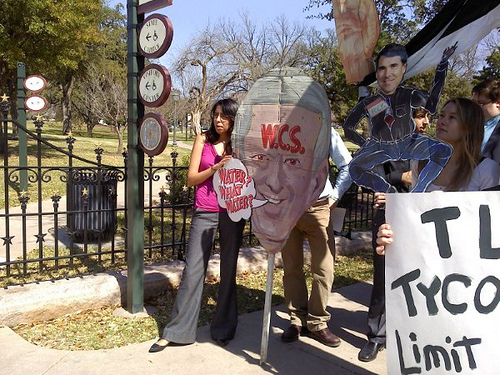
Infamously dubbed by Dallas Magazine “Dallas’ Most Evil Genius”, socialite and energy tycoon Harold Simmons is no stranger to Texas lobbying.  As this blog previously reported in January, Simmons has contributed $1.12 million from 2001 to September 2010 to Rick Perry significantly increasing his contributions between 6/25/2009 and 9/30/2010 totaling $600,000 in a 15 month period or more than doubling his previous contributions. Now why did Simmons increase his campaign contributions? Perhaps it’s been used to grease the wheels on his  recently passed radioactive waste bill SB 1504 allowing Simmons’ company Waste Control Specialists a monopoly on Texas low-level radiation waste disposal.

Simmons’ money didn’t stop at Perry. According to the Texans for Public Justice, Simmons paid $182, 350 in the 2010 election cycle to 92 members of the House, 94% Republicans and 6%  Democrats. Obviously, all of this is significant because of the recent vote in the House on bill SB 1504. 76% of the members who received Simmons contributions or $138,350 voted with the money, yea, while only 13% or $24, 500 voted nay and 11% or $19,500 abstained from voting. Contrary to a damning report by Public Citizen addressing the dangers of nuclear waste disposal , 84% of the House members who took Simmons’ money voted following the company line while only 16% or 15 members abstained from voting or voted nay.

Simmons granted a rare interview to the Dallas Business Journal in 2006 offering an eerie outlook on his lobbying efforts “It took us six years to get legislation on this passed in Austin, but now we’ve got it all passed. We first had to change the law to where a private company can own a license [to handle radioactive waste], and we did that. Then we got another law passed that said they can only issue one license. Of course, we were the only ones that applied.

Most House Members Who Took Simmons’ Money Voted To Grant Him A Monopoly to Import Nuclear Waste

Simmons BillVote in House No. of Members Percent of Members Total Amount From Simmons Average Amount from Simmons
Yea 108 72% $138,350 $1,281
Nay 36 24% $24,500 $681
Not Voting 6 4% $19,500 $3,250
Totals 150 100% $182,350 $1,216

House Members Taking Simmons’ Money but Bravely Went Against Their Benefactor

House Member Dist. Party Simmons Amount in 2010 Cycle 2nd Reading Vote 5/17 3rd Reading Vote 5/18
Anderson, Charles 56 R $2,000 Absent Absent
Carter, Stefani 102 R $2,000 Nay Nay
Coleman, Garnet 147 D $15,000 Yea Nay
Davis, Sarah 134 R $500 Yea Nay
Dukes, Dawnna 46 D $1,000 Nay Nay
Farrar, Jessica 148 D $500 Absent Nay
Gallego, Pete 74 D $15,000 Nay Nay
Giddings, Helen 109 D $1,000 Nay Nay
*Howard,  Donna 48 D $500 Nay Nay
Hunter, Todd 32 R $2,000 Absent Absent
Issac, Jason A. 45 R $1,000 Nay Nay
Kolkhorst, Lois 13 R $1,000 Nay Nay
*Martinez Fischer, Trey 116 D $1,000 Nay Nay
Reynolds, Ron 27 D $500 Nay Nay
Straus, Joe 121 R $15,000 Not Voting Not Voting
Villarreal, Mike 123 D $1,000 Nay Absent

*Member of House Natural Resources Committee that first approved bill.

Note: If you are interested to see  if your representative voted with the money or even received 2010 campaign contributions from Simmons please visit this link provided by TPJ, Bankroll Call: Correlating Simmons Contributions To Texas House Votes.

Read Full Post »

Back in November we blogged about a story that KHOU broke in Houston about radioactive contaminants in the Houston area drinking water. Revelations that came to light showed hundreds of water providers around the Gulf Coast region were providing their customers with drinking water that contains radioactive contaminants that raise health risks.  State tests by the Texas Department of State Health Services that were reported to the Texas Commission on Environmental Quality showed utilities provided water that exceeded the EPA legal limit for exposure to alpha radiation.  But the kicker was that for more than 20 years, the Texas Commission on Environmental Quality under-reported the amount of radiation found in drinking water provided by communities all across Texas by subtracting off the margin of error for all radiation readings it would receive (which was not in compliance with EPA rules that have been in place since Dec.  7, 2000).  Click here to see that post.  

It appears that TCEQ was using this method to help water systems escape formally violating federal limits for radiation in drinking water, maintaining their calculation procedure eliminated approximately 35 violations.  Without a formal violation, the water systems did not have to inform their residents of the increased health risk.

In this recent report by KHOU, newly-released e-mails from the Texas Commission on Environmental Quality show the agency’s top commissioners directed staff to continue lowering radiation test results, in defiance of federal EPA rules.  It goes on to revisit a Texas Water Advisory Council (comprised of some of the highest ranking public officials in Texas) meeting in June of 2004 where they reviewed and discussed TCEQ testimony regarding this issue, yet nothing seems to have changed in how TCEQ handled the under reporting, and they continued their policy of subtracting the margin of error from the result of each water-radiation test until an EPA audit caught them doing so in 2008.   The state has since complied with the EPA regulation.     So if you didn’t drink tap water in the Houston area before 2008, you’re probably good.  Click here to to see this most recent KHOU story.

Read Full Post »

A crucial ban on mining uranium around the Grand Canyon is about to expire, and corporations have already staked more than 1,100 claims to drill.

Ripping up radioactive material around a national landmark, with its fragile ecosystem and designation as one of the seven natural wonders of the world, will cause irreversible damage to its beauty and wildlife, put nearby communities at risk (especially the Havasupai, a Native American tribe who inhabit the canyon itself) and contaminate the water supply for millions who live nearby.

Thousands have already signed a petition started by Suzanne Sparling of Arizona calling on the U.S. Bureau of Land Management to extend the ban on uranium mining around the Grand Canyon.

A nationwide outcry has forced the Interior Department to extend the time window for public comment about the decision.

To read more about the impacts of uranium mining on the Grand Canyon, click here to visit the Grand Canyon Trust’s website whose mission is to protect and restore the Colorado Plateau — its spectacular landscapes, flowing rivers, clean air, diversity of plants and animals, and areas of beauty and solitude.

You can click here to send an email to your representatives in Congress telling them you support U.S. Interior Secretary Ken Salazar’s new Bureau of Land Management “Wild Lands” policy.

There is just a short time to protect one of America’s most important national parks, click here to sign Suzanne Sparling’s petition.

Read Full Post »

Wanted: Short term, possibly long term position that pays thousands of dollars for up to an hour of work requiring little training working in perilously radioactive environments.

A Tokyo Electric Power Co. (TEPCO) official said this week that the company has tasks fit for “jumpers” (ジャンパー) — workers so called because they “jump” into highly radioactive areas to accomplish a job in a minimum of time and race out as quickly as possible.  Sometimes jumpers can make multiple runs if the cumulative dosage is within acceptable limits — although “acceptable” can be open to interpretation.  In cases of extreme leaks however the radiation might be so intense that jumpers can only make one such foray in their entire lives, or risk serious radiation poisoning.

Asked how the contaminated water could be pumped out and how long it would take, a TEPCO official replied: “The pump could be powered from an independent generator, and all that someone would have to do is bring one end of the pump to the water and dump it in, and then run out.”

Translation: Jumpers wanted.

In its attempts to bring under control its radiation leaky nuclear power plant that was severely damaged by last month’s massive earthquake and tsunami,  TEPCO is trying to get workers ever closer to the sources of radiation at the plant.

Workers are reportedly being offered hazard pay to work in the damaged reactors of up to $5,000 per day.

So if you aren’t concerned about the quality of your life 10 to 15 years down the line and are not planning on having children, this may be the job for you.

Read Full Post »

HB 2184 will probably be voted out of the Texas House State Affairs Committee later this afternoon and so far, legislation that impacts how much, from where and how safely radioactive waste will be stored at a West Texas site is moving forward in favor of the private operator, giving them the power to negotiate private deals to import waste, make a gigantic profit and do it without any oversight by Texas regulatory agencies or the Texas Low-level Radioactive Waste Disposal Compact Commission.

According to an article in Mother Jones:

The compact allows him (Simmons) to get paid for burying other states’ nuclear trash while outsourcing much of the risk to Texas taxpayers. Though the state will receive a cut of disposal fees and $36 million to cover “corrective action” and ”post-closure” expenses, it will have to bear any other cleanup costs on its own. According to a report by the Texas Sunset Advisory Commission: “Potential future contamination [from the waste] could not only have a severe impact to the environment and human health, but to the State, which bears the ultimate financial responsibility for compact waste disposal facility site.

Click here to read the recent Mother Jones article on the history and issues with this site.

In light of the massive cleanup that faces Japan from the radiation that is flooding the area around the Fukushima Dai-ichi nuclear plant in the wake of its ongoing recovery efforts – seemingly contributed to by Japan’s failure to adequately regulate and reign in the runaway plant operator, is it in Texas’ best interest to just let this company have their way with us?

This bill will go next to the floor of the House and if it continues to move, as we expect it will given the money and influence behind it, on to a Senate committee.  If we are to have any chance of making this bill more protective of the health, well-being and pocketbooks of regular Texans, regular Texans are going to have to let their lawmakers know they are concerned.

House State Affairs

Read Full Post »

Radiation hotspots of Cesium-137 from Chernobyl

Radiation hotspots of Cesium-137 in 1996 resulting from the Chernobyl nuclear power plant accident. -Wikipedia

Experts believe the radioactive core in reactor No. 2 at the crippled Fukushima nuclear power plant has melted through the bottom of its containment vessel and on to the concrete floor of the drywell below.  This new development has raised fears of a major release of radiation at the site, and some nuclear industry experts are saying that while they don’t believe there is a danger of a Chernobyl-style catastrophe, it’s not going to be good news for the environment.

The major concern when molten fuel breaches a containment vessel is that it will react with the concrete floor of the drywell, releasing radioactive gases into the surrounding area. At Fukushima, the drywell has been flooded with seawater, which was a last ditch effort to cool any molten fuel that escapes from the reactor and reduce the amount of radioactive gas released.

The drywell is surrounded by a secondary steel-and-concrete structure designed to keep radioactive material from escaping into the environment. But an earlier hydrogen explosion at the reactor may have damaged this, and the detection of water outside the containment area that is highly radioactive and can only have come from the reactor core, is a good indication that the containment area has been breached.

In the meantime, countries around the world are reassessing their nuclear power programs.  Britain has signaled that they could take a step back from nuclear power in the wake of the disaster.  Germany ordered a temporary halt to the country’s seven oldest reactors, and China is considering scaling back their program.

France, which gets about 80 percent of its energy from atomic power and has been the poster child for nuclear power during the recent nuclear renaissance, wants threats from airplane crashes and terrorists excluded from safety checks planned on European reactors following the Fukushima nuclear accident.  An interesting stance to take considering as recently as October of 2010, the French defense minister, Herve Morin told the French people that a terrorist threat exists, and could hit them at any moment.

At a minimum, governments should insist on two conditions for the future of the next generation of nuclear power plants: they have to be safe and they can not let the taxpayer be ripped off.  This is a opportunity for investment into renewable energy sources such as solar, wind and energy storage that don’t have the potential to be really, really bad news for the environment and the people who live in that environment.

Read Full Post »

Today is the 32nd anniversary of the worst U.S. nuclear accident, a partial meltdown at the Three Mile Island power plant outside Harrisburg, Pennsylvania. Although no deaths or injuries resulted, many of the concerns the public is expressing about the ultimate fate of the doomed Fukushima Dai-ichi plant were played out over five days in 1979 in the North East.  Then, as now, it is difficult for the public to discern what the real status of the situation is.

Today a spokesperson for the Japanese government announced that the containment structure surrounding the No. 2 reactor at the nuclear power plant is damaged and may be leaking radioactive material.  Tepco, the plant’s owner, then disclosed that small amounts of plutonium had been found among contaminants around the facility later today as Japanese authorities explained that how radioactive water was leaking into maintenance tunnels and possibly, into the Pacific Ocean.

The radiation level near the No 2 reactor is four times the top dose Japan’s Health Ministry has set for emergency workers struggling to control the further emission of radioactive material from the damaged plant and it is unclear what the status of ongoing efforts are, given the increased radiation levels. 

Greenpeace is organizing vigils around the country to show support for the victims of the Japan disaster and ask for a nuclear-free world.  Click here to find out about an event in your area tonight.

Read Full Post »

Older Posts »

Follow

Get every new post delivered to your Inbox.

Join 3,136 other followers