Feeds:
Posts
Comments

Archive for the ‘Texas Legislature’ Category

Just before Earth Day, the House of Representatives once again demonstrated its commitment to protecting the fossil fuel industries that fund many of the members campaigns instead of protecting the people of our state from the devastating impacts of climate change by passing HB 788. The bill requires the Texas Commission on Environmental Quality (TCEQ) to permit greenhouse gas emissions, which cause climate change, but would remove the agency’s authority to limit such emissions.

You might wonder “what’s the point?”  The point is to take control of greenhouse gas permitting for Texas facilities from the Environmental Protection Agency (EPA) and place it in the hands of our state environmental agency – which has a much cozier relationship with industry.  While EPA may ultimately prefer that states take responsibility for such permitting, we hope they wouldn’t support such a ineffective system as is proposed in HB 788.

Adding insult to injury, the author of the bill, Representative Wayne Smith, took advantage of the opportunity to spread misinformation.  Smith stated, “…the terms ‘climate change’ and ‘global warming’ are based on an unfounded science,” claiming this language was struck to remove the politics from the bill.  His remarks epitomizes a legislature that continues to threaten the health and safety of the people it should protect through weakened environmental regulations.

In fact, removing language which has been in Texas’ Health and Safety Code for 22 years which gives TCEQ the authority to limit greenhouse gases put the politics in the bill and took the science out of it.  Governor Rick Perry is an avid climate change denier and may have influenced the drafting of HB 788.

This type of misinformation does a disservice to Texas citizens who must endure the harmful impacts of climate change, such as drought, wildfires, sea-level rise and more volatile weather patterns. These changes have already cost our state billions of dollars and numerous lives.  Climate change is happening now and given the big jump in carbon dioxide (CO2) emissions last year, we’re probably in for more harmful impacts than many predicted just a few years ago.

Image

This graph compares increasing CO2 levels (dark line) to increasing average global temperature over the last century (blue and red bars).

Although our efforts to stop or amend HB 788 in the Texas House were unsuccessful and it was disheartening to hear Representative Smith’s comments, Earth Day brought a refocusing on facts.

The Committee on International Trade and Intergovernmental Affairs held a hearing on Global Climate Change and Trade.  Attendance was sparse in the audience, but a stellar line-up of scientists, delegates, and business representatives took the witness stand to testify on the fact of climate change.

HB788 was mentioned in anonymous fashion as a bad greenhouse gas bill on several occasions.  But, the most glaring comments were directed at Texas’ lack of policy to address climate change.  Cynthia Connor, the Resource Security Policy Adviser for the British Consulate General in Houston spoke in serious tones.  Her message was that Texas has a responsibility to adopt climate change policies to protect $20 billion in Texas investments by UK-owned business, which are responsible for  70,000 jobs.

Almost all of the witnesses addressed Texas’ policy of climate change denial.  To their credit, most of the Representatives on the committee asked questions to confirm the scientific findings, how climate change affects Texas, and how our climate change policies compare to the rest of the modernized world.  The general consensus is that Texas lags far behind the rest of the world.  Texas fails to acknowledge the potential harms of climate change and ignores its responsibility to lead the nation in ethical energy policies as the top producer of oil and natural gas.

While these weren’t messages of hope, at least they were based in scientific facts and observations.  At least for a brief time, science was recognized in our state capitol.

We must each do what we can to reduce our personal impact and we must convince our elected officials that the time for climate change denial is over.

HB 788 is now being considered in the Texas Senate.

Email your Texas state senator to oppose HB 788 and protect Texas’ climate, economy and people.

Read Full Post »

While Austin City Council continues to move forward with an ordinance to transfer governing authority of Austin Energy from our elected City Council to an unelected board, Austin democracy is being attacked at in the state legislature as well.  Senate bill 410, sponsored by Senator Kirk Watson and Representative Paul Workman, would allow the city to establish an unelected board without a charter election, as our city charter calls for.

The issue of who should govern Austin Energy is important, but it’s also local in nature.  There is no need for state to amend Austin’s charter.  That is a right reserved for the citizens of Austin.  If the changes proposed by City Council are truly in the best interest of our city, that case should be made to the voters and decided upon at the ballot box. 

To have a state representative who doesn’t even live in Austin carrying a bill to change our charter is unacceptable.

The Austin City Charter was adopted by the people of Austin and the people of Austin approved a governance structure for Austin Energy that is accountable to the people through elections.

An unelected board won’t be directly accountable to the ratepayers and wouldn’t necessarily represent our values.  As we debate this issue in Austin the unelected board at San Antonio’s CPS Energy is slashing the rate customers with solar installations will receive for their energy in half without first consulting the public or the solar industry.  Austin Energy customers could be facing similar changes if we don’t act now to protect our rights.

SB 410 has passed the Senate and will be heard by the House Committee on State Affairs tomorrow.

Please consider attending the hearing and speaking against SB 410.

What: Hearing on SB 410 to change Austin’s charter to move Austin Energy governance to an undemocratic board without a vote by the citizens of Austin, as our charter requires.

When: 1:00pm on Wednesday, May 1

Where: John H. Reagan (JHR) building, room 140 – 105 W. 15th St., Austin, TX, 78701

Why: Because Austin Energy’s governance structure will impact decisions going forward, including on renewable energy and energy efficiency programs and rates.  This is the decision that will determine how other decisions are made.

You can register against the bill at the kiosks outside of room 140.  Even if you don’t wish to speak, registering against the bill would be helpful.  We hope you’ll consider saying a few words about the value of local democracy though.  Speakers will be limited to 3 minutes each.

SB 410 is anti-democratic and is one more example of the state government trying to interfere with Austin’s internal policies and governance.

We need your help to stop this bill.

Public opposition to SB 410 at Wednesday’s hearing may be the only thing that can ensure that our Austin representatives don’t let this bad bill move forward.

Please email Kaiba White at kwhite (at) citizen.org if you can attend the hearing at 1:00pm on Wednesday.

Read Full Post »

You may have never heard of Property Assessed Clean Energy (PACE), but it has the potential to make a huge difference in adoption of distributed renewable energy systems, such as rooftop solar installations. PACE allows businesses to borrow money from local governments to work on energy efficiency and renewable energy projects in the buildings they occupy.

Since PACE is funding is loans, there is no real expense to the taxpayer.  On the other side of the coin, it allows businesses to spread out the costs of becoming more environmentally friendly over time, all while lowering their monthly utility costs.  This strategy is a win-win-win for Texans.  Business save money, the environment benefits, and it cost Texans nothing.

The Texas Legislature is currently considering legislation that would move PACE forward for our state.  Senate bill 385 has already cleared the hurdle of the Texas Senate, and now is pending in our House of Representatives. House bill 1094 is still waiting be voted out of the House Committee on Energy Resources.  The House should move forward to adopt this common sense measure.

As of 2013, 27 states and the District of Columbia have PACE legislation on the books to help combat harmful emissions from electric generation.  States from California to Wyoming have enacted PACE programs.  Generally, in these states, the financing terms are 15-20 years.  It works very much like taking out a home loan, or perhaps a better example would be a home improvement loan, but for commercial properties. Disbursing the payments over a longer period of time makes these efficiency upgrades affordable for a wider variety of business.  It also makes upgrades attainable for smaller businesses.

I urge fellow Texans to get in touch with their State Representative and tell him or her to support the PACE bills (HB 1094 and SB 385).  This is common sense legislation that benefits everyone.

Click here to find out who represents you. 

Read Full Post »

It wouldn’t be a Texas legislative session without some truly backwards bills.  Today we have House Bill 2026 by freshman Representative Sanford of Collin county that would eliminate our state renewable energy goals.

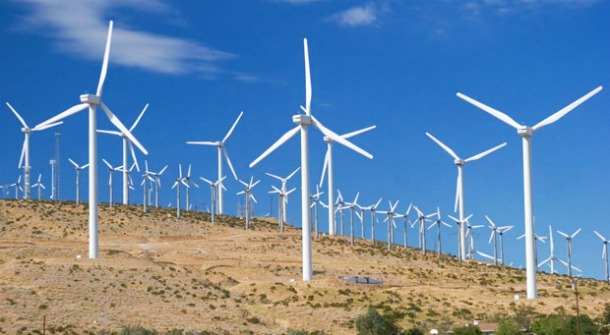
BeachWindIn 1999, the state of Texas made a commitment to renewable energy in the form of the renewable portfolio standard (RPS).  That decision played a major role in spurring the development of the wind industry in Texas.

We have now exceeded the renewable energy goals established in the 2005 update to the RPS and Texas has more wind energy capacity than any other state.[1]  On the surface that may seem to indicate that the RPS has been 100% successful and is no longer needed, but that isn’t the case.

One of the major reasons for establishing the RPS was to encourage diversification of our energy sources, which ultimately makes us more resilient to physical and economic forces that can impact the availability and price of energy sources.  While wind energy has increased from zero percent when the RPS was first established to around ten percent today, other renewable energy sources are still largely absent from our energy portfolio.

With more solar energy potential than any other state, Texas should be the center point of the solar industry as well.[2]  Instead we are lagging behind states with far less solar resources, such as New Jersey and Pennsylvania,[3] and are paying the price in missed opportunities for job growth and new generation capacity that can produce during peak demand.

Solar companies invest in California and other states, because smart policies created attractive markets in those places.  California has 1,505 solar companies compared to Texas’ 260. Even New Jersey has more, with 382.[4] Texas should be doing more, not less to attract solar businesses to our state.

SolarInstallProjections showing that we won’t have enough electricity to meet demand by 2020.[5]  The maximum wholesale price of electricity has been set to triple by 2015, without even determining what the cost to consumers will be.  There have been workshops and meetings to consider the prospect of implementing a capacity market in Texas, which would raise costs even more.  But little time has been spent considering simpler, cheaper solutions such as expanding efficiency and demand response (where customers get paid to reduce there energy usage for short periods of time when demand is high) and getting more solar capacity built in Texas.  Solar is most productive when we need it the most – on hot, sunny afternoons.

The RPS should be retooled to focus on solar and other renewable energy resources that are most capable of producing during peak demand.  Millions of dollars could be saved in the wholesale electric market if we had more solar panels installed.[6]

Solar, like wind, also has the benefit of needing very little water to operate.  Solar photovoltaic (PV) installations need an occasional cleaning to keep performance high, but the amount of water need is minimal in comparison to fossil fuel options.  Coal-fired generators need billions of gallons of water to operate each year[7] and while natural gas-fired generations consume less water than coal-fired generators, they still use more than solar, even without accounting for the millions of gallons of water used to extract the gas with hydraulic fracturing.[8]  Including more renewable energy in our portfolio will make our electric grid less vulnerable to drought[9] and will free up water supplies that are desperately needed for human consumption and agriculture.

Abandoning the RPS now would send a terrible signal to renewable energy companies that are deciding where to establish their businesses.  Our state made a commitment that isn’t set to expire until 2025 at the earliest.  There is no good reason to abandon the policy now.  We should be moving in the opposite direction of what is proposed in HB 2026.  Instead of giving up on a policy that has been successful, we should be looking at ways to build on that success and benefit our state.


[1] AWEA. “Wind Energy Facts: Texas.” Oct 2012. http://www.awea.org/learnabout/publications/factsheets/upload/3Q-12-Texas.pdf.

[2] NREL. “U.S. Renewable Energy Technical Potentials: A GIS Based Analysis.” July, 2012. Pg. 10-13. http://www.nrel.gov/docs/fy12osti/51946.pdf.

[3] SEIA. Solar Industry Data. http://www.seia.org/research-resources/solar-industry-data#state_rankings.

[4] SEIA. State Solar Policy. http://www.seia.org/policy/state-solar-policy.

[5] “Report on the Capacity, Demand, and Reserves in the ERCOT Region.” Dec 2012. Pg 8. http://www.ercot.com/content/news/presentations/2012/CapacityDemandandReservesReport_Winter_2012_Final.pdf.

[6] Weiss, Jurgen, Judy Chang and Onur Aydin. “The Potential Impact of Solar PV on Electricity Markets in Texas.” The Brattle Group.  June 19, 2012. http://www.seia.org/sites/default/files/brattlegrouptexasstudy6-19-12-120619081828-phpapp01.pdf.

[7] “Environmental impacts of coal power: water use” Union of Concerned Scientists http://www.ucsusa.org/clean_energy/coalvswind/c02b.html

[8] http://www.ucsusa.org/clean_energy/our-energy-choices/energy-and-water-use/water-energy-electricity-natural-gas.html

[9] Wu, M. and M. J. Peng.  “Developing a Tool to Estimate Water Use in Electric Power Generation in the United States.” Argonne National Laboratory – U.S. Department of Energy. http://greet.es.anl.gov/publication-watertool.

Read Full Post »

Public Citizen’s positions on the pre-filed amendments to the PUC Sunset bill can be viewed here: http://bit.ly/Guide_to_Amend_PUC_Sunset_bill_HB1600 or in the table below.

Support These Amendments to Improve the PUC Sunset Bill

Bar code # Sponsor Description Comment
830096 Cook clean up cleans up language in bill – no substantial changes
830097 Cook clean up cleans up language in bill – no substantial changes
830077 Davis bans sharing of customer info from advanced meters eliminates the value of smart meter – demand response providers may not be able to operate (NOTE: amendment to the amendment will fix this problem)
830076 Davis requires annual  review of certificate holders
830087 Davis requires written disclosure prior to releasing info from advanced meters protects customer privacy while allowing demand response providers to operate with permission of customer
830088 Davis makes utility liable for damages to advanced meter during installation or removal protects customer from unreasonable charges
830089 Davis bans billing for average use of electricity restricts customer choice (NOTE: amendment to the amendment will fix this problem by allowing customers to choose levelized billing)
830090 Davis reregulates the electric market assures adequate resources to meet the load
830101 King caps transmission congestion costs protects consumers
830104 Phillips prevents Texas generators from exporting electricity from ERCOT during an electricity emergency protects reliability in ERCOT
830084 Phillips bans cost recovery for interstate transmission lines out of state electric generators must finance their own transmission
830086 Rodriguez sets 35%  renewable portfolio standard by 2020 increases generation, local jobs and investment
830082 Strama establishes a peak energy portfolio standard improves reliability and increases local investment and jobs
830106 C Turner requires study by gas utilities on replacing their gas distribution lines improves safety
830072 S Turner requires legislative approval to increase the Universal Service Fund limits costs to consumers
830073 S Turner restricts cease and desist orders for customers to those causing a danger provides reasonable restrictions of PUC power and protects customers
830078 S Turner increases state penalties for market abuses and eliminates double jeopardy restores recommendation of Sunset Advisory Commission staff to increase fines for market abuse
830103 S Turner requires cost-benefit analysis when PUC makes significant market changes helps protect consumers
830102 Vo requires 30 day notice of discretionary changes in electric rates provides some customer protection against unexpected electric rate increases
830098 Walle limits water companies to one rate increase each 3 years and limits the amount of any increase protects consumers

Oppose These Bad Amendments to the PUC Sunset Bill

Bar code # Sponsor Description Comment
830095 Cook changes qualifications for PUC commissioners allows utilities to have too much control over commission
830100 Gonzalez gives PUC citing authority over a new plant in the El Paso area shouldn’t apply to just one company
830085 Krause eliminates the PUC’s ability to issue a cease and desist order jeopardizes reliability
830105 Laubenberg eliminates the PUC’s ability to issue a cease and desist order jeopardizes reliability
830091 Phillips interferes with reliability must run plans could jeopardize reliability and create inefficiencies
830092 Phillips requires CREZ lines to be buried in a specific municipality significantly increases electric consumers’ costs
830093 Stanford eliminates cease and desist orders for retail customers prevents the PUC from stopping abusive behavior and protecting reliability of the electric grid
830094 Sheets creates a 5 member Public Utility Commission two commissioners could meet without following open meeting requirements
830079 Simpson eliminates the PUC’s ability to issue a cease and desist order jeopardizes reliability
830080 Simpson eliminates cease and desist orders for retail customers prevents the PUC from preventing abusive behavior and protecting reliability of the electric grid
830081 Simpson shifts cost of opting out of advanced metering to other customers puts unfair cost burden on customers
830074 S Turner changes to single elected commissioner opens door to even more industry influence over regulators through campaign contributions

Read Full Post »

Texas Capitol - north viewTwo bills have now been filed in the Texas House that would expand the state’s goals for renewable energy.  Representative Rafael Anchia‘s bill, HB 723, would establish goals for growing renewable energy installations other than large-scale wind through 2022.  Similarly, Representative Eddie Rodriquez‘s bill, HB 303, would establish a goal for solar installations and increase the existing goal (which was met 15 years ahead of schedule) for all renewable energy for 2020.

We applaud these efforts and the leadership that Rep. Anchia and Rep. Rodriquez are showing by filing these bills.  These proposals recognize that success is a good thing and something we want more of.  You wouldn’t think that would need saying, but when a state agency recommends tossing out a successful policy, I start to wonder.  Texas’s renewable energy goals have been extraordinarily successful.  Not only have the goals been met ahead of time, but they have spurred development of the wind industry in Texas, bringing economic benefits to rural parts of West Texas, as well as to manufacturing centers.  On top of that, wind energy is helping to keep electric bills lower.

A carpenter doesn’t throw away her hammer just because she finished building her first book shelf and Texas shouldn’t repeal it’s renewable energy policies, just because we’ve met some of our goals (remember, the non-wind goal was never enforced).  Wind energy does now makes a substantial contribution to meeting the state’s electrical needs – it contributed a record 26% this past Christmas day, but solar energy is still very underutilized (accounting for less than 1% of energy on the ERCOT grid, which serves 85% of the Texas population) and the geothermal energy industry is still getting off it’s feet.  As Rep. Anchia and Rep. Rodriquez’s bills show, this successful policy tool can be adjusted to keep moving Texas forward.

Read Full Post »

The House Committee on Environmental Regulation held a public hearing today to take invited testimony on an interim charge before the 83rd legislative session starts in January of 2013.  They examined the federal eight-hour ozone standard under the National Ambient Air Quality Standards program and its impact on the State Implementation Plan.  They were also looking to identify counties expected to be in non attainment, the state’s proposed designations of those counties, the time lines for meeting the applicable standard, and the status of the state’s ability to attain the standard.

  • Click here to see the presentation that went along with the testimony of Public Citizen’s Texas office director, Tom “Smitty” Smith.
  • Click here to watch the archived video of the hearing.
  • Click here to see the presentation that went along with the testimony of the Lone Star Chapter of Sierra Club’s interim director, Cyrus Reed.

Read Full Post »

The following story on the threat the proposed Tar Sands pipeline poses for the state was reprinted with the permission of the Texas Energy Report.

GROUP WARNS OF TEXAS OIL SANDS PIPELINE THREAT

Enbridge says public data don’t back up spill concerns

As the Environmental Protection Agency announced the re-opening of parts of the contaminated Kalamazoo River in Michigan Thursday, environmental activists in Texas warned that tar sands could contaminate water supplies in the Lone Star State as well.

Noting that Enbridge Inc. “was allowed to push tar sands through” a 43-year-old pipeline in Michigan leading to a spill “nearly impossible” to clean up, environmental experts at Public Citizen – Texas say the same could happen in Texas.

Enbridge, they say, has begun pumping the “same toxic diluted bitumen” through the 36-year-old Seaway pipeline, which runs under three major drinking water sources for the Dallas-Fort Worth area.

“All Texans should be deeply troubled,” the group said in a statement, noting similarities between the Kalamazoo and Texas pipelines now transporting tar sands, also known as oil sands.

“The reversal and repurposing of the aging Seaway pipeline was accomplished without any inspection or oversight from state or federal agencies despite the fact that the new tar sands feedstock is substantially more likely to cause a pipeline rupture, contains a far greater concentration of toxic diluents, and is made up primarily of Canadian bitumen which sinks in water, making it almost impossible to clean up,” Public Citizen said in a statement.

“I don’t think it’s that simple,” Larry Springer, an Enbridge spokesman based in Houston, told Texas Energy Report.

“We went back ourselves and looked and did not find any examples of pipelines that failed from internal corrosion in the last 10 years that were carrying oil that was produced in the Canadian oil sands,” he said.

Springer cites the Pipeline and Hazardous Materials Safety Administration (PHMSA) as the source of data backing up that claim. He also noted that the pipeline that failed in Michigan was from a much older era.

By Polly Ross Hughes

Ramrodded by veteran reporter Polly Hughes, the Texas Energy Report’s Energy Buzz specializes in what is happening on the ground in Texas energy ranging from dedicated coverage of the Texas regulatory agencies to battles in the Legislature that affect the future of the industry. 

Copyright June 21, 2012, Harvey Kronberg, http://www.texasenergyreport.com, All rights are reserved.  Reposted by TexasVox.org with permission of the Texas Energy Report. 

AND THIS IS WHAT WE CAN LOOK FORWARD TO:

A photo collage video by Michelle Barlond-Smith, a resident of Battle Creek, Michigan, near the Enbridge pipeline spill.

In  the meantime, an Enbridge Tar Sands victim of the Michigan spill, the most expensive in US history, is scheduled to testify on Tuesday, June 26th in front of the House Energy Resources Committee of the Texas Legislature, to describe the human cost of a tar sands pipeline spill.

Michelle Barlond-Smith is a resident of Battle Creek, Michigan, one of the communities hit hardest by the July 2010 rupture in Enbridge’s Line 6B which dumped over 1.1 million gallons of diluted bitumen into the Kalamazoo River. Michelle witnessed firsthand neighbors and friends becoming sick or being hospitalized, has watched communities along the Kalamazoo become ghost towns, and brings a cautionary tale to Texans along the Seaway pipeline from near Dallas down to the gulf coast.  She will be in Texas testifying in front of the House Energy Resources Committee at the public hearing that will address an interim study charge examining state regulations governing oil and gas well construction and integrity and pipeline safety and construction and determine what changes should be made, if any, to ensure that the regulations are adequate to protect the people of Texas and its natural resources.

This committee hearing will begin at 9:00 am on Tuesday, June 26 in the Texas capital extension in room E1.010.  The committee will hear invited testimony only.  No public testimony will be taken, but the public is permitted to attend, and we encourage you to do so.
     

Read Full Post »

No Bailout for Energy Future HoldingsEnergy Future Holdings, formerly TXU, of Dallas might be looking for a handout – from you.

Back in January, Moody’s changed Energy Future Holdings Corp’s rating outlook to negative and made it impossible to ignore what anyone who had been paying attention to the company’s quarterly reports already knew: Energy Future Holdings is on a path heading towards bankruptcy.  Now there are rumors floating around that the company may ask the Texas Legislature to approve a public or ratepayer-funded bailout.

Neither option would benefit majority of Texas citizens and we urge everyone to sign our petition in opposition to any bailout proposal for Energy Future Holdings

You might wonder how the profitable TXU end up as the failing Energy Future Holdings.  The answer is twofold.

First, in Texas, electricity prices are set based on the price of natural gas.  When natural gas prices were high, this meant that coal-fired power plants could reap additional profit.  This made TXU an attractive acquisition because the company owned many coal-fired power plants.  But now, natural gas prices have plummeted and those same coal-fired power plants, especially the oldest and most inefficient, are dragging Energy Future Holdings down.  The private equity investors made a big bet on the wrong energy source.

The second problem is that Energy Future Holdings was acquired in a leveraged buyout.  What that means is that instead of the investors paying the full amount to buy TXU, they financed the deal partially through loans to the company.  While the company has done a good job of staving off the day of reckoning by refinancing many of those loans, many are approaching maturity and additional refinancing options are limited by the negative prospects for the company.

So, while TXU was a profitable company with relatively low debt, Energy Future Holdings is an unprofitable company (because of low natural gas prices) with massive debt (because of the leveraged buyout) that is approaching maturity.  This isn’t a good combination and some people are going to lose money on the deal (many already have).  However, those losses shouldn’t be placed on Texas taxpayers or ratepayers.

Tell your state representatives and senators that you oppose bailing out failed corporations.

Most of us have to live with the consequences of our bad decisions.  Help us make sure that Wall Street and private equity firms must do the same.

Read Full Post »

StateImpact is a collaboration among NPR and local public radio stations in eight pilot states to examine issues of local importance. The project seeks to inform and engage communities with broadcast and online news about how state government decisions affect people’s lives.

In Texas, a collaboration between local public radio stations KUT Austin, KUHF Houston and NPR with reporters Mose Buchele, Terrence Henry and Dave Fehling traveling the state, the focus will be on reporting on how energy and environmental issues affect you.  Click here to read their reports or listen to them on NPR member stations.  Below are links to just a few of the stories StateImpact – Texas has reported on recently.

Read Full Post »

The PUC wants to have a meeting at the end of August to try to figure out how to fix Texas’s experiment of a deregulated generation market, as we look like we are going to run out of energy during what could be ever increasing hot summers.
It seems the current market based behavior doesn’t send proper signals to companies to build new generation.
In addition our grid was designed to be almost completely isolated from the rest of the country so we cannot get help if its needed and available.
Generators use old, outdated generation to reduce costs and even turn off environmental controls to further lower costs at the expense of citizens health and to maximize profits.
The “new” market is based on scarcity pricing but if generation is truly scarce we have rolling blackouts, which are devastating to the economy and kill people.
Before deregulation the Utility commission would request new generation be built in a certain time frame and capacity and pay a preset profit margin to the companies that participated. They did the same thing with transmission lines and retail costs.
These are critical infrastructure needs and were protected from the swings of the financial and other markets. The process was covered under the term Total Resource Planning.
Now with the current heat wave and over a decade of deregulated markets we face the possibility that there will not be enough generation to meet the needs of Texas. We have many old and highly polluting plants that resemble the old steam locomotives of the 1800’s carting around a bin of coal to burn rocks and boil water. A larger amount of our critical infrastructure also consists of ancient natural gas “steamer” plants that are only run around 400 hours a year and are also highly polluting and have proven not to be very reliable but highly profitable.
Compare that to the newer generation of combined cycle gas turbines that resemble a jet engine and have several additional generators attached to it to recover the excess heat to generate even more energy with low stack emissions.
We have harvested significant amounts of non-polluting wind energy (coastal wind is over-performing expectations during the current crises) but the majority is located in just one region (West Texas) leading to problems of transmission congestion and generation variability. Some progress has been made on building wind projects in the areas along the Texas coast that provide energy much closer to the time that its needed, but more needs to be done.
Texas has made very little progress on adding an solar generation (that would provide energy when its needed most) because of a lack of policy leadership at the legislature and the PUC.

Now the PUC wants to tinker with the market to see if it can artificially raise the price of energy by using a “proxy” price as in “we will pay you more because our market system isn’t working, so pretty please build some new generators”.

This is a hell of a way to provide the resources that Texans need. Its time to get rid of the old smoking wreaks of generation plants that are carrying the load, sucking up our ever shrinking water supplies and fouling our air, and go to a controlled “regulated” modernized generation plan that uses all our resources with the least impact to our health, environment and wallets.
We used to pay a fair price for services delivered, now we just pay and hope the lights stay on.

###

By promoting cleaner energy, cleaner government, and cleaner air for all Texans, we hope to provide for a healthy place to live and prosper. We are Public Citizen Texas

Read Full Post »

from http://www.flickr.com/photos/rmgimages/4882451468/The Texas Legislature has taken steps to offer more transparency in government this legislative year. As a Texas Tribune article  written by Becca Aaronson points out, lawmakers hope this will provide a lot of information to be available online. However, some people are worried that private information could be leaked to the public because of the recent breaches in security online on the Department of Assistive and Rehabilitative Services website. Some experts are concerned that with the amount of information being released some private information could become public.

As quoted in the article, Sherri Greenberg, former State Representative and interim director at the Center of Politics and Governance at the LBJ School of Public Affairs, says that “we must be very careful when we talk about personal privacy, security and certain data that should never… be online”.  Public Citizen’s own Andy Wilson was also quoted in the article saying that it should not be a problem to take out the private information and that “it should be fairly simple if it is in the form of a spreadsheet or a database to just simply eliminate those columns of [private] data.” Adding that it is “a technical issue, not a privacy issue”.

Many lawmakers and experts hope that the new bills will help with efficiency as well as transparency. Representative Kirk Watson from Austin thinks that when the information is released, some people will “offer ideas for efficiency in government”. Although lofty thinking by Rep. Watson, the public disclosure laws passed in the Legislature will be a major victory in the fight for good government. It is difficult to predict the ramifications of the new laws, but at least now it is up to the public to determine the outcome.

Read Full Post »

Texas State Senator Mike Jackson added an amendment to the ethics bill (HB 1616) only 48 hours before the regular session ended and seems to be regretting that decision.  Now he wants Gov. Rick Perry to veto his own legislation. 

The amendment was written so that candidates would have been able to expunge from their record any complaint if the candidate could prove it was a mistake in good faith.  According to the bill, candidates would have 14 business days after a complaint was filed to “fix” their reports without penalty so long as there was no “intent to mislead or to misrepresent the information contained in the report.”

However, there was no limitation on how large of a donation could be dismissed and the bill would have the unintended consequence of allowing a candidate to hide a pattern of misreporting potentially embarrassing donations by claiming they were an accounting or typographical error or misunderstanding of reporting requirements.  The bill would also remove the incentives to accurately report campaign contributions and expenditures as well as reduce the Texas Ethics Commission’s revenue from fines.

If Jackson does not get a veto from Perry, he has placed an amendment on to the special session’s Fiscal Matters Senate bill (SB 1) to repeal his earlier amendment.  Although SB 1 is controversial in many respects, the new amendment is a bright spot for proponents of campaign finance reform. The amendment would have been destructive to the campaign process and allowed candidates a loophole in which to exploit. Campaign finance laws need to be reformed but not in this way. Sen. Jackson did well to fix his mistake with his amendment in the special session and should be recognized for owning up to it.

Read Full Post »

In a recent NPR show, former Labor Secretary and political commentator Robert Reich addressed the potential executive order by President Obama to require government contractors to disclose their political spending. Reich wants to take the executive order a step farther by eliminating all political contributions from government contractors. Reich explains that contractors such as Lockheed Martin get a large portion of their contracts from the federal government and then use that money to lobby members of Congress.

However, not everyone is as much of a fan of the proposed order as Reich. Texas Congressman Jeb Hensarling was scheduled to attend a breakfast yesterday morning hosted by a PAC fro Fluor which is a major government contractor. Last week Rep. Hensarling voted in favor of an amendment to counteract President Obama’s executive order. Adam Smith of Public Campaign wrote on his website ” I wonder if Hensarling discussed his concern about the influence of money in our political process with the government contractor lobbyists handing him money this morning.”

In addition, this cycle has left many Congressional staffers feeling as though Citizens United v. Federal Election Commission has changed the game in Congress as showed in a recent Public Citizen survey. Furthermore, as Stephen Colbert demonstrated, the Citizens United ruling made it much easier for unlimited funds to flow into politics.

Colbert proves just how dangerous the Supreme Court ruling can become. He jokes about the implications, but in Texas it is very real. In Texas, individuals as well as corporations have always had a major impact in elections and legislation. Most recently, a new Texans for Public Justice report shows that Bob Perry along with two conservative PAC’s gave substantial amounts of money to opponents of the new Home Owner Association Reform bill. Anther report by Texans for Public Justice shows that the Dallas billionaire Harold Simmons gave money to more than 61 percent of the Texas House of Representatives. Of that group, 83 percent of them voted in favor of the out-of-state nuclear waste bill. Public Citizen advocates for the government to serve the voters and not corporate special interests such as Bob Perry’s Homes or Harold Simmons‘ corporations. Public Citizen Texas fights for clean and fair elections through public financing, not corporate funded elections. We also want greater accountability in government. The public should know where political contributions are coming from, especially when corporations are involved. Because as Stephen Colbert said that the American Dream is about people working hard enough so “someday they can go on to create a legal entity which can then collect unlimited funds [for elections].”

Read Full Post »

Yesterday, Texans from across the state made their voices heard in the Texas state house by calling their state senators and asking them to stand up to  industry’s power play to pollute at will. 

On Tuesday night, Rep. Dennis Bonnen (HB 25, Angleton), offered an amendment on SB 875 that would provide industry an affirmative defense against civil suits. This amendment would severely restrict Texans’ ability to protect their property by giving industry immunity from nuisance and trespass action on nearly every type of regulated activity.  On Wednesday afternoon, after an hour-long debate, the House tried to remove the Bonnen amendment from SB 875. The vote was 82-63 to take it off the bill, but the motion failed because, according to the House rules, an amendment on 3rd reading, requires a 2/3rd majority for passage.  So the bill passed on 3rd reading with the Bonnen amendment on it and headed back to the Senate.

Last night, due not by any small amount to all of you who called in expressing your concern about this bill, the Senate refused to concur on the bill, sending it to conference committee.  The senate members of the conference committee (conferees) are:

  • Senator Troy Fraser – Chair, R-Horseshoe Bay – 512-463-0124 
  • Senator Robert Duncan – R-Lubbock – 512-463-0128
  • Senator Kirk Watson – D-Austin – 512-463-0114
  • Senator Mike Jackson – R-La Porte – 512-463-0111
  • Senator Craig Estes – R-Wichita Falls – 512-463-0130 

Later today we expect the House to announce their conferees and we will update this blog with that information.

UPDATE

The house appointed their conferees.  They are:

  • Rep. Kelly Hancock – Chair, R-North Richland Hills – 512-463-0599
  • Rep. Dennis Bonnen – R-Angleton – 512-463-0564
  • Rep. Warren Chisum – R-Pampa – 512-463-0736
  • Rep Craig Eiland – D-Galveston – 512-463-0502
  • Rep Wayne Smith – R-Baytown – 512-463-0733

This all sounds familiar to those who have followed the TCEQ Sunset legislation and industry’s attempt to weaken the public’s ability to contest a permit.    The original bill (SB 875) only limited local governments’ right to bring nuisance or trespass lawsuits for greenhouse gases that negatively impacted their communities, but that was significantly expanded with Bonnen’s amendment, that upon review was so broad that it took away people’s right to protect their property from pollution beyond greenhouse gases.  The Senate conferees have said they are committed to taking the Bonnen amendment off, however this is still a bad bill.   

How can you help? Call your representative and senator’s Capitol office today. Here’s what you need to say:

Vote no on SB 875 as it comes back from the Conference Committee.  Texans believe in private property rights–and they will rightly object to laws passed to restrict these rights and the rights of our local governments to protect our interests.

If you’re not sure who represents you, you can find out here.

Thank you again for your efforts to keep this bad bill from becoming law. 

Read Full Post »

Older Posts »

Follow

Get every new post delivered to your Inbox.

Join 3,194 other followers