Capital Metro’s Project Connect system plan is heading for a vote with the board of directors on December 17. The idea is to adopt a system plan and identify routes to submit for funding to the Federal Transit Administration (FTA) and put through the National Environmental Policy Act (NEPA) review process. All of that would then lead to an Austin bond election in November 2020 to fund the first phase of the system.
 Vision Plan Needs Work
The map (called the Vision Plan) that the board will be asked to vote on shows a number of new routes in various parts of Austin, but a closer look reveals that all but two of those routes – the orange and blue lines – are designated for BRT-light. “BRT” is bus rapid transit and “light” means that those buses would be driving in the same lanes as the rest of traffic.
Here’s the problem – a bus slogging through traffic takes longer to get from one place to another than a car because it has to stop along the way to pick passengers up. And, depending on how fuel efficient your car is and whether or not you have to pay for parking at your destination, the bus could cost more than driving your personal vehicle too. That is not a recipe for luring in choice riders – those who could use some other form of transportation. It’s also not good for the transit dependent population – those who need the bus to get to work, school, doctor appointments, the grocery store and everything else. A longer commute for those who can’t afford a car says “your time isn’t as valuable.” Capital Metro staff and their consultants are well aware that dedicated lanes are the key to a successful mass transit system, but the Vision Plan doesn’t reflect that fact.
The Blue and Orange lines are designated for high capacity transit in dedicated pathways on Austin’s busiest corridors and those where population growth is coming. The Orange Line would run down North Lamar to Guadalupe, across the river and down South Congress. The Blue Line would run from the airport, along Riverside, across the river, into downtown and up to the UT campus. These routes could have light rail or bus rapid transit – Cap Metro isn’t saying which yet. Either way, those trains or buses will be moving faster because they won’t be stuck in the traffic jam. Bus rapid transit is the cheaper of these options, but light rail can move more people, so could end up being cheaper per passenger. Because light rail can move more people, it would be better suited than bus rapid transit to serve the busiest routes as Austin continues to grow.
The other significant deficit we see with the proposed system plan is high capacity transit service or BRT-light isn’t envisioned for some of the areas with significant numbers of residents who depend on transit. The new north-south routes would end right around 183. A high capacity route along East MLK Blvd that was shown in previous drafts has been removed. Many lower-income residents in north and east Austin rely on transit and would stand to benefit from access to more efficient mass transit.
Why the Limited Vision?
So, why isn’t Capital Metro planning for designated lanes for the whole system? Why are important routes into north and east Austin being shortened or removed from the plan? And why isn’t light rail identified as the mode of choice on routes where the largest numbers of people could be moved?
Part of the reason seems to be that the agency is using current bus ridership numbers to project future ridership on high capacity transit routes. This may be common industry practice, but it doesn’t result in a very ambitious plan. If Capital Metro and the City of Austin worked together to make transit a more attractive and more affordable option than driving or taking a ride share, it stands to reason that more Austinites would use it. And we need a lot more Austinites to start using transit if we’re going to meet our community-wide goal of reaching net-zero greenhouse gas emissions and stop wasting so much of our lives sitting in traffic.
The more overarching reason for the less than visionary Vision Plan that Capital Metro rolled out in October seems to be a lack of confidence. Specifically, a lack of confidence that Austinites are willing to fund a more costly and ambitious transit plan. Capital Metro has good reason to be warry of Austin voters. Twice now – once in 2000 and again in 2014 – Austin voters have rejected the transit agency’s requests for bond money for the development of light rail in the city. One could – and many do – argue that the voters’ rejection of those bond requests were at least partially because Capital Metro failed to listen to voters during the planning process, but what seems to have stuck with the agency (and other city leaders) is simply the fact that voters rejected those bonds.
Inspiring Voters, Increasing Ridership
While funding the development of light rail and bus rapid transit in all parts of the city at once isn’t practical, it stands to reason that people all across the city will be more enthusiastic about supporting a bond for the first route or two if they can see that the rapid transit system will eventually be expanded to their area. If this is a vision plan, let’s make sure that it reflects a vision that would truly address the scope of Austin’s transportation challenges. A system relying primarily on buses stuck in traffic (BRT-light) won’t result in the mass shift from riding in cars to public transit that we need to reach our climate goals.
So, what do we do? We need to show the Capital Metro board of directors – which includes Austin City Council Members Ann Kitchen (D5), Delia Garza (D2), and Pio Renteria (D3) – that Austinites are ready to go big on mass transit.
Taking Action
There are several ways to weigh in and now is the time to do so.
Whether in person or in writing, we encourage you to ask for dedicated lanes for high capacity transit on all routes and ask that routes be extended into north Austin (north of 183) and into east Austin along MLK. Asking for light rail for the orange and blue lines would also be helpful, although that final decision won’t be made for over a year.
- Email the Capital Metro board of directors to ask that they strengthen the Project Connect system plan before adopting it on Dec. 17 (sample email provided).
- Attend one of the Capital Metro Project Connect public events and ask for improvements to the plan.
- If you can, plan to attend the Capital Metro board meeting on December 17. The time and location will be posted here.







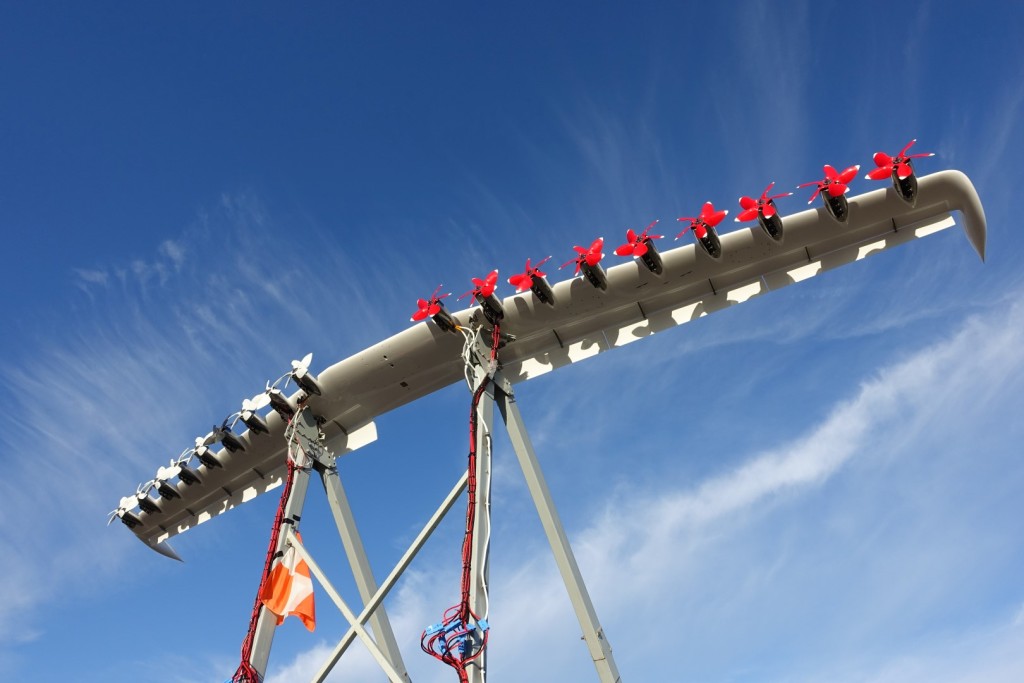
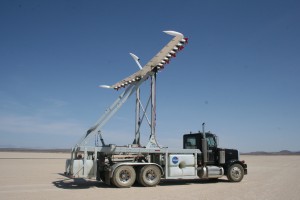 The project features a 30-foot airplane wing – the kind found on a small plane. The new wing design has 18 electric motors with small propellers along its leading edge.
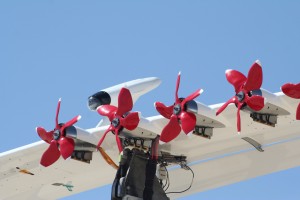 Distributing the motors around the plane (instead of in just one spot) has aerodynamic advantages. The position of the motors on the leading (front) edge of the LeapTech wing results in