Feeds:
Posts
Comments

Archive for the ‘Water’ Category

Two years after the earthquake and accompanying tsunami that resulted in three of the reactors melting down at the Fukushima Dai-Ichi plant, nuclear engineers are still grappling with how to bring the facility under control.  This plant was heavily damaged and to date, no one has been able to repair it.  So it’s still badly broken and it is no wonder that power outages and water leaks continue to hamper the clean-up.

The United Nations atomic monitors, the International Atomic Energy Agency (IAEA), arrived at the Fukushima Dai-Ichi nuclear plant to review how contaminated water is being stored at the disaster site and assess decommissioning risks.  Their arrival was met with reports that a large amount of radioactive water had leaked from the plant.  The IAEA has made irregular visits to the Fukushima site since the March 11, 2011, disaster occurred. Their last visit was in December, 2012.

Currently, about 280,000 tons of highly radioactive water are stored at the Fukushima plant, according to Tokyo Electric Power Company (Tepco), the company that owns the plant. That’s enough to fill about 112 Olympic-sized swimming pools, according to Bloomberg News calculations.

So here is how we got to that much radioactive water.  The reactor cores still have fuel inside that needs to be kept cool.  To cool the cores, Tepco has had to continuously bring in water from outside and pour it in.  That water flows down into the basement of the plant. From there, they pump it out, do an initial decontamination (they are able to remove some radioactive elements like cesium from the waste water, but other elements, like tritium, require more time to scrub) and store it.  Initially, they were storing the radioactive water in metal tanks on site, but these tanks have been filling up because groundwater has also been coming into the basements so they recently switched to reservoirs – really just earthen pits that have been lined with sheets of plastic. It is somewhere in this complex process that these leaks have occurred and right now they believe the reservoirs are leaking.  Here is a cleanup strategy as jaw-droppingly “maybe should have gone with something a bit less duct-tape home repair” short-sighted as the cleanup of the Pegasus Tar Sands spill in Arkansas with what appears to be paper towels that was ridiculed on the Rachel Maddow Show and the Colbert Report.

There are monitors around all the reservoirs, so they have pin pointed which ones are leaking, but they don’t know how much has leaked.  What we do know is that fish and mollusks within 12.4 miles of the Fukushima plant have surpassed baseline measures of radioactivity, according to Tepco’s  most recent environmental monitoring report published April 12. One specimen tested near the port entrance to Fukushima Dai-Ichi was 4,300-times more radioactive than what Japanese officials consider standard and may pose health risks.

Some say clean up is decades away, I say that is a nice fairy tale. Fukashima still has fuel inside, the spent fuel that was being stored above the reactors is still there, and no one can get to any of it right now. The area is just too radioactive. So they will have to wait for all the fuel to cool down and then figure out how to go in there and get it out.  It will be years before they can even open up the reactors. But the reality is that nuclear power plant disasters of this magnitude will take generations to clean up.

In six days we will commemorate the 27th anniversary of the nuclear disaster at the Chernobyl Nuclear Power Plant.  Only 2 miles away from the reactor, the company town of Pripyat, remains deserted and unfit for human habitation for hundreds of years to come.

Chernobyl sits inside a fenced area known as the Exclusion Zone. Radioactive remnants of the failed reactor continue to smolder inside a modern day sarcophagus, a concrete and steel encasement hastily erected after the accident. Leaky and structurally unsound, it now threatens to collapse, shaking loose enough radiation to cause a second disaster of similar magnitude. Work has already started on a new encasement, which will slide over the existing sarcophagus to seal in the remaining nuclear fuel. In the mean time desperate efforts are underway to shore up the sarcophagus to protect it from collapsing.

While our nation has avoided a disaster equal to these, our nuclear fleet of 104 reactors is an aging one, many of which are close to heavily populated areas of the country, and there is no absolute guarantee that the U.S. is invulnerable to a disaster of this magnitude.  We should all keep this in mind as nuclear plant after nuclear plant applies for a license extension that will go well beyond the expected life planned for these plants.

Read Full Post »

It wouldn’t be a Texas legislative session without some truly backwards bills.  Today we have House Bill 2026 by freshman Representative Sanford of Collin county that would eliminate our state renewable energy goals.

BeachWindIn 1999, the state of Texas made a commitment to renewable energy in the form of the renewable portfolio standard (RPS).  That decision played a major role in spurring the development of the wind industry in Texas.

We have now exceeded the renewable energy goals established in the 2005 update to the RPS and Texas has more wind energy capacity than any other state.[1]  On the surface that may seem to indicate that the RPS has been 100% successful and is no longer needed, but that isn’t the case.

One of the major reasons for establishing the RPS was to encourage diversification of our energy sources, which ultimately makes us more resilient to physical and economic forces that can impact the availability and price of energy sources.  While wind energy has increased from zero percent when the RPS was first established to around ten percent today, other renewable energy sources are still largely absent from our energy portfolio.

With more solar energy potential than any other state, Texas should be the center point of the solar industry as well.[2]  Instead we are lagging behind states with far less solar resources, such as New Jersey and Pennsylvania,[3] and are paying the price in missed opportunities for job growth and new generation capacity that can produce during peak demand.

Solar companies invest in California and other states, because smart policies created attractive markets in those places.  California has 1,505 solar companies compared to Texas’ 260. Even New Jersey has more, with 382.[4] Texas should be doing more, not less to attract solar businesses to our state.

SolarInstallProjections showing that we won’t have enough electricity to meet demand by 2020.[5]  The maximum wholesale price of electricity has been set to triple by 2015, without even determining what the cost to consumers will be.  There have been workshops and meetings to consider the prospect of implementing a capacity market in Texas, which would raise costs even more.  But little time has been spent considering simpler, cheaper solutions such as expanding efficiency and demand response (where customers get paid to reduce there energy usage for short periods of time when demand is high) and getting more solar capacity built in Texas.  Solar is most productive when we need it the most – on hot, sunny afternoons.

The RPS should be retooled to focus on solar and other renewable energy resources that are most capable of producing during peak demand.  Millions of dollars could be saved in the wholesale electric market if we had more solar panels installed.[6]

Solar, like wind, also has the benefit of needing very little water to operate.  Solar photovoltaic (PV) installations need an occasional cleaning to keep performance high, but the amount of water need is minimal in comparison to fossil fuel options.  Coal-fired generators need billions of gallons of water to operate each year[7] and while natural gas-fired generations consume less water than coal-fired generators, they still use more than solar, even without accounting for the millions of gallons of water used to extract the gas with hydraulic fracturing.[8]  Including more renewable energy in our portfolio will make our electric grid less vulnerable to drought[9] and will free up water supplies that are desperately needed for human consumption and agriculture.

Abandoning the RPS now would send a terrible signal to renewable energy companies that are deciding where to establish their businesses.  Our state made a commitment that isn’t set to expire until 2025 at the earliest.  There is no good reason to abandon the policy now.  We should be moving in the opposite direction of what is proposed in HB 2026.  Instead of giving up on a policy that has been successful, we should be looking at ways to build on that success and benefit our state.


[1] AWEA. “Wind Energy Facts: Texas.” Oct 2012. http://www.awea.org/learnabout/publications/factsheets/upload/3Q-12-Texas.pdf.

[2] NREL. “U.S. Renewable Energy Technical Potentials: A GIS Based Analysis.” July, 2012. Pg. 10-13. http://www.nrel.gov/docs/fy12osti/51946.pdf.

[3] SEIA. Solar Industry Data. http://www.seia.org/research-resources/solar-industry-data#state_rankings.

[4] SEIA. State Solar Policy. http://www.seia.org/policy/state-solar-policy.

[5] “Report on the Capacity, Demand, and Reserves in the ERCOT Region.” Dec 2012. Pg 8. http://www.ercot.com/content/news/presentations/2012/CapacityDemandandReservesReport_Winter_2012_Final.pdf.

[6] Weiss, Jurgen, Judy Chang and Onur Aydin. “The Potential Impact of Solar PV on Electricity Markets in Texas.” The Brattle Group.  June 19, 2012. http://www.seia.org/sites/default/files/brattlegrouptexasstudy6-19-12-120619081828-phpapp01.pdf.

[7] “Environmental impacts of coal power: water use” Union of Concerned Scientists http://www.ucsusa.org/clean_energy/coalvswind/c02b.html

[8] http://www.ucsusa.org/clean_energy/our-energy-choices/energy-and-water-use/water-energy-electricity-natural-gas.html

[9] Wu, M. and M. J. Peng.  “Developing a Tool to Estimate Water Use in Electric Power Generation in the United States.” Argonne National Laboratory – U.S. Department of Energy. http://greet.es.anl.gov/publication-watertool.

Read Full Post »

Public Citizen’s positions on the pre-filed amendments to the PUC Sunset bill can be viewed here: http://bit.ly/Guide_to_Amend_PUC_Sunset_bill_HB1600 or in the table below.

Support These Amendments to Improve the PUC Sunset Bill

Bar code # Sponsor Description Comment
830096 Cook clean up cleans up language in bill – no substantial changes
830097 Cook clean up cleans up language in bill – no substantial changes
830077 Davis bans sharing of customer info from advanced meters eliminates the value of smart meter – demand response providers may not be able to operate (NOTE: amendment to the amendment will fix this problem)
830076 Davis requires annual  review of certificate holders
830087 Davis requires written disclosure prior to releasing info from advanced meters protects customer privacy while allowing demand response providers to operate with permission of customer
830088 Davis makes utility liable for damages to advanced meter during installation or removal protects customer from unreasonable charges
830089 Davis bans billing for average use of electricity restricts customer choice (NOTE: amendment to the amendment will fix this problem by allowing customers to choose levelized billing)
830090 Davis reregulates the electric market assures adequate resources to meet the load
830101 King caps transmission congestion costs protects consumers
830104 Phillips prevents Texas generators from exporting electricity from ERCOT during an electricity emergency protects reliability in ERCOT
830084 Phillips bans cost recovery for interstate transmission lines out of state electric generators must finance their own transmission
830086 Rodriguez sets 35%  renewable portfolio standard by 2020 increases generation, local jobs and investment
830082 Strama establishes a peak energy portfolio standard improves reliability and increases local investment and jobs
830106 C Turner requires study by gas utilities on replacing their gas distribution lines improves safety
830072 S Turner requires legislative approval to increase the Universal Service Fund limits costs to consumers
830073 S Turner restricts cease and desist orders for customers to those causing a danger provides reasonable restrictions of PUC power and protects customers
830078 S Turner increases state penalties for market abuses and eliminates double jeopardy restores recommendation of Sunset Advisory Commission staff to increase fines for market abuse
830103 S Turner requires cost-benefit analysis when PUC makes significant market changes helps protect consumers
830102 Vo requires 30 day notice of discretionary changes in electric rates provides some customer protection against unexpected electric rate increases
830098 Walle limits water companies to one rate increase each 3 years and limits the amount of any increase protects consumers

Oppose These Bad Amendments to the PUC Sunset Bill

Bar code # Sponsor Description Comment
830095 Cook changes qualifications for PUC commissioners allows utilities to have too much control over commission
830100 Gonzalez gives PUC citing authority over a new plant in the El Paso area shouldn’t apply to just one company
830085 Krause eliminates the PUC’s ability to issue a cease and desist order jeopardizes reliability
830105 Laubenberg eliminates the PUC’s ability to issue a cease and desist order jeopardizes reliability
830091 Phillips interferes with reliability must run plans could jeopardize reliability and create inefficiencies
830092 Phillips requires CREZ lines to be buried in a specific municipality significantly increases electric consumers’ costs
830093 Stanford eliminates cease and desist orders for retail customers prevents the PUC from stopping abusive behavior and protecting reliability of the electric grid
830094 Sheets creates a 5 member Public Utility Commission two commissioners could meet without following open meeting requirements
830079 Simpson eliminates the PUC’s ability to issue a cease and desist order jeopardizes reliability
830080 Simpson eliminates cease and desist orders for retail customers prevents the PUC from preventing abusive behavior and protecting reliability of the electric grid
830081 Simpson shifts cost of opting out of advanced metering to other customers puts unfair cost burden on customers
830074 S Turner changes to single elected commissioner opens door to even more industry influence over regulators through campaign contributions

Read Full Post »

Whooping Cranes - Wikipedia Photo

Whooping Cranes – Wikipedia Photo

A federal judge has ruled that the Texas Commission on Environmental Quality was responsible for the deaths of 23 rare whooping cranes in the winter of 2008-2009.

Senior U.S. District Judge Janis Graham Jack in Corpus Christi found that TCEQ’s management of rivers feeding San Antonio and Aransas bays caused their salt levels to rise and says the state must develop a conservation plan to protect the last naturally migrating flock of the endangered birds.

Her order also bars the state from issuing any new water permits on the rivers.

Read Full Post »

San Antonio Kick-Off is scheduled for Wednesday, March 13, 2013 at the Whole Foods Market Meeting Room, 255 E. Basse Rd. #130, San Antonio, TX, 78209

RSVP here!

This past year, Texas experienced one of its worst droughts: Reservoirs dipped to record lows, and as many as 500 million trees across Texas died.  In San Antonio, it seems everyone knows the level of the Edwards Aquifer, and recent storms have not brought adequate relief or repaired this damage.

The good news is that we can save millions of gallons through common-sense, cheap solutions like fixing leaky pipes and recycling water that we have already collected. But we need YOUR help. The best way to learn more and get involved is to join San Antonio’s Save Texas Rivers Kick-Off Wednesday, March 13 at 6:30PM.

Environment Texas will discuss Texas water policy, the importance of conservation, and ways to ensure a sustainable water future. RSVP here and bring a friend!

Read Full Post »

In a new peer-reviewed scientific study, experts said satellite data show sea levels rose by 3.2 millimeters a year from 1993 to 2011 — 60 percent faster than the 2 mm annual rise projected by the U.N.’s Intergovernmental Panel on Climate Change (IPCC) for that period, however  the IPCC was just about spot on with its predictions for warming temperatures.

The IPCC has estimated that seas rose by about 7 inches over the last century, and estimates a range of between 7 and 23 inches this century.  This is enough to worsen coastal flooding and erosion during storm surges and if the impacts of Hurricane Sandy is any indication, will dramatically impact the dense coastal populations around the world.

The most recent IPCC report did not factor in a possible acceleration of the melt of the Greenland and Antarctic ice sheets and “assumed that Antarctica will gain enough (ice) mass” to compensate for Greenland ice loss, the new study’s authors noted, but more recent studies have shown that “the ice sheets in Greenland and Antarctica are increasingly losing mass.”

When the next IPCC report comes out in March 2014, we should expect a more quantitative understanding of ongoing sea level rise — and an entire chapter on the topic —given the impacts on the densely populated coastal regions of the world.

Read Full Post »

Submit a comment to the Nebraska Department of Environmental Quality (DEQ) on how risky the Keystone XL pipeline route is for the Nebraska Sandhills and the Ogallala Aquifer. Help us get over 1,000 comments submitted.  Click here to send a comment to the Nebraska DEQ.  If you are not from Nebraska, change the comment and let them know how this affects you.

The Ogallala Aquifer is part of the High Plains Aquifer System.  It is a vast, yet shallow, underground water table aquifer located beneath the Great Plains in the United States. One of the world’s largest aquifers, it covers an area of approximately 174,000 square miles in portions of eight states.  These include South Dakota, Nebraska, Wyoming, Colorado, Kansas, Oklahoma, New Mexico, and Texas.


Read Full Post »

Native Americans protesting the Keystone XL pipeline will be compelled to stay in enclosure located miles from President’s pro-oil event

Native American’s gathering in Cushing, OK today to protest President Obama’s words of praise for the Keystone XL pipeline were forced by local authorities to hold their event in a cage erected in Memorial Park. The protestors were stunned that their community, so long mistreated, would be insulted in such an open manner instead of being given the same freedom of speech expected by all Americans simply for taking a stance consistent with their values.

“A lot of tribal councils and Indian businesses struggle to find a balance between economic resources and our inherited responsibilities for the earth,” said Indian actor and activist Richard Ray Whitman in a statement. “How will the decisions we make now effect coming generations?”

“President Obama is an adopted member of the Crow Tribe, so his fast-tracking a project that will desecrate known sacred sites and artifacts is a real betrayal and disappointment for his Native relatives everywhere,” said Marty Cobenais of the Indigenous Environmental Network. “Tar sands is devastating First Nations communities in Canada already and now they want to bring that environmental, health, and social devastation to US tribes.”

The President visited Cushing to stand with executives from TransCanada and throw his support behind a plan to build the southern half of the controversial Keystone XL pipeline to move tar sands bitumen and crude oil from Cushing to the Gulf Coast refineries in Texas.

A major concern for Native Americans in Oklahoma, according to spokespeople at the event, is that Keystone XL and the Canadian tar sands mines that would supply it ignore impacts to indigenous communities and their sacred spaces.

“Natives in Canada live downstream from toxic tar sands mines,” said Earl Hatley, “and they are experiencing spikes in colon, liver, blood and rare bile-duct cancers which the Canadian government and oil companies simply ignore. And now they want to pipe these tar sands through the heart of Indian country, bulldozing grave sites and ripping out our heritage.”

The group points to a survey done by the Oklahoma Archeological Survey which found 88 archaeological sites and 34 historic structures that were threatened by Keystone XL. TransCanada was asked to reroute around only a small portion of these, leaving 71 archaeological sites and 22 historic structures at risk. The group says they have asked for a list of these sites and to oversee operations that might threaten sacred burial grounds, but neither request has been honored.

Beyond the threat to their own cultural heritage, the group voiced opposition to the pipeline’s environmental impacts.

“The Ogallala Aquifer is not the only source of water in the plains,” said RoseMary Crawford, Project Manager of the Center for Energy Matters. “Tar sands pipelines have a terrible safety record and leaks are inevitable.”

“We can’t stop global warming with more fossil fuel pipelines,” added Crawford. “The people who voted for this President did so believing he would help us address the global environmental catastrophe that our pollution is creating. He said he would free us from ‘the tyranny of oil.’ Today that campaign promise is being trampled to boost the President’s poll numbers.”

Read Full Post »

Comment Period Extended to March  23rd

The Texas Commission for Environmental Quality is the second largest environmental agency in the world—with a budget to match. Help hold TCEQ accountable for taxpayer’s interests and stop them from implementing rules that favor polluting businesses.

TCEQ’s Mission Statement and Agency Philosophy includes a commitment to “ensure meaningful public participation in the decision-making process.”  Frankly, that did not translate into practice last week.  At the public hearing on Tuesday, March 6th, Public Citizen testified about our experience attempting to gain access to an agency analysis of the proposed changes to Chapter 60 (Compliance History) rule on a previous report that is accessible on TCEQ’s website as an ASCII file which can be imported into an excel spreadsheet. (more…)

Read Full Post »

Get tough on environmental crimes

Texas law requires that the our state environmental agency, the Texas Commission on Environmental Quality (TCEQ), consider a facility’s past compliance when making decisions regarding permits or inspections.  In fact, a facility’s Compliance History score affects every bit of its business with the TCEQ.

New rules currently proposed by the TCEQ to the Compliance History program would possibly bump up thousands of previously categorized “poor” performers to an “average” classification without having removed an ounce of pollution from our air and water.  The TCEQ has introduced even more limitations which will only further serve to keep every facility average.  These changes include increasing the score by which a performer falls into the poor category, separating repeat violations by media (i.e. administrative violations vs specific emissions violations), giving the TCEQ Executive Director extraordinary authority to change a facility’s classification, and handing out bonus points for ill-defined and unregulated voluntary measures that a facility can implement.

If the Compliance History program reforms go forward as currently written, we will be missing out on two major opportunities by continuing to pretend that all facilities in this state are average.

  • First, we miss a chance to implement the type of regulation that a lot of people in our state prefer.
  • Second, and most importantly, we miss a huge opportunity to try to clean up the air and water around our state in a business friendly manner.

At a time when the challenge of grappling with an increasing array of environmental and health threats to our state and its population gets harder every day, we cannot afford to let such opportunities pass us by.  We urge the TCEQ to reconsider its Compliance History rules, and deliver a program that works to the people of the state of Texas.

The public has a chance to weigh in on these rules and we ask you to consider coming to the public hearing on March 6th or sending comments to the TCEQ by March 12th.  Tell them:

  • Don’t pardon the polluters by increasing the threshold for being declared a poor performer
  • Don’t give the executive director the right to pardon polluters
  • Don’t give polluters a get out of jail free card for signing up for “defensive polluting” classes

As we know from our criminal justice system, swift sure and certain punishment deters crime.  We should apply these lessons to environmental crime too

Public Hearing : TCEQ will hold a public hearing on this proposal in Austin on March 6, 2012 at 10:00 a.m. in Building E, Room 201S, at the commission’s central office located at 12100 Park 35 Circle.

Comments can be submitted  by March 12, 2012.

Tips on Commenting Effectively

You will be providing comments for the rulemaking – 2011-032-060-CE: HB 2694 (4.01 and Article 4): Compliance History

  • Identify who you are and why the regulation affects you;
  • Explain why you agree or disagree with the proposed rulemaking;
  • Be direct in your comment; and
  • Offer alternatives, compromise solutions, and specific language for your suggested changes.

Read Full Post »

drought monitor Feb 7, 2012While only 23 percent of Texas remains under “exceptional” drought, 90% of the state is still under some level of drought in spite of the recent rains many parts of the state have experienced.  But we can’t get cocky, as the U.S. seasonal drought outlook indicates most of Texas can expect the drought to persist or intensify through April of this year.  If we are lucky, the next outlook won’t be so dire as we head toward another Texas summer, hopefully not like our last one.

Drought Outlook thru April, 2012

Read Full Post »

Spicewood, Texas, a small community on Lake Travis, is precariously close to becoming the state’s first community to run out of drinking water during this historic drought.  On Monday, under dark clouds and with rain falling, Spicewood got its first delivery of 8,000-gallons of water after it became clear local wells could no longer produce enough water to meet the needs of the 1,100 residents.

Several communities in Texas have come close to running out of water during 2011, the driest year in Lone Star State history, but until now none had to truck in water.

For more than a year, nearly the entire state of Texas has been in some stage of severe or exceptional drought. Rain has been so scarce lakes across the state have been drying up. One town near Waco, Groesbeck, bought water from a rock quarry and built a seven-mile pipeline through a state park to get water. Some communities on Lake Travis moved their intake pipes into deeper water. And Houston started getting water from an alternative, farther away reservoir when Lake Houston ran too low.

Although it has started to rain more this winter, it is not enough to fill the state’s arid rivers and lakes.  Austin, Tx still remains nearly 20 inches below normal rainfall for the past 12 months, so we are talking about rainfall events of 20 inches plus, basically flood events, to bring the lake levels up.

Under the current long term weather predictions, we are not likely to see such an extreme weather event as la Nina keeps its hold on Texas, bringing dryer than normal conditions through the spring.  2012 is going to be a difficult year for the Lone Star state.

Read Full Post »

As Texas struggles to determine how they will meet their water needs in the face of what could be an extended 5 to 10 year period of drought, Oklahomans are looking to protect their water rights as their neighbors to the south look on lustfully.

An Associated Press story says proposed legislation by two Oklahoma state lawmakers would require a statewide vote of the people before any out-of-state sale of Oklahoma water. Sen. Jerry Ellis of Valliant and Rep. Eric Proctor of Tulsa said the legislation, dubbed ”The People’s Water Act”, would give Oklahomans the final say in deals with other states.

The Tarrant Regional Water District has waged a multi-year legal battle to obtain water from Oklahoma that has so far been unsuccessful. Ellis, who is based in water-rich Southeastern Oklahoma has been one of the most vocal opponents of water sales to Texas and said the future of Oklahoma water should not be decided in private meetings between politicians and Texans.

In the 1870s to 1881 recurrent friction and eventual violent conflict over water rights in the vicinity of Tularosa, New Mexico, involving villagers, ranchers, and farmers were well documented.  As the region deals with this extended drought, which some say could be the region’s new norm, could we be looking at more conflicts over water, not only along groundwater sources inside the state, between industrials, urban areas and agriculutural regions, but between Texas and its neighbors?

Read more here: http://blogs.star-telegram.com/politex/2012/01/bill-would-give-oklahomans-the-right-to-vote-on-any-texas-water-sale.html#storylink=cpy

Read Full Post »

A draft finding by the U.S. Environmental Protection Agency (EPA) could have a chilling effect on states trying to determine how to regulate the process.

Fracking, or hydraulic fracturing, involves pumping pressurised water, sand and chemicals underground to open fissures and improve the flow of oil or gas to the surface.

The EPA found that compounds likely associated with fracking chemicals had been detected in the groundwater beneath the Wyoming community of Pavillion where residents say their well water reeks of chemicals.

Health officials advised them not to drink their water after the EPA found hydrocarbons in their wells.

The EPA announcement has major implications for the vast increase in gas drilling in the US in recent years. Fracking has played a large role in opening up many reserves.

The industry has long contended that fracking is safe, but environmentalists and some residents who live near drilling sites say it has poisoned groundwater.

The EPA said its announcement is the first step in a process of opening up its findings for review by the public and other scientists.

“EPA’s highest priority remains ensuring that Pavillion residents have access to safe drinking water,” said Jim Martin, EPA regional administrator in Denver. “We look forward to having these findings in the draft report informed by a transparent and public review process.”

At this time, the EPA is emphasising that the findings are specific to the Pavillion area. The agency said the fracking that occurred in Pavillion differed from fracking methods used elsewhere in regions with different geological characteristics.  Further studies need to be done in specific areas and the finding of this report should not be extrapolated to other areas of high activity.

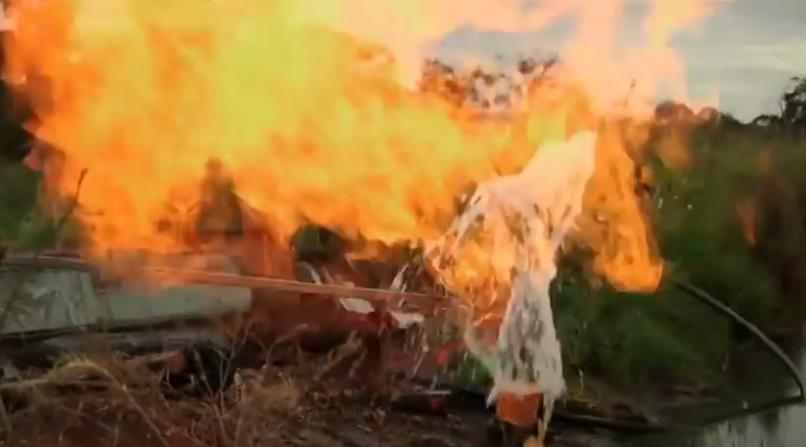
This feels a bit like the EPA is hedging their bets and is scant consolation to those folks in other parts of the country who have the sideshow ability to light their water taps on fire.  Nevertheless, this finding may make it easier for other communities to have their voices heard when they express concerns about pollution of their water supplies.  This will be particularly important in Texas which is looking at a multi-year, record breaking drought in their future.

The fracking occurred below the level of the drinking water aquifer and close to water wells, the EPA said. Elsewhere, drilling is more remote and fracking occurs much deeper than the level of groundwater that anybody would use.

In Colorado, regulators are considering requiring oil and gas companies to publicly disclose the chemicals used in fracking

The public and industry representatives packed an 11-hour hearing on the issue on Monday. They all generally supported the proposal but the sticking point is whether trade secrets would have to be disclosed and how quickly the information would have be turned over.

Industry representatives say Colorado and Texas are the only states to have moved to consider disclosing all fracking chemicals, not just those considered hazardous by workplace regulators.

Read Full Post »

Waste Control Specialists LLC (WCS) is seeking several amendments to its Radioactive Material License # R04100 from the Texas Commission on Environmental Quality (TCEQ).  Five of the amendments request design changes to the Compact Waste Disposal Facility (CWF) and the Federal Waste Facility (FWF) for commercial and federal low-level radiactive waste disposal. The other two amendment applications set forth new Waste Acceptance Criteria that includes rates and contract considerations and new pavement design considerations.

Just as important, TCEQ is considering revising language and definition for waste of international origin, acceptance criteria, reporting of inventory and liability coverage as well as the issued TCEQ waste water permit.

TCEQ is accepting public comments and requests for a public meeting.  These can be submitted by mail to:

the Office of the Chief Clerk
MC 105
TCEQ
P. O. Box 13087

or electronically at www.tceq.state.tx.us/about/comments.html by December 17th.

If you need more information about the license application or the licensing process, please call the TCEQ Office of Public Assistance at 1-800-687-4040.

We will post the link to the amendment applications as soon as we are able to find them.  TCEQ recently migrated its database and the links no longer work.  Makes finding materials to base written comments on a bit more complicated.

Read Full Post »

Older Posts »

Follow

Get every new post delivered to your Inbox.

Join 3,144 other followers