Earlier this month, Governor Gregg Abbott released a new report on Hurricane Harvey. “Eye of the Storm,” The Governor’s Commission to Rebuild Texas (Nov. 2018) (available at https://gov.texas.gov/uploads/files/press/RebuildTexasHurricaneHarveyEyeOfTheStorm_12132018.pdf).
 Harvey’s magnitude was unprecedented in Texas. Sixty eight people lost their lives; 780,000 were evacuated; and 122,000 were rescued by first responders. All told, the storm was estimated to cost Texas $125 billion. The Governor’s Commission to Rebuild Texas was created to develop a path forward for recovery from the storm and preparedness for the next one. Texas A&M University System Chancellor John Sharp chaired the commission. The report that resulted is a comprehensive look at Hurricane Harvey and Texas’ needs. In many areas we agree with the commission, and we encourage everyone to look at the report and judge for themselves. There are some areas where we disagree or would have recommended stronger action. Below we have commented on a few specific subjects covered in the report.
Climate Change must be identified as a contributing factor to Harvey and future storms.
Much attention was paid to how the Governor’s Commission to Rebuild Texas—and Governor Abbott himself—did or did not mention climate change in the report. Neither the Governor’s press release announcing the report or the 178 page report itself says the words “climate change.” This is a disservice to Texas, as it’s hard to prepare for something that you refuse to call by name.
We have improved since 2011, when Texas censored a report about climate change and sea level rise in Galveston Bay. This report includes some oblique references to climate change. The Rebuild Texas Commission states that, “The clearest and most important message we took from the commission’s work is that Hurricane Harvey was a warning we should heed.” (Eye of the Storm at p. iv.) The report also acknowledges that, “The current scientific consensus points to increasing amounts of intense rainfall coupled with the likelihood of more intense hurricanes.” (Id. at 42.)
This language is tacit acceptance of the existence of climate change, but it simply isn’t enough. According to the 2018 Climate Opinion Maps from the Yale Program on Climate Change Communication, 56% of Texans believe that our governor should do more to address global warming. (See http://climatecommunication.yale.edu/visualizations-data/ycom-us-2018/?est=governor&type=value&geo=state&id=48.) He can start by saying “global warming” or “climate change” in public and by publishing the words in official state reports.
But this isn’t enough. A plan to actually prepare Texas for climate change will account for the new reality of hotter temperatures, longer droughts, more frequent and intense rain events and hurricanes, sea level rise, and changing flood patterns. Texas will never develop such a plan if its Governor will not hold honest, open conversations about the issue. (There are, however, legislative proposals that would move Texas in the right direction.)
Notification of community members should be improved.
The report notes that, “Effective communication among responder groups and citizens during a crisis greatly increases the success of response.” (Eye of the Storm at 62). One interesting development during the rescue operations was the impromptu use of social media to alert first responders of where rescues were needed. The commission recommendations focus on “interoperability” of communications systems—that is, the ability of different agencies and first responder groups to communicate with one another on channels such as radio.
We think that new channels are also needed to communicate with the public. For several years now Public Citizen has called for Texas to develop a more modern system of emergency notifications for chemical emergencies. In the 85th legislative session we supported HB 1927 to do just that. Hurricane Harvey also showed that more modern emergency notification systems are needed. Cell phones allow “push notifications” that can be highly geotargeted and are sent unless users opt out. We believe that such a modern notification system should be developed and accessible for use by agencies and local governments statewide. Such a system could be used for chemical emergencies, floods, wildfires, and other natural and manmade disasters.
Better planning is needed for Temporary Debris Management Sites.
Harvey generated 13 million cubic yards of debris (or, in Texas units, 16 Kyle Fields worth of debris). (Eye of the Storm at 72.) Managing that debris required the approval

Screenshot of the TCEQ’s TDMS map with contact info.
of 228 temporary debris management sites (TDMSs). (Id. at 73.) In conversations with TCEQ staff, we were told that TDMSs go through a pre-approval process that includes an opportunity for public notice and comment. Neither Public Citizen nor its allies were aware of this pre-approval process before Hurricane Harvey. Many communities across the region were alarmed to find that debris management sites popped up overnight in their communities.
We suspect that the pre-approval process for these sites was lacking, and we encourage TCEQ to engage in a more inclusive effort to notify the public when approving future TDMSs. To its credit, the TCEQ did create a comprehensive map of all TDMSs that includes location and a contact phone number. That map is available at https://www.google.com/maps/d/viewer?mid=1hfhU9C6qfnGnGWuT5x6JgAHyz8s&ll=29.15144754529617%2C-97.10440749999998&z=7.
Rule suspensions must stop.
For eight months after Hurricane Harvey, Governor Abbot left in place the suspension of forty-six environmental rules spanning air, water, and waste regulation. Public Citizen and its allies objected to the prolonged suspension and successfully lobbied for their removal in April 2018. (You can see our comments on the rule suspension here and a rule-by-rule analysis here.)
We object to any rule suspensions during disasters. It may be that extenuating circumstances during a disaster make it difficult or impossible to comply with one or more environmental rules. If that it is the case, the Texas Commission on Environmental Quality has enforcement discretion it can exercise to forgive entities that could not comply with rules. But blanket suspensions of rules send the wrong message about accountability during a disaster and potentially create a legal defense to any liability for actions during or after a disaster. For these reasons, Public Citizen will as a matter of policy oppose all future rule suspensions during disasters.
The Rebuild Texas Commission recommended that the Governor’s office, “Compile and maintain a comprehensive list of all the regulatory waivers needed during a disaster to expedite suspensions in any future event.” (Eye of the Storm at 99.) For the reasons stated above, we believe that no waivers are needed.
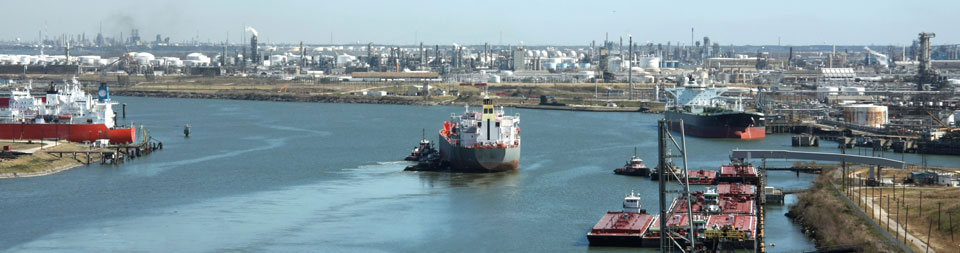
Air pollution and petrochemical industry vulnerability must be addressed.
The Commission to Rebuild Harvey included virtually no discussion of air pollution in its report. The report does acknowledge a “particularly severe” impact on “water systems and the chemical, oil and transportation industries.” (Eye of the Storm at 122.) Some of the impacts catalogued include:
- 77 boil water notices.
- 19 water systems and 31 wastewater systems offline.
- 16 hospital closures.
- 15 dams affected.
- 336,000 electricity customers lost power.
- Three highways inundated (I-10, I-45, and US-59).
- 500 roads closed.
- 13 bridges requiring repairs.
Absent from this list is the millions of pounds of air pollution that was released; anywhere between 1.7 million and 8.3 million pounds depending on who’s counting.
Interestingly, the report states that two very large incidents, including the Arkema chemical plant disaster—possibly one of the most widely reported on disasters resulting from Harvey—were “never publicized.” (Eye of the Storm at 23.) It is true that there was a critical lack of information about the Arkema situation as it was unfolding—a situation that led to at least 15 first responders seeking medical care or hospitalization due to exposure to the disaster. But after the fact the Arkema disaster was the subject of much analysis culminating in the release of a report by the U.S. Chemical Safety and Hazard Investigation Board.
The report also pointed out a lack of coverage of the Magellan Midstream Partners tank farm accident in Galena Park. That accident was initially reported to have released more than 2.5 million pounds of air pollution, though that amount was eventually revised down to a little more than 56,000 pounds. Interestingly, the Environmental Integrity Project released a report showing that companies who revised their pollution estimates almost always decreased them, and often dramatically (see p. 21 of the report).
We agree with the Commission to Rebuild Texas that air pollution events were underreported in the hours and days after they began. But there has been extensive coverage of that fact in the months since the storm. By failing to detail the specific incidents and their causes, the Commission to Rebuild Texas has omitted a significant vulnerability: the petrochemical industry. The report does not identify specific weaknesses such as floating roof tanks and includes no proposals to harden the petrochemical industry.
For our part, Public Citizen believes that responsibility for preparing that industry for the next storm should not be borne by taxpayers. Indeed, the members of the petrochemical industry are in part responsible for Hurricane Harvey due to their contribution of the greenhouse gases that cause climate change. If anything, industry should be contributing to the state’s cleanup effort. Texas and Texas taxpayers should not have to bear any cost at all of industry recovery or resiliency planning.
Harvey recovery should be funded by the Economic Stabilization Fund.
It’s called the “Rainy Day Fund” for a reason. Right now the Economic Stabilization Fund has a balance of about $12.5 billion. Governor Abbott declined to call an emergency session to provide Houston with rainy day funds before the 86th session. Now it will be up to the legislature whether to develop an aid package for coastal communities impacted by Harvey. Certainly there is a need for funding from all available sources to continue to the path to recovery and resilience. The Commission to Rebuild Texas did not make a recommendation regarding use of rainy day funds. We recommend the use of rainy day funds and believe they are absolutely necessary to achieve the goal set by the Governor’s Commission to Rebuild Texas: not simply to replace what was destroyed by Harvey, but to increase Texas’ resilience before the next storm.
The people of Texas, our first responders, and our government officials deserve credit for their response to Hurricane Harvey. We worked together to minimize the damage from one of the worst natural disasters in state history. Public Citizen commends those who helped out during and after the storm. We commend Governor Abbott for commissioning this report as well. There is work to be done to rebuild and prepare, and the state should follow through with the recommendations in this report.
But there are some areas where the state should go further. Our leaders must be willing to call out climate change for the existential threat that it is. And we must allocate emergency funding when emergencies leave lasting unaddressed need. Texas will not soon forget the lessons from Harvey, nor will the recovery be completed any time soon. This report is a good step forward, but much is left to be done.

 Vision Plan Needs Work