Feeds:
Posts
Comments

Posts Tagged ‘air pollution’

Back in March, the Dallas Observer reported about the chance that Energy Future Holdings (EFH – formerly TXU) the state’s largest power generator, was verging on bankruptcy,  Our question then was – are Texas ratepayers going to have to pay for EHF’s bad bet?

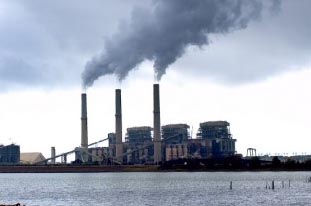
Before and since then, there has been a lot of talk about how the EPA is threatening our ability to keep the lights on in Texas.  It was just last fall that Dallas based Luminant claimed that it would be taking 2 coal-fired generating units at the Monticello plant offline due to the cost of complying with newly proposed EPA regulations.

Now, with EPA’s Cross-State Air Pollution Rule off the table, Luminant is going to take the Monticello plant offline for the winter season anyway.  The reality of the energy market in Texas and across the U.S. is that coal isn’t the cheapest option anymore.

Now comes the Dallas Observer with a new article questioning EHF’s Luminant generation division’s claim that EPA regulations are going to be the cause of plant closures.

Brantley Hargrove writes:

Does Texas’ biggest electricity generator, Dallas-based Luminant, just have one hell of a poker face, or should we not read too much into Friday’s announcement that it will idle two units at its Monticello plant for six months? If you’ll recall, the company threatened to idle the units last summer, a time when record demand almost forced rolling blackouts. It claimed that an EPA rule designed to reduce the amount of harmful air pollution wafting across state lines was going to force the company to remove 1,200 megawatts from the grid, enough to power more than a million homes.

Texas politicos were quick to pile onto the agency’s “job-killing” regulations, which they said threatened the very integrity of the grid. “As expected, the only results of this rule will be putting Texans out of work and creating hardships for them and their families, while putting the reliability of Texas’ grid in jeopardy,” Gov. Rick Perry scolded from the presidential campaign trail.

“The rule will impose great costs on coal-fired power plants, causing some to shut down or curtail operations, threatening the state’s electrical capacity reserve margins needed to avoid power disruptions during times of peak demand,” Texas Commission on Environmental Quality director Bryan Shaw warned. “Such a scenario could lead to blackouts, which create serious health risks for Texans dependent on reliable energy.”

To hear them tell it, Texas was given a brief reprieve when a federal appeals court stayed the rule pending oral arguments. And when it tossed the Cross-State Air Pollution Rule altogether last month, the court’s decision was heralded as a decisive coup for Luminant and Texas electric reliability.

“EPA’s illegal micro-managing of state air-quality plans was so specific that immediately after the rule-making it was clear that coal-powered energy production at Texas-based plants operated by Luminant, a big utility, would have to be cut,” a Wall Street Journaleditorial opined. “Tuesday’s ruling means Luminant will be able to keep 1,300 megawatts of power online in Texas, which needs more electricity because unlike other parts of the U.S. in the Obama era it is growing.”

But no sooner had Texas Attorney General Greg Abbott crowed over his “defeat” of the “EPA overlords” than Luminant announced it would idle those two Monticello units anyway. Awkward. For between six or seven months, starting in December, they will sit dormant. Luminant spokesperson Allan Koenig blames low power prices. Monticello has been running below capacity as it is, he says. They’ll be back online in time for next summer’s heat wave. In the meantime, somehow, Luminant won’t lay anybody off.

What Koenig says about the power market is true: The price of electricity fell along with the price of natural gas back in 2008. Ever since then, their bottom line has gotten pinched, along with everyone else’s.

But Luminant is a special case, troubled by a unique predicament, causing some to wonder whether we can lay everything at the feet of the cruel market. The real problem came (as we examined in a March cover story, “Blackout Blues”) when private equity firm Kohlberg Kravis Roberts saddled the former TXU with tens of billions of dollars in debt. The bull electricity market KKR was betting on went bearish, and the newly reconstituted Energy Future Holdings’ already daunting mountain of debt became insurmountable. Analysts think the company’s preparing for an impending bankruptcy.

So, the coal-fired plants KKR expected Luminant to ride into profitability are now cheaper to shut down, particularly when seasonal electricity demand is low. That makes sense. It made sense, too, that as the generator navigated treacherous financial straits, costly pollution controls on aging, depreciating coal-fired units wouldn’t be the wisest investment. It’s one big expense they can’t currently afford. Nor can it afford to lose money by running a coal-fired plant.

It all causes one to wonder, though: Now that the threat of regulation has, albeit momentarily, passed, and the units it threatened to shut down because of clean air rules have gone dark anyway, what was the point of all that brinksmanship? Was Luminant playing a high-stakes game of chicken to ward off regulations by threatening to idle a plant it was going to idle regardless of the outcome? Luminant’s Koenig says the shut down is “in no way related” to last year’s regulatory standoff. “Federal regulation is very, very different from low power prices,” Koenig says. “We can’t control either, but we can respond to regulation and low power prices. The argument to me, it’s absolutely apples and oranges.”

Yet others in the industry say it’s all about the market. Always has been.

“These regulations will not kill coal,” John Rowe, until recently the leader of one of the country’s largest generators, told an audience at an American Enterprise Institute conference. “In fact, modeling done on the impacts of these rules shows that up to 50 percent of retirements are due to the current economics of the plant due to natural gas and coal prices.”

If fingers need to get pointed anywhere, point them in that direction, and at LBO architects that left the company all but incapable of navigating these choppy Texas waters.

We are wondering the same and believe market factors are impacting the coal industry more than the EPA and the current administration.

Read Full Post »

The New York University School of Law’s Institute for Policy Integrity has released a new reportThe Regulatory Red Herring: The Role of Job Impact Analysis in Environmental Policy Debates. The study finds that claims of jobs that stand to be gained or lost due to environmental regulations require much closer scrutiny than they’re given. Very often these claims are made dramatically out of context, based on economic analyses that may not have been meant to support them.

The report goes on to say there are ways that cost-benefit analysis can more accurately evaluate the effect of environmental regulation on layoffs and hiring. But frequently, the tendency is for jobs impact models to be used in ways that are not helpful in debates over environmental protections. Results are sometimes cited without calling adequate attention to their limitations and assumptions even though different modeling choices can lead to drastically different conclusions.

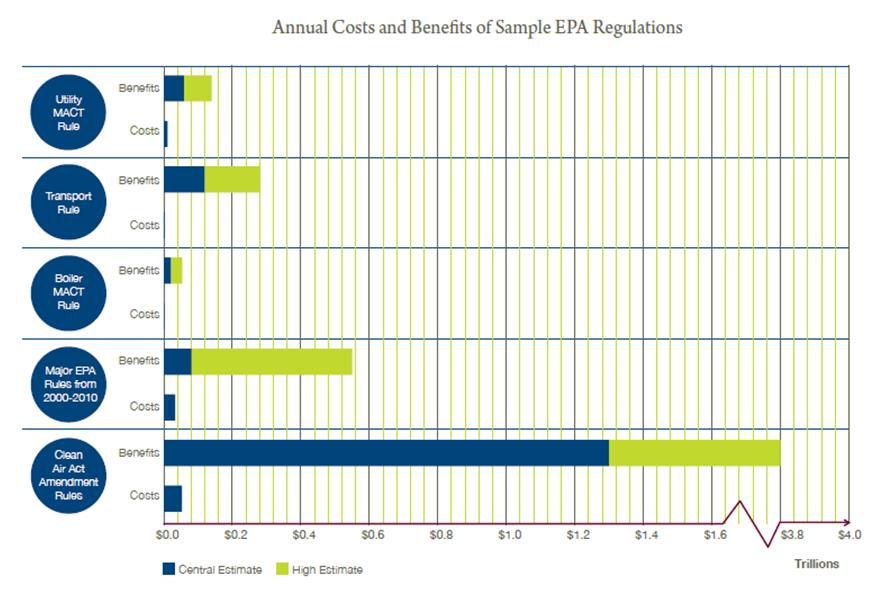
EPA’s recent regulations, which have come under attack for “killing jobs,” have all gone through economic analysis and have been vetted by the White House Office of Information and Regulatory Affairs. For example, the Boiler MACT Rule is estimated to deliver between $22.2 billion and $54.5 billion in benefits per year, including the avoidance of thousands of premature deaths and cardiopulmonary illnesses annually (as well as significant, non-monetized ecosystem and mercury reduction benefits); by comparison, only about $1.9 billion in costs are expected.

Below is a table that shows the analysis for several EPA regulations.

Annual costs and benefits of sample EPA regs

In each instance, the benefits outweigh the costs.  Click here to get the full report.

Read Full Post »

According to an MSNBC article, even short-term exposure to air pollution — just a day or a week in some cases — may kick off a heart attack or stroke according to two new studies.  The studies reveal that the risk of heart attack or stroke can jump after high-pollution days, especially for people who already have predisposing health problems.

In a new analysis published in the latest issue of the Journal of the American Medical Association, up to a week of exposure to most major types of air pollution may be enough to trigger a heart attack.

  • Heart attack risk went up by almost 5 percent with high carbon monoxide levels over as little as seven days
  • Heart attack risk increased almost 3 percent with higher levels of air particles for up to seven days.

The risk of stroke jumped 34 percent after 24 hours of exposure to moderate air pollution, according to a study published in the latest issue of the Archives of Internal Medicine.

No one knows exactly how much pollution will trigger a heart attack or stroke, but experts suggest that vulnerable people protect themselves by minimizing time spent breathing air contaminated with a heavy dose of fine particles.  As exposure increases, both in terms of time and intensity, so does the risk of a heart attack and stroke.

The best recourse for those with cardiovascular disease may be to keep a close eye on local pollution levels, experts say. And government agencies are making that easier and easier. The Environmental Protection Agency, for example, has a downloadable app that provides information on local air quality. You can download the air quality app from the AIRNow app from the EPA’s website. The app works on both Apple and Android phones and allows users to get pollutant and ozone levels for more than 400 cities across the nation.

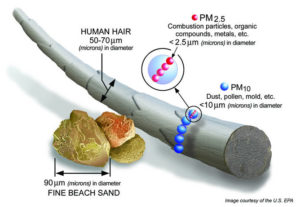
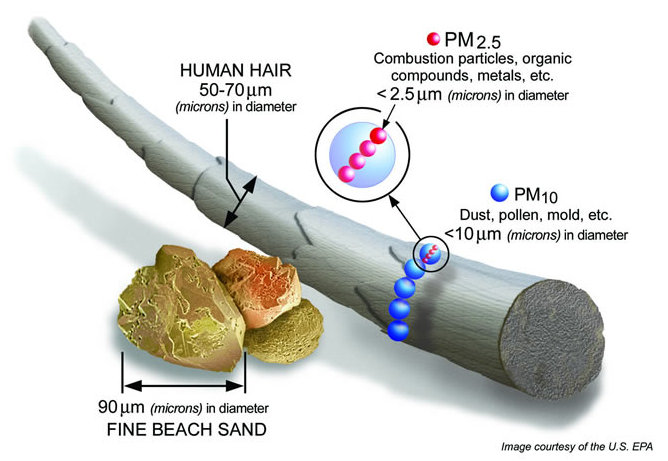
The culprit in both studies is particulate matter, tiny bits of material and droplets, known as PM2.5s. The particles come from a variety of sources, including power plants, factories, trucks and cars.

If you live in an area that is in non-attainment for federal air quality standards such as DFW or Houston, this should cause you some concern as the Texas leadership does everything they can to block the EPA’s efforts to enforce the Clean Air Act.  While they express concern about EPA regulations on the financial health of the energy industry, touting the imaginary loss of jobs, they rarely express concerns about the actual health of Texans who would be protected by the increased regulation.

Read Full Post »

The U.S. Senate killed Sen. Rand Paul’s (R-Kentucky) effort last week to strike down the EPA’s Cross State Air Pollution Rule regulating emissions that blow across state lines, thanks in part to your calls and emails.

The measure died on a 41-56 vote with Texas Sens. John Cornyn and Kay Bailey Hutchison voting for the failed measure. The air pollution rule requires certain states, including Texas, to cut harmful emissions of sulfur dioxide and nitrogen oxide.

President Obama had promised to veto the bill if it arrived at his desk. Still, that didn’t stop attacks from foes of the controversial rule, which has prompted lawsuits against the U.S. Environmental Protection Agency by the State of Texas and the state’s largest power generator (Dallas-based Luminant, which relies heavily on coal-fired generation).  Both declaring that the rule would harm the reliability of Texas’ electric grid and kill jobs.

Senators from small eastern states, however, said they had done all they could to clean up their own air already but were now contending with 95 percent of pollution that arrives from other states.

Backers of the rule say cleaning up the air is job friendly because it creates green jobs and reduces employee sick days and absenteeism in public schools. Opponents of the rule said installing expensive emissions-cutting retrofits would hurt jobs at a time when creating jobs should be the top priority. They also said it would hurt senior citizens and the poor who would see their power bills increase.

Again, to those of you who made calls and sent in emails, thank you.

Read Full Post »

The U.S. Senate is set to take a vote to stop the Environmental Protection Agency’s (EPA) rules affecting downwind communities.  This single vote – tomorrow at noon – will be an up or down vote in the U.S. Senate and will dramatically affect the EPA’s work on clean air issues from stationary sources like coal plants.

S.J. Res. 27, sponsored by Sen. Rand Paul (R-KY), would block the EPA from moving forward with the regulation called the Cross State Air Pollution Rule (CSAPR).  Your call or email can make a difference in the air quality of your community.

Need contact information for your U.S. Senator?  Click here to find out who represents you, call or email your Senators and ask them to vote against Sen. Rand Paul’s S.J. Res. 27.

Read Full Post »

In the 2011 ozone season, North Texas pushed ahead of Houston in the battle for the worst air quality in the state. Both metro areas have significant pollution problems, and both continue to exceed federal ozone limits.

Dallas-Fort Worth now has the distinction of beating the Bayou City as the former longtime state champ, and one that has been contending for years for the worst smog problem in the country.

The release of the 2011 ozone season stats has been met with little concern by those in positions of power.

The Texas leadership keeps telling Texans that the feds are out to get us with their onerous and unnecessary environmental rules and regulations. But as the ozone readings reveal, the state isn’t troubling itself with meeting even basic standards.

North Texas and Houston are still exceeding the now-outdated ozone limit of 85 parts per billion and are nowhere near complying with the new standard of 75 ppb.  We all pay for failing to meet this bar with public health consequences — more respiratory illnesses, hospital visits, lost work days and premature deaths.

Texas is under federal mandate to reduce ozone levels. The state is required to submit and to abide by plans to improve air quality — but too many deadlines have been missed, and too many plans have been little more than Band-Aids.

The story the numbers tell is, not enough has been done to bring North Texas into compliance. The metropolitan area needs a more aggressive clean-air plan, but it also needs state environmental officials to lead the way to reduce pollution from sources outside the cities’ purview – like coal-fired power plants – that blow into these urban areas making it even more difficult to meet air quality standards.

Read Full Post »

Public Citizen, Sierra Club and SEED Coalition are calling on Luminant to come clean and retire, rather than idle, the old dirty coal plant, Monticello 1 and 2.

After receiving notice that Luminant Generation Company, LLC, has filed a Notification of Suspension of Operations for Monticello Units 1 and 2 with the Electric Reliability Council of Texas (ERCOT), these environmental groups called on Luminant to retire the units rather than idle them and be more forthcoming with long-term plans that will affect workers.  While Luminant and Texas have been in the headlines repeatedly for their opposition to the Cross State Air Pollution Rule, the rule would effectively help Dallas/Fort Worth meet the minimum public health air quality standards for the first time in years. Yet, if Luminant only idles the plants, then chooses to run them at full capacity next summer, the implications for Dallas/Ft Worth’s air quality remain unclear.

“Luminant has been frightening Texans with claims that power will become scarce if the company is not allowed to continue polluting unabated.  But other Texas utilities are cleaning up their act without difficulty, and this summer’s successful growth of coastal wind demonstrates there are multiple ways to meet Texas’ electricity needs.” said Jen Powis, representative of Sierra Club’s Beyond Coal Campaign.   “Indeed, the Public Utilities Commission and ERCOT both have multiple tools in their arsenal that can be used to ensure grid reliability as Texas moves beyond coal.”

Luminant states that the rule unfairly targets their existing generation, yet a review of the 2009 self-reported emissions inventory maintained by the Texas Commission on Environmental Quality demonstrates that the three Luminant coal plants (Big Brown, Monticello, and Martin Lake) are the top 3 industrial polluters in Texas among nearly 2,000 industrial plants. They are exceptionally dirty plants:

  • Combined they emit 25.5% of state industrial air pollution
  • Combined they emit 33.8% of state industrial SO2 air pollution
  • Combined they emit 11.4% of state industrial PM10 air pollution
  • Combined they emit 10% of state industrial NOx air pollution
  • Combined they emit 37.6% of state industrial CO air pollution

Comparing Luminant’s three coal plants only to other coal plants, however, shows an even more problematic tale.  Luminant’s Big Brown, Monticello, and Martin Lake are:

  •  46.8% of all Texas coal plant emissions (19 existing coal plants)
  • 41.5% of all Texas coal plant SO2 emissions
  • 36.0% of all Texas coal plant PM10 emissions
  • 30.6% of all Texas coal plant NOx emissions
  • 71.7% of all Texas coal plant CO emissions

“We call on Luminant to move beyond posturing and sit down at the negotiating table with EPA in good faith to discuss responsible retirement plans for these plants, like CPS Energy in San Antonio is doing. This approach would be good for consumers, our health and the environment,” said Tom “Smitty” Smith of Public Citizen’s Texas office.

“In order to protect the health of Texans, Luminant must plan now to retire these old coal plants. Monticello has often been the worst emitter of toxic mercury pollution in the nation,” said Karen Hadden, Executive Director of the Sustainable Energy and Economic Development (SEED) Coalition. “We don’t believe Luminant’s plans to retrofit these plants are economically feasible given the company’s poor financial health. Their plans rely on multiple expensive changes, any of which could simply fail to materialize. Luminant should commit to retire Monticello Units 1 and 2, and work with ERCOT, EPA, and public interest groups to prioritize clean energy generation.”

Public Citizen, Sierra Club and SEED Coalition call on Luminant to cease the use of scare tactics, and commit to a plan to retire its Monticello Units 1 and 2, paving the way for clean energy in North Texas. All three groups also call on ERCOT and the PUC to move forward by implementing new rules for energy storage, distributed renewable energy like onsite solar, energy efficiency, demand response, and a restructuring of the Emergency Interruptible Load System to assure there are maximum options available next summer.

“The Legislature has already granted broad authority to ERCOT and PUC to expand our use of these tools,” noted Cyrus Reed, with Sierra Club. “Now it’s time for them to step up to the plate, begin implementing these measures, and using their time to create solutions rather than fight clean air protections.”

Read Full Post »

The States Attorney general is leaping into the environmental fray once again with a filing with the federal appeals court to review the new EPA regulations while the Texas house state affairs hold hearings today, but Governors Perry’s attorney and chief is taking it one step farther filing against  four different rules according to the AGs web site:

“Specifically, Texas petitioned the U.S. Court of Appeals for the D.C. Circuit to stay the EPA’s greenhouse gas Endangerment Finding, the Light-Duty Vehicle Rule, the Prevention of Significant Deterioration (PSD) Interpretive Rule, and the Tailoring Rule.”

After a record-breaking heat wave it seems that its turning out to be better to litigate than try to find a solution (problem what problem), with all the state agencies now following lock step on message. It was back in Pres Bush’s administration that some of the rules were proposed and many of Texas’s and the rest of the countries industries have been gearing up and cleaning up to meet the new rules. After the White House caved on the ozone rules one can guess that they are expecting to get away with anything they want.

Reported shortages of different inhalers for the treatment of breathing difficulties by pharmacies,along with studies showing that Texas can meet the new cross state pollution rule and clean up the air don’t seem to carry any weight with this administration. Recent press releases on the loss of 500 jobs by Luminant (take a look at their stock market filings if you think this is just about federal intervention) and our previous post ,after the state just got done axing over 6000 jobs with its heavy-handed budget process, are making headlines. “Jobs for coal, but not for kids” might be a more appropriate  tag-line.

Its time to turn on the scrubbers, have the PUC come out with a strong energy efficiency rule to cut the load (a proven and cost-effective method) get a move on with the 500Mw non-wind renewable rule  that keeps getting tabled (and not paying companies to try to un-mothball old generation units). Just maybe we can get a little more fresh air and some non polluting peaking energy when we need it.

Leadership not lawyership is more of what we need.

###

By promoting cleaner energy, cleaner government, and cleaner air for all Texans, we hope to provide for a healthy place to live and prosper. We are Public Citizen Texas.

Read Full Post »

Seems like everyone is jumping onto the “Fracking” bandwagon. 

In an earlier blog we talked about the US Department of Energy’s entrance into the “Fracking” fray with Secretary Steven Chu appointing an Energy Advisory Board subcommittee on natural gas, led by former CIA director John Deutch, who plan to have recommendations on the table in the next few weeks.

The U.S. Environmental Protection Agency (EPA) is the other federal agency looking at the environmental impact of drilling for huge volumes of shale gas, but EPA doesn’t plan to release its initial findings until 2012 at the earliest. Nevertheless, this week they unveiled proposals to regulate air pollution from oil and gas operations, taking aim for the first time at the fast-growing practice of hydraulic fracturing.

Environmental activists say the regulations would mark the first significant steps taken by the EPA since 1985 to control harmful emissions released during production and transport of oil and gas, and the Texas Oil and Gas Association is already characterizing the proposed rules as an “overreach.”

The EPA’s suggested regulations fit into four categories, including new emissions standards for (1) volatile organic compounds (VOCs), (2) sulfur dioxide, (3) air toxics during oil and gas production, and (4) air toxics for natural gas transmission and storage.

The EPA expects the following emissions reductions would result if the new standards were fully implemented:

  • VOCs: 540,000 tons, or industry-wide reduction of 25 percent
  • Methane: 3.4 million tons, which is equal to 65 million tons of carbon dioxide equivalent, or a reduction of about 26 percent
  • Air Toxics: 38,000 tons, a reduction of nearly 30 percent.

Now Texas Railroad Commissioner David Porter has put together the Eagle Ford Task Force, whose top concerns include:

  • Protecting water resources while tapping into millions of gallons to help shake oil and gas out of tight shale formations
  • Waging good community relations via public education of how the oil and gas industry will operate in the area
  • Listening and working with concerns of locals citizens concerning noise levels and wear and tear on county roads and state highways
  • Developing a well-trained, technical workforce to fill thousands of entry-level jobs with starting pay of $60,000
  • Exercising stewardship over the area’s natural resources while balancing environmental concerns with cost-effective regulatory practices

Individuals named to the task force include:

  • Stephen Ingram, Halliburton Technology Manager
  • Brian Frederick, southern unit vice president of for the east division, Houston, of DCP Midstream, a gatherer and processor of natural gas
  • Trey Scott, founder of Trinity Minerals Management of San Antonio
  • Leodoro Martinez, executive director of the Middle Rio Grande Development Council, Cotulla.
  • Webb County Commissioner Jaime Canales, Precinct 4, Laredo.
  • Teresa Carrillo, Lone Star Chapter of the Sierra Club executive member and Eagle Ford landowner.
  • James E. Craddock, senior vice president of drilling and production operations, Rosetta Resources, Houston.
  • Erasmo Yarrito, Texas Commission on Environmental Quality, Rio Grande Water Master, Harlingen.
  • Steve Ellis, senior division counsel, EOG Resources, Corpus Christi.
  • Dewitt County Judge Daryl Fowler, Cuero.
  • Anna Galo, vice president, ANB Cattle Company, Laredo.
  • Mike Mahoney, Evergreen Underground Water Conservation District, general manager, Pleasanton.
  • James Max Moudy, senior client service manager, MWH Global, Inc., Houston.
  • Mary Beth Simmons, senior staff reservoir engineer, Shell Exploration and Production Co., Houston.
  • Terry Retzloff, founder, TR Measurement Witnessing, Campbellton.
  • Greg Brazaitis, vice president government affairs, Energy Transfer, Houston.
  • Glynis Strause, dean of institutional advancement, Coast Bend College, Beeville.
  • Susan Spratlen, senior director of corporate communications and public affairs, Pioneer Natural Resources, Dallas.
  • Chris Winland, Good Company Associates; University of Texas at San Antonio, interim director, San Antonio Clean Energy Incubator, Austin/San Antonio.
  • Paul Woodard, president, J&M Premier Services, Palestine.

 It will be interesting to see what kind of a production this cast of thousands puts on.

Read Full Post »

Data on Dangerous TXU-Luminant Pollution Underscores Need for Strengthened Environmental Safeguards

The Sierra Club released new reports indicating that three large, North East Texas coal-fired power plants owned by Luminant, formerly TXU, are single-handedly causing violations of federal air quality standards.  The three East Texas coal plants addressed in the reports — Big Brown, located in Freestone County, Monticello, located in Titus County, and Martin Lake, located in Rusk County, have a history of environmental problems.  The new reports indicate that sulfur dioxide emissions from the troubled coal plants are causing air pollution in nearby areas that exceeds the federal air quality standard for sulfur dioxide (SO2).  The reports come a week after the Environmental Protection Agency (EPA) issued a rule that requires coal-fired power plants in 28 states, including Texas, to cut dangerous SO2 emissions.

“TXU-Luminant’s coal plants have been a problem for public health and the environment for a long time now.  Big Brown, Monticello, and Martin Lake top the list of the nation’s worst polluters,” said Neil Carman, Sierra Club’s Clean Air Program Director.  “These reports reveal that the TXU-Luminant coal plants’ emissions of dangerous SO2 pollution are more than double the allowable amount of that pollutant.  

The new EPA safeguard is designed to protect public health by setting a maximum amount of SO2 considered to be safe for Americans to breathe. The reports by Khanh T. Tran of AMI Environmental, show that the three coal plants are each modeled to emit SO2 pollution at levels that are predicted to far exceed the federal standard – even without taking into account other background sources.

SO2 is linked to asthma, other respiratory illnesses, and heart disease.  SO2  is especially harmful to those with existing conditions, such as asthma, and is associated with increased emergency room visits, according to the EPA.

In 2010, TXU-Luminant’s three coal plants emitted the following tonnage of SO2 into the air:

Martin Lake                ~76,000 tons of SO2
Big Brown                    ~63,000 tons of SO2
Monticello                   ~58,000 tons of SO2

TOTAL in 2010      ~ 197,000 tons of SO2

Ilan Levin, attorney with Environmental Integrity Project, said “Despite lots of promises, TXU-Luminant continues to be the poster child for dirty coal-fired power plants.  The levels of dangerous contaminants being put into the air and water from just these three coal plants is staggering.”   

Highlights From the Reports:

  • Big Brown, Monticello, and Martin Lake are the top three emitters of sulfur dioxide emissions in Texas
  • Martin Lake coal plant was modeled to exceed safe limits by over 189%, and the area of exceedances is up to 10 miles away from the coal plant.
  • The report’s modeling shows that each coal plant is causing exceedances of sulfur dioxide air quality standards independently, without taking into account other sources of SO2 pollution.

TXU-LUMINANT OPTIONS

“A series of additional EPA environmental safeguards  are pending that will require  coal plants to install a series of retrofits to meet toughening clean air and water  standards. We estimate these retrofits  could cost  as much as $3.6 billlion for all three of the plants,” said Tom ‘Smitty’ Smith of Public Citizen’s Texas Office.  “TXU-Luminant should consider retiring these aging coal plants and replacing them with cleaner energy options such as energy efficiency and renewable energy including geothermal, wind, and solar power. TXU-Luminant has already made some clean energy steps, however they could create many more jobs by transitioning away from dirty coal toward clean energy.”

An earlier report released in March 2011 by the Sierra Club, The Case to Retire Big Brown, Monticello and Martin Lake Coal Plants details financial issues at the North East Texas TXU-Luminant coal plants which are the subject of today’s air modeling reports.  The financial report’s author Tom Sanzillo found, “The bottom line investment decision: should $3.6 billion, and possibly more be invested into plants that are nearing the end of their useful life (usually fifty years) in a regional economy that is not conducive to coal plants. Throughout the United States coal plants are being retired because the market in mid and late stage plants are no longer profitable.”

Neil Carman, Clean Air Program Director with the Sierra Club’s Lone Star Chapter summed it up this way, “TXU-Luminant should begin phasing out and retiring the dirtiest coal plants – these plants are public health hazards and that is not acceptable — nor financially viable.  TXU-Luminant would do much better to strongly transition to clean energy.”

Read Full Post »

New EPA Safeguard will Improve Health & Lives of Millions of Americans

Earlier today, the US Environmental Protection Agency (EPA)  announced a new Cross State Air Pollution Rule designed to protect Americans from dangerous air pollution from coal-fired power plants. The new protections will reduce power plant emissions of sulfur dioxide (SO2) and nitrogen oxides (NOx) in 27 states including Texas. SO2 and NOx form soot and ground-level ozone smog which contributes to poor air quality days and respiratory illnesses affecting millions of Americans.   Texas environmental groups Sierra Club, Public Citizen, and Environmental Integrity Project welcomed the EPA’s announcement.

Dr. Neil Carman, Sierra Club’s Clean Air Program Director in Texas, a chemist and former Air Control Board investigator celebrated the announcement:

The Sierra Club applauds EPA Administrator Lisa Jackson’s landmark Cross State Air Pollution safeguard announcement today.  EPA’s actions today will help save lives and reduce dangerous air pollutants from coal-fired power plants.  Air pollution does not respect state boundaries.  As a result, air pollution created in one state can burden surrounding states with harmful pollution.  Texas coal plants are known to produce pollution that has negative consequences for the health of people both in Texas and surrounding states, particularly in eastern Oklahoma and western Arkansas.  We are especially pleased with EPA’s decision to include Texas in its proposal and to include sulfur dioxide, as Texas coal plants are at the top of the list of worst polluters in the nation.

According to the EPA, in 2005, 17 Texas coal plants emitted 531,059 tons of SO2 and 134,234 tons of NOx. By 2014, the new safeguard will reduce from 2005 levels — 303,467 tons of SO2 or 57% of SO2 and 49,814 tons of NOx or 29% of NOx.  90% of these reductions will occur at Texas coal plants.  EPA Chief Administrator Lisa Jackson today said that this rule will prevent 670-1000 premature deaths in Texas beginning in 2014.

Carman concluded, “This will result in a leap forward in reducing ozone in Texas non-attainment areas where urban areas have been struggling to clean up the air.  People living near the coal plants will definitely enjoy living with cleaner and safer air.”

TEXAS ENERGY NEEDS COVERED & COST BENEFITS

Tom ‘Smitty’ Smith, Director of Public Citizen’s Texas office spoke about the economic implications of the new EPA safeguard saying,

Concerns about meeting Texas energy needs are unfounded.  ERCOT’s most recent state of the market report along with its 2011 Report on the Capacity, Demand, and Reserves in the ERCOT Region show that we have sufficient generating capacity to meet summer peaks.  With cost effective energy efficiency measures, we can meet the electrical demand and clean the air.  Concerns about costs of this protective measure are also unfounded.  EPA found that this protection will result in a less than 1% increase on electricity bills.

We believe – and, the Texas PUC’s own Itron report, the “Assessment of the Feasible and Achievable Levels of Electricity Savings from Investor Owned Utilities in Texas: 2009-2018” shows that we can cost effectively reduce the energy needed in Texas by 23% using energy efficiency measures that are far cheaper than the cost of burning coal.   Today Texans are paying almost $6 billion a year in health care costs resulting from power plant pollution, and the insignificant cost increases that might result to consumers will be more than made up in lowered medical costs for all.  It’s time the utilities do their fair share to clean the air. The emissions controls that the utilities will be required to use are very similar to those put on every new car since the 1970s. Besides health benefits, the EPA’s safeguard supports Texas transition to a clean energy economy and green jobs.

Texas officials should convene a panel to analyze the cost of pollution upgrades at the coal plants and look at whether there are more cost-effective ways to meet our energy needs in the future.

TEXAS TRANSITION TO CLEAN ENERGY JOBS

San Antonio’s public utility, City Public Service recently announced the phase-out of its dirty old coal plant, Deely in favor of clean energy solutions and just yesterday announced a call for bids for a 400 Megawatt solar power plant.

Smith concluded, “The costs of solar are plummeting as this clean renewable energy source comes to scale.  San Antonio is leading the way to Texas clean energy future and the rest of the State should get with the clean energy program.”

A recent report published in March of 2011 by the American Council for an Energy Efficient Economy found that a significant investment in energy efficiency in homes and businesses and investments in new combined heat and power capacity within the industrial sector found that some 98,600 jobs would be created over the next 20 years in Texas. An American Center for Progress Report study found that a 25% renewable energy standard by 2025 coupled with increased spending in energy efficiency through the monies earmarked for Texas through the ARRA would produce some 150,000 jobs in Texas by 2030, while a 2009 Blue-Green Alliance study found that a nationwide Renewable Energy Standard would create 60,000 new jobs in Texas over the next 10 years, including 20,000 in solar energy.

Next week, Texas environmental groups will release new data that details pollution problems at existing coal plants and underscores the importance EPA’s inclusion of Texas in this new Cross State Air Pollution rule.. 

Read Full Post »

There are two main causes of air pollution—diesel engines and coal-fired power plants—both of which are prevalent in Texas.  And these neighborhood contaminants are having grave consequences, particularly on Hispanics in Texas and the rest of the country. 

Because of work or housing availability, Hispanics across the country tend to live near some of the most polluted areas of the country.  In both urban neighborhoods and rural areas, 65 percent of Hispanics live in areas where the air fails to meet federal standards.   According to the Clean Air Task Force, Hispanics take in approximately one-and-one-half times the levels diesel exhaust of the average American, resulting in anywhere between 2,000 to 5,000 premature deaths in the Hispanic community annually. Additionally, Hispanics are 3 times as likely as whites to die from asthma.

Coal-fired power plants are among the biggest polluters in the country and 15 percent of Hispanics live within 10 miles of one.  But it is not only poor air quality that threatens Hispanic neighborhoods.  A recent report released by the Sierra Club indicated that mercury—emitted from coal-fired power plants—is present in high levels in rivers and streams that Hispanics fish. Pregnant women are especially susceptible to the harmful effects of eating contaminated fish because mercury poisoning contributes to babies being born with learning disabilities, developmental delays and cerebral palsy.

A 2007 University of Texas study revealed that children who lived within a 2 mile radius of the Ship Channel in Houston had a 56 percent higher chance of having leukemia than those living elsewhere, and this area of Houston has a large Hispanic population.

The impact on health translates into increased pressure on families juggling caring for a sick family member and their jobs, increased costs to the family from emergency room visits and medication for chronic conditions, all these things are a tremendous burden on families and workers.

The Environmental Protection Agency (EPA) sets air quality standards by setting maximum levels of common air pollutants, which include ozone, particles, sulfur dioxide, carbon monoxide, nitrogen dioxide and lead, which can be present in the air over a set period of time. They also measure for other contaminants that the EPA calls toxic, such as mercury.  States then enforce these standards by issuing permits and

Currently in Texas, when a polluter applies for an air quality permit, the state environmental agency (the Texas Commission for Environmental Quality – TCEQ) looks only at projected air emission levels from that specific plant.  There is no requirement that they look at the cumulative impacts on air quality and efforts to address cumulative impacts failed to pass in the Texas legislature this past session.  This leaves communities dealing with the cumulative impacts of air pollution from several different sources with little recourse, because without one specific polluter, individual families can’t take legal action against companies.

From coast to coast, Hispanics are banding together in a growing environmental justice movement insisting that not only should the earth be protected but also people should be treated equally around environmental issues.  Industry threatens that increasing regulation to protect citizens will cost jobs, but jobs are a poor exchange for the loss of a loved one.  One way to address the current inequities is to VOTE YOUR INTERESTS.  Keeping local, state or federal candidates’ stances on environmental issues in mind when election time rolls around can impact air pollution in your community.

Read Full Post »

Here’s a quick update on the status of the Chisum assaults on the contested case hearing process (also known as the assault on your rights to protect your community and your family from pollution).

HB 3251 – the bill to eliminate the contested case opportunity for air permit amendments to control hazardous air pollutants (mercury, toxics) from coal plants:

  • HB 3251 was pulled from the House calendar for floor action and recommitted to House Environmental Regulation Committee
  • Monday (May 2) it was again reported out of the House Environmental Regulation Committee and is now eligible again to be set by the House Calendars Committee for House floor action
  • The bill was NOT on Tuesday’s house calendar – it could be set for House floor action as early as Wednesday, but bills are beginning to stack up on the House “general state” calendar and several major, controversial bills are already set for House floor action on the “major state” or “emergency” calendar for Wednesday and Thursday

HB 3037 – the bill to switch the burden of proof in contested case
hearings from the pollution permit applicant to the folks contesting the permit:

  • HB 3037 was reported out of House Environmental Regulation Committee a couple of weeks ago but has NOT yet been set by the Calendars Committee for House floor action

BOTTOM LINE FOR THESE BILLS IN THE HOUSE – If your House member is a member of the House Calendars Committee urge them NOT to set either HB 3251 or HB 3037 on any House calendar for floor action. Contact your House member even if they are not on the Calendars Committee and urge them to vote AGAINST the bills if they are brought to the House floor.

HB 2694 – the TCEQ sunset bill that was “polluted” on the House floor by the Chisum amendments that have the identical language as HB 3251 and HB 3037.

  • HB 2694 was heard in the Senate Natural Resources Committee yesterday and the Senate sponsors (Senators Huffman and Hegar) substitute for SB 657 that with none of the House amendments on the bill

BOTTOM LINE FOR THE TCEQ SUNSET BILL IN THE SENATE – If you haven’t done so already, contact your Senator and urge them to “keep the TCEQ sunset bill (now HB 2694) clean” – in other words, the bill should not pass the Senate with the Chisum amendments on the bill.

Read Full Post »

As the administration and Congress get down to brass tacks in slashing the federal budget, one would think that President Barack Obama’s proposal to cut $1.3 billion from EPA’s budget would be well-received by Republicans who have spent a lot of time this year criticizing the agency.  In fact, according to a story by Politico, that is in fact not the case.  Click here to read the Politico story:

For all their talk about the “job-killing” EPA, Republicans have a dirty little secret: They actually like many of the agency’s efforts, particularly bread-and-butter programs aimed at cleaning up drinking water and air pollution in their districts.

Read Full Post »

The Dallas-Fort Worth area has long been recognized as among the most traffic-congested areas in America, and immediately following the MLK holiday, it will be recognized by the federal government as having some of the most polluted air as well.

The region will become known as a “serious” violator of air-quality standards set by the U.S. Environmental Protection Agency, a designation that will put it infamously among the worst-offending metro areas in the country.

Five other regions in the country are even worse, labeled either “severe” or “extreme,” with  Houston also considered a severe offender.

In order to deal with this designation, the state will need to chart a new compliance plan for the region, something that could govern the kinds of highway projects and other infrastructure that is built in North Texas.

The Texas Commission on Environmental Quality will be required to develop a clean-air plan tailored to the nine-county DFW nonattainment area by July 2012.  Much of this is already under way.

###

By promoting cleaner energy, cleaner government, and cleaner air for all Texans, we hope to provide for a healthy place to live and prosper. We are Public Citizen Texas.


Read Full Post »

Older Posts »

Follow

Get every new post delivered to your Inbox.

Join 3,136 other followers