San Antonio’s draft climate plan – SA Climate Ready – is out for public comment until March 26 and is expected to be up for a vote at City Council in May. We hope that city staff will take the next several weeks to strengthen the plan, and that the City Council will then adopt it without further delay. You can weigh in here.
Climate change is already wreaking havoc on communities around the world, with the loss of life and damage to ecosystems, public infrastructure and private property already at unacceptable levels, and worse to come. So the most important thing is to avoid further delay in acting to reduce greenhouse gas emissions that are fueling climate change, and subsequently extreme weather, including droughts, wildfires, floods, and stronger hurricanes, as well as rising sea levels and melting permafrost
Greenhouse gas emissions actually increased in 2018, demonstrating why every city in the U.S. needs a climate plan and needs to implement those plans with a real sense of urgency. There is no time to waste and our federal government isn’t helping.
How does SA Climate Ready stack up? In short: it needs work.
At the most fundamental level, the plan doesn’t set goals that align with the scientific consensus on how quickly emissions must be reduced to keep global warming to 1.5°C (a level that will result in more disasters than we are currently experiencing, but will hopefully avoid ecological collapse). Likewise, it fails to recognize that U.S. cities, including San Antonio, have a responsibility to reduce emissions more quickly than cities in poorer countries with lower emissions. The reality of what is needed from U.S. cities (ending our addiction to fossil fuels over the coming decade) may seem daunting, but the least we can do is recognize the fact, even if we don’t have a clear plan to achieve the goal.
What the World’s Climate Scientists Say
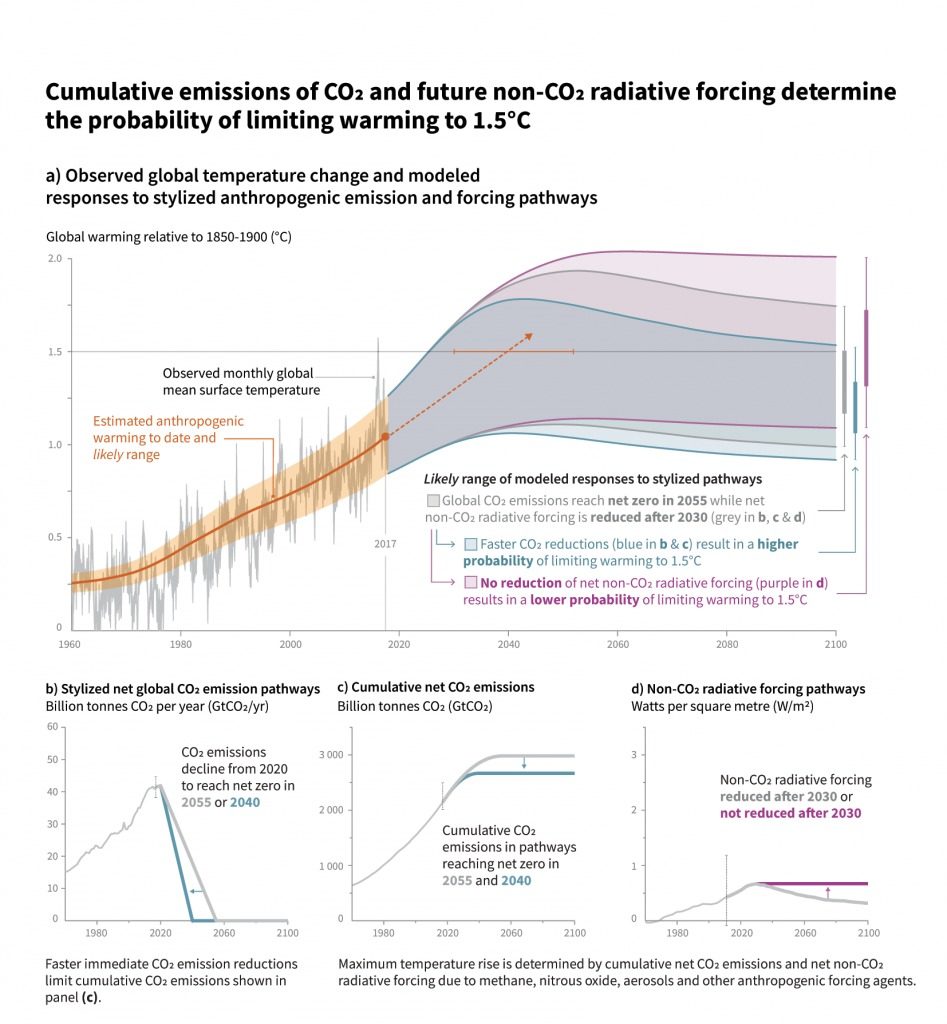
Last year, the Intergovernmental Panel on Climate Change (IPCC) issued its “Special Report on Global Warming of 1.5°C,” which made it clear that the window of opportunity to avoid catastrophic climate change that is irreversible on the human time scale is closing. We need big changes now. We will have the best chance of keeping global warming to 1.5°C if we can achieve net zero greenhouse gas emissions on a global level by 2040. Postponing significant emissions reductions until after 2030, as is implied by the SA Climate Ready plan, won’t land us in a world we want to live in.
From IPCC “Special Report on Global Warming of 1.5°C”
Listen to the Experts on City Climate Planning
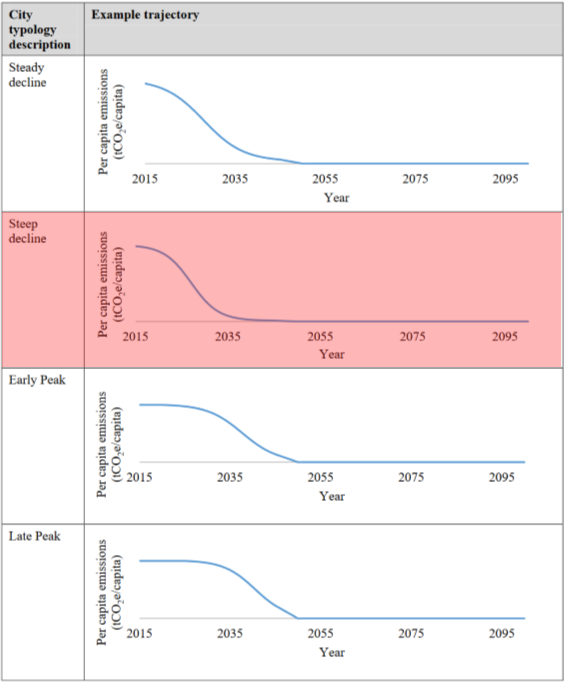
C40 Cities – the leading organization that works with cities in the U.S. and internationally to take on climate change has developed a very helpful guidance document called “Deadline 2020” to help cities develop climate plans that align with meeting the goals of the Paris Climate Agreement. The name of the report comes from the fact that global greenhouse gas emissions need to peak by 2020 to give us a decent shot of limiting warming to 1.5°C, but the report describes emissions reduction paths for cities through mid-century.
As an organization that works with the world’s largest cities, C40 Cities is intimately aware of the fact that not all cities can reduce emissions at the same rate and that it’s not fair to expect all cities to be on the same path. Cities in wealthy countries with high emissions – like the U.S. – have the responsibility and the ability to reduce emissions much quicker than average. According to the C40 Cities methodology, San Antonio should be on the “steep decline” emissions reduction path.
From C40 Cities “Deadline 2020” report
Big, but Achievable, Emissions Reductions Needed in San Antonio
The “Deadline 2020” methodology was developed before the IPCC released its latest and most dire report, so we think that, taken together, the IPCC and C40 Cities reports point to U.S. cities needing to reduce emissions by around 80% by 2030. That’s a big drop, but fully transitioning to renewable energy (which is possible and can be done affordably with planning) and electrifying transportation (which is already a growing trend), would achieve this goal for a city like San Antonio. It’s cities that are home to more polluting industries that will have a bigger challenge.
CPS Energy Must Take Responsibility
San Antonio, along with the rest of the world, needs to stop burning coal and natural gas to make electricity. Cheap wind and solar, paired with now cost-competitive energy storage, along with energy efficiency, can replace fossil fuel power plants that pollute the community and are the city’s largest sources of greenhouse gas emissions. CPS Energy made a big deal about funding the development of the climate plan, but the utility failed to provide any analysis of options for phasing out it’s use of fossil fuels during the planning process. The city-owned utility is holding firm on waiting until 2050 to stop burning coal and natural gas. This simply isn’t compatible with climate action. That’s why we’re calling on CPS Energy to shut down the Spruce coal-burning power plant by 2025 and phase out it’s natural gas power plants by 2030
Our message to the city is this: Be straight about the facts and set goals that give the city a decent chance of meeting the challenge at hand. Do your fair share to preserve a livable planet.
On Monday, October 8, 2018 the Intergovernmental Panel on Climate Change (IPCC) released a new report, that holding average global warming 1.5 degrees Celsius (°C) – the stronger of the two goals set in the Paris Agreement Climate Agreement – is still possible, but only with urgent action.
The report was requested by members of the United Nations Framework Convention on Climate Change (UNFCCC) during the adoption of the Paris Agreement. Member countries recognized that the emissions reductions commitments made by participant countries weren’t sufficient to meet the temperature goals in the Agreement, so they asked the IPCC to provide additional technical information that could inform future updates. The report will serve as key input for the next U.N. climate change conference in Poland in December.
CLIMATE CHANGE IMPACTS: 1.5°C vs. 2°C
Current international commitments would result in global warming that is closer to 3°C — far above the 1.5°C and 2°C (2.7 – 3.6 degrees Fahrenheit) targets of the Paris agreement. Any temperature rise more than 1.5°C would bring cataclysmic changes in the global environment, including the death of life-sustaining ecosystems, the complete melting of the ice caps, and the rendering of enormous amounts of land both unfarmable and unlivable. Additionally, according to the report “limiting global warming to 1.5°C, compared with 2°C, could reduce the number of people both exposed to climate-related risks and susceptible to poverty by up to several hundred million”.
IPCC Global Warming of 1.5C, Summary for Policymakers, pg 13
Earth’s sea level has already risen by about seven or eight inches since 1900. The new report shows that in a 2°C world, sea level rise is projected to be about four inches higher than it would be in a 1.5°C world. That’s enough to expose an additional 10 million people around the world to risks from sea level rise (31-69 million people in 1.5°C scenario, compared to 32-79 million people in the 2°C scenario).
The report shows that in mid-latitude countries, like the United States, our hottest days are expected to be significantly higher and more numerous in a 2°C world than in a 1.5°C world. The U.S is also likely to experience other serious impacts, including more intense and frequent extreme weather events, more severe droughts and heatwaves, and an increase in hospitalization and fatalities from these impacts, all of which we have seen in the past decade.
Even today, extreme weather events have had serious consequences for the health and safety of people in the U.S. and around the world. We only need to look to this year to see how extreme heat waves helped create the conditions for large wildfires in the West, which led to the loss of life and homes. Hurricane Florence led to numerous deaths and damaged infrastructure. And we will be hearing about the impacts of Hurricane Michael in the coming days and weeks. The 2017’s wildfire season and hurricanes tell a similar story. More global warming means more of these kinds of events.
WHAT WILL IT TAKE?
The report outlines the several possible emissions pathways and associated actions necessary to limit global warming to 1.5 or 2°C. Global carbon dioxide (CO2) emissions need to peak by 2020, and must reach net-zero by between 2014 and 2055. The probability of keeping warming to 1.5 °C is significantly higher if net zero global CO2 emissions is reached in 2040, as opposed to 2055. Reduction of other global warming gases, including methane, needs to start by 2030.
IPCC Global Warming of 1.5C, Summary for Policymakers, pg 6
Limiting global temperature rise to 1.5°C is physically and technically possible, but will require system change on an unprecedented level. The composition of our energy sources, our means of transportation, the way we grow food, the types of foods we consume, the products we use and industrial processes (such as cement production) all have to change.
Removing CO2 from the air and sequestering it – using methods such as reforestation, land restoration, and technologies to capture CO2 – will be necessary, even with the emissions reductions described.
As one of the biggest emitters of global warming emissions, the U.S. has a big role to play in limiting warming to 1.5°C. The Trump administration’s plan to withdraw the U.S. from the Paris Agreement, as well as its moves to roll back other key domestic policies that would reduce our greenhouse gas emissions, leaves the burden for taking action on states and local governments.
WHAT CAN YOU DO?
While we can make changes as individuals, the political will of communities and countries are needed to make the level of changes that are necessary. Supporting policy and system changes is the most important thing you can do. We must demand that our elected officials enact rapid and divisive climate policies that decarbonize the economy on the federal level, such as with a Green New Deal.
To reduce emissions in our daily life, we can reduce our home energy consumption, opt for public and human-powered transportation when possible, stop consuming meat, buy less and reuse more, and have fewer children. However, it’s important to remember that individual actions are not enough to address climate change. Collective action is necessary and vital if we are to limit planetary warming to 1.5°C and preserve a livable planet.
We’ve known about the risks associated with global warming for years now and the report shows limiting global warming to 1.5°C will certainly not be easy. It will require major societal transformations. But it is possible and a better, healthier, more equitable world will be the result of all our efforts, if we act now.
Check out our upcoming Facebook video discussion with Public Citizen’s San Antonio Climate Justice organizer, Briauna Barrera and Energy Policy and Outreach Specialist, Kaiba White.
Even as we struggle with heat waves, hurricanes, floods, wildfires, drought, and rising sea levels are as a result of climate change, the potential to sequester carbon in forests and soils offers hope. Humans have caused climate change by burning fossil fuels and disrupting the balance of nature, but there is an opportunity to restore these natural systems for carbon sequestration. Since we already used the carbon budget to keep global temperature increase to 1.5 degree Celsius, an action is needed to not only eliminate emissions but to recapture carbon dioxide that has already entered the atmosphere.
By stopping deforestation, and restoring degraded forests and soils we can combat climate change while improving biodiversity, soil productivity, and food security. Implementing better land management practices could be an important strategy to store carbon in the ground and lowering carbon emissions. Thus, curbing the rate of deforestation and improving land management and agricultural techniques should be a priority for policymakers at the federal and state levels in order to slow climate change, which has posed a significant threat to U.S agriculture.
Deforestation:
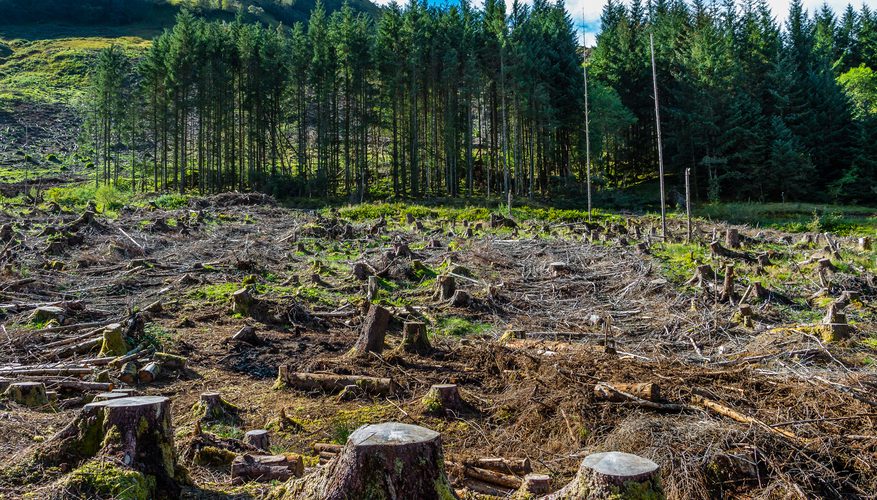
Forests are one of the largest carbon sinks and are currently absorbing and storing 450 billion tons of carbon. Forests are not only important in storing carbon, but they also play a significant role in preventing floods, supporting wildlife, moderating extreme temperature, presenting cultural values and providing recreation. However, after the industrial revolution, people started cutting down and burning trees for construction, shipbuilding, and energy producing, which resulted in turning a large amount of carbon back into the atmosphere. Human activities are the main reason for releasing carbon dioxide back into the atmosphere, including through deforestation.
Between 2001 and 2017, 5.57 gigatons of carbon (Gt) was released into the atmosphere as a result of tree cover loss in the United States. The U.S is cutting trees to make wood chips and wood pellets and export them from ports in the Southeast to Western Europe. Last year, Southern U.S. was identified as the largest exporter of wood pellets in the world as a result of a 70 percent increase in wood pellet exports from Southern. In 2017, the U.S lost 2.3 million hectares (Mha) of forest equivalent to 175 metric tons (Mt) of CO₂ emissions. Continued deforestation will neutralize all climate action efforts and strategies.
Afforestation and Reforestation Opportunities:
Afforestation is the process of planting forests in areas that have never been forested, while reforestation is the recovering of forests in areas where forests were destroyed. Reforestation and afforestation could make an important contribution to curb climate change and to improve the quality of air if managed appropriately. Thus, afforestation and reforestation are identified as negative emissions options since they are able to remove CO2 from the atmosphere. Afforestation, reforestation, and improving land management and conservation practices as a means of solution for removing CO2 from the atmosphere have several benefits to the society and environment. Planting new trees and recovering forests protects against soil erosion, helps retain soil moisture, increases biodiversity, and controls flooding. Also, these efforts can enhance agricultural productivity and develop resilient food systems. Moreover, planting trees has lower cost and environmental impacts compared to other negative emission technologies such as Bioenergy Carbon Capture & Storage.
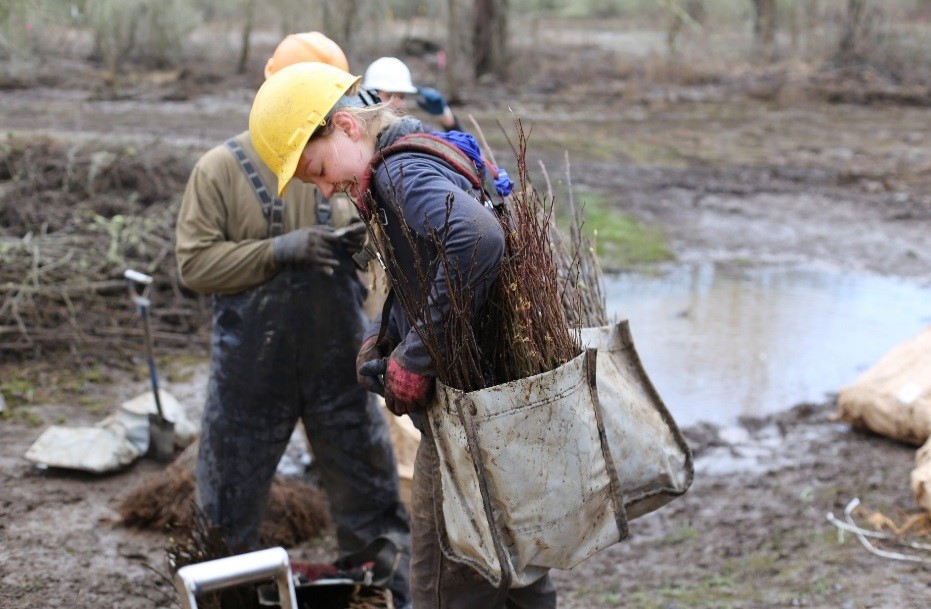
Enterprise 50 Year Tree Pledge Surpasses 12 Million Plantings, 100 Reforestation Projects.Photo by Eterprise holdings
Afforestation and Reforestation:
The main problem is that planting forests is not an instant solution, since it takes time for seedling trees to be matured. Also, if afforestation is not properly managed, it can result in a reduction of local biodiversity, the modification of particular biomes, the introduction of non-native and potentially invasive species, and lost revenue from agriculture. Native grasslands that are altered to forests may not contain the same habitat for local species, and ill-managed reforestation efforts may result in the production of a monoculture (the practice of growing a single tree species) that lacks not only plant diversity but reduces the number of available habitat types for forest inhabitants. In addition, the application of nitrogen fertilizers would have several negative impacts on the environment. The production of nitrogen fertilizer releases a group of potent greenhouse gases known as nitrous oxides, along with CO2. Nitrogen pollution is identified as a threat to the biodiversity of species and biodiversity loss is a major environmental challenge
Soil Carbon Sequestration Opportunities:
Soil is a major sink of carbon and can store twice as much CO2 than is in the atmosphere. Unfortunately, farming currently plays a significant role in releasing a large amount of carbon into the atmosphere. As a result of an increase in the global population and the demand for food, commercial planting with the use of nitrogen fertilizer has increased, and frequent harvesting has resulted in reduced carbon levels in the soil. However, there are several land management practices which help promote inappropriate farming techniques. “Soil Carbon Sequestration” is one of the techniques which implements as a tool to remove CO2 from the atmosphere and store it in the ground. Thus, soil as a carbon sink can play a vital role in agricultural strategies to curb climate change and offset greenhouse gas emissions.
Agriculture, forestry and other land use techniques that store CO2 in the ground offer an opportunity to mitigate climate change. Farmers can help soil hold more CO2 by making sure crop residue and animal manure re-enters the soil. However, the amount of carbon that soil can hold depends on several factors such as types of soil, regional climate, and characteristics of soil microbes. Healthy soils with more organic matter can store carbon while providing agricultural and environmental benefits. Soil carbon storage directly benefits farmers by improving soil fertility, reducing erosion and increasing resilience to droughts and floods.
Conservation practices such as agroforestry, no-till agriculture, planting cover crops, forest farming, and silvopasture all increase the amount of carbon that can be sequestered in the soil.
In agroforestry, crops are planted between rows of trees while the trees mature. The system can be designed to produce fruits, vegetables, grains, flowers, herbs, bioenergy feedstocks, and more. Agroforestry helps improve land productivity with several potential benefits for the communities such as reducing soil erosion, increasing plant growth, climate change adaptation, and increasing food security.
“Forest farming” also is a way to grow food, herbal, botanical, or decorative crops under a forest canopy that is managed to provide ideal shade levels as well as other products.
“Silvopasture” integrates trees with livestock and their forages on one piece of land. The trees provide timber, fruit, or nuts as well as shade and shelter for livestock and their forages, help animals from the hot summer sun, cold winter winds, or a heavy rainfall.
Soil Carbon Sequestration Challenges:
Land Management Techniques: Forest farming & Agroforestry methods to keep CO2 in the ground & improve soil fertilizing
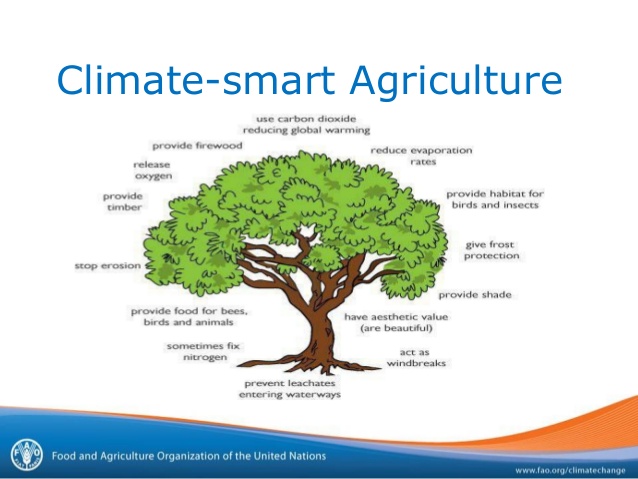
The main problem is that the initiatives are all voluntary and have not been adopted on a large scale. Farmers are experiencing several barriers in the way of implementing smart agriculture. For example, tilling the soil is a traditional practice for controlling weeds, and shifting to no-till technique requires changing farm equipment and using other weed-control methods. Therefore, farmers have to encounter with the high costs of altering farm equipment and the risk of lower yields in the short-term. Furthermore, the benefits of soil carbon-rich take a long time to be viable and the long-term benefits of healthier crops and resilient communities are spread among societies. Thus, incentives and subsidies play a vital role in encouraging farmers to invest in cultivating healthier soils and split costs of shifting to new techniques since implementing the sustainable land management practices is critical to curb climate change and keep CO2 in the ground.
However, in the Midwest, for instance, around 50% of U.S farmland is operated by renters, and around 80% of agricultural land is owned by a non-farming landlord. Therefore, it would be difficult to encourage investments in soil health because renting tenants face short-term costs but might not receive the long-term benefits. Thus, policy-makers should provide tax incentives and subsidies for renters and non-farming landlords to be able to apply the land management practices. Since enhancing soil carbon by practicing land management techniques can prepare us to be well adapted for the negative impacts of climate change on the agriculture industry, there is an imperative need to invest in this solution and develop more helpful regulations to improve farmland productivity and communities’ resiliency.
Overall, fixing these barriers need providing the greatest financial and technical assistance and improving research and development (R&D) efforts as well as increasing private partnerships and offering incentives for farmers and renters. Improving the land management practices and the climate-smart agriculture is required a coordination and integration between various sectors dealing with climate change, agricultural development, and food security at the national, regional and local level. Local governments can provide tax credits for private companies to invest in different types of research with an emphasis on supporting soil carbon storage and to encourage them to offer useful consultant for farmers.
In Conclusion:
Well-managed natural systems carbon sequestration projects, along with the arrangement of sustainably produced timber, agriculture, and energy will produce numerous benefits including additional income for rural development, improve communities’ resiliency, and promote conservation programs. In order to improve climate change mitigation and sustainable development programs, governments must carry out the resolution of sustainability practices and oversee the implementation of these practices. The success of carbon sequestration projects will depend on the high carbon prices and aggressive emission reduction goals. Also, the political willpower plays an important role in prioritizing forestry activities and land management practices as part of mitigation portfolios. Care should also be taken to avoid unintended environmental and socioeconomic impacts that could threaten the overall value of natural systems carbon sequestration projects.
As global temperatures continue to rise along with CO2 emissions, leaders in need of solutions should be cautious when considering the potential of bioenergy with carbon capture and storage (BECCS). While the wholesale success of these technologies was assumed in many of the climate models used in developing the Paris Climate Agreement in 2015.
In the 2015 United Nations Climate Change Conference, the world agreed on implementing greenhouse gas mitigation plans which focus on producing negative carbon dioxide emissions to help curb climate change.
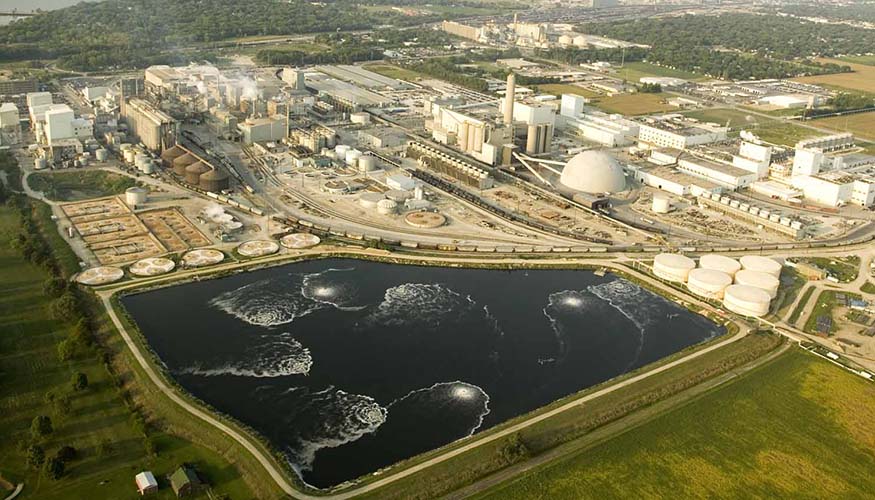
Illinois Industrial Carbon Capture and Storage Project. Capture CO2 from ADM’s Decatur corn processing facility and store it underground.
Bioenergy with carbon capture and storage (BECCS) facilities generate electricity by burning trees and crops that have taken CO2 from the atmosphere throughout their lifetime. When the biomass is burned, BECCS facilities capture the CO2 emissions and store them or, more often, use CO2 in order to enhance oil recovery (EOR). BECCS is one of the technologies the potential to achieve negative emissions if easy-to-grow feedstocks, such as switchgrass, are grown with sustainable practices and the captured CO2 is sequestered. However, these conditions don’t currently exist at commercial facilities.
BECCS Case Study: Illinois Industrial Carbon Capture and Storage Project
In April 2017, the U.S Department of Energy (DOE) announced that the Illinois Industrial Carbon Capture and Storage (ICCS) project at Archer Daniels Midland Company’s (ADM) Decatur corn ethanol facility had begun operations by injecting carbon dioxide into a large saline reservoir. The ICCS project stores more than 1 million tons of CO2 a year. The project captures CO2 from ADM’s Decatur corn processing facility, and stores it almost a mile and a half underground. The total project cost is $207.9 million and it has received a cost-share agreement of $141 million investment from the Department Of Energy. The project team members include ADM, Schlumberger Carbon Services, Illinois State Geological Survey (ISGS), University of Illinois, and Richland Community College (RCC). The technology demonstrated for this project aimed to help the development of the regional CCS industry (i.e., enhanced oil recovery in the depleted oilfields in the Illinois Basin).
Although the main purpose of BECCS technology is to reduce greenhouse gases and help combat with climate change, practically, CO2 has been captured in order to enhance oil recovery, which will result in more CO2 in the atmosphere. As the world’s focus is on keeping global temperature below 2 degree Celsius, using carbon capture storage (CCS) and BECCS in this way will perpetuate the use of fossil fuels. Also, emissions from the transportation of feedstock and the use of nitrogen fertilizer for growing crops could be a big challenge and accelerate the trend of global warming especially associated with ozone destruction.
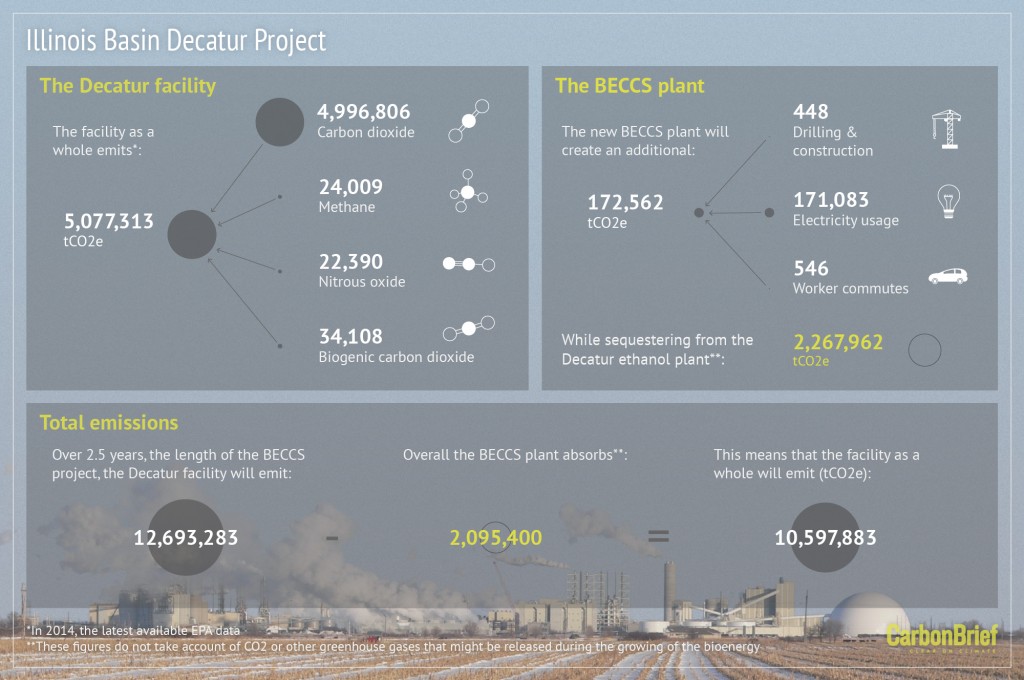
The Illinois Basin Decatur facility and the EBCCS plant as a whole emit more CO2 than the BECCS plant has been designed to capture. The graphics info provided by Carbon Brief shows that the total CO2 emissions have been emitted by Decatur facility over 2.5 years of the operation was 12,693,283 tons of CO2. However, the EBCCS plant only absorbed 2,095,400 tons of CO2 which means that Decatur facility as a whole has emitted 10,597,883 tons of CO2 even with BECCS capacity. Thus, this project failed to fulfill the purpose of reducing carbon and curbing climate change.
The Illinois Basin Decatur Project. By Rosamund Pearce for Carbon Brief.
Caption: The Illinois Basin Decatur Project. By Rosamund Pearce for Carbon Brief.
Challenges and Concerns of BECCS Projects:
High Cost of Capturing and Storing Carbon: It costs $100 to capture a ton of CO2 for a biomass plant. Whereas, fossil fuel plants are capturing carbon for about $60 a ton. This difference is based on varying bioenergy feedstock prices; energy production process; and capture technology. Also, transporting large amounts of biomass long distances to the storage site would significantly add to the cost of BECCS, since biomass tends to have a lot of weight relative to its energy.
Transporting CO2 to the reservoirs via pipelines or trucks: The transportation networks are costly and also turn more CO2 back into the atmosphere. More infrastructure – such as pipelines – would need to be built, which increases the cost of BECCS and indirectly results in more emissions through the construction process. Also, CO2 leakage from pipelines or storage sites could endanger people, harm marine ecosystems, and threaten freshwater ecosystem. Navigating the property rights of local communities can also be a challenge.
Effects of increased fertilizer use, such as nitrogen: Nitrogen fertilizers can be leached into the groundwater and washed into waterways, resulting in serious health, environmental, and economic damage. Nitrogen fertilizers applied in agriculture can add more nitrous oxide to the atmosphere than any other human activity. Nitrous oxide also moves into the stratosphere and destroys ozone which could result in increasing global heat. Nitrogen pollution is identified as a cause of decline in native species and is a threat to biodiversity for vertebrate, invertebrate and plant species. A study found 78 federally listed species identified as affected by nitrogen pollution. Use of fertilizer nitrogen for crop production also influences soil health, by reducing organic matter content and microbial life, and increasing acidity of the soil.
Water concerns: Agriculture and power generation are highly water intensive. In order to produce 1 ton of ethanol, 3.5 t of CO2 and 5 t of H2O is needed, which means that more than 21,000 t of CO2 and 300,000 t of water vapor are consumed each year. However, more than 3 billion people are already affected by water scarcity so it is a critical challenge in utilizing BECCS technology.
Food Scarcity: food prices would increase as a result of changes in land use. Also, since climate change has already threatened the crop yields harvest, sudden changes in the weather could result in food shortage or even famine in some regions. Altering lands to a specific crop yield would affect the land quality and may result in regional resource shortages.
Geological storage sites for CO2: In the fertile Midwest of the U.S., croplands are too far from geologic storage to be a viable location for BECCS in the near-term. There are relatively few pipelines in place for transporting CO2 and the long-distance transportation of large volumes of captured CO2 is expensive, particularly if many small pipelines have to be built. Biomass could be transported to sites where CO2 storage is available, but that would significantly add to the cost of a BECCS project.
Land Use challenges: Could displace or expose small farmers to the volatility of world markets. Also, as a result of changing land applications, soil erosion, and degradation could happen and soil would lose its fertility. Poor management of bioenergy crop production can result in soil carbon loss from direct and indirect land use changes and significantly affect the net amount of CO2 removed by BECCS. In addition, land rights of farmers & ranchers should be considered as important challenges as well.
Cost of Ethanol Production: Depending on a cost of a barrel of oil and production cost of gasoline refining, ethanol can either increase or slightly decrease the cost of a gallon of gasoline.
Overall, even though the U.S has a large potential for geological storage sites, there is still a need for transportation systems for either biomass or CO2 for the large-scale deployment of BECCS. Also, concerns associated with the land, water, and fertilizer use that would be required at the large-scale deployment of BECCS make the long-term economic viability of this technology uncertain. Tax incentives such as 45Q might cover some parts of the related costs, however, the health, environmental, and economic impacts of this project on the society is still unclear as well.
Overly optimistic assumptions about quickly achieving negative emissions on a large scale are dangerous. The world carbon budget is running out for 2 degree Celsius and we have already used the 1.5 degree’s carbon budget. While investments in BECCS are needed, these technologies do not give us a license to postpone eliminating emissions from other sources. And BECCS is only a solution if sustainable agriculture practices are employed, CO2 emissions are permanently sequestered and not used for oil recovery, and project sites are carefully selected to reduce emissions from transportation. (more…)
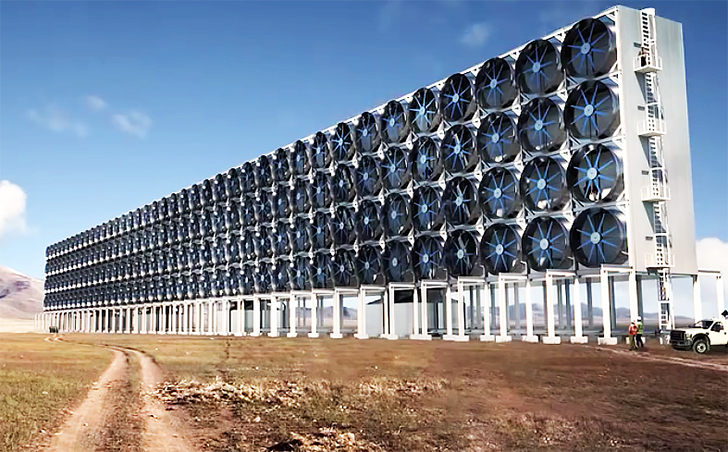
Carbon Engineering’s direct air capture facility sucks CO2 directly from the atmospheric air. – Carbon Engineering
To maintain climate, we need to cut greenhouse gas – especially carbon – emissions down to zero. The more greenhouse gases that are released, the hotter our planet will be. If we are seeking to keep the global temperature below 1.5-2 degree Celsius, we need to find a way to reduce CO2 emissions. Direct Air Capture (DAC) is a technology which sucks CO2 out of the atmosphere by using large fans that move air through a filter to generate a pure CO2 stream. Depending on the application of the captured CO2, DAC can be either a “carbon recycling” or “carbon removal” technology. Carbon recycling refers to the process of using CO2 produced by DAC as fuel, or in other ways which will release CO2 back into the atmosphere, such as to carbonated beverages. Carbon removal requires CO2 to be stored underground or used in materials that do not allow CO2 to be released into the atmosphere, such as in cement or plastics.
DAC Carbon Recycling Case Study: Carbon Engineering
Recently, “Carbon Engineering,” a Canadian-based company leading the commercialization of direct air capture technology, have been working on Air to Fuels project, which uses renewable electricity to generate hydrogen from water, and then combines it with CO₂ captured from the atmosphere to use it as an input to produce synthetic fuels that can substitute for diesel, gasoline, or jet fuel. DAC’s cost at a commercial scale is not exactly determined yet. However, the latest estimate cost announced by Carbon Engineering is a range cost from $94 to $232 per ton for capturing CO2 and they hope to produce fuels from the Air2fuel project for less than $1.00 per litter, once it scaled up.
DAC Carbon Removal Case Study: Climeworks
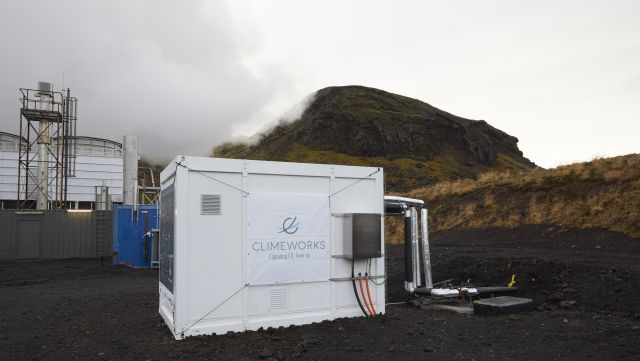
Direct air capture unit along with the cooling towers of the geothermal power plant in Hellisheidi, Iceland. (Climeworks/Zev Starr-Tambor)
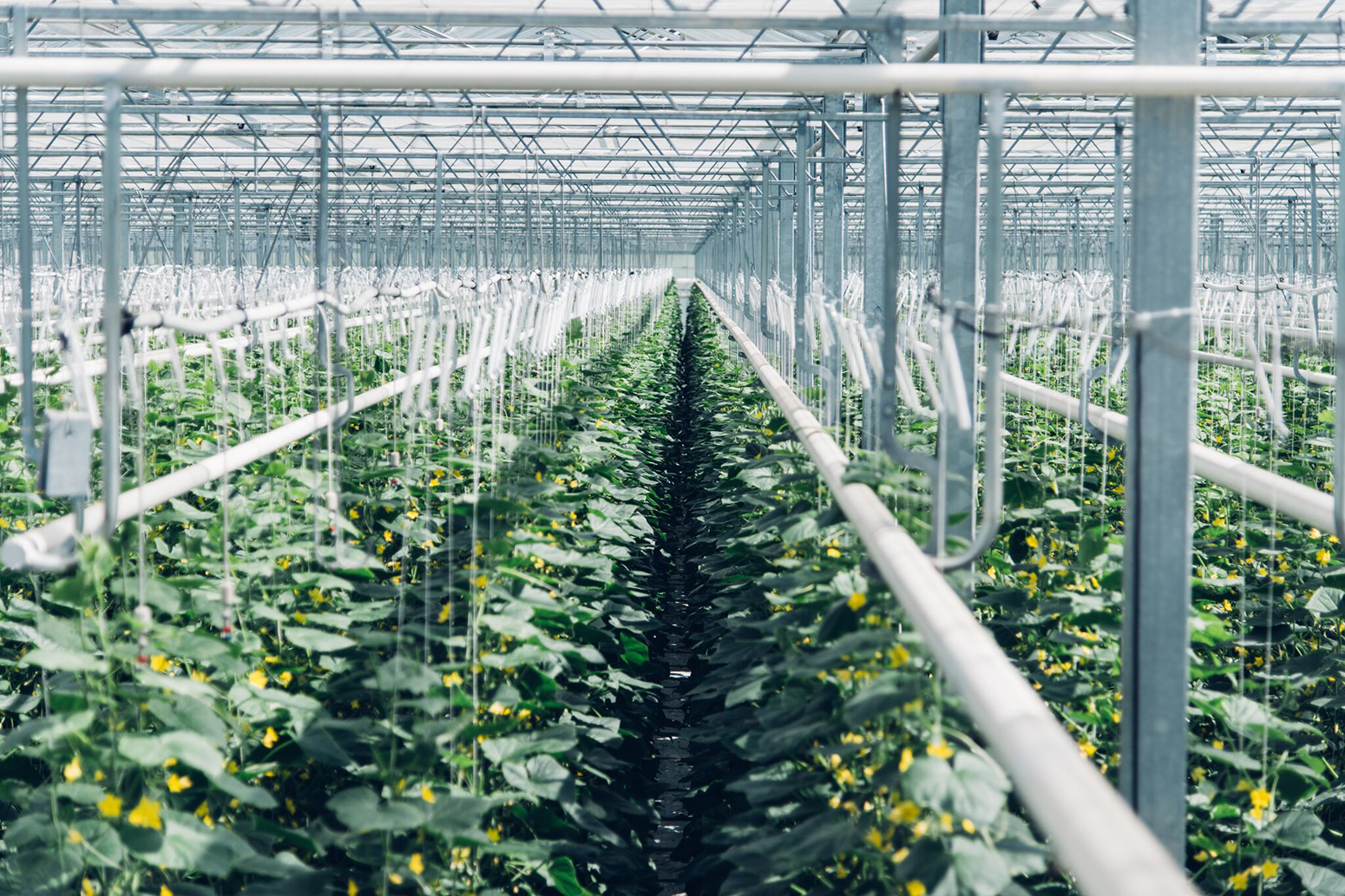
Swiss firm Climeworks recently launched the world’s first “commercial” direct CO2 capture plant at Hinwil, Zurich. Climeworks has been working on CO2 for carbonated drinks and renewable fuels project through the partnership with CarbFix which working on the project of dissolving CO2 into drinking water. Also, the Gebrüder Maier fruit and vegetable company uses the captured CO2 to boost the growth of cucumbers, tomatoes, and aubergines in its large greenhouses. However, the most interesting project which is designed to be a carbon removal project is happening right now! Climeworks recently launched a pilot project in Iceland which is a geothermal power plant with direct air capture technology. The facility is capturing 50 metric tons CO2 from the air each year, which is equivalent to a single U.S household or 10 Indian households. The CO2 captured in order to convert the emissions into stone. Thus, they’re making sure that CO2 doesn’t escape back into the atmosphere for the next millions of years.
Climeworks / Julia Dunlop Carbon capture from ambient air goes commercial
Pros of DAC:
Full-scale operations are able to absorb significant amounts of carbon, is equivalent to the annual emissions of 250,000 average cars
DAC system can be sited anywhere which reduce the cost of transporting CO2 to the sequestration sites
DAC can be scaled easily and has a relatively small land footprint in comparison to other carbon removal technologies such as Bioenergy Carbon Capture Storage (BECCS)
Energy Intensive: Direct air capture is a fairly energy intensive process because the concentration of CO2 in ambient air is relatively low. Separating CO2 from the air is challenging since it takes a significant amount of energy and air to separate and concentrate CO2 in the atmosphere. Thus, large volumes of air must be processed in order to collect meaningful amounts of CO2
Very Expensive: Currently, it is not a financially viable option because it is very expensive. The cost of CO2 captured from the atmosphere ranges between $94 and $232 per ton according to Carbon Engineering estimate
Water consumption concern: One study estimates for removing 3.3 gigatons of carbon per year, DAC could expect to use around 7.925e+13 gallons of water per year (assuming current amine technology, which is what Climeworks uses). This is equivalent to 4% of the water used for crop cultivation each year. Carbon Engineering using sodium hydroxide that would use far less, but this, in turn, is a highly caustic and dangerous substance
Revenue Opportunities: Revenue opportunities for DAC carbon removal systems depend on carbon markets and regulations. Without high enough carbon prices, DAC systems are likely to find the largest revenue opportunities by providing CO2 for manufacturing fuels, enhanced oil recovery, greenhouses and carbonated beverages, as DAC systems can be sited anywhere.
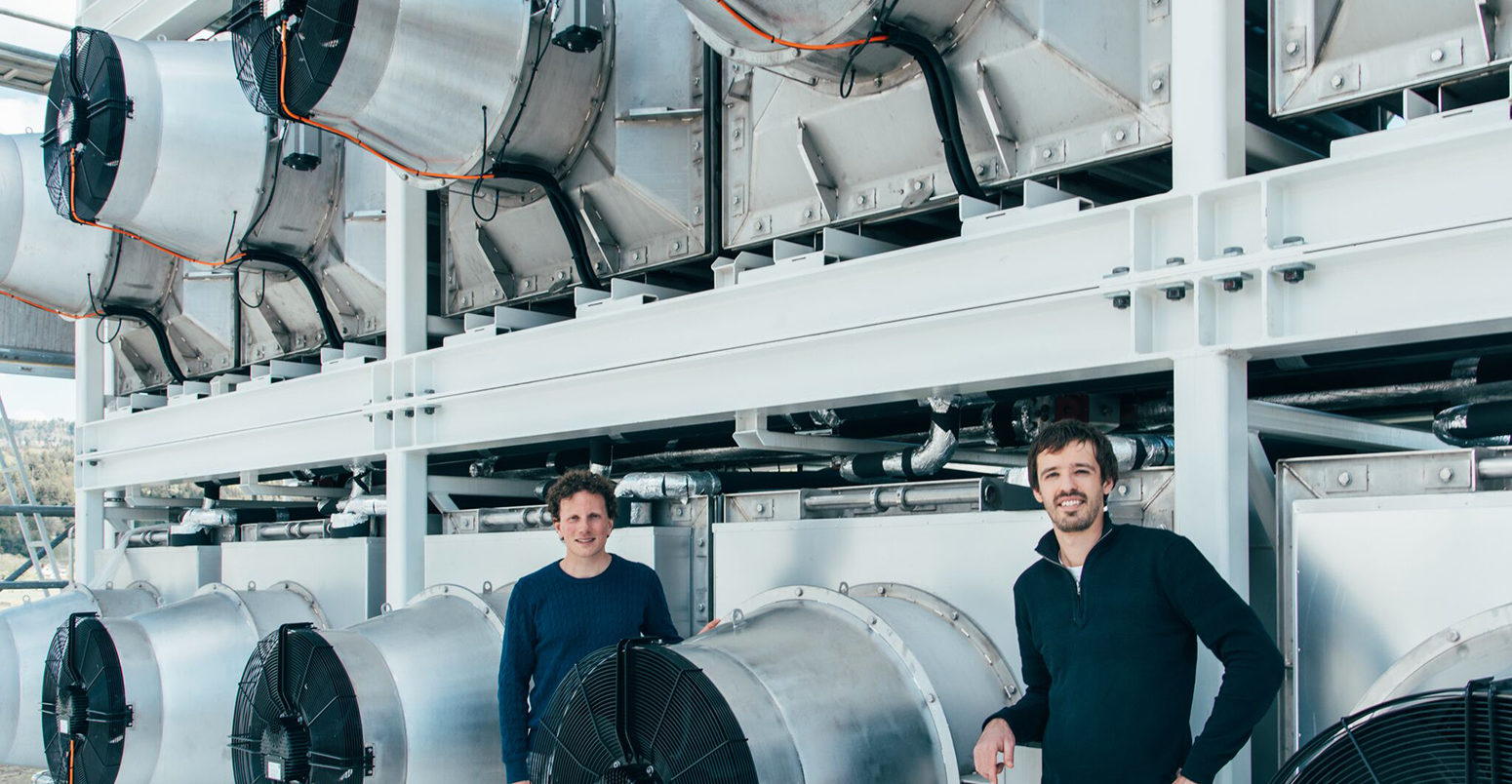
Climeworks direct air capture plant founders Christoph Gebald and Jan Wurzbacher onsite. Climeworks / Julia Dunlop
Policy Approach:
There have been some policies that provided a shift toward greater development and deployment of carbon dioxide removal and recycling. In February 2018, the U.S budget bill passed by Congress which extends and reforms the federal Section 45Q tax credit. 45Q provides credits for businesses that use CO2 for enhanced oil recovery (EOR) and for CO2 injection into underground geologic formations. Mostly, the 45Q tax credits benefits fossil fuels industry. Based on the bill, any new fossil-fuel power plant or carbon-dioxide producing industry that commences construction before 2024 is eligible for tax credits for up to 12 years. The tax credits offered up to $35 per metric ton of carbon dioxide captured if the CO2 is put to use (pushing out oil from depleting fields is the most popular use) or up to $50 if it is simply buried in underground storage. Hence, the bill benefits fossil fuels companies at a lower cost of carbon capture and help fossil fuels companies expand oil production, and continue to build coal plants. Thus, the carbon removal companies are not willing to sequestrate carbon when there is a market for selling it. The only way to make money off sequestration is if the government is directly subsidizing it or if there is an extremely high carbon price. Currently, there is no carbon price anywhere in the world great enough to make sequestration profitable. At present, carbon is trading at a low price in the global market compared to the cost of storing it underground.
However, tax credits could make negative emission projects more financially attractive and more economically viable. Based on the incentives provided by 45Q bill, direct air capture could be a critical tool for CO2 removal since it has a countless potential for removing carbon and reuse it. Since the high cost of the technology in pilot projects has been an obstacle to a large-scale implementation, hopefully, new regulations and tax credits such as 45Q bill ease the process and lower the costs. Although the tax credit will not cover the full cost of these technologies, it will make a noticeable reduction in the operating cost.
Tax credits and regulations mean greater opportunities for developers and suggest positive movement in wider efforts to stem climate change, as carbon capture and storage is widely considered to be a significant element of addressing climate change. Recently, several private investors and fossil fuels companies have started investments in DAC technology. Especially, the oil and coal industry since the captured CO2 can be used for Enhanced Oil Recovery (EOR). However, utilizing DAC technology to develop EOR would neutralize any efforts regarding climate mitigation actions.
Direct air capture could hold the promise of capturing CO2 from the atmosphere. However, since there is an economic benefit of using CO2 to make fuels or for enhanced oil recovery, fossil fuels industry are making money off the technology. In a time that there is relatively little carbon budget left to keep the world temperature below 1.5C or 2C, nations need to focus on cutting CO2 emissions rapidly by shifting their reliance away from fossil fuels to the renewable energy, in particular. (more…)
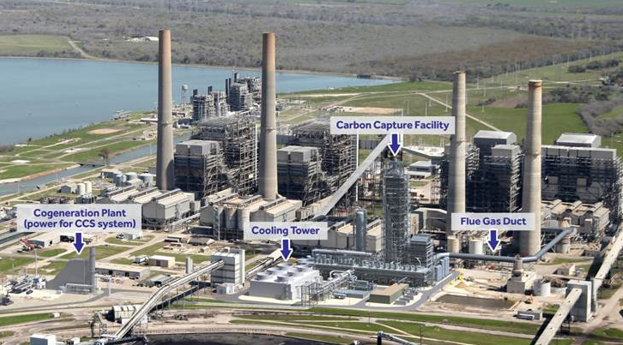
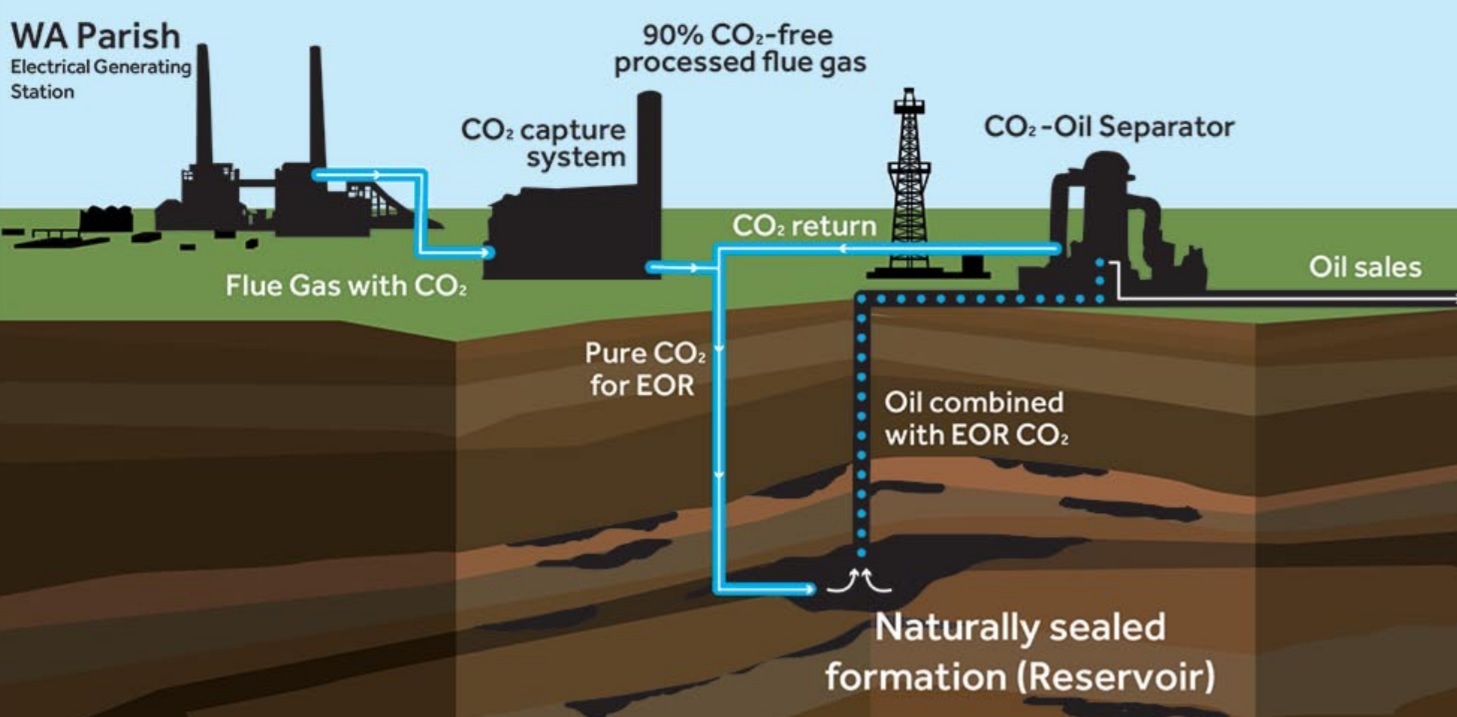
Petra Nova, the world’s largest post-combustion carbon capture project, has been in commercial operation at the W. A. Parish Plant in Thompsons, Texas, southwest of Houston, since January 2017. The project offers no hope for combating climate change.
Petra Nova Facility
The Parish station has 10 generating units, but only unit 8 has been upgraded with carbon capture technology, and thus, the other 9 units are still emitting CO2. The project was supposed to divert 40% unit’s exhaust into a post-combustion capture (PCC) system, which designed to capture 90% of the CO2 in that stream. However, once the emissions from the gas-fired turbine that powers the carbon capture system and the emissions from the additional petroleum products resulting from enhanced oil recovery are taken into consideration, the total impact of the carbon capture system is actually an estimated 2% increase in CO2 emissions.
The Petra Nova has retrofit cost $1 billion and benefitted from a $190 million Clean Coal grant from the U.S. Department of Energy. This huge amount of money has been invested to build a new coal power plant and enhance oil recovery by injecting 5,200 tons of carbon dioxide per day at West Ranch. However, NRG’s CEO has claimed that the Petra Nova CCS project “made both strategic and economic sense at $75 to $100 a barrel” and that “obviously [with West Texas Crude selling for less than US$50 a barrel], it does not currently make economic sense.”
Fossil fuel industries have promoted the use of CCS technology as a solution to enable the continued burning of fossil fuels for electricity generation. The coal industry has been seeking to increase its profit by lobbying Congress to get subsidies even though they are aware of the negative impacts of burning fossil fuels on the human health and climate change. Moreover, fossil fuel industries have influenced the EPA to reduce penalties and long-term liability to increase the profitability of CCS projects at the expense of public health and the environment.
Petra Nova Carbon Capture
Health and Environmental Impacts of CCS Technologies Include:
Power plants that are capable of capturing carbon require 15-25% more energy than conventional plants in order to capture and store CO2. The mining, transportation, and burning of the additional fuel (usually coal) needed for CCS produces more CO2 emissions.
Particulate matter and Nitrogen Oxide are both expected to increase as a result of the additional fuel consumption in order to capture carbon dioxide. Particulate matter is identified by the World Health Organization to be the deadliest form of air pollution as its ability to enter the respiratory system
Due to the degradation of the solvents in the process of capturing carbon, Ammonia is expected to increase, which can lead to form particular matter in the atmosphere
Possible damages or any leakage in the pipeline or storage reservoir would result in serious environmental impacts
Gradual leakage in the storage site can damage fresh groundwater resources if the incorrect storage site is selected or the site is not prepared correctly
Injecting CO2 into aquifers can cause acidification of the water and increase its ability to break down the surrounding rocks, aggregate the potential for leakage into the soils or water table, which could worsen the impact of climate change in ocean sinks as a major reservoir of carbon dioxide.
Since burning fossil fuels is the main reason for global warming, do we really need another coal power plant with CCS capability? Isn’t better to allocate federal tax credits and incentives for building energy storage or solar/ wind farms to generate electricity?
Recently, the average cost of solar energy has decreased by $2.71 to $3.57 per watt and the wind energy cost has dropped to around $30/MWh to $60/MWh in 2017. Solar battery energy storage technologies have also advanced and costs have declined by $400 dollars per kilowatt hour (kWh) to $750/kWh. Therefore, it is more viable and profitable to invest in the clean renewable energy to cut CO2 emissions instead of building new coal power plants with CCS capability.
As a result of a growth in the world population and energy demand, greenhouse gas emissions are increasing and have accelerated climate change. In order to combat climate change, nations must shift their reliance away from fossil fuels to renewable energy instead of applying new technologies to produce “clean coal.” Relying on carbon capture and sequestration (CCS) technologies to rescue the world from climate change instead of focusing action on reducing greenhouse gas emissions is a dangerous gamble.
SAN ANTONIO, Texas – Yesterday, a few days after the one-year anniversary of President Trump announcing US withdrawal from the Paris Agreement, the Climate Action SA coalition called on the City of San Antonio to establish significant goals to help San Antonio fight climate change.
Climate Action SA proposed the following goals for CPS Energy, our city-owned public utility: CPS Energy electric generation Coal-Free by 2025 and Carbon-Free (no fossil fuels) by 2030. Significant reduction in the reliance on fossil fuels can be achieved with aggressive investment in energy efficiency, demand response, renewable energy and energy storage.
These goals for CPS Energy put the city on a path to achieve of a goal proposed by Climate Action SA for city-wide greenhouse gas emissions to be reduced to net-negative by 2050 or sooner, following a path that prioritizes near-term reductions. Net-negative means that community activities would pull more greenhouse gases out of the atmosphere than they emit into it. This is assumed by almost all of the climate models used in the development of the Paris Climate Agreement.
Diana Lopez, Southwest Workers Union – photo by Angel Amaya
“The climate community in San Antonio is taking the right step towards including the neighborhoods most affected and creating solutions that are just, resilient, and keep the ecosystem of neighborhoods strong,” says Diana Lopez of Southwest Workers Union. “We are taking this beyond the Paris Climate Agreement and localizing action in San Antonio.”
The public health benefits of phasing out fossil fuels are well known. In addition to releasing carbon pollution which leads to climate change, coal and fracked gas produce pollution that creates ozone (smog) and particulate matter (fine soot), impacting vulnerable populations here at home the hardest.
“San Antonio is now failing federal air quality standards for ozone,” points out Peter Bella of imagineSanAntonio. “We insist on reductions in both carbon- and ozone-causing pollution, and SA Climate Ready provides the path.”
San Antonio can be a leader, but we don’t have to do it alone. Cities around the world are taking action to address climate change. The goals supported by the Climate Action SA coalition are necessary to avoid the worst of climate change and reflect the commitments in the resolution passed last June by Mayor Nirenberg and the San Antonio City Council to support the Paris Climate Agreement.
Keeping global temperature rise to between 1.5 and 2 degrees Celsius requires massive greenhouse gas reductions in the coming decade. The good news is that this transformation not only reduces local air pollution – it will also create new jobs and tax revenues.
Briauna Barrera, Public Citizen – photo by Angel Amaya
“Climate change is an existential threat and what we do in the next couple of decades will determine the fate of billions of people and future generations,” says Briauna Barrera of Public Citizen. “We need to ground ourselves in urgency. We need to be compelled into rapid, collective action to preserve a livable planet.”
Although ending our reliance on fossil fuels for power generation is key to solving the climate crisis, we must also be moving aggressively in other areas like transportation and solid waste. The coalition also plans to make recommendations on these topics soon.
The Climate Action SA coalition consists of 35 nonprofit organizations working together to support the creation and implementation of a robust climate action and adaptation plan for San Antonio, developed and implemented with strong community engagement. The coalition has a strong focus on protecting San Antonio’s most vulnerable communities from extreme weather and pollution, and ensuring that all members of the community can benefit from climate solutions.
LOCATED 5 MINUTES EAST OF DOWNTOWN DALLAS, NEAR THE INTERSECTION OF INTERSTATE 30, INTERSTATE 45 AND HIGHWAY 75 (CENTRAL EXPRESSWAY). Click here to get directions. Click here for a map of the fairgrounds, we will be in the Centennial building (number 13 on the map) in spaces 5317-5319.
If you are planning to attend, you can make navigating the multiple events and exhibits easier with the EarthX 2018 official mobile application which you can get on google play or apple itunes. We look forward to seeing you at Fair Park for Earthday!
In addition to hundreds of exhibitors, there is a slate of speakers and panels scheduled throughout the days of the expo in the Centennial and Automobile Buildings. Be sure to catch David Arkush – Managing Director, Public Citizen’s Climate Program – on Saturday, April 21st from 12 noon to 1:00 pm on the Centennial Discovery Stage as he participates on a panel moderated by Betsy Rosenberg, an environmental talk show host and producer of The Green Front on Progressive Radio Network.
Wake Up and Smell the Carbon! The Role of Mainstream News Media in Covering Climate and Environmental News. Saturday, April 21st from 12 noon to 1:00 pm on the Centennial Discovery Stage
This and much, much more is happening at EarthX. Check out the Expo Guide here to make the most of your visit to this year’s EarthX event.
Houston Mayor Turner has voiced concerns about climate change and pollution, recently through an op-ed published in the Huffington Post entitled “Cities Must Get Creative In The Fight Against Air Pollution.” In this piece, Turner says that cities must address the poor air quality that too often disproportionately impacts low-income communities. Specifically, he states that he will protest permits for new concrete batch plants. Turner also plans to address climate change through using renewable energy to power city operations and through electric vehicle adoption.
Yet, the city of Houston can do more. The Houston Climate Movement came together last year before Harvey because we know that Houston is at risk for the impacts of climate change. The Houston Climate Movement advocates for a community-wide climate action and adaptation plan.
In response to Turner’s op-ed, we penned this letter to him:
Houston Mayor Turner, City Council Members, and community members displaced by Harvey speaking at a City of Houston press conference.
Months after Hurricane Harvey, Houstonians are still suffering. Over 5,000 people are not in their homes, some housed in hotels, others hopping between family or friends to ensure a roof over their heads. City of Houston urgently requests funding from the federal government to help the most vulnerable rebuild as well as to mitigate future flooding disasters.
As the U.S. House approved $81 billion for hurricane relief today, Texans await for the U.S. Senate to follow in their footsteps to help support hurricane-ravaged Texas, Florida, and Puerto Rico. Yet this, according to Houston Mayor Sylvester Turner, is not enough. He called the reluctance to fully fund the $61 billion aid request from Texas a “formula for failure,” stating that the current proposal will not do enough to help those most vulnerable. In order for Houston to become a stronger and more resilient city, it needs strong support from the state and federal governments.
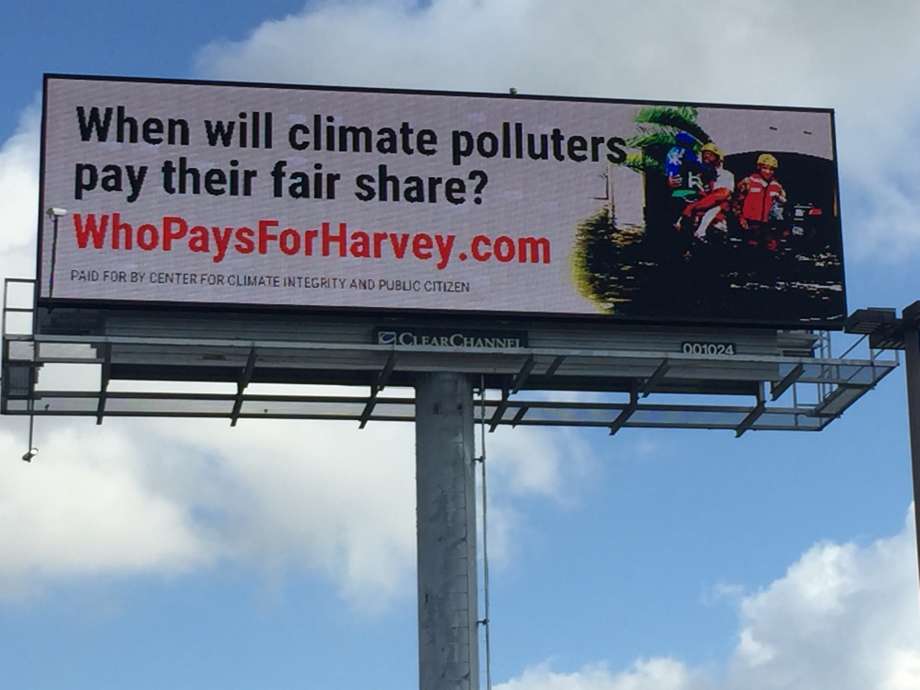
While a 20 foot storm surge would no doubt create untold ecological, environmental, and health crises, the real impetus behind the Ike Dike is to protect the assets of the petrochemical industry, and this is $12+ billion taxpayer-funded bailout. Public Citizen joins Center for Climate Integrity as part of a campaign called Who Pays for Harvey. Scientists have demonstrated that the rainfall and flooding from Harvey was made worse due to climate change-related effects. Furthermore, many of the major petrochemical companies that line the Houston Ship Channel have been aware of the impacts of climate change for decades, yet have actively funded denial campaigns to mislead the American public. Rather than another corporate bailout, government should hold corporations accountable for their role in climate change. Corporations should at the very least foot the bill for the infrastructure projects that serve to protect their assets, while leaving federal dollars to help the most vulnerable rebuild and put their lives back together.
I wrote recently about the difficulty of “blaming” any particular storm on global climate change. I pointed out there that scientists don’t usually reach conclusions in the form of: “X definitely caused Y.” Particularly when complex global systems are involved.
That remains true, but research recently published in the Proceedings of the National Academy of Sciences makes a pretty strong claim about the link. Researchers assert that climate change made a storm such as Harvey six times more likely. That’s a startling figure.
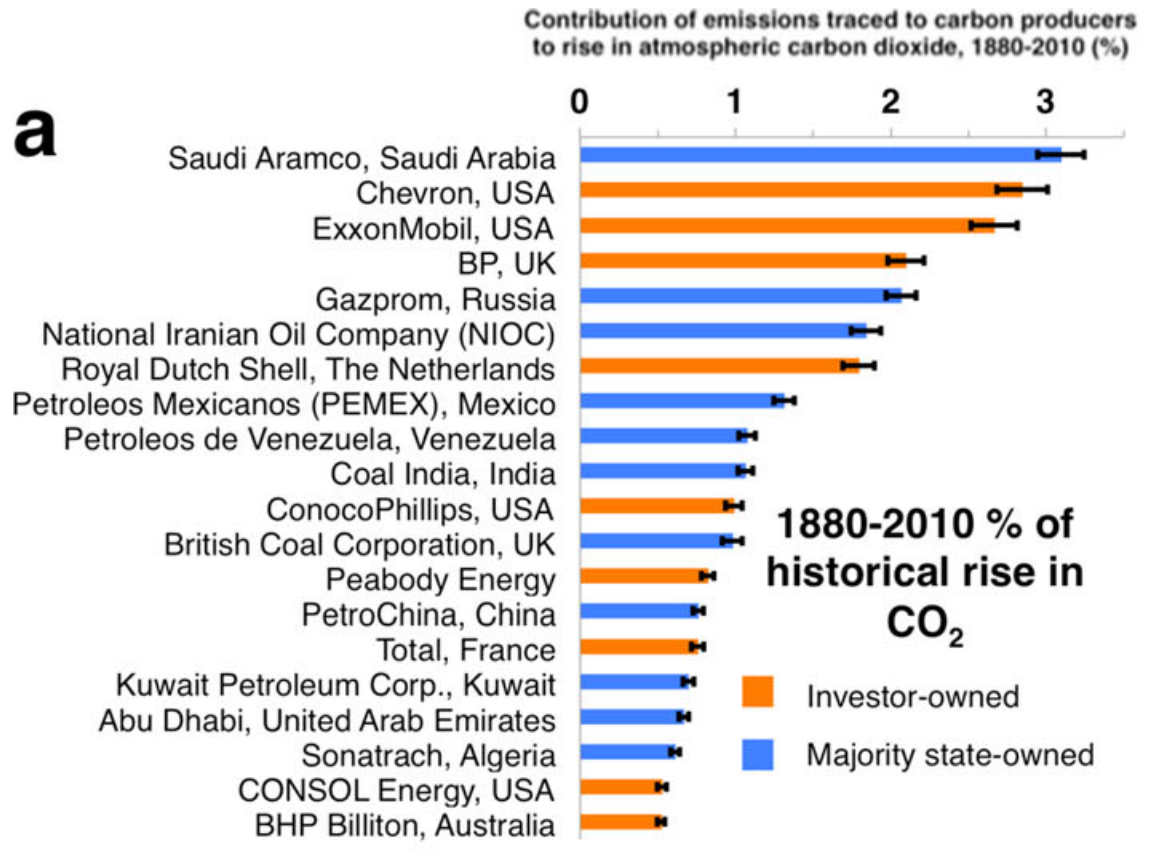
We are also gaining insight about the causes of climate change–more specifically, about who caused climate change. A recent report by researchers at the Climate Accountability Institute asserts that just 90 companies are responsible for two-thirds of all man made carbon dioxide and methane emissions since 1854. The report found that Chevron, ExxonMobil, and BP were each individually responsible for 2 to 3 percent of all carbon emissions for the period 1880-2010. Only the country of Saudi Arabia had a larger contribution, with more than 3 percent.
These recent findings lead us to one conclusion: if we know climate change is causing major storms, and we know which companies are responsible for climate change, shouldn’t we start holding them accountable?
Harvey will cost taxpayers in excess of $100 billion. The City of Houston, the state of Texas, and the federal government have all committed millions to the cleanup effort. But it won’t be enough. Houstonians are already paying for Harvey. When will climate polluters pay their fare share?
We launched WhoPaysForHarvey.com with our colleagues at the Center for Climate Integrity to ask that question? Together we’ve started a pledge that we’re asking you to sign? Do you believe its fair for the entities that caused climate change to pay for its effects? Do you think fossil fuel companies have gotten off the hook, despite knowing for decades (#ExxonKnew) about the harm they were causing?
If you agree with us, please sign our pledge. This won’t be the last severe storm Texas endures. It’s time we started planning for the future, instead of rebuilding the mistakes of the past.
NOTE: Please stay safe and take precautions to protect yourself and your family from Hurricane Harvey. Resources are available at https://www.fema.gov/hurricane-harvey.
Harvey is the first hurricane since Ike in 2008 to threaten the Texas Gulf Coast. Warnings have been issued from “Brownsville to Beaumont” and Governor Gregg Abbott has issued a preemptive disaster declaration for 30 Texas counties. As Texas braces for the storm, Harvey is a stark reminder that the Gulf Coast is vulnerable to severe storms and the impacts of climate change.
The specter of climate change looms over any severe storm forecast today. We can’t ascribe a particular storm to the effects of global climate change, but we do know that climate change may be responsible for an increase in Hurricanes in the Atlantic. Harvey is a reminder that the Texas Gulf Coast, must prepare for the impacts of climate change.
Some of the doubt about the real risks of global climate change has been sown by leaders of industry. The accusation that “Exxon knew” about climate change decades before it admitted the risk to the public was recently bolstered by research published in Environmental Research Letters. The research supports the conclusion that ExxonMobil willfully hid research conclusions about climate change from the public for many decades.
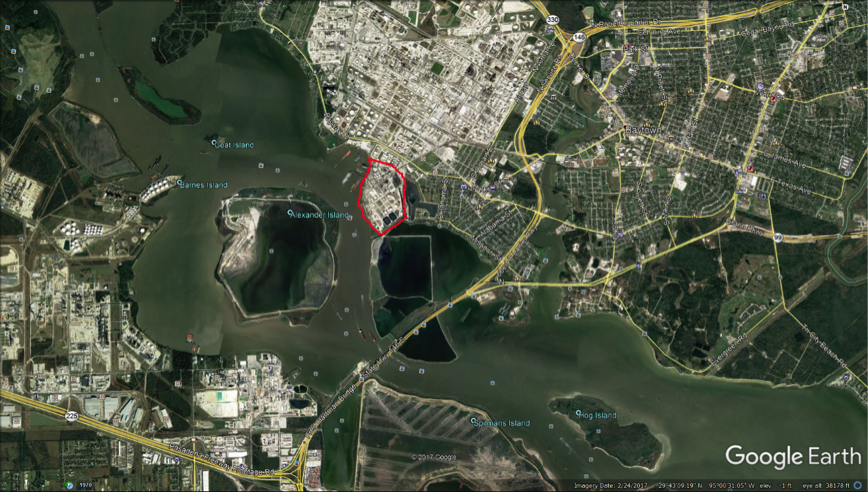
Whether or not ExxonMobil publicly admits the risk of climate change, the company would do well to prepare for its effects. ExxonMobil operates the second largest oil refinery in the nation, the Baytown Refinery and Complex, with a daily capacity of 560,500 barrels.
Harris County places portions of the ExxonMobil Baytown complex within the 100-year floodplain, shown below in light blue:
Comparing this map to the Google Earth map of the region, you can see a tank farm within the 100-year floodplain:
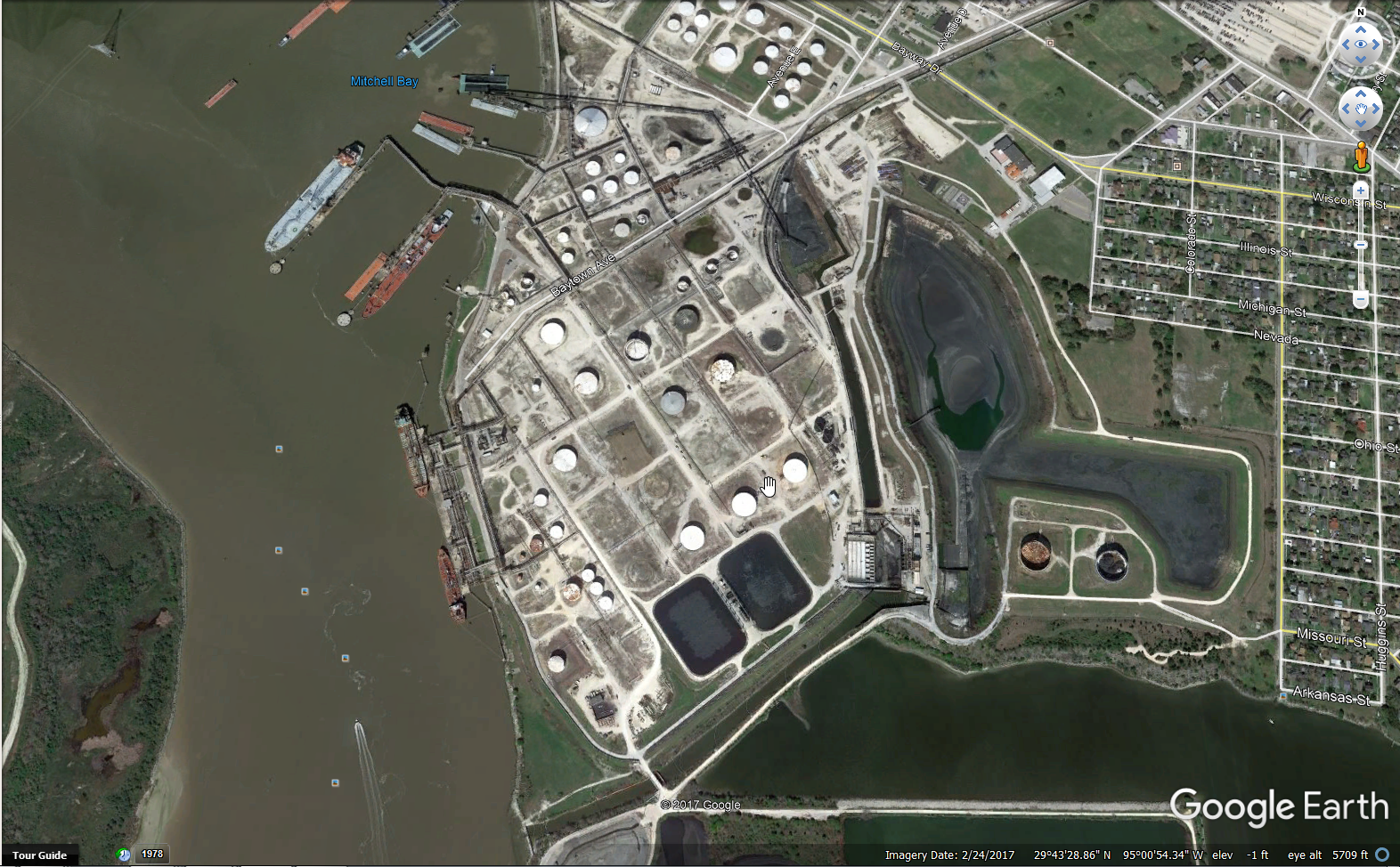
Zooming in on the outlined area above, we see perhaps three dozen tanks and two petcoke storage pits in the threatened area:
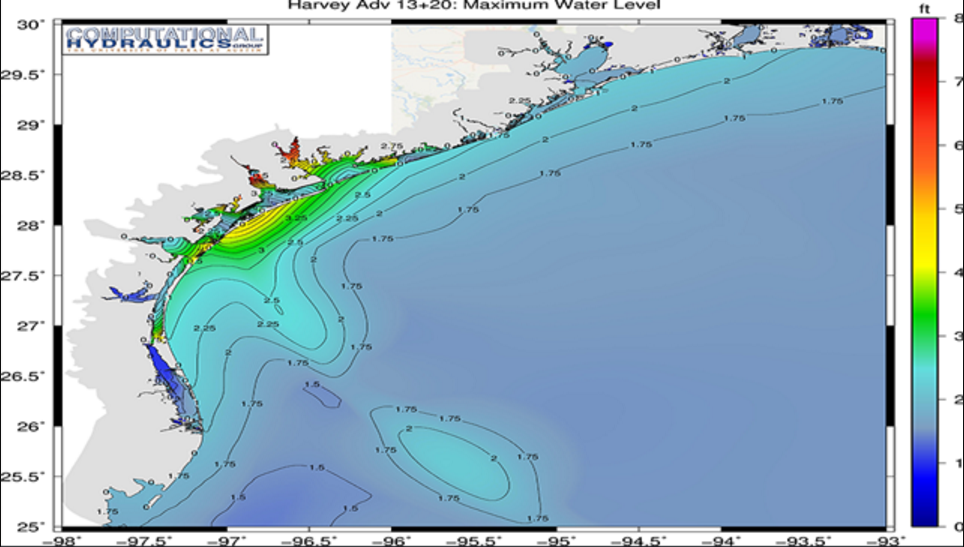
Research organizations in Houston have been modeling the potential impacts of severe storms on the Houston Ship Channel. At Rice University, the center for Severe Storm Prediction, Education, and Evacuation from Disasters has a model of the potential impacts of Tropical storm Harvey. The SSPEED Center predicts sea level rise of several feet in places (for now, no storm surge is predicted in Houston):
We don’t know if this storm, or the next one, will finally tests Houston’s resiliency. What we do know is that our nation’s largest petrochemical complex is vulnerable to severe storms. We also know that climate change will make these storms more frequent, and more dangerous. If we do not prepare ourselves for their impact, we can only hope to recover from their consequences.
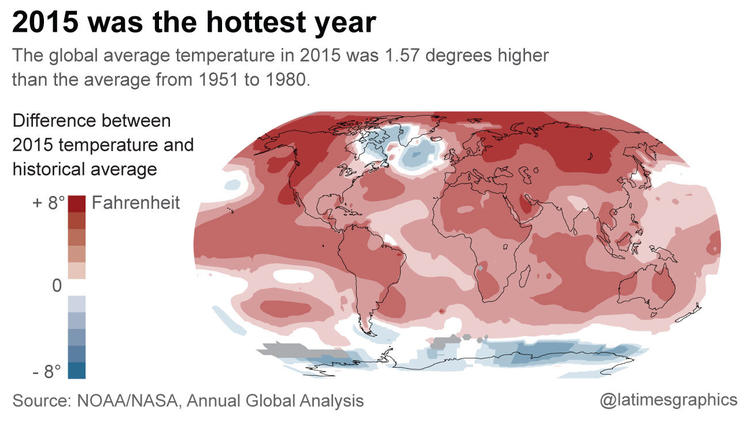
If you felt like 2015 was exceptionally warmer than usual, you weren’t alone. Last month, scientists declared 2015 the hottest year on record. Some of this heat can be attributed to the El Niño weather pattern releasing heat from the Pacific Ocean into the atmosphere, but most of the record-breaking heat is from climate changes caused by human-related greenhouse gas emissions.
NASA, the National Aeronautics Space Administration, and NOAA, the National Oceanic and Atmospheric Administration, both collected data that showed that 2015 was between 0.23-0.29 degrees Fahrenheit hotter than 2014. This number may seem small and insignificant, but in terms of global temperature, it’s a big deal. Thomas Karl, director of NOAA’s National Centers for Environmental Information emphasized that point:
This record, we literally smashed. It was over a quarter of a degree Fahrenheit, and that’s a lot for the global temperature.
The severe heat last year was felt around the world. There were record-high temperatures in the triple digits across Europe in June and July in Spain, Portugal, France, the U.K., Germany, and Poland. In May, India experienced 120 degree days that melted the asphalt, killing 2,500 people. In June, 1,200 people died in Pakistan after temperatures reached 113 degrees. When the atmosphere is warmer, it can hold more water vapor, which can cause an increase in heavy rains. The recent catastrophic floods in the eastern U.S. are evidence of this. El Niño is also disturbing atmosphere circulation which is causing some worldwide weather extremes like the drought in southern Africa.
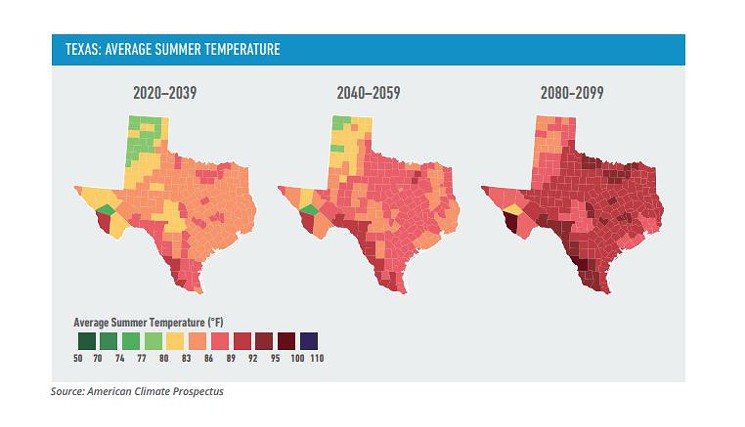
So how will Texas be affected by this global climate change? With its location and vast size, Texas has a wide range of vulnerabilities to the effects of climate change. A study done by the Risky Business Project found that Texas will be one of the states that is most negatively affected by climate change.
The number of extremely hot days per year (temperatures exceeding 95 degrees) will more than double from 43 to 106 days per year.
About 4,500 additional heat-related deaths per year.
A $650 million per year increase in storm-related losses along the coast, bringing the state’s annual damages to more than $3.9 billion.
The Risky Business Project’s mission is to convince business leaders in Texas that climate change is a true risk. This will not be easy since Texas lawmakers routinely dismiss climate change. Regarding the news that 2015 was the hottest year, NASA head Charles Bolden said, “This announcement is a key data point that should make policymakers stand up and take notice – now is the time to act.” That it is, Bolden.
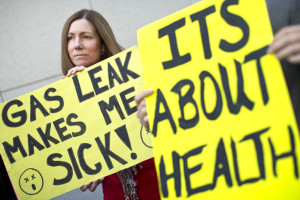
The massive natural gas leak in Porter Ranch, CA, just outside of Los Angeles, has been temporarily capped. That’s the good news. The bad news is that the leak isn’t yet permanently stopped and that it has already done incredible damage over the 111 days it spewed methane and toxic chemicals into the air.
The state of emergency called by Governor Jerry Brown is still in effect for what is being named the largest environmental disaster since the BP oil spill. Over 94,700 metric tons of methane has escaped since October 23, which is one of the largest leaks ever recorded. This incident has taken California two steps back in its progress towards greenhouse gas emissions reductions especially since methane is 87 times more potent of a greenhouse gas than carbon dioxide. For perspective, the amount of methane released so far from the natural gas leak will have the same impact on climate over the next twenty years as emissions from seven coal power plants. Despite these environmental crimes, not one person has been arrested, although this past week, the citizens of Los Angeles County have begun taking legal action.
Southern California Gas Co (SoCal Gas), a subsidiary of Sempra Energy, is the responsible company for the Aliso Canyon Methane Leak, and is finally facing charges for this disaster. District Attorney Jackie Lacey announced the criminal charges filed against SoCal Gas for failing to immediately report the gas leak at its Aliso Canyon facility to the proper state authorities. The site leaked for three days before SoCal Gas officials contacted the city’s fire department.
Major public health concerns are also leading to lawsuits. Residents across the county are reporting health issues such as nose bleeds, female health problems (excessive bleeding), rashes, vomiting, headaches, and dizziness, and have packed town hall meetings voicing their concerns. One Porter Rach resident, Christine Katz, stated, “Even though you can’t see the gas, it’s there. And that’s the saddest part — people don’t understand it. Because it’s not a mudslide, it’s not an earthquake. You just don’t see the devastation, but it’s there.”
SoCal Gas has yet to release a full listing of the chemicals being emitted from the leak, furthering distrust and anxiety from the community. Local law firms have organized a website (www.porterranchlawsuit.com) for citizens to reach out if they have been impacted. More than 25 lawsuits have been filed pursuing damages from the SoCal Gas and Sempra Energy. For example, a family of an elderly woman has filed a wrongful death lawsuit against the gas company, claiming that the leaking chemicals led to the worsening of her health and untimely death this past January.
Legal actions will certainly hurt these gas companies financially, but is this an effective way of enforcing the law? History says no. Time and time again, environmental crimes are punished with fines, and these disasters continue to happen putting the public at risk. New regulations, transparency, and stricter criminal enforcement on the individuals responsible very well could bring justice in these incidents.
Crimes committed under a corporate veil are still crimes and should be treated as such. No amount of money will ever reverse the harsh health and environmental effects the Aliso Canyon Methane Leak is having on the region. But we can put into place policies that make corporations take the environmental risks of their operations much more seriously. A proactive justice process would be exponentially more effective means of dealing with environmental crimes than merely reacting after the fact.
Protecting our Workers from Climate Change by Christina Hausle
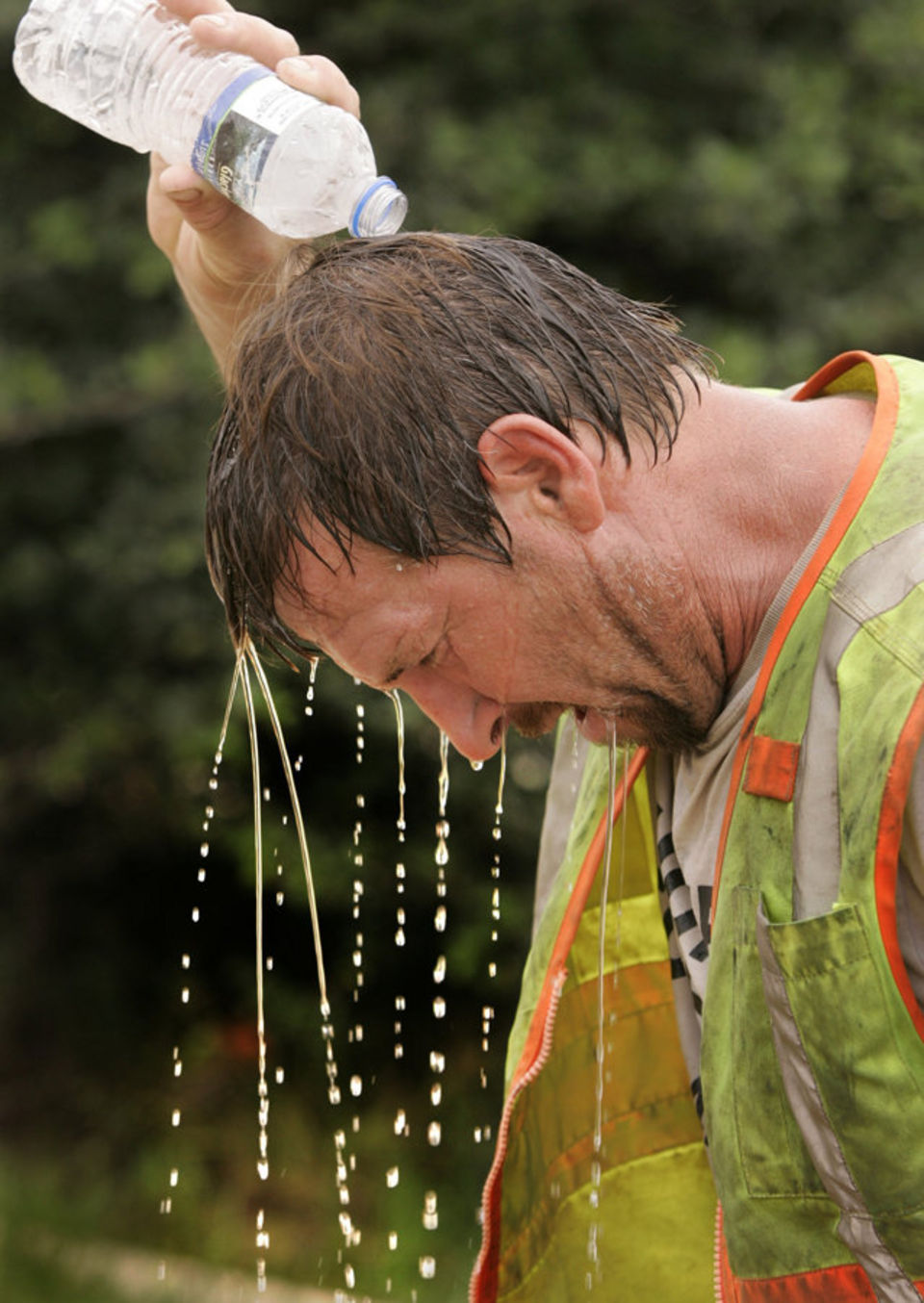
The world is getting hotter. And for those who work outdoors, climate change could mean very dangerous working conditions. As the heat index increases, stricter regulations and safety practices need to be implemented to ensure the health of our workers. Not doing so could be the difference between life and death.
People working jobs that require time outside, especially those working strenuous jobs outside must protect themselves from heat illness. The body is vulnerable to heat illness when our natural cooling mechanisms are not enough, allowing out body temperatures to rise to dangerous levels if precautions are not taken such as drinking water and resting in shade or air condition. Heat illness can take many forms, such as heat rash, heat cramps, heat exhaustion and heat stroke which requires immediate medical attention, and can result in death. Extreme heat increases the chances of deaths from cardiovascular and respiratory disease as the raised levels of ozone and other pollutants in the air from climate change exacerbate these diseases along with increased pollen and other aeroallergen levels.
Most employers understand the risk of heat illness and prepare by establishing a heat illness prevention programs that provide workers with water, rest, shade and modified schedules for those who need to acclimatize to the hot conditions such as new workers or those who have not been working for a week or more. The danger increases when workers have to wear bulky protective clothing or take part in intensive work tasks; similarly, working in full sunlight can increase the heat index values by 10 degrees Celsius.
Though both employers and employees should understand these risks, there are still cases where heat illness caused death. Between 2008 and 2014, the Occupational Safety & Health Administration (OSHA) had 109 reports of workers’ deaths due to heat illness with 15 of those recorded in Texas. Though employers do not have to legally comply with the OSHA standards for heat illness prevention, they must have some version of such a program to protect their workers.
With recent increases in the global temperature due to climate change, conditions only become more and more dangerous for workers. In the last 100 years, the world has warmed by .75 degrees Celsius with the last 3 decades successively warmer since 1850. These increased temperatures are expected to cause about 250,000 additional deaths per year from malnutrition, malaria and heat stress between 2030-2050. With increased average temperatures, more frequent and more intense heat waves are expected to occur. Throughout the U.S. the number of days with high temperatures above 90F is predicted to increase, especially in the Southeast and Southwest.
If the frequency of heat waves and extreme heat days follows this prediction, then all workers will be at risk for heat illness and even greater measures must be taken in order to protect their health. But more importantly, measures must be taken to prevent the increase of climate change in the first place—this problem that has the power to negatively affect every single aspect of our lives.









 The severe heat last year was