Feeds:
Posts
Comments

Posts Tagged ‘coal ash’

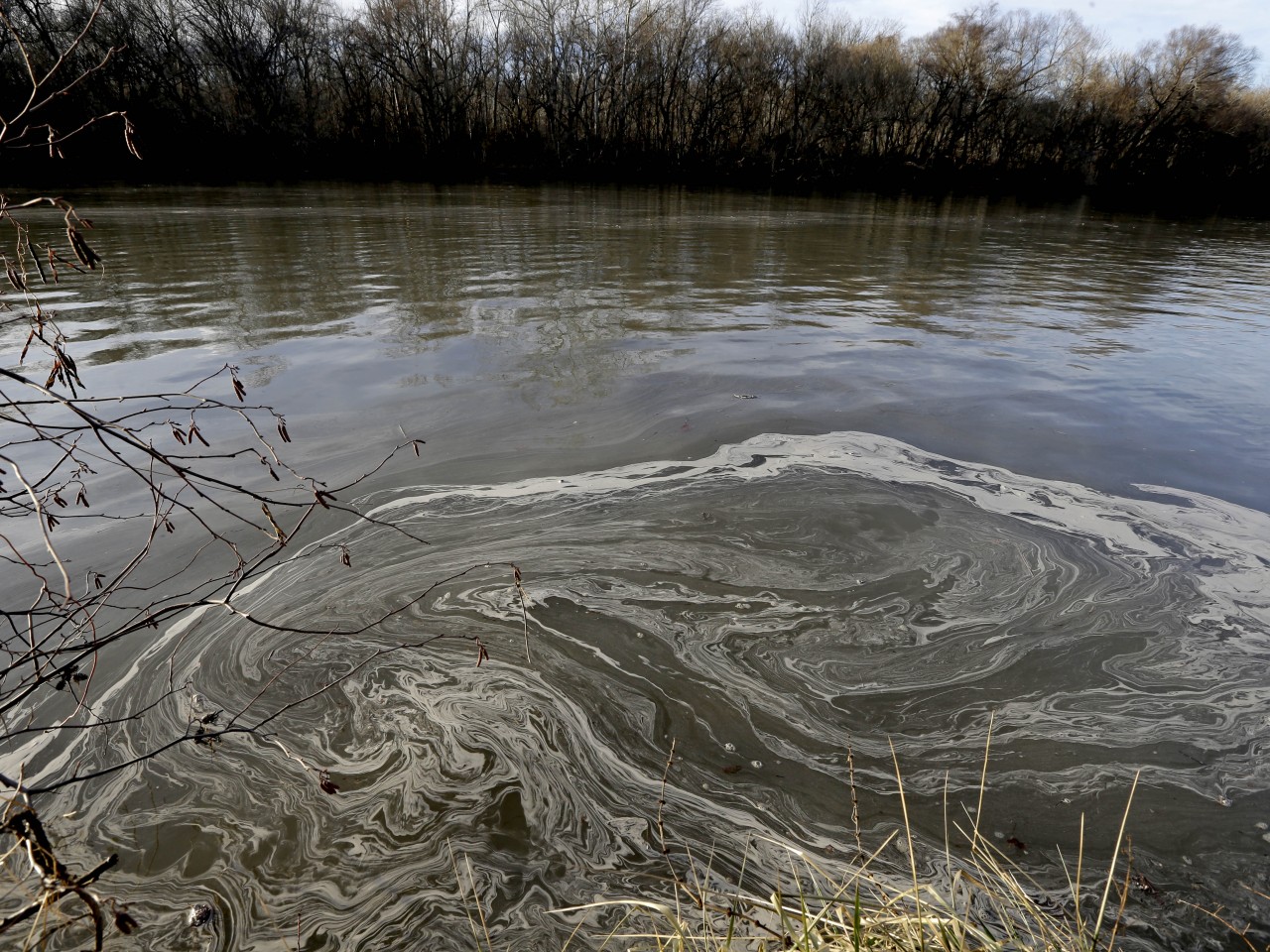
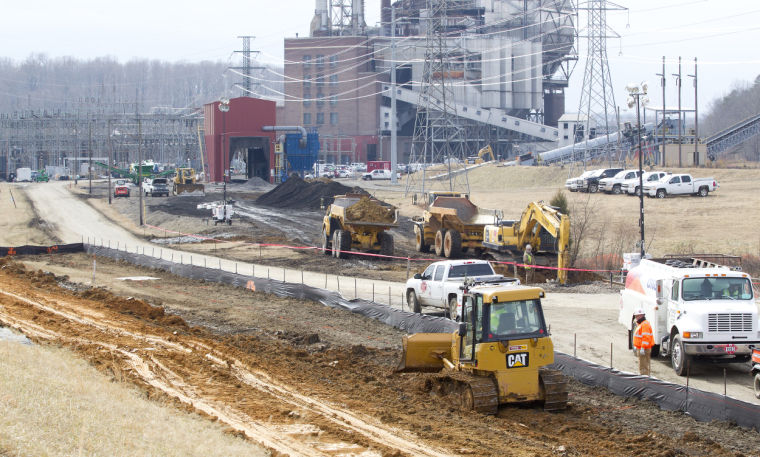
A report by the Tennessee Valley Authority’s (TVA) Office of Inspector General found that the groundwater at some coal ash sites is contaminated with arsenic and other toxic pollutants and is a health hazard.

Levels at the Gallatin plant site in Sumner County and at the Cumberland site, 50 miles northwest of Nashville, are at health-hazard levels.  Beryllium, cadmium and nickel levels are above drinking water standards at Gallatin, as are arsenic, selenium and vanadium at Cumberland and arsenic was found above allowable levels repeatedly in groundwater at TVA’s’ Allen coal-fired plant in Memphis.

Coal ash, once considered harmless, has been shown to contain a variety of heavy metals in low concentrations that can leach into drinking water sources and pose “significant public health concerns,” an Environmental Protection Agency (EPA) report has said.

Currently, the EPA is evaluating rules for coal ash waste as a pollutant.  If the EPA regulates coal ash waste, it could have a much greater effect on many coal-fired plants in Texas coming into compliance than the new air quality rules will have.

Read Full Post »

World News with Diane Sawyer is airing a segment tonight on the Bokoshe fly-ash dump in Oklahoma. Public Citizen first worked with the people of Bokoshe and others throughout Oklahoma back in 2008 to oppose the expansion of the Shady Point coal plant in Poteau, OK – the plant that dumps its coal ash in Bokoshe. In one of the swiftest coal plant battles in US history the expansion was defeated, but the people of Bokoshe continue to deal with the problem of toxic coal-ash from the existing coal plant.

The main problem is that coal ash is almost completely unregulated despite the fact that coal ash contains heavy, metallic neurotoxins like mercury and lead as well as other toxins like selenium, cadmium, arsenic, and can even contain radioactive isotopes. Though the EPA is attempting to initiate new, stricter regulations on this toxic and hazardous waste product there is a large push back from the coal industry to weaken these standards, and the implementation of those standards has been continually delayed. (more…)

Read Full Post »

The Senate is about to hear legislation pertaining to coal ash waste regulation. There is an amendment proposed to slash EPA’s funding so that they cannot enforce safeguards at coal ash waste landfills. The following is a message from our friends with Environmental Integrity Project. Please take a few moments to contact your senator and let them know you want enforcement of regulations on these very hazardous and dangerous waste sites.


Dear Friends,

Thank you for helping to influence 183 Representatives in the US House to vote against Congressman McKinley’s amendment to eliminate EPA’s funding to regulate coal ash as a hazardous waste.  Eighteen Representatives were Republicans switching ranks to vote against their party’s leadership and for safe water.

Within one week we MUST defeat this amendment likely to be proposed to the budget bill (Continuing Resolution) that is brought to the floor of the Senate, or this egregious proposal to slash EPA’s funding could become a reality – leaving EPA unable to enforce basic safeguards at toxic coal ash dumps such as liners, covers or monitoring and thousands of American communities nearby in harm’s way.

Nearly a half million Americans submitted comments on the EPA’s proposed coal ash rules with a majority of them in support of safeguards.   More than a thousand concerned citizens who traveled to 8 day-long EPA hearings supported these safeguards.  Clearly, Americans have voiced their support FOR protection of our drinking water and public health by the US EPA.

Please call your Senators today and urge them to vote NO to any amendments to cut the US EPA’s authority to protect our health from toxic coal ash.
Use this link to find phone numbers for your Senators – you just need to type in your zip code: http://www.contactingthecongress.org/

1.  Tell your Senators you want them to respect the rule-making process and the comments that their constituents submitted on the EPA coal ash regulation.

2.  Tell them to let the US EPA to do its job and protect public health.

3.  Ask them if you can count on their support for basic safeguards to protect public health from toxic coal ash.

After you make your call, please let us know you’ve made the calls and what their offices said.  Send your responses to: lwidawsky@environmentalintegrity.org.

Please let your US Senators know today that Americans throughout the country want to be protected – call them immediately and tell them to uphold our right to safe drinking water.

Thanks for your continuing help and please spread the word.

###

By promoting cleaner energy, cleaner government, and cleaner air for all Texans, we hope to provide for a healthy place to live and prosper. We are Public Citizen Texas.

Read Full Post »

PLEASE HELP  GENERATE 200,000 COMMENTS BY NOVEMBER 19th


If you have not already sent your comment to the EPA. simply send it using the links below.  We can win this!

If you have been affected by coal ash contamination and have a personal or family story to tell, click here.

If you do not have your own story to tell, please click here.

Read Full Post »

The EPA is holding hearings on newly proposed coal ash regulations throughout the country. One of the few places they’ve decided to hold a hearing is Dallas. Coal ash waste facilities have never been properly regulated, despite the fact that coal ash is full of toxic pollutants and carcinogens. This is due primarily to the fact that the coal lobby wants to profit off of their waste by selling it to other industries for use in manufacturing products ranging from concrete to fertilizer.

Texas has 17 coal plants, all of which produce massive amounts of toxic coal ash waste that get stored either in slurry ponds (coal ash mixed with water) or in landfills.

Check out more info and find out how you can encourage the EPA to regulate this waste properly by visiting Sierra Club’s action page.

For some background info on the coal ash waste disaster in Tennessee go here.

###

By promoting cleaner energy, cleaner government, and cleaner air for all Texans, we hope to provide for a healthy place to live and prosper. We arePublic Citizen Texas.

Read Full Post »

Requests for a public meeting should be submitted to EPA’s Office of Resource Conservation and Recovery by July 21, 2010.  For a sample request letter and where to send it, click here.

Read Full Post »

Rule #1 for being an organization even pretending to be a grassroots movement: Actually have some grassroots supporters.  Even manufactured outrage groups ginned up by Freedomworks or the Tea Bag people or United Health Care actually have people who believe and will regurgitate their corporate PR spin.  But, presumably because the coal industry couldn’t find and photograph any actual human beings who supported their agenda, they have had to resort to buying and using internet stock photos.

As DeSmogBlog had previously reported,

“The Federation for American Coal, Energy and Security (FACES of Coal).” the latest “grassroots” organization to join the public conversation on behalf of the coal industry, appears to be a project of the K-Street public relations firm, the Adfero Group, one of industry’s most accommodating voices in Washington, D.C.

The FACES website, which includes no contact information, is registered to Adfero.

And now the Front Porch Blog from Appalachian Voices has reported that

We’ve touched on the fact that the new coal industry front group “FACES” has yet to come forward with a list of their members.  Well, thanks to a few new media> gumshoes, including our own Jamie Goodman and our friends at DeSmogBlog, we’ve learned that not only is FACES hosted by a K-Street firm called Adfero, but all of the “FACES” of coal are actually just istockphotos. They couldn’t even get real photos of their supporters.

You can see the actual photos and screencaps by going to the Front Porch Blog.

If Big Coal wanted to hire models to be the faces of coal, we could’ve saved them the trouble and recommended these photos:

ZoolanderCoalMine

I think Im getting thwe black lung, pop!

"I think I'm getting the black lung, pop!"

And let’s remember that it is not that far of a drive to get out to coal country even from Washington DC, where both West Virginia and Pennsylvania coal-centric communities are less than a 3 hour drive.  It just must really be that hard for fat cat K Street lobbyists to take time out of their busy schedules wining and dining at $2300 / plate fundraisers and take a camera out to coal country to see the actual faces of coal.

Here’s an example of what they might actually find if they did:

Real voices from coal country know that coal is killing us.  It kills their local economies and destroys precious landscapes and water supplies and kills workers because greedy mine owners care more about profits than human lives, such as in the case of the Crandall Canyon disaster in Utah last year.  It pollutes our air and contaminates our water when we burn it, so much so that a USGS study this week found that every fish they tested in the US had mercury contamination.  And even after it’s burned, the coal ash waste is a problem.  From when they dig it up out of the ground to when they try to store the ash, coal is dirty, cradle to grave.  And grave here is meant in the literal sense.

Don’t be fooled by expensive-cocktail-drinking, $1000-shoe-wearing lobbyists in Washington and their stock photos.  The real faces of coal are against it, and we should be moving away from it as quickly as possible.

Read Full Post »

For any of you global warming denier trolls lurking out there, here you finally have it: ANOTHER final study that undeniably shows a link between manmade greenhouse gas emissions and the warming that has occurred.

Yes, yes, and the sky is blue as well.  AND the Earth revolves around the sun.  I know most of us don’t need more scientific evidence that putting pollution in the atmosphere fundamentally disrupts the climate, but what is most interesting about this study is it calculates a precise amount of warming per ton of CO2 or equivalent:

Until now, it has been difficult to estimate how much climate will warm in response to a given carbon dioxide emissions scenario because of the complex interactions between human emissions, carbon sinks, atmospheric concentrations and temperature change. Matthews and colleagues show that despite these uncertainties, each emission of carbon dioxide results in the same global temperature increase, regardless of when or over what period of time the emission occurs.

These findings mean that we can now say: if you emit that tonne of carbon dioxide, it will lead to 0.0000000000015 degrees of global temperature change.

If we want to restrict global warming to no more than 2 degrees, we must restrict total carbon emissions — from now until forever — to little more than half a trillion tonnes of carbon, or about as much again as we have emitted since the beginning of the industrial revolution.

The full article will eb published in the June 11 edition of Nature.

And if that wasn’t enough, this from the HuffPo about coal ash:

Aerial photo of the Kingston fly ash spill

Aerial photo of the Kingston fly ash spill

Just how bad has the coal ash situation gotten in the United States? So bad that the Department of Homeland Security has told Sen. Barbara Boxer (D-Calif.) that her committee can’t publicly disclose the location of coal ash dumps across the country.

The pollution is so toxic, so dangerous, that an enemy of the United States — or a storm or some other disrupting event — could easily cause them to spill out and lay waste to any area nearby.

There are 44 sites deemed by the Environmental Protection Agency to be high hazard, but Boxer said she isn’t allowed to talk about them other than to senators in the states affected. “There is a huge muzzle on me and my staff,” she said.

“Homeland Security and the Army Corps [of Engineers] have decided in the interests of national security they can’t make these sites known,” she said.

There are several hundred coal ash piles across the nation, she said, all of them unregulated.

“If these coal ash piles were to fail they’d pose a threat to the people nearby,” she said. While keeping it from the public, DHS is alerting first responders as to the location of the piles.

“I believe it is essential to let people know,” said Boxer, arguing that if people knew what was in their backyard they’d press public officials to clean it up and protect the area. “I think secrecy might lead to inaction…I am pressing on this.”

Especially in the wake of Kingston fly ash disaster, which was the worst environmental disaster ever in the US– worse even than the Exxon Valdez- this seems pretty simple to me: climate change is caused by greenhouse gases, coal is the major contributor to CO2 emissions, coal ash is so dangerous we can’t even know where the dumps are because of national security… so, let’s stop burning coal? That’s a solution so easy, it’s not surprising anyone in Washington (or for that matter, Austin) hasn’t proposed it.  Oh wait, we have.  It’s called a coal moratorium, and we should be doing it.  For more info, visit www.coalblock.org

Read Full Post »

State Rep. Eddie Rodriguez, D-Austin, discusses a bill that would monitor coal waste at a press conference at the Capitol on Thursday afternoon. Photo courtesy of Paul Chouy at The Daily Texan

State Rep. Eddie Rodriguez, D-Austin, discusses a bill that would monitor coal waste at a press conference at the Capitol on Thursday afternoon. Photo courtesy of Paul Chouy at The Daily Texan

A while back we held a press conference to highlight the scale of Texas’ coal combustion waste problem. The Natural Resources Defense Council (NRDC) recently released a report which found that Texas is the worst state in the nation in terms of toxic coal-ash waste that will result from proposed dirty coal-fired power plants.  I could tell you all about it, or let the media that picked up the story speak for themselves.  Today I am le tired and pick door number two.

So here it is, all the news that’s fit to link:

Lawmakers search for cleaner, safer ways to deal with excess coal waste,” by Matt Stephens with The Daily Texan

Environmental agency says Texas leads nation in production of coal ash waste,” by Randy Loftis at the Dallas Morning News

You can also watch a video of the press conference, courtesy of the House Archived Broadcasts.  Look for the link at 3/12/09 titled “Press Conference – Coal Combustion Waste – Sponsored by Rep. Rodriguez.” Check it out to hear Texas State Rep. Eddie Rodriguez (D-Austin) discuss his bill, HB 1450, which would improve the regulation of coal combustion waste, and to hear Travis Brown, president of Neighbors for Neighbors, speak about the danger coal combustion waste represents to human and environmental health.

NRDC’s new coal combustion waste site, launched along with the report, is also worth checking out.  If you find the dropdown to see Texas’ state specific profile, you can find a map of existing and proposed coal plants in Texas as well as a statistical breakdown of the coal waste and toxic metals from existing and proposed plants.  Scary stuff.

And of course, if you really, really want it… you can read the press release after the jump.

(more…)

Read Full Post »

Most people can recall or have at least heard of the 1989 Exxon Valdez oil spill in Alaska. This event is cited as one of the most devastating environmental disasters to occur in US history, receiving much mediated and public attention. Yet, why is it that over the past few weeks there has been waning discourse about a recent coal spill in Tennessee that is estimated to be 50 times larger than the 1989 Exxon Valdez oil spill?

Aerial Footage of the Spill:

Just recently on December 22 of 2008, 5.4 million cubic yards of coal ash flooded out of a TVA (Tennessee Valley Authority) Kingston Fossil Plant in an Eastern Tennessee town just forty miles West of Knoxville. For those unfamiliar with this particular culprit known as coal ash, it is the leftover residue from coal-fired power plants that generate electricity and expel pollutants.  In order to prevent the ash from entering into and contaminating the atmosphere, it is mixed with water so that it can be kept in retaining pools.

This particular TVA plant had been accumulating waste for over half a century, housing sludge that staggered 65 feet into the air, spreading over 100 acres prior to when the dam burst in December. As imagined, the consequences of this spill were, and still are, devastating to the surrounding communities. The expansive outflow of sludge has damaged around twenty-two homes and has reportedly spilled into two tributaries of the Tennessee River, the Emory and Clinch Rivers. The Tennessee River marks a major source of drinking water for not only people in East Tennessee, but in Alabama, Kentucky, Chattanooga, and Western regions of Tennessee as well. Concerned yet? The T.V.A. isn’t—their website refers to the spillage as an “ash slide”, making the catastrophe sound rather harmless.

So, the big question is, why has a story of such magnitude been so downplayed in the media? I know that there are big stories to cover in the news right now, from the conflicts between Israeli and Palestinian forces to a tanking American economy. But, this is arguably the biggest environmental disaster in United States’ history! This story needs to be unveiled—questions need to be asked and action needs to be taken. The main question I asked earlier—why is the story going unreported—directly leads into the conflict surrounding the hazards of coal ash. When it comes to the subject of coal residue, the majority of people engaged in the topic believe that coal ash contains no harmful toxins, and is perfectly safe. This likely explains why this story has been shoved under the rug. Yet, it would be misleading to say that there are not people concerned about this issue, namely environmentalists and Tennessee residents who believe that coal ash is harmful. If there is a present concern, the question should be examined: is coal ash really as harmless as many claim it to be? (more…)

Read Full Post »

Follow

Get every new post delivered to your Inbox.

Join 3,144 other followers