The United States Department of Energy has sunk $154 million into a carbon capture and sequestration project in Texas proposed by NRG Energy near Houston. The “demonstration” project will be built on their existing Parish Generating Station in Thompsons, TX (one of the biggest and dirtiest coal plants in Texas and the United States). The project will only be capturing 60 megawatts worth of CO2 from the plant – or 400,000 metric tons of CO2 annually. In comparison the Parish plant currently generates 2,697 megawatts of power and releases over 21 million tons of CO2 every year. Also keep in mind that the CO2 from this “capture” process will be used in what’s called “Enhanced Oil Recovery” meaning that the CO2 being sequestered will be partially offset by the CO2 released when the resulting oil is burned. And even industry analysts have said that between 35-50% of the CO2 solution used in EOR comes back up during the oil recovery process, with this carbon being released back into the atmosphere. (more…)
Posts Tagged ‘Department of Energy’
DOE Throws $154 Million Down A Texas Hole
Posted in Coal, Global Warming, tagged carbon capture, carbon capture and sequestration, CCS, clean coal, climate change, Coal, coal plant, Department of Energy, doe, Energy, NRG, Texas on March 11, 2010 | 1 Comment »
CPS/NRG Settlement Shows Nuclear Power Too Costly, Too Risky
Posted in Nuclear, tagged City Council, CPS Energy, Department of Energy, doe, Loan Guarantees, nrg energy, rate increase, San Antonio, south texas nuclear project, South Texas Project, STP, Tom "Smitty" Smith on February 17, 2010 | Leave a Comment »
Statement of Tom “Smitty” Smith, Director, Public Citizen’s Texas Office
Today’s announcement that as a part of a settlement with NRG Energy, CPS Energy will withdraw its application for a federal loan guarantee for the South Texas (Nuclear) Project (STP) expansion and end further investment in the project demonstrates nuclear plants are too costly and too risky to build.
CPS Energy and the San Antonio City Council have signaled their desire to stop throwing good money after bad at STP, a message we hope will tell the U.S. Department of Energy that this plant is a poor candidate for federal loan guarantees. This debacle should show the federal government that nuclear loan guarantees are a fundamentally flawed and wasteful use of taxpayer money.
At $18.2 billion, the cost of STP has already tripled in just a year. When STP 1 and 2 were built, they ended up being six times over-budget and eight years behind schedule, and STP 3 and 4 look like they are on track to beat out that poor performance record.
Today’s announcement is a victory for the many citizens of San Antonio that have worked so hard in the last year to bring openness and accountability to the city’s participation in this project. We applaud CPS for wisely seeing the futility of wasting more time and energy on this flawed nuclear endeavor. We hope that they will be satisfied with the deal they’ve gotten and avoid the temptation to increase their ownership in the project. CPS has finally reached a settlement that shields San Antonio ratepayers from the financial risks of yet another nuclear deal gone wrong. Any future investment would throw that protection to the wind.
On Thursday, the City Council will vote on a proposed rate increase for CPS. The City Council should put a firewall in that proposal to ensure that no unauthorized money will be siphoned off to buy a bigger stake in STP. San Antonio can’t afford to let this rate increase become a back door to continued nuclear investment.
We also have to wonder how NRG will move forward, without another clearly delineated partner in the project. Less than a month ago, NRG announced that if CPS “does not meet future obligations representative of its ownership interest in the site”, they “will wind down the project as quickly and as economically as possible.” We certainly hope that NRG CEO David Crane will remain true to that expressed intent to protect his shareholders from the next financial failure in a long historic line of overly expensive, poorly executed nuclear projects.
###
By promoting cleaner energy, cleaner government, and cleaner air for all Texans, we hope to provide for a healthy place to live and prosper. We are Public Citizen Texas.
Youth Storms US Congress at Powershift–Largest Lobby Day in Environmental History
Posted in Coal, Global Warming, Toxics, tagged Air Quality, carbon cap, Carbon Dioxide, Clean energy corps, climate change, Coal, Congress, Department of Energy, geothermal, global climate treaty, green jobs, greenhouse gas, house of representatives, obama, powershift 09, Public Citizen, renewable energy, Renewables, senate, solar power, stimulus package, student activists, washington dc on March 12, 2009 | Leave a Comment »
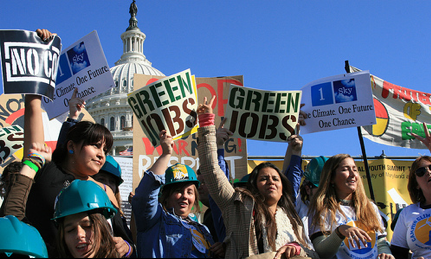
In the fight for a greener future, America’s youth has and is continuing to be one of the strongest forces. Recently, I participated in Powershift 2009–the largest summit on climate and energy in United States’ history. Roughly 12,000 attended the conference, and the overwhelming majority of participants were students from high schools and colleges spanning across the nation!


The conference began Friday, and provided endless opportunities for attendees to experience environmentally-geared panels, workshops, movies, speakers, and state breakouts until Sunday. The amalgamation of these informative and inspirational activities worked as a preface that ultimately led to Powershift’s climax that Monday–lobby day. Despite the untimely blizzard-like weather that stormed DC right before that Monday, thousands of youth still trudged through snow and sleet to capitol hill. That day, March 2nd, proved the be the largest lobby day for climate and energy in US history. Senators and representatives from all fifty states were successfully lobbied, with a total of 350 lobby visits! For any of you who are glad that some federal lobbying was completed for your interests, here is the platform that Powershifters presented to US senators and representatives:
1. Cut Carbon Emissions
- Reduce global warming pollution by the targets science tells us are necessary: 25%-40% below 1990 levels by 2020; and 80%-95% below 1990 levels by 2050.
- Set an aggressive cap on carbon immediately. If a cap-and-auction mechanism is chosen, 100% of pollution allowances must be auctioned. Any revenue generated from this cap must be used to address the climate crisis in a just and equitable way; none of this money should go to polluting industries.
- Conserve and restore the world’s forest, ecosystems, and carbon sinks, which are the best natural defense in a warming world.
2. Invest in a Green Economy
- Create 5 million new jobs through investments in clean energy.
- Develop a “Clean Energy Corps” to create service, training, and job opportunities in the clean energy economy (1).
- Train a generation of workers and volunteers to build our clean energy future and help communities adapt to the already changing climate.
3. Power Our Future with Clean Energy, not Dirty Fuels
- We see a future powered by clean, renewable energy like wind, solar, and geothermal; 100% of our electricity should come from these sources, and we should invest in sustainable transit and energy efficiency.
- End our dependence on dirty energy by enacting a moratorium on financing and development of new coal and nuclear plants, and oil shale and tar sands infrastructure.
- Immediately begin phasing out dirty and dangerous energy sources and methods of extraction, while also ensuring a just transition for affected workers and communities.
4. Lead the World to a Clean and Equitable Energy Future
- Work with other nations to reach a strong new global climate treaty in Copenhagen that puts us on track to reduce carbon below 350 parts per million.
- Assist vulnerable communities and developing countries in the transition to low-carbon economies and with adaptation to the changing climate.
_________________
This was the type of rhetoric left at the nation’s capitol a week ago, and such requests likely still serve as hot topic points in DC. As a voice of Powershift, and the young environmentalists of this nation, this is the direction we want to see our federal government take now, and in the future. And let me assure you, the overwhelming feeling in Washington experienced by many of the Powershifters is that this direction is highly achievable, at least, more so than ever before in our nation’s history!
(1) The UN Framework Convention on Climate Change (UNFCCC) COP15 in Copenhagen.
Obama steps up to the energy efficiency plate
Posted in Efficiency, Energy, tagged ACEEE, appliance standards, Department of Energy, obama on February 16, 2009 | Leave a Comment »
For the past 30 years, previous administrations have failed to write regulations to enforce the laws, despite strong pushes by Congress and even a court order to attain stricter energy standards on 30 categories of appliances, according to a recent New York Times article. Speaking to the Department of Energy recently, however, President Obama ordered the department to immediately draft standards to make a variety of appliances more energy efficient. While some would expect that these standards will lead to more expensive appliances, the American Council for an Energy Efficient Economy (ACEEE) points out:
Under standards, equipment prices have risen modestly, but estimates by the Lawrence Berkeley National Laboratory and ACEEE indicate that the benefits are more than 3 times the costs on a net present value basis.
Obama said he plans on complying with the laws, beginning this year with nine categories of appliances, including ovens, vending machines, microwave ovens, dishwashers and light bulbs. The President said that “this will save consumers money, this will spur innovation and this will conserve tremendous amounts of energy.” My boy, former President George W. Bush, had completed seven standards, leaving office with fifteen yet to be written. Mr. Obama intends to toughen the standards issued by the Bush administration and of course get started where Bush left off. The fact that Bush completed only seven of the fifteen measures in eight years is pretty consistent with the priorities he had while in office. Obama taking the initiative early on to see that the rest of the standards get completed as well as improve upon the existing standards is a promising sign for our country’s energy future.
One very specific concern of the Department of Energy is to develop stricter efficiency standards for fluorescent light bulbs. Doing so could save businesses and households as much as $67 billion over the next 30 years. Congress hopes to phase out the traditional incandescent bulb by 2014.
While this is all super exciting, you can get started on making your home more energy efficient right now! Just check out your energy provider’s website at www.powertochoose.org. Most utilities offer customers tips on how to make their homes more energy efficient (i.e. upgrading to more energy efficient appliances as well as taking measures such as installing attic insulation, solar screens on windows, caulking, and weatherstripping), while some provide customers rebates and incentives for taking said measures. Get started today!
For more advice on saving energy, visit the Department of Energy’s Consumer’s Guide to Energy Efficiency and Renewable Energy.
-Garren
Nickel and Dime your way to a nuke: an update on San Antonio
Posted in Energy, Nuclear, tagged CPS, Department of Energy, Express-News, Greg Harman, Loan Guarantees, San Antonio, South Texas Project on January 22, 2009 | 1 Comment »

CPS committed to spend $60 million more on the proposed expansion of the South Texas Nuclear Project at its Board of Trustees meeting on Tuesday, which brings the city utility’s total expenditures on units 3 & 4 to $267 million.
The construction and operating license still languishes at the NRC, almost a year and a half after being submitted.
Somewhat lost amid the honorings, approvals, and statements of the Board meeting was the fact that STP 3 & 4 ranking for DoE’s loan guarantees has slipped from #1 to #3 (out of 14). Updated rankings will be out in March. 3rd seems respectable. It’s a bronze medal, right? Well, there’s only $18.5 billion slotted for loan guarantees and each reactor can cost $6-who-knows-how-many-billions.
Gschwartz’s piece on this week’s Board of Trustees meeting sums things up pretty well on SA Current’s Queblog. The Express-News touched on it here and here.
-Matt
The Energy Collective Roadmaps Renewables
Posted in Global Warming, tagged biofuels, Department of Energy, geothermic, redmonk, Renewables, scott sklar, smitty, solar, sustainable energy, the energy collective, tom raftery, wind farms on November 6, 2008 | Leave a Comment »
The Energy Collective, an online blogging group, hosted a webinar Wednesday about developing a roadmap for large-scale installation of renewable energy sources. The online seminar’s expert participants described Texas as a world leader in wind energy, yet at the same time focused on the U.S. as lagging behind many countries in wide scale renewable installation.
“The audience is primarily American and you may not want to hear this, but you guys are lagging behind,” said Tom Raftery, a sustainable industry analyst for Redmonk and Energy Collective blogger who is Irish, but recently moved to Spain.
“All the markets are very different . . .Ireland is at about 7 percent (of renewable power sources), Spain is at 10 percent. The U.S. is at about 1 percent. The U.S. needs to (increase renewables), and do it fast,” Raftery said.
One attendee asked webinar participant Scott Sklar, who is president of the Stella Group and a chair of the Sustainable Energy Coalition’s steering committee, whether Sklar supported selection of an American “Energy Czar”.
“Yes,” replied Sklar. “Because most of what the Department (of Energy) does are wonderful things but in the end have nothing to do with our energy policy. Renewables don’t get due attention outside of photo opportunities because they are such a small part of the agency’s agenda. It needs to be a cabinet post.”
Sklar said that converging interests demand fast development in the energy sector. He said that presidential candidate John McCain cited renewable development as a necessity for improving national security; Barack Obama cited it as a source of job creation, and environmentalists cite the need for the planet’s health.
“The U.S., by not having resolved our energy policy and letting our policy be driven by energy price has really harmed our own standing within these technologies,” Sklar said.
He added that the U.S. is now importing wind and solar (more…)
Gimme! Nuclear industry asks for $122 billion from Uncle Sam
Posted in Energy, Nuclear, tagged bailout, Department of Energy, Friends of the Earth, loan guarantee, Nuclear on October 16, 2008 | 1 Comment »
Call it a preemptive bailout if you like, my Friends…
…but the Department of Energy recently issued a press release stating that they have received 19 applications for federal loan guarantees to build 14 nuclear power plants. The price tag: $122 billion.
http://www.energy.gov/news/6620.htm
I know after the $700 billion bailout package, on top of $100+ billion just for AIG, $122 billion for nukes doesn’t sound that impressive. But it is a little scary when you realize that the feds only appropriated $18.5 billion for loan guarantees. Now children, don’t push in line!
The DoE estimated the total cost to construct the 21 proposed reactors at $188 billion, which they say averages out to around $9 billion per reactor.
Taxpayer-backed loan guarantees would total $5.8 billion per reactor based on DoE’s numbers. That’s a hard pill to swallow for an industry with a notorious history of default. From Bloomberg:
Taxpayers are on the hook only if borrowers default. A 2003 Congressional Budget Office report said the default rate on nuclear construction debts might be as high as 50 percent, in part because of the projects’ high costs.
-Matt


![Validate my RSS feed [Valid RSS]](valid-rss.png)