Feeds:
Posts
Comments

Posts Tagged ‘natural gas’

According to Bloomberg, with four days left in 2012, wind-turbine installations are expected to exceed natural gas-fueled power plants in the U.S. for the first time as wind farm developers race to complete projects before a renewable energy tax credit expires.

New wind capacity reached 6,519 megawatts by Nov. 30th of this year, beating the 6,335 megawatts of gas additions and more than double that of coal, according to data from Ventyx Incm which plans to release final tallies in January.

Congress has yet to renew the production tax credit, which provides incentives for wind farms completed before Dec. 31, 2012. Efforts to take advantage of the subsidy trumped interest in gas-fired stations, which are supported by a plunge in prices for the commodity resulting from added production through hydraulic fracturing.

To qualify for the tax credit, which pays wind farm owners 2.2 cents per kilowatt-hour of power they produce over 10 years, projects must be online and producing power by Jan. 1.

A bill to extend the wind production tax credit was approved by the Senate Finance Committee in August.  Unless Congress extends the incentive, wind turbine installations are predicted to fall 88 percent next year according to a forecast by New Energy Finance.  Earlier this month, in an effort to head off opposition to an extension, the American Wind Energy Association proposed a six-year phase-out of the credit, ending the subsidy at the start of 2019.  They claim 37,000 jobs will be lost if the credit lapses now.

An increase in gas prices may make wind even more competitive. Gas futures saw their first annual increase since 2007, rising almost 15 percent this year.  And, utilities in 29 states are required to get an increasing amount of their supplies from renewable resources such as wind and solar, whether or not Congress renews the tax credits.

Read Full Post »

Yesterday, Public Citizen spoke before the Department of Energy subcommittee tasked with natural gas drilling and outlined the key steps needed to properly oversee the process of fracking. We are calling on the subcommittee to recommend closure of many loopholes that create regulatory exemptions for fracking.

Please join us in urging the DOE to regulate this risky process by signing on to our public comments.

Click here to read our earlier post about environmental advocacy around “fracking” at the national level

Read Full Post »

Oh no . . . we're fracked!

What happens when you let Big Business regulate itself? – You get fracked.

Hydraulic fracturing — also known as fracking — is a controversial method of natural gas extraction that involves injecting a toxic chemical sludge into the surface of the earth until it rips open.

And it’s a case study in the dangers of letting giant corporations sidestep laws that protect our health, our investments and our environment.

Learn more about the risks of fracking, including how it could threaten your drinking water:

www.citizen.org/fracking-unsafe-unregulated

In 2005, then-Vice President Dick Cheney got fracking exempted from laws that keep our air and water clean. That exemption — known as the “Halliburton loophole” — allows oil and gas companies to force hazardous chemicals into underground water supplies.

As if that’s not enough, the Halliburton loophole is only one of seven exemptions for the oil and gas industries from major federal environmental laws like the Clean Air Act and National Environmental Policy Act.

The wholesale lack of federal tools to protect the public from fracking has created an inadequate patchwork of state regulations. As a result, companies are assaulting the environment and polluting drinking water supplies all over the country.

In Pennsylvania, a state with some of the most robust fracking regulations, one company — Chesapeake Appalachia LLC — racked up 149 environmental violations in just two and a half years.

While fracking is currently a hot-button issue, it is not a new practice. It was developed by Halliburton in the 1940s and has primarily been the scourge of communities in the Southwest.

The huge bump in fracking has been based on speculation that shale reserves in the Northeast could be the Saudi Arabia of natural gas. But even this is being challenged. The New York Times has recently reported that natural gas companies may be vastly overstating their reserves in what could be a giant Ponzi scheme.

To the credit of activists all over the country, the federal government has been forced to address fracking.

  • A number of lawmakers have sent letters to the Securities and Exchange Commission asking it to investigate whether the industry has provided accurate information about the productivity of natural gas wells, particularly those involved in fracking.
  • As part of President Obama’s “Blueprint for a Secure Energy Future,” the Secretary of Energy Advisory Board (SEAB) is exploring recommendations to better protect public health and the environment from fracking.

Public Citizen will be giving public comment with a list of recommendations at a SEAB meeting later this week. We will be giving you an opportunity to contribute to the dialogue, too, so stay tuned!

But investigations are only the first step toward curbing this unsafe practice. In the near term, legislative action to close loopholes that exempt fracking from federal law is needed. Meanwhile, all fracking activity should be suspended. Moving forward, shifting away from dangerous and dirty fuels is the only solution.

Read Full Post »

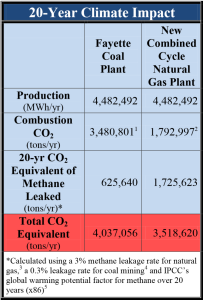
A new study from Cornell Professor Robert Howarth shows that natural gas from shale beds extracted through hydraulic fracturing or “fracking” has the same effect on the climate as burning coal, tarnishing one of the natural gas industry’s major claims of being a less polluting and more climate friendly fossil fuel.

A megawatt of electricity from a natural gas power plant will generally produce anywhere from 1/3 to 1/2 of the greenhouse gas emissions, specifically CO2, compared to a megawatt from a coal plant.  And since coal plants have rightfully been targeted as the biggest climate polluters the natural gas folks have been positioning themselves as the cheaper, cleaner alternative.

Not so fast, since methane, the main component of natural gas, is also a greenhouse gas that the EPA rates as having 20 times the heat-trapping capacity of CO2.  Since so much methane is released into the atmosphere during the fracking and drilling process, Howarth’s study questions that assumption, implying the climate benefits are minimal, if they even exist.  From The Hill:

More broadly, many gas supporters see domestic reserves as a “bridge” fuel while alternative energy sources are brought into wider use.

Howarth’s study questions this idea.

“The large GHG footprint of shale gas undercuts the logic of its use as a bridging fuel over coming decades, if the goal is to reduce global warming,” the study states.

But [natural gas industry spokesmen] also note that gas has other advantages over coal as an energy source, due to its lower emissions of conventional pollutants including nitrogen oxides and sulfur dioxide.

The study cautions that the research is not meant to justify continued use of oil and coal, but rather to show that using shale gas as a substitute might not provide the desired checks on global warming.

Howarth and Cornell engineering Prof. Anthony Ingraffea, who also worked on the study, acknowledged uncertainties in the nexus between shale gas and global warming in a presentation last month.

“We do not intend for you to accept what we reported on today as the definitive scientific study with regard to this question. It is clearly not. We have pointed out as many times as we could that we are basing this study on in some cases questionable data,” Ingraffea said at a mid-March seminar, which is available for viewing on Howarth’s website.

“What we are hoping to do by this study is to stimulate the science that should have been done before, in my opinion, corporate business plans superceded national energy strategy,” he added.

This is an incredibly important discussion to have, especially given the impacts that fracking is having on our air, water, health, and our state budget.

UPDATE: The Texas Energy Report got some good response from around the Capitol and we couldn’t help include it:

“Sounds like the coal industry may have funded it,” joked Sen. Troy Fraser (R-Horseshoe Bay), author of Senate Bill 15, which would create a 20-year energy and environmental policy council for Texas.

“The direction they’re going is exactly opposite of what we hear that natural gas is cleaner with less greenhouse emissions. We’ve always worked under that premise,” said Fraser who is also chair of the Senate Natural Resources Committee.

***“I would like to see it. I don’t know what they’re drawing their conclusions on. I would say it’s interesting – significant I don’t know,” said Rep. Jim Keffer, chairman of the House Energy Resources Committee.  “We’ll have to take a look at it. I’m sure there’ll be another side.”

Keffer is the author of a bill to require oil and gas companies drilling for shale gas to disclose the contents of chemicals they inject into the ground with water and sand during fracking. Fracking involves high-pressure injections of water into the ground to fracture rock formations and release gas.

The Environmental Defense Fund of Texas, which has embraced Keffer’s bill as the most significant fracking disclosure measure in the nation, said more work is needed to determine the air quality implications of fracking.

“Though we have questions about the study’s emissions estimates, it nevertheless highlights the importance of getting better data,” said Ramon Alvarez of the EDF.

###

By promoting cleaner energy, cleaner government, and cleaner air for all Texans, we hope to provide for a healthy place to live and prosper. We are Public Citizen Texas.

Read Full Post »

In another effort to stave off critics who call a $1 billion annual tax break for high-cost gas producers in Texas outrageous, a study paid for by the industry has emerged intended to scare folks into believing that for every $1 the state spends in tax breaks it gets back about $4 in related economic activity and that will disappear if we take their tax break away.

Former Deputy State Comptroller and current lobbyist Billy Hamilton has produced an industry-backed study for the American Natural Gas Alliance on what they claim the impact of the withdrawal of the tax incentive would have on Texas.   The  industry is rightly concerned that the tax break would come under attack as the state tries to close a $27 billion budget gap.

Hamilton’s analysis concludes that ending the tax break would result in an immediate loss in 2012 of 35,000 and $3.8 billion in economic output, estimating Texas would lose 94,400 jobs each year and $10.4 billion each year in economic output.

The industry has been saying for some time that if Texas dumps this tax break, states like Pennsylvania will get the driller’s business, but Texas has the largest reserve of natural gas in the nation and it is hard to believe the industry would pull up stakes to move elsewhere.  It is not like they aren’t making plenty of money here in Texas.  And the state hasn’t seemed concerned that they are losing renewable energy manufacturing jobs by not providing that industry with tax breaks/incentives, so no sympathy here.

Worthy of discussion here is exactly who is getting these state tax cuts, and according to the Houston Chronicle, it’s mostly companies from out of state.

Not surprisingly, the top five firms that saved the most as a result of the exemption represent the largest oil and gas producers in Texas:

Oklahoma-based Devon Energy, saved $113.8 million in fiscal year 2010 under the exemption. Devon reported net earnings last year of $4.6 billion.

Next on the list was XTO Energy Inc., a subsidiary of Exxon, which saved $113.2 million on its “high cost” gas operations in Texas. XTO reported $2 billion in net earnings last year. Others who received top financial benefits were: Canadian-based EnCana, which saved $60.6 million, Oklahoma-based Chesapeake Energy, which saved $59.4 million and Enron spin-off EOG Resources of Houston, with $58.6 million in savings.

These tax breaks really amount to little more than subsidies of some of the most profitable companies around. It would be one thing if these were Texas companies, but when Texas taxpayers are subsidizing Oklahoma and Canadian companies, something is very, very wrong. We can expect the corporate welfare queens to cry when their gravy train is threatened, but their protected status at the Legislature, thanks to millions in campaign contributions to Texas politicians, insures that they won’t actually be in danger of cuts.  Not like our schools, or grandma’s nursing home. Perhaps if our teachers and the elderly were represented by out of state special interests who can dip into their huge profits to bribe donate to politicians, they could be safe from cuts, too.

If, in fact, there are no sacred cows as the legislature tries to deal with the budget deficit, then this tax break needs to be on the table too.

Read Full Post »

The Federal Energy Regulatory Commission (FERC) wants to know the reasons for the Texas power generation outages and for the interruptions in natural gas delivery to New Mexico.

As Texas officials began looking into the causes of the Texas electricity blackouts, New Mexico was holding its own hearings.  The ripple effect felt by down pipeline states when Texas’ electric grid and natural gas supplies went awry during an abnormally cold winter storm in February of this has prompted the federal agency to examine how to ensure that a new fleet of natural gas plants around the country can get plenty of fuel.

This has major implications for a state that has been expanding natural gas drilling operations exponentially over the past several years, many think to the detriment of the environment and the health of those who live around those operation.  Just ask the folks in the Barnett Shale region of North Texas.  Some of them might even be able to light their water taps on fire for you.

If you want to learn more about the concerns of citizens living in natural gas drillling areas check out “Gasland,” the Academy Award nominated documentary film by Josh Fox, that examines whether hydraulic fracturing of shale formations threatens water supplies and poses other environmental hazards.  Click here to read our earlier blog about the movie.

Read Full Post »

Map of Texas highlighting counties served by t...

Texas counties served by AACOG

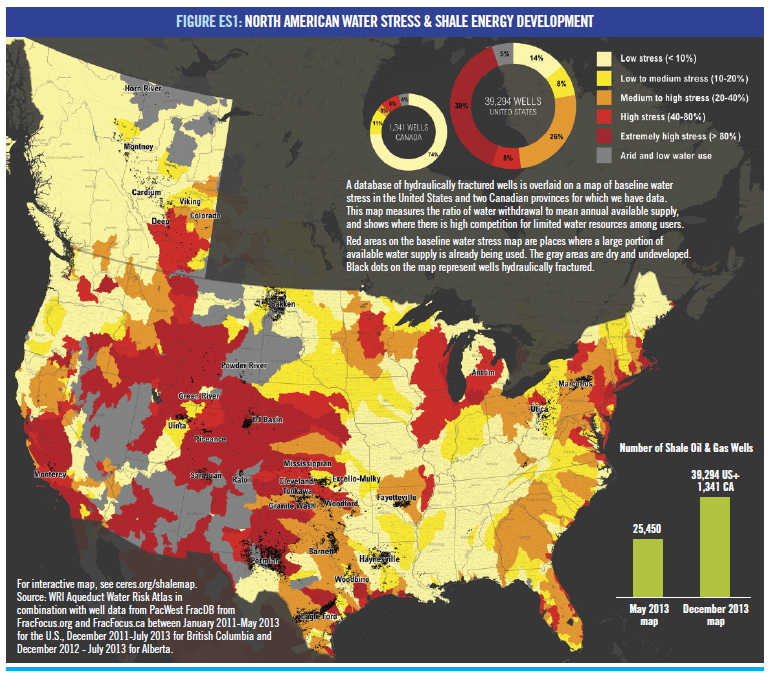
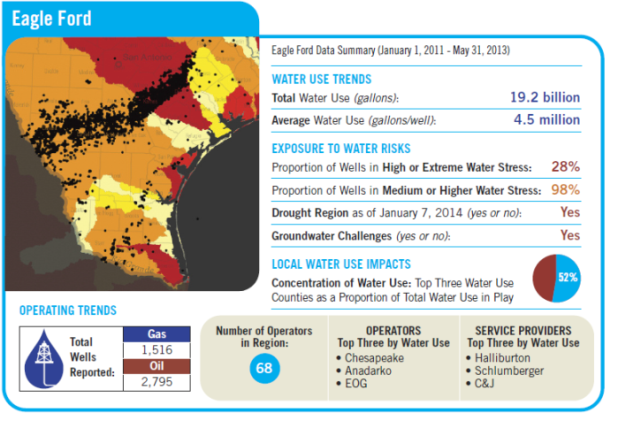
San Antonio, which sits just north of what many say is one of the largest oil and gas reserves in the country known as the Eagle Ford, is a heart beat away from violating federal air quality standards for ground-level ozone. It seems it is only a matter of time before the increased emissions from the Eagle Ford could drift up on prevailing winds, pushing the area out of compliance.

With drilling expected to increase over the next decade, those responsible for this region’s air quality say the increased pollution could make it difficult to remain under federal limits.  In the past decade, San Antonio’s ozone levels have decreased by 13 percent while its population has increased 13 percent, managing to stay just ahead of federal standards.  However, once a region falls out of compliance, efforts to get back in are time-consuming, politically unpopular and expensive.

It is going to be a tough contest for the environment to compete with the hype about the economic benefits (which always fail to take into account the economic costs to the region for these types of activities – increased health care costs, decreased quality of life costs, and the cost of coming back into compliance with federal air quality standards).

According to a study by the Center for Business Research at the University of Texas at San Antonio and commissioned by America’s Natural Gas Association:

Activity in the Eagle Ford in 2010 alone generated more than $2.9 billion in total revenue, supported roughly 12,600 full-time jobs and provided nearly $47.6 million in local government revenue.

Last year there were 72 active oil leases, some of which may have more than one well, and 158 producing gas wells.

However, the number of drilling permits issued by the Texas Railroad Commission, which regulates the state’s oil and gas industry, has reached 1,132 as of February. In just one year, the output of crude oil, condensate and other liquids nearly quadrupled to 3.9 million barrels.

And the boom has just begun; the UTSA study forecasts that 5,000 more wells could be drilled by 2020.

So far, no regulatory agency has begun comprehensive air monitoring in the Eagle Ford area, meaning there’s no baseline to measure any increased pollution.

Models for other regions of the country show drilling and related emissions can increase ground-level ozone significantly and the sheer volume of drilling that’s expected over the next decade, will require Alamo Area Council of Governments (AACOG) to add a new category, for drilling and recovery, into its air pollution forecasting models.

The San Antonio Express News writes about the area:

The Eagle Ford shale covers a swath roughly 50 miles wide and 400 miles long, from Maverick and Webb counties sweeping north and east up to Leon and Houston counties, but not including Bexar County. Unlike other large shale formations that have recently been tapped, the Eagle Ford includes a good deal of oil, mostly along the northern reach.

Because oil prices are high and natural gas prices low at the moment, there’s more activity in the oil region at this time, industry analysts say.

Drilling has occurred in South Texas for decades, but the oil and gas trapped in the deeper, dense rock layers once were too expensive to reach. Advances in drilling technology, most notably hydraulic fracturing and horizontal drilling, have allowed an unprecedented amount of hydrocarbons to be extracted.

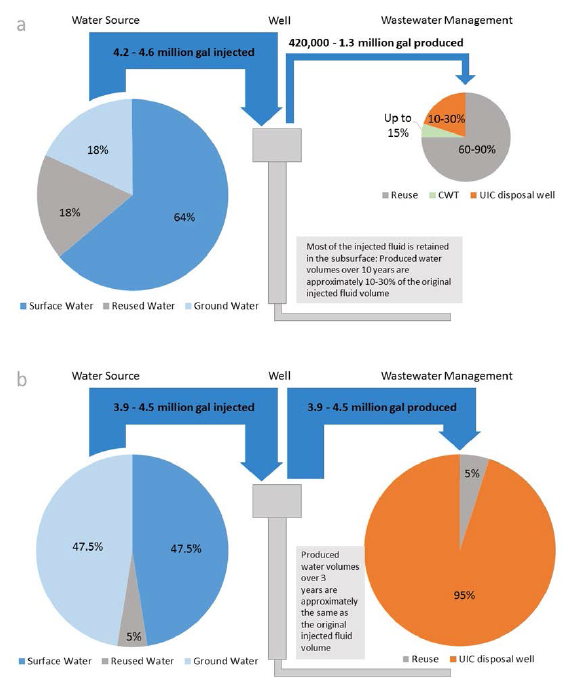
“Fracking,” as it’s known, forces millions of gallons of water, mixed with sand and a variety of chemicals, into shale formations, forcing open fissures to allow the natural gas and oil to escape. Horizontal drilling allows for one hole to be drilled vertically, then one or more pipes to branch out into the shale.

Together, these techniques have spawned a natural gas boom in the country, with some industry experts estimating a 100-year supply of a fuel that burns more cleanly than coal and could help push the country toward energy independence.

In other parts of the country the boom is well under way, and as drilling has increased, so have complaints about its environmental impacts, most notably drinking water contamination.  While it remains unclear whether fracturing has contaminated drinking water, the EPA last month agreed to study the entire life cycle of the gas production process, to determine how it can affect drinking water supplies.

While water has gotten the lion’s share of the attention thus far, air quality concerns also are increasing and seem to be the area of most concern to San Antonio as they look toward increased drilling activities in the region.  Let’s hope they can stay ahead of this new boom.

Read Full Post »

Texas Barnett Shale gas drilling rig near Alva...

Image via Wikipedia

I hope you’re going to have a great Oscar night, and while we may all have our favorites for best picture (True Grit was my favorite, but I think The Social Network and The King’s Speech are also very deserving), this year we have one of the most important issues of our time as the subject of one of the nominees for best documentary.

In Gasland, director Josh Fox travels across America to learn about the effects of hydraulic fracturing, or fracking, as a method to drill for natural gas. Despite the rhetoric about how clean natural gas is compared to other fossil fuels (kind of like saying it’s the least ugly stepsister), fracking is causing major problems across the US.

One of our favorite local bloggers in Texas, TXSharon, has been documenting these same problems living on top of the Barnett Shale. We don’t have a clip we can embed from Gasland, but I’ll use this as a placeholder:

Fox’s filmmaking is beautiful, frightening, humorous where possible, wry, and dismally depressing all at the same time. But he educates you on this terrible problem seeping up from the ground, and he makes you a little bit hopeful that we can find ways to get energy that don’t destroy our water supplies. That don’t ruin suburban neighborhoods or productive farmland.

And ultimately why it should win is because it’s fairly obvious the truth it is telling is far too dangerous to those who profit from fracking with our water. The natural gas industry has been on a months-long crusade to try to discredit Gasland, even going so far as to try to get it declared ineligible to receive the award, and if Hollywood bows to the pressure it will be an even worse tragedy than allowing them to censor The King’s Speech so it can get a PG-13 rating.

Also, Id like to see it win because it features my favorite EPA Regional Administrator, Dr. Al Armendariz, talking about his research about how the drilling from the Barnett Shale in suburban Ft Worth is creating more pollution than all of the cars and trucks in the Dallas/Ft Worth area combined. It also features Cal Tillman, the mayor of the little town of Dish, TX, who recently sold his home in Dish because of health problems his family was having from the drilling. He made the new buyer watch Gasland before they bought the house. These real, but amazing, subjects in the documentary are folks I’m proud to rub shoulders with here in Texas.

Enjoy the Academy Awards, hopefully surrounded by some good, geeky friends and family. And even if “Exit Through the Gift Shop” wins for best documentary, make sure you see Gasland as soon as possible.

Cross-posted at BigShinyRobot.com where I occasionally blog about geeky stuff under the pseudonym CitizenBot

Read Full Post »

The protests in Wisconsin. The passage of the CR in the House in the dead of night over the weekend. And the continued debate over how to balance the Texas $26 billion budget gap. We kept getting told there are no sacred cows- that all have to share in the burden and pain of budget squeezing.

But realpolitik has shown exactly where the real sacred cows are, while corporate tea party crusaders use the budget crises as a reason to bust unions, raid pensions funds, and slash health services and education budgets, they are leaving intact the tax breaks for oil and gas companies.

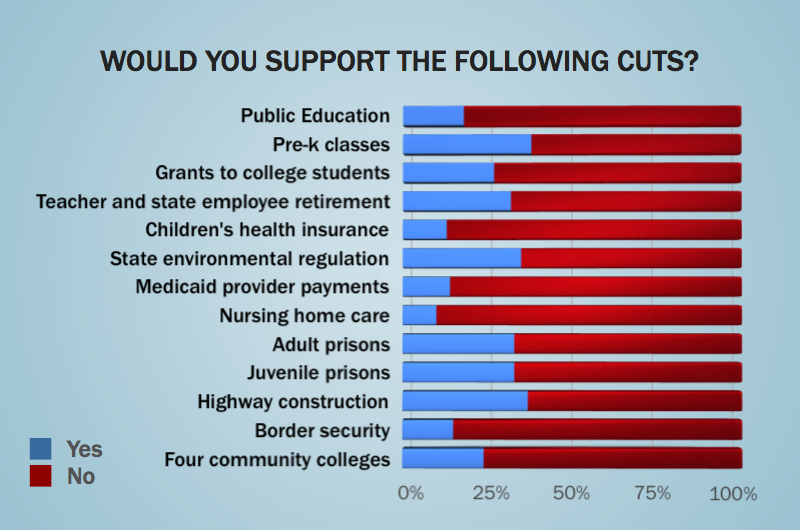
Let’s talk Texas first:  a new study out this morning by the Texas Tribune showed that Texans want a balanced approach to fixing the budget.  The single most popular answer was a 50/50 split of revenue enhancements and spending cuts.  However, when you asked people what they wanted to cut spending on, the answer was a resounding NO! to educationTexans say no to budget cuts cuts, NO! to health services cuts, NO! to environmental reg cuts. And when asked where to increase revenue, it was equally sticky.  The single most popular options, the only ones which get over 50% support, was to legalize casino gambling and increase alcohol taxes.  But taxing vice can only get us so far.

One of the things not touched by the poll were the enormous tax breaks we give to the natural gas industry, one which the LBB has suggested eliminating, namely a $7.4 billion tax cut to oil and gas companies using “high cost” wells- which generally means one thing: hydro-fracturing. Fracking is used on areas like the Barnett Shale and has been linked to spoiled water, a cancer cluster located in Flower Mound/Dish, and natural gas turning tap water flammable, and a garden hose into a flamethrower.

At the very least, all of the drilling is producing more air pollution than all of the cars and trucks in the Dallas-Forth Worth area. So to add insult to industry, not only is the drilling on the Barnett Shale ruining families’ homes and making people sick, but we are paying the companies billions of dollars in pork to do it, robbing school children and those who need a hand from social services.

And to kick us even more when we’re down, Chesapeake Energy has the audacity to say if their corporate welfare goes away, they’re going to have to curtail drilling on the Barnett Shale.  From the Star-Telegram’s story:

An executive with Chesapeake Energy told members of the Tarrant County legislative delegation Wednesday that the company would consider curtailing activity in Texas if the exemption is discontinued.

“We’d have to look at it on an individual well basis, but I think it’s pretty safe to say that we would reduce our activity in the state of Texas,” Adam Haynes, senior government affairs director for Chesapeake, said after his appearance before lawmakers. “It certainly affects the Barnett Shale, absolutely.” (more…)

Read Full Post »

Oak Grove coal fired power plant was one of the plants that caused rolling blackouts in Texas on February 2, 2011ERCOT just released an updated list of all of the power plants that were not operating Feb 2, contributing to the power shortages that caused the rolling blackouts.  That document is here, but we present the data below for your convenience.

Notice a trend? Natural gas and Lignite coal were the main power sources that couldn’t cope.

Meanwhile, the wind really saved our bacon. And since wind companies’ standard operating procedure is to bid into the market at $0 for their extra capacity (no fuel charge, so it doesn’t cost them anything to turn on the extra turbines if the wind is blowin’: unlike a gas plant that has to, you know, pay for their gas. Assuming they can get gas, that is.) wind did not contribute to the high prices of energy or manipulate the market.

For an even more in depth rundown, please see our testimony our Deputy Director, David Power, gave in front of a special joint session of the Senate Business and Industry and the Senate Natural Resources Committees.

PS- Sorry if the formatting on this list is hard to read- we tried as best we could to get all the data on here. (more…)

Read Full Post »

The Texas Railroad Commission added an emergency item to their agenda today so it could hear from the Texas Energy Reliability Council about natural gas service’s impact on the rolling blackouts that swept the state.  They told the Commission that Texas was never in danger of a natural gas shortage during last week’s statewide deep freeze and no electric generating company with an “uninterruptible” contract for gas had to do without.

Of course, one could also read that as gas supplies could have been interupted at generating facilities that chose to purchase their fuel under contracts offered at a lower price, but with the risk that delivery cannot be absolutely guaranteed in all circumstances.  That is, in fact what happened, so if those plants had been able to get delivery of natural gas, it is possible that the state might have been in danger of a natural gas shortage.

During the prolonged winter storm, gas production in the Barnett Shale was shut down as well as some others around the state. But that short-term gap in supply was filled by tapping reserves warehoused in underground salt domes, at least for those power plants that had uninteruptable contracts.

But be forwarned,  the Electric Reliability Council of Texas (ERCOT) warns that more blackouts might be needed as state braces for Arctic Blast Round 2 and  issued another plea for conservation, especially during the peak-use hours of 6 a.m. to 9 a.m. and 4 p.m. to 8 p.m., saying the grid is still down some 2,700 megawatts of capacity and that rolling blackouts might return with the next round of sub-freezing weather.

ERCOT said tomorrow’s peak demand is projected to exceed 54,000 megawatts between 8 p.m. and 9 p.m. , and then top 58,000 megawatts between 7 and 8 Thursday morning. That would surpass the current winter peak demand record of 56,334 megawatts, which occurred Feb. 2.

Today’s hearing at the Railroad Commission was the first public review of the circumstances surrounding the rolling blackouts. It focused solely on natural gas supplies and production.

A more comprehensive hearing will occur Feb. 15 when the Senate Business and Commerce Committee meets jointly with the Natural Resources Committee to review issues surrounding the outages.

If you want to watch today’s hearing, you can catch it online at www.texasadmin.com.

###

By promoting cleaner energy, cleaner government, and cleaner air for all Texans, we hope to provide for a healthy place to live and prosper. We are Public Citizen Texas

Read Full Post »

The Texas Railroad Commission added an emergency item to tomorrow’s agenda so it can hear from the Texas Energy Reliability Council about last week’s rolling blackouts impact on natural gas service.

The meeting starts at 9:30 am on Tuesday, February 8th at the William B. Travis Building.  Watch it online at www.texasadmin.com.

Read Full Post »

Keynote’s promotion of coal leans heavily on unrealistic view of the Texas energy market

In a forum held last Thursday the conservative Texas Public Policy Foundation (TPPF) unveiled a report that attempts to sway the debate about Texas energy policy off its current trajectory – namely ideas put forward by high-profile Republicans officials like Lt. Gov. David Dewhurst and Senator Troy Fraser to help transition the state’s electric supply away from coal and towards natural gas.

Unfortunately, the report wasn’t precisely accurate in its representation of the facts. Here’s perhaps the most important chart in the entire TPPF report (entitled Texas Energy and the Energy of Texas co-authored by Dr. Steven Hayward who was the forum’s keynote speaker) with a couple modifications to try and make it a little more accurate:

Modified chart from TPPF report

As you will note from my (clearly marked) changes, TPPF was not presenting the actual cost of electricity from different fuel sources, but the cost of the fuels themselves. That makes the chart inaccurate since the cost of electricity also depends on things like the cost of building a power plant. Of course that’s a minor expenditure of only several billion dollars in the case of most coal and nuclear plants and hundreds of millions of dollars for natural gas plants.

The TPPF chart was also misleading in three important ways, and one can only really conclude that it was intentionally so. (more…)

Read Full Post »

The controversy over Barnett Shale natural gas drilling or “fracking” that has overcome Fort Worth and Tarrant County since 2002 has, in recent months, drawn public attention nationally – first to the money to be made by mineral rights owners, then to the inconveniences of drilling for those who live around it, and, more recently, to a heightened concern about the potential environmental and health impacts of this concentrated activity in a densely populated urban area.

Less attention has been paid to another hard fact of Barnett Shale drilling: Not a single well goes into production without a network of pipelines to take the gas to market.

There are about 2,700 wells in Tarrant County alone and 15,000 in the 23-county Barnett Shale formation, according to the latest Railroad Commission data. With 241 companies active in the field, drilling won’t stop any time soon.

So now it’s time — past time, really — for elected officials and state and local agencies to focus more attention on the proliferation of pipelines and whether they are being done right.

A study of that issue resulted in a report, “The State of Natural Gas Pipelines in Fort Worth”  that was done for the Fort Worth League of Neighborhoods.  Researchers studied gas pipelines in the region over a year-long period and put forth 26 recommendations for federal, state and local lawmakers and regulators, the pipeline industry and the citizens of Fort Worth.

The report’s recommendations highlight the need to bring local residents into the pipeline-planning process early on, giving them more information about what makes for a safe pipeline and more ability to make an informed decision about whether they can live with what’s being proposed for their neighborhood.

Texas has thousands of miles of pipelines for gathering, transmitting and distributing oil and natural gas. Pipeline failures are few and far between. It’s just that any such failure can be catastrophic. 

If you live in an area where natural gas fracking is or could potentially occur, you might want to take a look at this report, “The State of Natural Gas Pipelines in Fort Worth”.

Read Full Post »

Clean drinking water...not self-evident for ev...

Is your drinking water safe? -Wikipedia

The U.S. Environmental Protection Agency (EPA) is ordering a natural gas company in Fort Worth to take immediate action to protect people living near one of its drilling operations who have complained about flammable drinking water coming out of their home faucets.

Read some of our earlier blogs about the process that is suspected of causing these kinds of  problems:

Read other recent posts about our regulatory agencies’ failure to adequately insure the safety of Texan’s drinking water:

Natural gas drilling (or fracking) near homes in Parker County west of Fort Worth has caused or contributed to the contamination of at least two residential drinking water wells, and the EPA  has confirmed that extremely high levels of methane in local water supplies pose an “imminent and substantial risk of explosion or fire.” The agency also found other contaminants including benzene, which can cause cancer, in the drinking water.

The EPA has issued an imminent and substantial endangerment order under Section 1431 of the Safe Drinking Water Act and has ordered the company to step in immediately to stop the contamination, provide drinking water and provide methane gas monitors to the homeowners.  EPA has given the company 24 hours to assure them that it will comply with the order and 48 hours to provide alternative water supplies to affected residents.

To see the EPA’s letter to the company, click here.

###

By promoting cleaner energy, cleaner government, and cleaner air for all Texans, we hope to provide for a healthy place to live and prosper. We are Public Citizen Texas.

Read Full Post »

Older Posts »

Follow

Get every new post delivered to your Inbox.

Join 3,167 other followers