Feeds:
Posts
Comments

Posts Tagged ‘smog’

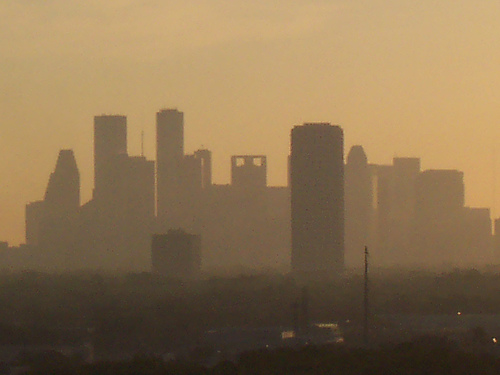
On March 16, 2010 Sierra Club, Public Citizen, Downwinders At Risk, Texas Campaign for the Environment and other concerned environmental organizations and individuals held a public meeting to submit comments to the EPA regarding their newly proposed ozone standard. State representatives and staff from Region 6 of the EPA were there to hear comments. These are the video comments that were recorded by those who did not get an opportunity to speak in front of the panel. These video comments were submitted to the EPA.

###

By promoting cleaner energy, cleaner government, and cleaner air for all Texans, we hope to provide for a healthy place to live and prosper. We are Public Citizen Texas.

Read Full Post »
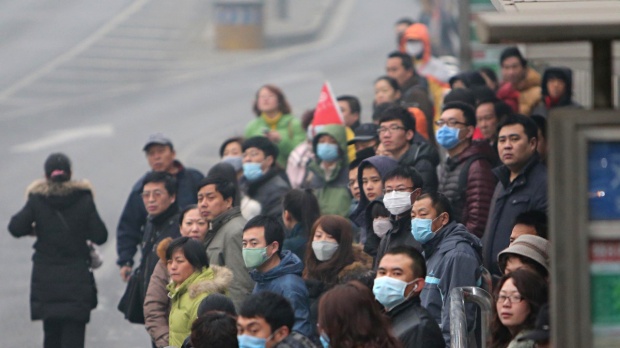
Anybody catch this article last week in the Houston Chronicle? An important issue to think about: how coal plants will not only affect the surrounding air quality, but that of communities down wind. If the White Stallion coal plant is allowed to be built: Houston, we will have an even worse smog problem. Look for Ryan’s quote to close it out!

City’s smog concerns may choke power plant

Pollution near Matagorda could drift to Houston

By MATTHEW TRESAUGUE

HOUSTON CHRONICLE

A proposed coal-fired power plant in mostly rural Matagorda County, 90 miles from the traffic-choked freeways and smokestacks of Houston, has moved to the center of the debate over the big city’s air.

Some federal regulators, Houston lawmakers, and environmentalists say the proposed White Stallion Energy Center would only exacerbate the city’s stubborn smog problem as tougher nationwide limits for the widespread pollutant come into play.

The U.S. Environmental Protection Agency, for one, wants Texas regulators to prove that pollution from the coal plant would not make Houston’s smog worse before issuing permits. Critics also want the state to require the power company to consider new technology that might slash emissions of smog-forming pollution.

The push comes amid a review of the proposal by the State Office of Administrative Hearings, which will soon recommend whether the Texas Commission on Environmental Quality should grant the plant’s air permit.

The plant would be built less than 20 miles from the boundary of the eight-county Houston region that was long in violation of federal limits for smog or ozone. Rules on industrial pollution — in particular, new sources — are tighter inside such areas than outside, even though smog ignores county lines. (more…)

Read Full Post »

Public Citizen and Area Legislators Urge State to Deny Air Pollution Permit

HOUSTON – Area legislators joined Public Citizen this week in urging environmental agencies to deny the White Stallion coal plant its air permit because if built, the facility would degrade air quality in Houston.  The emissions from this proposed power plant would exacerbate the problem of smog in the Houston-Galveston-Beaumont region, which already is in violation, or “non-attainment,” of federal ozone standards and may soon have to meet higher standards as the result of a new proposal to strengthen the federal ozone rule

“The proposed White Stallion coal plant would harm the health of the people of Matagorda County, degrade the environment, and stifle economic development and tourism throughout the region,” said Ryan Rittenhouse, coal energy analyst with Public Citizen’s Texas office. “We are pleased to see Texas legislators step up to protect our citizens, the environment and Texas’ economic future.”

White Stallion’s air permit hearing before the State Office of Administrative Hearings begins today and will last through Feb. 19. That office will make a recommendation to the Texas Commission on Environmental Quality (TCEQ).

The air pollution permit is the first step; the project still will need a wastewater permit from the TCEQ and an additional permit from the Army Corps of Engineers.

If granted an air permit, White Stallion will increase emissions of nitrogen oxide (NOx), the principle component of ozone, by more than a third in Matagorda County, where the plant will be located. That translates to more than 4,000 tons per year of NOx that would blow into the Houston area, dramatically increasing ozone levels in the non-attainment region.

“The proposed White Stallion coal plant will be less than 17 miles from the Houston/Galveston non-attainment region. Coal plants such as this one are one of the largest, individual sources of smog-forming pollutants,” said State Rep. Ana E. Hernandez (D-Houston). “Particularly in light of new EPA ozone standards, why should we allow a coal plant to be built on our doorstep? It will only make it that much harder for us to clean up Houston’s air pollution.”

Last year, the Environmental Protection Agency (EPA) ruled that the TCEQ has not been adhering to the Clean Air Act in its issuance of new air permits, but the TCEQ has failed to change its permitting process.

For this reason, Texas legislators, including Reps. Hernandez, Jessica Farrar (D-Houston) and Kristi Thibaut (D-Houston), sent appeal letters this week to Dr. Al Armendariz, regional administrator of the EPA, urging the agency to step in and provide much needed guidance and oversight to the TCEQ. Their letters asked that the White Stallion power plant not be given an air permit to begin construction until the EPA ensures that constituents will receive the full public health protections of the federal Clean Air Act.

“I urge TCEQ and the EPA to deny the permit authorizing the White Stallion coal plant to be built in Matagorda County. Texas’ air quality must be improved for the good health of every Texan. The goal of clean air and clean water can be obtained by a commitment to reducing air contaminants,” Farrar said.

Despite the fact that a new coal plant could hinder Houston’s ability to meet federal regulations, the TCEQ refuses to predict or consider air impacts that are outside the non-attainment region. In fact, the TCEQ executive director filed legal briefs arguing that evidence showing White Stallion would contribute to ozone problems in the Houston area is irrelevant to the decision of whether to grant the White Stallion air permit. The TCEQ similarly refuses to consider cumulative impacts when granting an air permit, such as the fact that the 30-year-old Parish coal plant is only 50 miles northeast of the White Stallion site and also within the Houston/Galveston non-attainment region.

White Stallion would also pull 36,000 acre-feet of water from the Colorado River every year. Increased activity from the two barges required to deliver coal every day would contaminate the water with toxic runoff and erode the embankments.

The proposed plant would be located along a 100-year floodplain and would store coal ash waste on site. In the event of extreme weather, that toxic waste could easily wash into public waterways.

“The proposed White Stallion coal plant would dump thousands of tons of toxic pollutants into our air and water every year, when this region is already in non-attainment for clean air,” Thibaut said. “Furthermore, construction of this plant would remove 36,000 acre-feet of water each year from the Colorado River, which serves many drought-stricken areas of our state. As the elected representative for thousands of my constituents who would be affected, and as the mother of a small child, I cannot stand by as our air and water quality are further eroded.”

If the project is granted its air permit, advocates still have a chance to challenge the permit in state court and to reform the TCEQ through the sunset review process.

“The TCEQ is one of a number of state agencies that are about to undergo sunset review at the Texas Legislature. The sunset commission has the power to reform this agency and insist that any permits issued in the future adhere to the Clean Air Act,” said Tom “Smitty” Smith, director of Public Citizen’s Texas office. “With this process, Texas has the opportunity to ensure that the health of Texans and their environment are protected more than the profits of energy corporations.”

###

By promoting cleaner energy, cleaner government, and cleaner air for all Texans, we hope to provide for a healthy place to live and prosper. We are Public Citizen Texas.

Read Full Post »
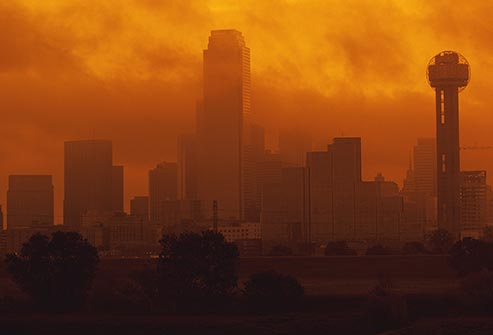
Check out the video and op-ed below by some of our Clean Air Texas coalition partners about the hearing in Houston tomorrow on the EPA’s new proposed rule to strengthen ozone standards. I’ll be at the hearing tomorrow, along with Ryan Rittenhouse, to represent Public Citizen and interview folks from around the state who’ve come to speak up for clean air.  If you plan on attending the rally, look for us and tell us your stories!

It’s Time to Weigh in on Smog Limits

Imagine this conversation between a mother and child:

“Mommy, can we go outside and play?”

“Not today, dear, it’s just not safe.”

Most of us growing up in Texas didn’t wait for our parents to check an air quality report before venturing outside in the summer. But things have changed. Today, we know that rising temperatures bring rising ozone levels and as summer arrives we’re forced to restrict outdoor activities to limit harmful exposure.

Still, no matter how hard we try, we just can’t hide from poor air quality. We’ve got to clean it up.

That’s why we are encouraged that the Environmental Protection Agency is proposing new limits on ozone “smog” pollution to protect human health. On Tuesday, the EPA hosts an all-day public hearing at the Houston Hobby Hilton to get your feedback on these proposed stronger standards.

Why should you care about ozone? Ground-level ozone triggers asthma attacks, sends children to the emergency room and can even kill. It’s a serious health threat — especially in states with warmer climates like Texas. When our abundant sunlight and heat “cook” our equally abundant emissions from traffic and refineries, it forms — you guessed it — too much ozone. (more…)

Read Full Post »

Great editorial in the Dallas Morning News this weekend. We couldn’t agree more :)

Editorial: Texas, a state of denial on pollution rules

To the surprise of no one, the Environmental Protection Agency announced tougher ozone limits this week. The move to tighten pollution standards had long been anticipated as evidence mounted to illustrate the serious health risks associated with smog exposure.

In Texas, a state with notoriously dirty air, the appropriate response from leaders would be to get to work. Significant changes must be made to comply with federal rules – not to mention, to protect the people who live here.

But instead of getting started, too many state leaders just got angry. They seemed shocked – shocked! – that the EPA would dare abide by the science showing significant consequences of allowing a less stringent standard.

Gov. Rick Perry stuck with his three-pronged approach to environmental regulations: deny, deflect, pout.

In his statement, the governor denied the need for tougher ozone limits, somehow conflating smog rules with carbon dioxide regulations and suggesting that flawed science spurred this week’s announcement.

In fact, scientists have found that ozone exposure damages our lungs and is linked to heart and respiratory illnesses. Smog can be deadly. By lumping ozone standards in with climate change legislation, Perry only confuses the issue.

The governor also deflected suggestions that the state has less than pristine air. He focused on Texas’ modest anti-pollution efforts, ignoring the fact that our skies are still dangerously dirty.

And Perry pouted, arguing that the EPA has made Texas workers and taxpayers a target. Some of Perry’s allies have echoed that idea, asserting that the new administration has been hostile to the state.

The EPA is not picking on Texas.

The same pollution standards will apply to every state. Inhaling smog-choked air is a dicey proposition, no matter where folks live.

Admittedly, complying with the new rules will be tougher for Texas than many other states. That’s because years of plugging our ears, closing our eyes and pretending that new pollution rules weren’t looming did not leave Texas in a state of preparedness.

Implementing the lower ozone limits will come at a cost. But, the EPA notes, the new rules should yield comparable savings by reducing illnesses, emergency room visits and lost work days resulting from ozone-related symptoms.

The state now must get started on a serious ozone reduction strategy. Deny, deflect, pout doesn’t seem to be working.

###

By promoting cleaner energy, cleaner government, and cleaner air for all Texans, we hope to provide for a healthy place to live and prosper. We are Public Citizen Texas.

Read Full Post »
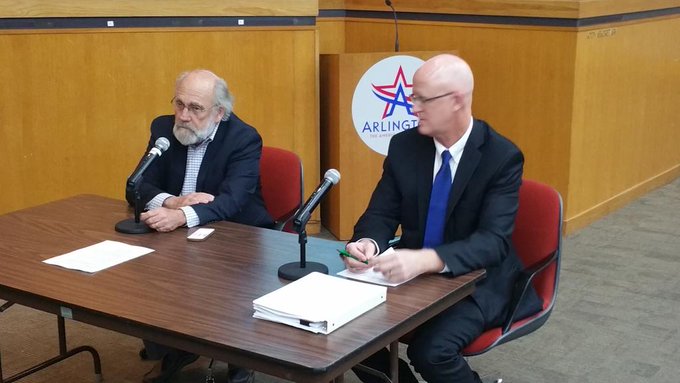
Just following up on our post yesterday that the EPA was going to announce a new air quality standard limiting ozone pollution: they did it!

The United States Environmental Protection Agency today proposed the strictest health standards to date for smog…The agency is proposing to set the “primary” standard, which protects public health, at a level between 0.060 and 0.070 parts per million (ppm) measured over eight hours.

For those of you who, like me, loathe decimals, that’s the same as 60-70 parts per billion(ppb). The previous standard was 75 ppb, a threshhold that failed to protect human health.  Ground-level ozone, also known as smog, is linked to a number of health problems such as asthma, and is especially dangerous for those with heart, lung or circulatory problems.  Children are especially at risk.

Yesterday I noted that “the proposed rule would strengthen the Bush administration’s ozone standard, which did not meet scientific scrutiny or standards to protect public health.” But that statement doesn’t tell the whole story (because I didn’t know the whole story at the time — you learn something new every day).  The fault with the current standard doesn’t lie with scientists — EPA scientists actually recommended a stricter standard, those recommendations were ignored when the final rule was set. According to the Washington Post,

Under Bush, EPA officials had initially tried to set a lower seasonal limit on ozone to protect wildlife, parks and farmland, as required under the law, but Bush forced the agency to abandon that proposal just before it announced the new standards.

The proposed rule will now undergo a 60-day comment period, after which it will be published in the Federal Register. The EPA will also have three public meetings on the proposed rule, one of which will be in Houston Feb. 4th.

So what does the new rule mean for Texas? I touched on a bit of that briefly yesterday, but for now I’ll defer to my boss (as he spoke to KERA radio):

That means… we are going to have to find new ways to reduce pollution. It may mean shutting down cement kilns and some plants… It may mean changing some of the ways we drive and getting more efficient automobiles, plug-in-hybrids on the road more rapidly.

###

By promoting cleaner energy, cleaner government, cleaner cars, and cleaner air for all Texans, we hope to provide for a healthy place to live and prosper. We are Public Citizen Texas.

Read Full Post »

The dramatic irony of the Texas Commission on Environmental Quality (TCEQ) decision this morning to grant the NRG Limestone Coal Plant an air permit (and therefore permission to begin construction on a third smokestack) is painful.  At the very moment that leaders from around the world are meeting to come to an international agreement to save the world from catastrophic global warming, at the very moment that residents of developing nations are begging for the continued existence of their land and way of life, Texas gives the green light to build another mercury-spewing, asthma-inducing, planet choking coal plant.

Not exactly what I was hoping to wake up to this morning.

This decision also comes just days after the Environmental Protection Agency (EPA) came out with its engangerment finding, which says that carbon dioxide and other greenhouse gases represent a significant threat to public health and welfare.  Earlier this year, the EPA also ruled that TCEQ has not been adhering to the Clean Air Act in its issuance of new air permits.  This is the first coal plant permit that TCEQ has issued since that warning (which TCEQ doesn’t seem to have taken to heart).  AND, according to Karen Hadden, executive director of SEED Coalition,

The TCEQ is not following federal law (Maximum Achievable Control Technology or MACT) in issuing this permit and a result, mercury emissions will be higher.

So many hearts to break, so little time. But of course there’s always a silver lining. Next legislative session, the TCEQ (and a whole host of other commissions) will undergo the Sunset Review process — and as Tom “Smitty” Smith, director of Public Citizen’s Texas Office mentions, that gives Texas a chance to reform the TCEQ permitting process:

This is just another example of why the Sunset Commission should take a good hard look at how TCEQ rubber stamps permits for coal plants in Texas.

In the meantime, keep your fingers crossed for progress in Copenhagen, and stay tuned at Texas Vox for more information on how you can help fight global warming and a 2nd Texas coal rush.

Full breakdown of the good (NRG has agreed to offset 50% of their emissions, though there’s nothing in their permit to hold them to that), the bad, and the ugly after the jump:

(more…)

Read Full Post »

Follow

Get every new post delivered to your Inbox.

Join 3,169 other followers
