Two bills have now been filed in the Texas House that would expand the state’s goals for renewable energy. Representative Rafael Anchia‘s bill, HB 723, would establish goals for growing renewable energy installations other than large-scale wind through 2022. Similarly, Representative Eddie Rodriquez‘s bill, HB 303, would establish a goal for solar installations and increase the existing goal (which was met 15 years ahead of schedule) for all renewable energy for 2020.
We applaud these efforts and the leadership that Rep. Anchia and Rep. Rodriquez are showing by filing these bills. These proposals recognize that success is a good thing and something we want more of. You wouldn’t think that would need saying, but when a state agency recommends tossing out a successful policy, I start to wonder. Texas’s renewable energy goals have been extraordinarily successful. Not only have the goals been met ahead of time, but they have spurred development of the wind industry in Texas, bringing economic benefits to rural parts of West Texas, as well as to manufacturing centers. On top of that, wind energy is helping to keep electric bills lower.
A carpenter doesn’t throw away her hammer just because she finished building her first book shelf and Texas shouldn’t repeal it’s renewable energy policies, just because we’ve met some of our goals (remember, the non-wind goal was never enforced). Wind energy does now makes a substantial contribution to meeting the state’s electrical needs – it contributed a record 26% this past Christmas day, but solar energy is still very underutilized (accounting for less than 1% of energy on the ERCOT grid, which serves 85% of the Texas population) and the geothermal energy industry is still getting off it’s feet. As Rep. Anchia and Rep. Rodriquez’s bills show, this successful policy tool can be adjusted to keep moving Texas forward.
Even Support from Businesses Like IKEA Is Not Enough for PUC
AUSTIN, TX – The Public Utility Commission delivered a slap in the face to the more than 6,000 Texans and 70 businesses and organizations who have actively called on the Commission to implement and expand the non-wind renewable portfolio standard (RPS). The non-wind RPS would establish a market for electricity from solar and other renewable energy resources in Texas, just as the State’s overall RPS did for wind energy. The non-wind RPS was passed into law in 2005, but has yet to be implemented by the PUC.
Democracy and the rule of law may be important tenants of our society, but they are utterly lacking at the PUC, where Commissioners refused to engage in even a single minute of public discussion on the matter before striking it down today.
Instead of gathering current information on the price of solar photovoltaic (PV) panels and other renewable energy technologies, the PUC staff recommended denial based on data that is more than two years old. This illustrates a shocking lack of due diligence, given that solar prices have plummeted over the past two years and are now competitive with traditional energy sources, especially when demand is high. David Crane, CEO of NRG Energy, told participants at the Bloomberg New Energy Finance Summit, “Solar is so cheap today that unless you tell me that you did a solar analysis yesterday, not last year or last month, then your analysis is out of date.“
The Commission appears to be committed to willful ignorance on this issue, but we’re not giving up. This is too important to the future of our state. The solar industry is going to continue to grow regardless of what the PUC does; it’s just a matter of whether it will grow in Texas and bring good jobs to Texans or if we will let other states and other countries leave us behind.
While misconceptions about the cost of solar energy persist, businesses and individuals who look at current prices have found an opportunity for energy savings by investing in solar. IKEA, a major international retailer, supports implementing and expanding the non-wind RPS in Texas. “While utilizing renewable resources for generating energy allows us to reduce our carbon footprint, it[s] also is good business since it significantly reduces operational costs,” states the company in its comments that they filed with the PUC.
A survey done by Solar Austin at the beginning of 2012 shows there are at least 615 full-time solar energy jobs in Austin. These jobs include manufacturing, R&D, solar installation, financial and engineering consultants. Adding standard jobs multipliers the total direct and indirect employment supported by the Austin solar industry is 1,180 to 2,190 jobs.
The job figures in Solar Austin’s survey did not include the 240 local job years of employment created by the 30-Megawatt solar park at Webberville east of Austin. The group says the job potential for rooftop solar is even greater.
In 2004, Austin Energy began a rebate program to promote rooftop solar panel installations. It was the first program of its kind in Texas. Austin has since founded and funded institutions that develop new clean energy technology and businesses resulting in clean-tech start-ups, spin-offs, and expansions with many of the jobs at family-wage scale – solar electric system installers making $36,000 a year, solar manufacturing jobs averaging $50,000 a year, and solar engineering paying $75,000 and more annually.
In spite of the potential for job growth, the group pointed to Austin’s south where San Antonio’s public utility CPS, has begun funding solar rebate programs that have overtaken Austin’s and challenged the city to continue to capitalize on their previous commitment, taking it to the next level to make Austin a renewable energy industry cluster in the same way it has electronic manufacturing and software clusters.
“We want thousands of jobs in renewable energy, not hundreds!,” says Public Citizen’s Texas director, Tom “Smitty” Smith.
Take a look at the 4 page flyer on the survey put out by Solar Austin - Jobs Survey 4-Pager.
California solar energy company Solyndra had its offices raided last week by federal agents as part of an ongoing investigation into their bankruptcy and federal loan guarantees they’d received form the Department of Energy. Some critics have cried foul, trying to show how federal money spent on emerging technology is a waste. Others have tried to disparage solar energy itself, trying to show the industry is not ready for prime time. In fact, these allegations couldn’t be further from the truth.
However, it does bring up important questions about the Obama administration, ethics, and the influence of campaign contributions. This is entirely a self-inflicted wound, a bone-headed mistake if not an ethical problem, and is the type of landmine the White House needs to avoid. There is another, similar trap they need to avoid touching in the Keystone XL tar sands pipeline, where Big Oil’s big money tendrils and the revolving door are even more frightening than those from Solyndra.
Their technology just didn’t get cheap quickly enough compared to traditional PV manufacturing, largely from Chinese imports. But in the silver lining to that otherwise not as nice cloud, those same cheap Chinese imports have meant a huge boon to American manufacturing who provide many of the materials and heavy equipment needed to manufacture PV.
Meanwhile, because of that change, solar has reached grid parity in terms of its costs. Grid parity means that the cost of producing electricity through a pv cell is less than or equal to the average cost of electricity. Other companies are making huge solar breakthroughs. Solyndra, unfortunately, was not one of them. But this is market economics, and this is what we expect, nay, desire from our entrepreneurs.
But why Solyndra is troublesome is because it appears undue influence may have been exerted to get them these loan guarantees. One of Solyndra’s top investors was also a bundler for the Obama campaign responsible for tens of thousands of dollars in campaign donations. A commitment to the highest ethical standards that the Obama Administration guaranteed when they took office meant they should have done extra due diligence on giving any loan guarantees to anyone with any sort of money connection to the White House. Every i dotted, every t crossed– special treatment, but special treatment to insure they weren’t receiving funds because of political donations. Indeed, they should have been held to a much higher standard than their peers.
This is an entirely self-inflicted wound on the part of the Obama Administration. It should have been avoided, and questions not only the ethics of those in charge but the rationality. Surely they should have seen this coming.
Clinton and Obama approving Keystone XL would be another avoidable landmine for the White House. Unfortunately, this landmine has much more dire consequences if approved, as it would signal both Business as Usual in Washington with Big Oil getting their way, the end of any veneer of ethics or being serious about campaign finance by the Obama Administration, and. . .oh, “game over” for the planet because of runaway climate change. More on this later.
If you live in Austin, TX and put solar on your rooftop, you might be able to pay only about a quarter of the initial cost estimate, making this a viable option for many homeowners. But for many Texans, there is still a good reason not to go with solar: the generous local incentives that Austinites have for affordable panels that could provide about two-fifths of a home’s electricity use do not exist in most of the rest of the state.
We had hoped that Texas lawmakers would pass a bill this session to establish a statewide rebate for solar projects, financed by extra charges on electric bills. But it died without getting out of a House committee.
Texas prides itself on being the national leader in wind power, and many renewable-energy companies were looking to this big, sunny state as the next frontier for solar power, which California currently dominates as it did wind before the state provided incentives for wind development. But solar technology remains expensive: while there environmental benefits, it can be more costly than coal or gas power on a nationwide basis before incentives. The recent fall in natural gas prices has made it even harder for solar to compete (although panel prices are falling fairly dramatically).
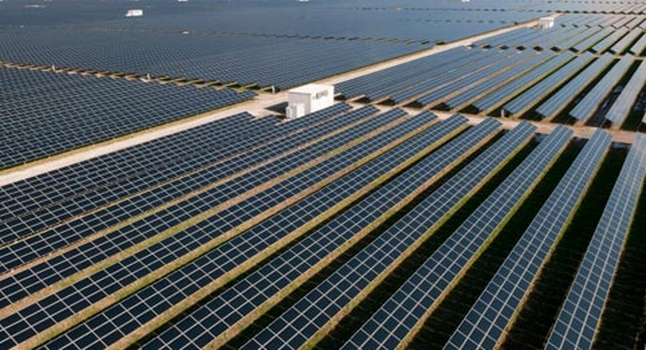
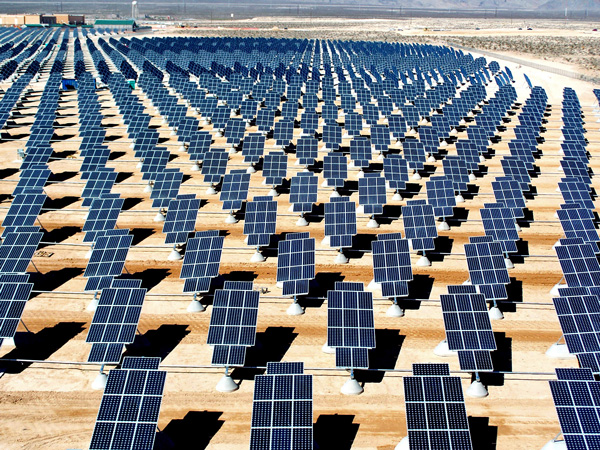
Despite the lack of incentives for solar on rooftops, some larger utility scale solar projects are emerging. San Antonio began getting power from a 14-megawatt solar farm late last year, and in May a developer started building a 30-megawatt solar facility in Webberville, a small community near Austin (the power will be sold to Austin Energy).
Oncor, a retail electric provider serving the Dallas area, will begin taking applications for a new round of solar incentives on Monday. Last year the program sold out in a month. Additionally, electric utilities in El Paso and San Antonio also offer solar incentives.
Two solar bills did pass this session. One will make it somewhat harder for homeowners’ associations to bar solar panels. Another clears regulatory hurdles to solar leasing and other third-party ownership arrangements, which for tax reasons will be helpful to schools and churches.
So while there is little in the way of incentives statewide, some communities are recognizing the benefit of supporting solar as a means to provide energy or reduce energy needed from the grid during peak periods (that sunny hot part of the day when air conditioning is running full out) and a way to help reduce the need to build new base-load (coal, gas, or nuclear) power plants that have significant upfront capital costs.
The House Business and Industry Committee will meet next Monday and one of the bills that they will be taking testimony on is HB 450 filed by Representative Eddie Lucio, III (D-San Benito) that addresses the regulation of solar energy devices by a property owners’ association. If you are a homeowner who wants solar but your HOA rules prohibit the installation of solar panels, and you live in the district of one of the committee members, you might want to call your representative and let them know that you support this bill.
Feeling really passionate about this and plan on being in Austin next Monday – stop by the capitol after 2pm, go to the hearing room-E2.016 and sign up to testify for this bill.
Below is a list of the House Business and Industry committee members and their capitol office phone numbers.
The US Department of Energy (DOE) announced $27 million in projects to advance solar development and manufacturing through its SunShot Initiative whose goal is to achieve cost competitive solar energy by 2020.
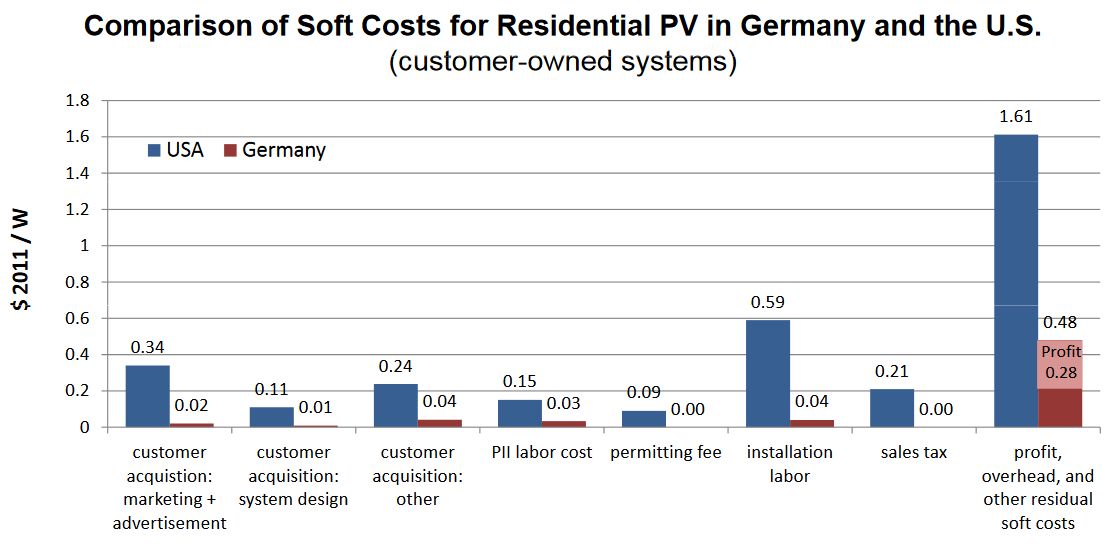
The hope is that the SunShot initiative can reduce the total costs of photovoltaic solar energy systems by about 75 percent so that they are cost competitive at large scale with other forms of energy, without subsidies, before the end of the decade. This level of cost reduction would make the cost of solar roughly $1 a watt – which would correspond to roughly 6 cents per kilowatt-hour – spurring the broad deployment of solar energy systems across the country and, at these price points, helping regain American economic competitiveness in the global market for solar photovoltaics.
The SunShot program builds on the legacy of President Kennedy’s 1960s “moon shot” goal, which laid out a plan to regain the country’s lead in the space race and land a man on the moon. The program hopes to aggressively drive innovations in the ways that solar systems are conceived, designed, manufactured and installed.
In addition to investing in improvements in cell technologies and manufacturing, the SunShot initiative will also focus on steps to streamline and digitize local permitting processes that will reduce installation and permitting costs. To achieve the SunShot goal of reducing the total installed cost of large scale solar electricity by about 75 percent, DOE will be working closely with partners in government, industry, research laboratories and academic institutions across the country.
Several bills filed this session, which included some heard at Wednesday’s hearing of the Senate Intergovernmental Relations Committee would preclude homeowners’ associations from restricting installation of solar energy devices. These are:
Rep. Burt Solomons (R-Carrollton) – HB 362 heard last week in House Business and Industry Committee and almost identical to the Senate versions except it includes energy efficient “cool” roofs
Compromises may be in the works to tweak bills for smooth passage. At the hearing, West, who chairs the committee, reached out to the Homeowners Associations (HOA) in hopes of striking a balance and avoiding an impasse.
Homeowners have complained that HOAs are unfairly, and sometimes arbitrarily, preventing them from making their abodes more energy efficient using solar technology. The HOAs want to preserve their ability to protect property values from unsafe and unattractive equipment. The green energy industry, environmentalists, some developers and some realtors want to see more solar power used in Texas.
In the House, compromise language already is being crafted. One potential sticking point is whether to give HOAs any discretion over approval of the design or appearance of solar devices. Some members believe the issue has gone beyond property rights to include energy sufficiency, electricity conservation and grid stabilization.
West said he hopes that if he can convince his colleagues in both houses to ease HOA restrictions on solar energy, they may be more likely to pass SB 142, his latest attempt at comprehensive HOA reform. He has not yet set it for hearing.
RRE Solar Austin held its groundbreaking ceremony in Pflugerville yesterday. This is the first utility scale solar farm, and one of the largest photovoltaic projects in the country, to be built by the company and the first to break ground in the Austin area. Planned to produce 60Mw of solar energy when completed it will use more than 400,000 solar panels in its construction.
The project is planned to start installing panels by March of 2011 and needs the construction of a local substation to be finished before it can begin sending energy to the grid. If everything goes according to plan, this project should start producing its energy and sending into the Texas grid by the end of 2011. They worked extensively with the local community, school districts, county and the City of Austin to get this project started and will be providing solar panels to the local school districts for their use as part of this effort.
RRE Solar has plans to start developing on a second 60Mw Project located in Big Spring Texas through its subsidiary RRE Big Spring Solar .
While attending the groundbreaking I had an interesting conversation with the construction crew, who were just watching the festivities, and asked them about the project. They were glad for the work and it hadn’t occurred to them that they were part of the “green jobs” that they had heard about. The project should employ around 250 construction jobs and the crew wants to have lots more of these projects to work on in the future.
With the Texas Legislature starting its session soon lets hope our legislators take notice and put policies in place to encourage more of these projects to be built around our state.
###
By promoting cleaner energy, cleaner government, and cleaner air for all Texans, we hope to provide for a healthy place to live and prosper. We are Public Citizen Texas.
For the last few months people who wanted to install solar systems in the Oncore service area have been disappointed as they have been told that the incentive funds are all reserved.
It turns out there is another pool of funds available that has been harder to find. The Oncore website lists all the solar incentive funds as being reserved, but that refers to a batch a funds that was made available as part of the Oncore sale settlement of a few years ago.
There is another source of funds that have not been drawn down and are not easily found on the website, the incentive amount per installed watt is smaller than the settlement fund, but cash of any amount helps the balance sheet and gets that sweet solar solution installed on your roof.
For commercial projects in the Oncore service area give John Hanel a call at 214-486-5886
For residential projects in the Oncore service area the person to contact is Carl Brown 214-486-3244
Finally, energy is now moving to the center of the debate in the governor race. Bill White announced yesterday his energy plan. For a while, the democratic candidate’s position on energy was a bit blurry but yesterday White set the record straight. He is in for green energy.
While the current governor has wasted state resources on fighting the EPA and the Federal government on behalf of big business, White thinks the state should focus more on green energy, especially from solar. White said that just like Texas had a good experience with wind energy in the past decade, it can exceed in the field of solar energy.
White emphasizes that green energy can create many jobs and help boost the Texas economy. The jobs can range from construction, and panel installation, research, to jobs in education and training and maintenance jobs so even in the long run, there will be jobs.
Texas can remain the energy capital of the world if we lead in new energy development. That’s why we must educate Texans for high-demand, high-paying clean energy jobs, promote job growth in construction and manufacturing, and invest in science and technology research,” said Bill White, yesterday in Lubbock.
In addition to promoting renewable energy, White outlined a plan to establish a residential energy efficiency program and another to retrofit government buildings to be more energy-conservative. The democratic candidates also encouraged Texans to be conservative with their use of energy, “Texans know that the cheapest kilowatt of power is the one you don’t use. Texas families and businesses, as well as the government, can save money with energy efficiency measures,”
We believe investing in green energy will not only enhance the quality of our environment, it will bring more money into our economy, and it will create more jobs for Texans. Sounds like we have one candidate with an energy plan. Governor Perry, yours please?
###
By promoting cleaner energy, cleaner government, and cleaner air for all Texans, we hope to provide for a healthy place to live and prosper. We are Public Citizen Texas.
Republicans keep rejecting the success of the stimulus package but that is nothing new, being opposed is just a Republican thing to do nowadays. President Obama said yesterday that even if he said the sky is blue, Republicans would disagree. Despite all that, in Texas, the stimulus seems to serve its purpose just fine, especially in the field of energy. Unlike what Republicans claim, it has provided incentives for small businesses with incentives to grow, save money, and it has also helped create jobs.
The Austin American Statesman shared a couple of stories about small businesses that have benefited from the stimulus. First is the Dog Ranch in Pflugerville. The owners wanted to install solar panels atop the ranch roof, a move they figured would save them some money on energy bills. The panel cost $87,000. With the stimulus funds(Grants from the Department of Energy) the owners received and Austin Energy’s rebate program, they only had to pay $10,000. For the Ranch owners, this deal saved them a lot of money since they only pay one third of the energy bill they used to pay before installing the panels in addition to the tax credit they get from installing the panels, “We just expanded in December, and we wouldn’t otherwise have had capitol to do it,” Said the Dog Ranch owner.
Longhorn Solar is the installation company that set up the Dog Ranch solar panels. The company too has taken advantage of the stimulus money and now it has 10 employees and many more installation projects. Louis Petrik, the CEO of Longhorn Solar said “It (the Stimulus) allows us to put a lot of jobs in the pipeline and go out and actively hire,”
A part of the stimulus money was given to states to have at their disposal to run their own programs (And they say the Feds want to take over local governments). To track the federal stimulus funds, the Texas Legislature appointed the Select Committee on Federal Economic Stabilization Funding. According to its website, The Committee “monitor[s] actions of the federal government, including legislation and regulations, related to efforts to promote economic recovery by providing federal funds to the states.”
On September 1st, the Subcommittee on Energy held a hearing in Corpus Christi where major stimulus fund recipients such as Centerpoint Energy and Iberdrola Renewables presented in what project they are using the stimulus money and how they are going about meeting their goals. Documents from the hearing are provided on the Texas Stimulus Funds website or you can access them by clicking here.