Feeds:
Posts
Comments

Posts Tagged ‘Tar Sands’

2013-02-17 Forward on Climate Rally on the National MallI have been a Public Citizen intern since January of this year.  As a Political Science graduate student, in both Undergraduate and Graduate studies I have been immersed in the political process and the theories behind the ideas that have formed our nation.  When I was a bit younger, I dabbled in political activism, with issues like civil rights and equal rights, which are still very near and dear to my heart.  But, I never took the plunge into becoming a full on activist.

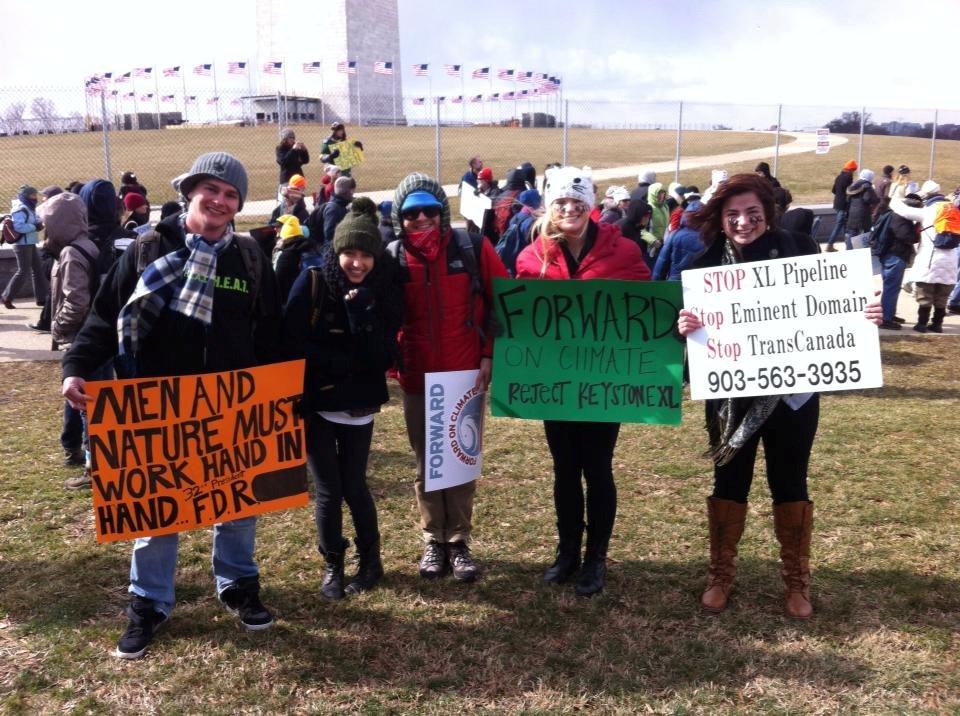
Thursday, February 14th, I had the opportunity, through Public Citizen and The Sierra Club, to get on a bus with 48 other Texans and make the long trek to Washington D.C. for the Forward on Climate Rally.  I had been to D.C. several times before, but never for a cause.  Our bus departed from Austin, Texas and made stops in Dallas and Tyler.  At each stop, new people joined us.  Each person on the bus had their own reasons for engaging in this somewhat grueling 30 plus hour bus ride.  Each person was motivated enough to take time out of their schedule and commit to a less than comfortable ride on a bus to our nation’s capital.

In the early part of our journey, many people did not know each other.  Many of us were coming from different places geographically and in life.  As the hours wound on, conversation and ideas began to flow on the bus.  People began to relax and conversations began to percolate throughout the bus.  After the formalities, discussions began on why we were on this trip.  There were people directly affected by the Keystone Pipeline.  Others were concerned with climate.  Some were just champions of the Earth.  For quite a few of my fellow bus riders, activism was old hat.  Others, such as one older, retired gentleman, still were hesitant to call themselves activists.  Some were believers in the cause, but just there for the exchange of ideas and to observe.  But, within the varying reasons for attending the trip, a common thread was clear.  Something needs to be done about climate change.  That was something everyone could agree upon, regardless of what school of thought they were coming from.

As for me, when I got on the bus, I did not really know which one of these types I was.  Climate change has always been a concern to me.  I try to live a “green” life.  I knew the Keystone Pipeline was bad news from things I had read and heard, but I suppose that I was never mad enough to do anything about it.  For me, civil rights and related social issues had always been the most important…

As the trip wore on, we all began to become friends.  We shared experiences and ideas.  By the time we arrived in D.C., we were no longer a bus full of strangers.  There was a feeling that we were a team, and some of us had become quick friends.  Our group spanned many different generations and encompassed many different levels of involvement in the cause. 

Friday night and Saturday, through some downtime and tourism, the group continued to solidify.  Our bonding was increased through a night on the town and sightseeing, but the main event was yet to come.

Sunday, February 17th began by loading on the bus and heading to the Public Citizen D.C. office for breakfast and some interviews with a reporter.  Outside, the cold was biting, with a wind chill of 6 degrees.   As we prepared to depart for the National Mall, the excitement level was high despite a lack of sleep and the cold weather. 
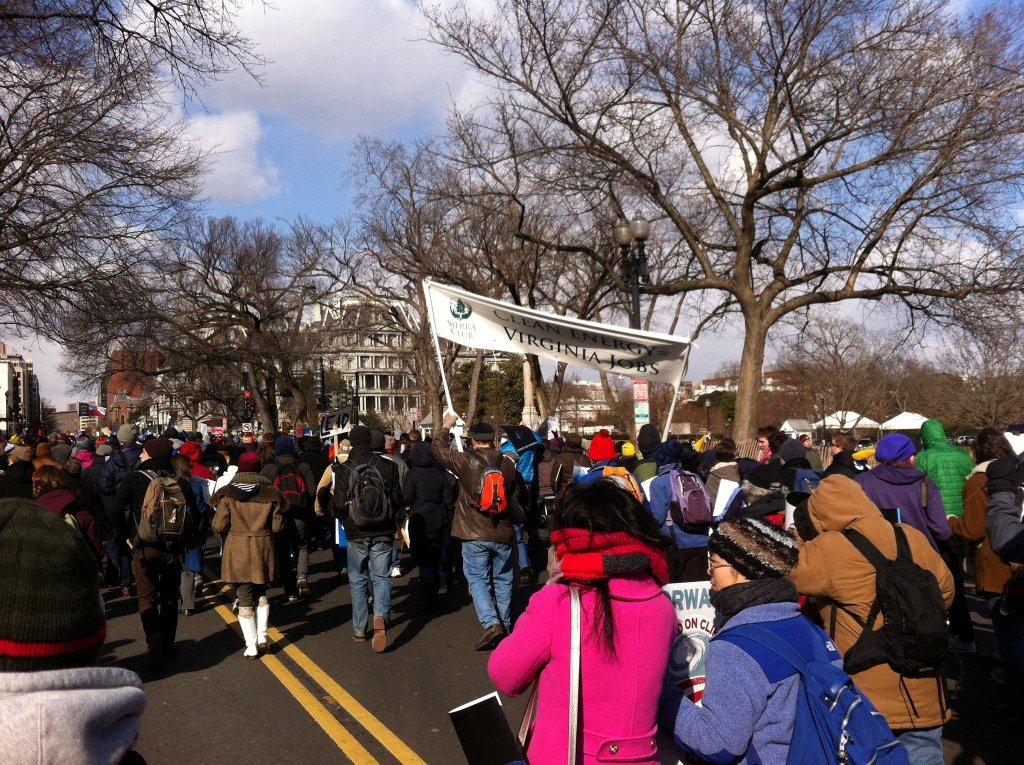
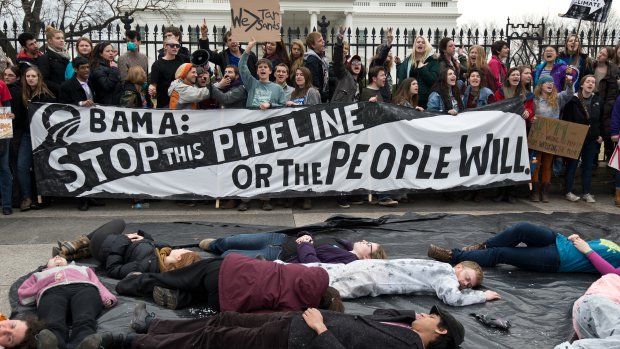
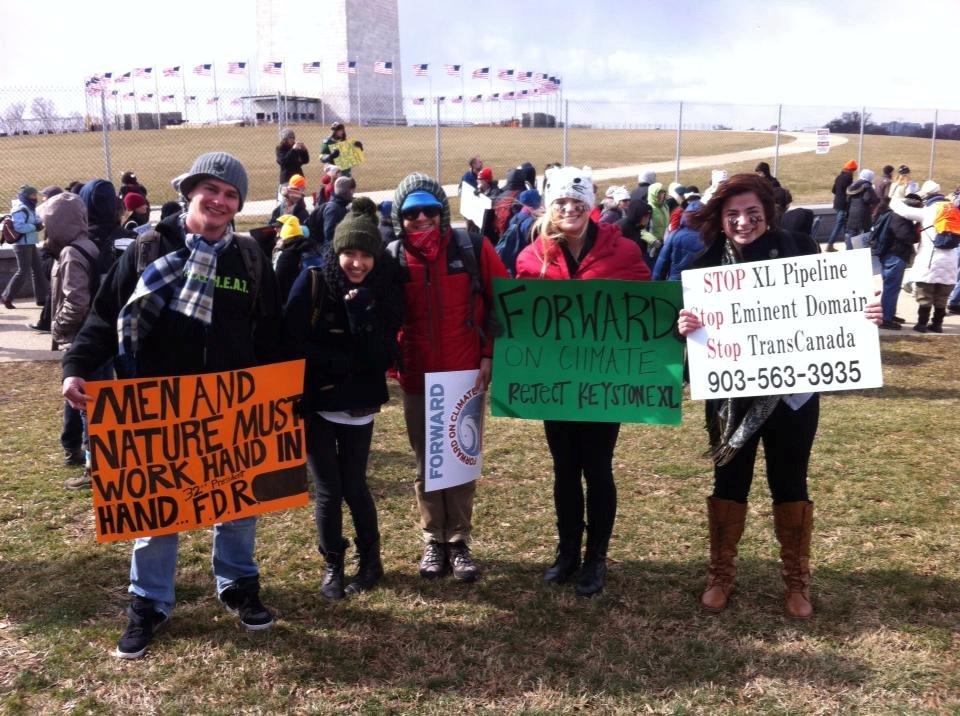
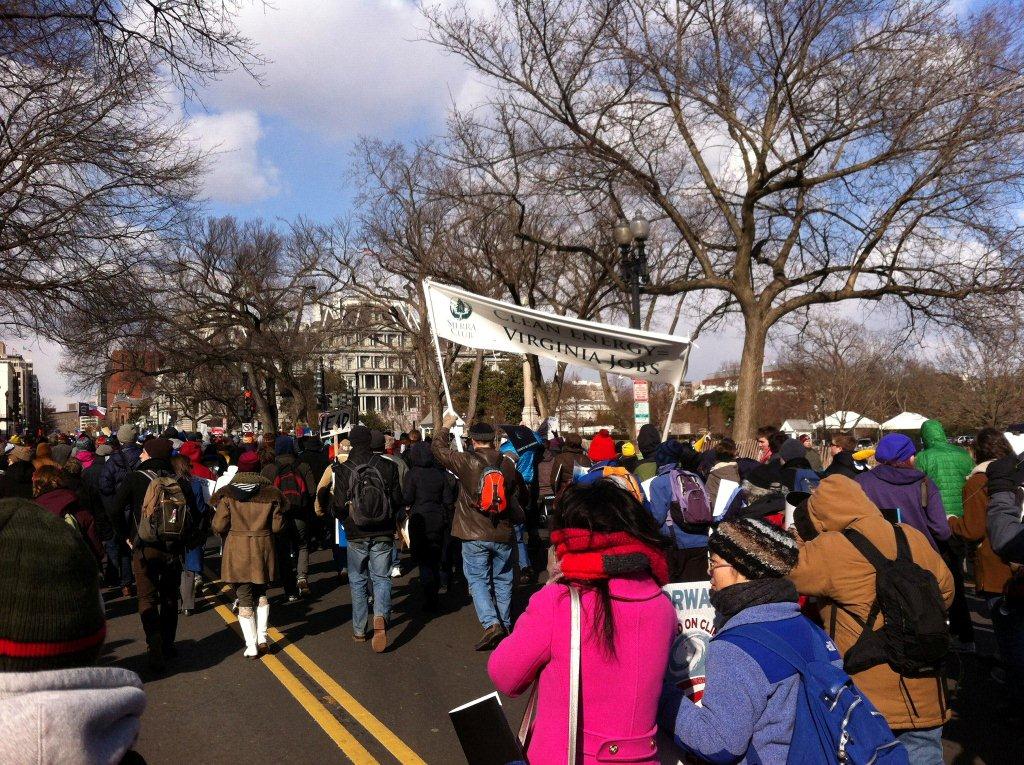
2013-02-17 Forward on Climte Rally March on the White HouseWe arrived near the Washington monument to a sea of busses.  Hundreds of busses.  We arrived about an hour early, and there were people as far as the eye could see ready to participate in democracy.  The estimates of number of people at the Forward on Climate rally ranged from 35,000 to 50,000.  As the rally began, speakers began to deliver messages from many different points of view.  Some were directly affected by the pipeline, other were speaking of climate change and activism.  The excitement level of the crowd increased with every speaker.  The climax of the rally was the 10’s of thousands of us marching to the White House.  The street was packed from curb to curb all the way around the White House.  We now know that President Obama was playing golf with Tiger Woods and oil executives, so he did not see the awe –inspiring site of that many people united for our climate.  Everywhere you looked there were signs.  When you stopped to listen, you could hear chants that would begin with one person and end with a united crowd chanting in solidarity.  While marching around the White House, you almost forgot how cold it was. (It was really cold)  When we returned to the National Mall, I had a sense of accomplishment.  You could not help but feel that we had done something important, united together as a group as varied as any ever assembled.  People of different ages, races, economic backgrounds, and geographic locations; all united in for the planet.  It was then that something I should have realized all along dawned on me.  Climate change and human/civil rights are intertwined.  They are so deeply related, that it is almost hard to see the preverbal forest for the trees.  Without one, there cannot be the other.  It also dawned on me that this is the fight of our generation.  This is the legacy that we should pass on to our children and their children. Our Earth and our climate is intrinsically a human right.  If we do not take action, there may not be an inhabitable planet for future generations, which would be the greatest violation of human rights in our history.  Through the interactions on the bus, the speakers, the sights and the sounds, something that should have been painfully obvious to me was finally made clear.

We cannot be passive observers in this fight against climate change.  We cannot be passive observers in things like the Keystone XL, even if we think they do not directly affect us.  (It does)  The time to remain silent is gone.  It is time to call on everyone who knows these things are terrible to use their voice, their right to free speech, and the democratic process to put an end to this insanity.  The Earth cannot wait while we sit idly by and do nothing while corporations destroy her under the guise of “progress” and “economics.”  We need to stand up and let them know that we will not stand for irresponsible practices and violations of our planet.  We must activate to preserve our climate and Earth for future generations.  We must let President Obama know that we won’t stand for the Keystone XL. 

For me, it is now no longer an option to passively oppose what is going on.  Activism is now a necessity.   I would urge everyone to use their voice, stand up and be heard.    


Read Full Post »
Update:

Around 11 am today, after 48 hours, the five tar sands blockaders who were jailed on Wednesday in Franklin County were freed! They were being held on a $2,500 bail each. Click here to keep up with what is happening with the blockade.

On Wednesday, September 19, 2012 around 8:00AM, three landowner advocates and climate justice organizers locked themselves to a piece of machinery critical for Keystone XL construction in Franklin County, Texas. They did so to defend David Hightower’s. As construction crews arrived at Mr. Hightower’s to begin clear-cutting his trees and home vineyard, Tar Sands Blockade supporters were in David’s front yard continuing their vigil

By 11:30 am, five arrests had been made at the Keystone XL construction site outside Winnsboro, Texas. The three brave blockaders locked to tree clear-cutting machinery delayed operations at the site for the day.

All 5 of the arrested blockaders were still in jail at the end of the day on Thursday since the four Franklin County justices of “peace” refused to hold a bail hearing. None of them are “available.”  They are scheduled to go before the judge around 8 or 9 this morning, Friday, September 21.

As of this time, we have not heard whether they have been released.

Read Full Post »

The following story on testimony provided to the Texas House Energy Resources Committee about the threat the proposed Tar Sands pipeline poses for the state was reprinted with the permission of the Texas Energy Report.

House Energy Resources Committee Chairman Jim Keffer on Tuesday promised environmental advocates warning of dangers posed by pipelines carrying Canadian tar sands – especially under outdated Texas regulations – that his committee will do its “due diligence’ on the issue.

“You have certainly helped me in things I didn’t know. I want to assure you this committee is going to take everything you said very seriously with the utmost respect it deserves,” Keffer (R-Eastland) said during a day-long hearing on Texas energy and regulations governing it.
Comparing pipeline safety and transparency to his landmark legislation on public disclosure of hydraulic fracturing chemicals, Keffer said he is committed to ensuring “we disclose everything we can to really help the industry going forward.
“We will certainly do it with all due diligence and make sure it is done right,” he added.
He lamented that no one from the pipeline industry attended the hearing to answer questions raised in detail about the safety of pipelines carrying tar sands, also known as oil sands, and commonly referred to as diluted bitumen when in transport.
Julia Trigg Crawford, a family farmer battling TransCanada Corp.’s use of eminent domain to condemn easements on her farm for the controversial Keystone XL Pipeline, testified that diluted bitumen is not akin to heavy Venezuelan crude, as many in the industry insist. (Texas Railroad Commissioner Barry Smitherman also made the comparison earlier in the hearing.)
“Please don’t allow our land to be taken and then endanger it by allowing old standards to be used for something that is an entirely new product that’s going to come across Texas soil. One does not have to pull back many layers to discover that Canadian tar sands are not your mother’s crude oil,” Crawford told the committee.
Noting that she’s learned TransCanada could begin pipeline construction on her land as early as August, Crawford said state officials have an obligation to ensure the “highest and most stringent” pipeline construction regulations are in place when transporting diluted bitumen.
She underlined that her family is fighting TransCanada’s use of eminent domain law to condemn easements on her land, claiming it is a common carrier. Diluted bitumen is not one of seven products listed in the state’s natural resources code that fall under current pipeline regulations, she pointed out.
The Crawford family’s fight against TransCanada will be aired next at a hearing July 18 in the Lamar County Court of Law with Judge Bill Harris presiding, she said. The family will argue the company cannot claim common carrier status in order to employ eminent domain. It also has raised legal issues regarding Native American artifacts that could be disturbed by the proposed pipeline construction route.
“The proposed pipeline that’s going to cross my land will transport Canadian tar sands,” she said. “This product has never come across our soil before. Our current state regulations have never had to address this specific product,” Crawford said, adding officials need to study ample existing data to prevent a repeat of a tar sands catastrophe in Michigan’s Kalamazoo River. “We really don’t know what we’re up against with this product. I don’t think we should use our Texas lands and resources as guinea pigs.”
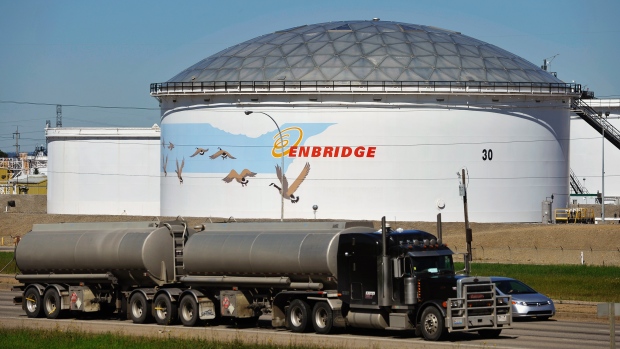
Trevor Lovell, environmental program coordinator of Public Citizen’s Texas office, told the committee that he coauthored an op-ed in the Dallas Morning News warning about Enbridge Inc.’s repurposing of the 36-year-old Seaway Pipeline to carry a “poisonous mix of chemicals and tar sands bitumen up to 20 times more toxic than traditional crude.” The pipeline crosses three major water sources for the Dallas-Fort Worth area.
The articl,e co-written by Public Citizen-Texas Executive Director, Tom “Smitty” Smith, raised several concerns: tar sands are solid at ambient temperatures, far more acidic than crude oil, and chemical diluents must be added to move them through a pipeline. Yet companies like Enbridge have refused to disclose the chemical mixes, calling them proprietary information.
They added that data from tar sands pipeline spills show the blend is heavy in benzene at toxic levels and other chemicals that are “far more deadly” than contents in ordinary crude oil pipelines.
While a chemical engineer formerly employed at Mobil responded that he agreed with the op-ed points on dangers posed by the Seaway pipeline conversion, Lovell said, a dueling op-ed submitted by an Enbridge executive did not address even one of the 10 key points Public Citizen had made.
Instead, it attacked the two authors, accusing them of distortion and misinformation. It cited statistics showing that no tar sands pipelines have ruptured due to corrosion, a point Lovell said the two did not assert.
After the hearing, Lovell said he felt “pretty good” about Keffer’s pledge to investigate the subject further to ensure safety and continued economic contributions from oil and gas activities in the state.
“It was very encouraging,” Lovell told Texas Energy Report. “I think that Keffer’s done a lot of leadership on that committee. He didn’t make any statements he can’t back up. He framed it in the terms he’s comfortable with, which is protecting the industry from itself, so to speak.
“At the end of the day,” he added, “what we care about is safety on these pipelines.”

By Polly Ross Hughes

Ramrodded by veteran reporter Polly Hughes, the Texas Energy Report’s Energy Buzz specializes in what is happening on the ground in Texas energy ranging from dedicated coverage of the Texas regulatory agencies to battles in the Legislature that affect the future of the industry.

Copyright June 21, 2012, Harvey Kronberg, http://www.texasenergyreport.com, All rights are reserved.  Reposted by TexasVox.org with permission of the Texas Energy Report.

Read Full Post »

Over 260,000 Americans have told the State Department that they do not want the Keystone XL Tar Sands pipeline to receive a permit. After two recent spills (and averaging one a month) on the 1 year old Keystone pipeline (Keystone XL would extend that pipeline into Texas) it seems obvious that Americans are waking up to just how bad this project is.

Check out KETK for their recent story on the spill and overview of the project.

The State Department will decide soon on whether or not to grant this project the necessary “presidential permit” it needs for construction from Canada down through the central US. The future of energy lies in renewable energy – and that is where we should be investing in new infrastructure. This pipeline takes us in exactly the opposite direction towards a dirtier and more destructive fossil fuel. Contact your congressman and ask them to pressure the White House and State Department not to grant this permit.

http://whoismyrepresentative.com/

Read Full Post »

keystone 500 barrel spill

Spill Site 2 Days Later (click to enlarge)

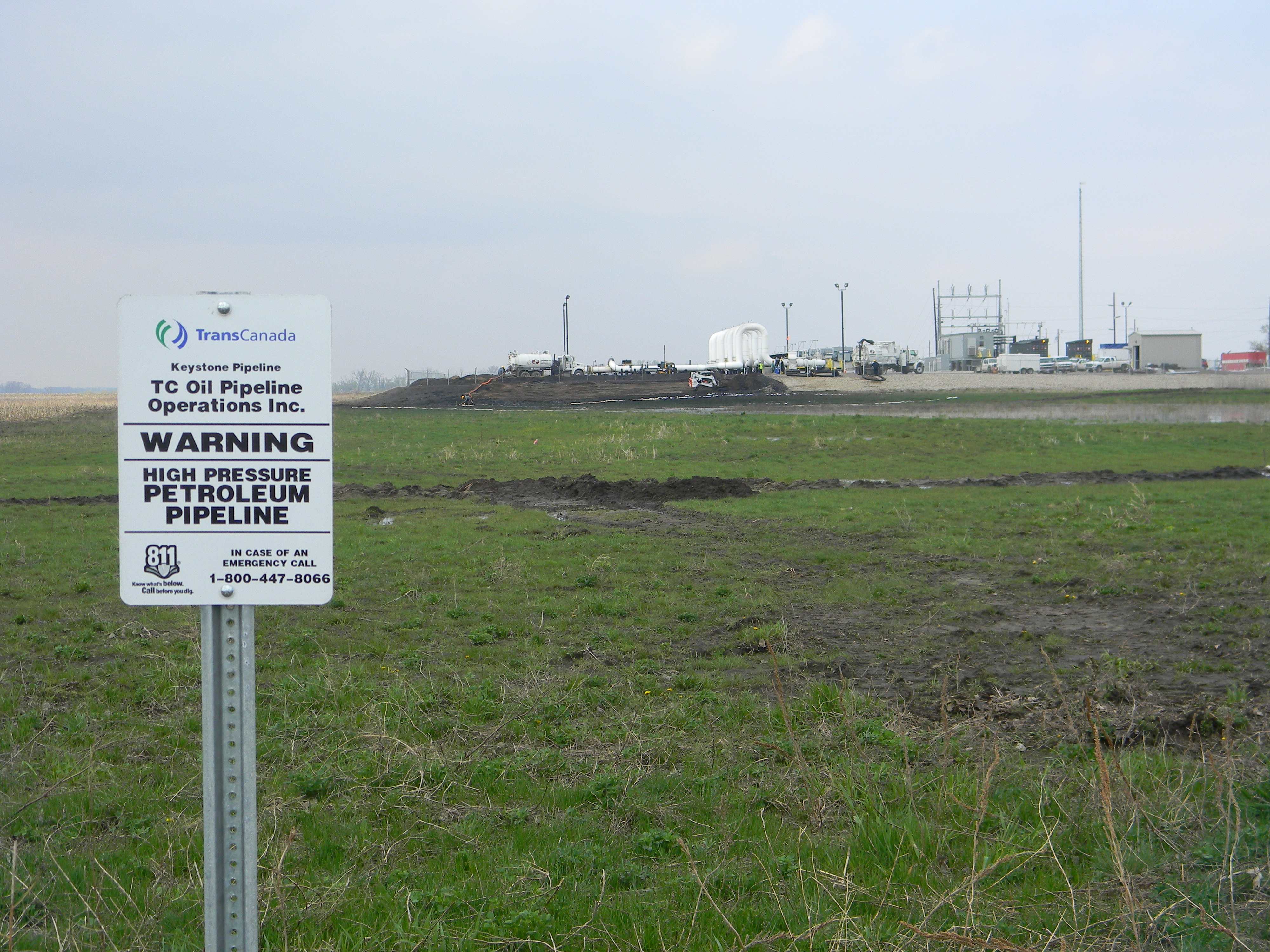
On Saturday, May 7 the Keystone pipeline had a major rupture and spill near Cogswell, North Dakota spewing 500 barrels of oil in a geyser twice the height of the surrounding trees (about 60 feet). This pipeline is owned by TransCanada, the same company proposing to build the Keystone XL pipeline (an extension of the Keystone pipeline) down through Oklahoma and Texas.

Here is a video from WDAY Channel 6 out of Fargo, North Dakota covering the spill. The pipeline spill was the lead story.

What this video doesn’t cover is that this was not ordinary crude oil, but rather a far more toxic and dangerous substance called “tar sands” oil, mined in the vast tar sands strip mines in Alberta, Canada. It should also be remembered that this pipeline is only a year old (more or less brand new) and has already had 10 other “small” spills. Such a deplorable record should be sending off massive alarm bells for the expansion project proposed for Texas.

TransCanada is a private, foreign (Canadian) company which has been granted, for some reason, powers of eminent domain throughout the US – including Texas. This company has been using the threat of this power to bully landowners into signing contracts they do not want to sign. The permit for their expansion project, the Keystone XL, is still pending at the State Department. In light of this recent spill there is no way the state department should consider granting this irresponsible and reckless company the ability to further endanger the lives and well-being of Texans and US citizens.

As Alex Moore with Friends of the Earth recently stated, “Nobody should have to wake up on a Saturday morning to the sight of oil spraying 60 feet into the air near her home.”

For more information on tar sands and what makes it the “dirtiest oil on the planet,” see some of our previous blog posts on the subject:

Tailing Pond Duck Deaths

Stop Tarsands Oil Pipeline

Voices From Texas Landowners

Stop TransCanada

Bad Faith Tactics

Read Full Post »

The Texas Supreme Court, the state’s highest civil court, will hear a controversial case over whether a company that plans to build pipeline to carry carbon dioxide and natural gas from Louisiana to site south of Houston qualifies as a “common carrier,”  giving it the power of eminent domain. That means if they want to come through your property and you don’t want to sign the offer they make on your property, they can begin condemnation procedures to just take your property for what they think it is worthAnd that just ain’t right.

The case is scheduled for oral arguments before the Texas Supreme Court on April 19th.  At issue is whether the  Jefferson County trial court ruled incorrectly when it said Denbury was a common carrier (meaning besides the company’s private, for-profit use, the line would be available for public use as well) and therefore could force private landowners to sell right-of-way so the 320-mile stretch of pipe could be built.

The appeals court upheld the trial court.

The industry is watching the case closely, and so should you, as lawmakers this session are considering emergency legislation that would strengthen the position of private property owners in eminent domain cases.  If the Supreme Court rules in the company’s favor and the legislation is passed, we could see a whole network of new pipelines snaking across areas of northeast and east Texas as natural gas companies expand their fracking projects and with a Canadian company pushing the tar sands pipeline from Western and Central Canada, down through the middle of the country on its way to crude refineries in the Houston area.  And they’ll be singing:

So Lord help the sister, who comes between me and my pipeline terminus.

To see the court documents filed in the case, click here.

###

By promoting cleaner energy, cleaner government, and cleaner air for all Texans, we hope to provide for a healthy place to live and prosper. We are Public Citizen Texas.

Read Full Post »

Meet Audrey and Jim Thornton, two of the landowners who have the threat of a Canadian tarsands pipeline proposed to run through their land. Tarsands crude is many times more concentrated with toxins and carcinogens than typical, Texas, crude oil. Like just about every other land-owner along the pipeline route, the Thorntons have been threatened with eminent domain if they do not sign a deal with TransCanada – the company building the pipeline.

Interview with the Thorntons:

Vimeo

YouTube

Like most people, the Thorntons don’t think it is right that a foreign company can come into the United States (and Texas) and use the threat of eminent domain to force landowners into a contract. And, like many others, the Thorntons have quickly learned the vast extent of the negative impacts such a pipeline would have not only on folks like them, but the world in general.

Check out our previous posts on the Canadian Tar Sands Pipeline including this one.

###

By promoting cleaner energy, cleaner government, cleaner cars, and cleaner air for all Texans, we hope to provide for a healthy place to live and prosper. We are Public Citizen Texas.

Read Full Post »

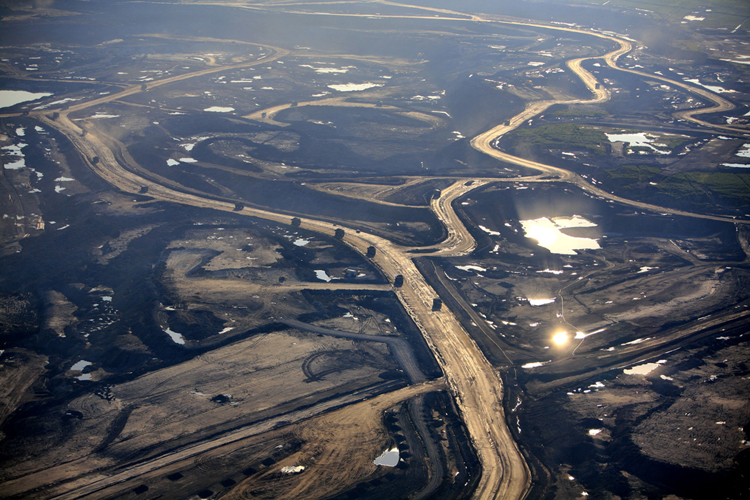
Tar sands oil makes conventional oil look clean by comparison, as it produces 3.2-4.5 times more the carbon footprint than conventional fuel. If that weren’t bad enough cleaner fuels such as natural gas, which otherwise might be used to generate electricity, are wasted in the process of creating more dirty energy from tar sands. Tar sands oil is a type of bitumen deposited in a semi solid form whose extraction is an extremely energy intensive project. For every third barrel of oil extracted one has effectively been consumed by the process. The process of tar sands oil extraction has left vast tracts of land barren with little vegetation as it is strip mined; while only 10%, of what is excavated, is oil. While some water is recyclable, the remaining toxic water is diverted to the euphemistically named “tailing ponds”. There are 2.5-4 barrels of water dumped into these toxic lakes for every barrel of oil extracted. These toxic “ponds” are actually very large; some are even visible from space.

Needless to say these pools are quite harmful to surrounding ecosystems as well as ground water supplies. The land left behind from tar sands extraction is a barren wasteland lacking vegetation and dotted with these toxic waste pools. Not only is the devastation comprehensive, it is widespread. Tar sands extraction in Alberta, Canada is set to affect an area the size of Florida.

Pipelines bringing this dirty oil to the United States have already been built, but TransCanada, an extractor of tar sands oil, has proposed to expand the pipeline system. Part of the proposed expansion will link to a current pipeline in Oklahoma and extend it into East Texas and the Houston Bay Area so that it might be refined there. These refineries will require expensive additions to handle this heavy crude. The planned route crosses through Texas and Oklahoma over rivers, through national forests, and across private land. Landowners have been threatened with eminent domain if they do not comply with Keystone’s demands. Keystone XL clearly places finance over environmental safety as they applied for (then temporarily withdrew) an application for exemptions to the rules that would allow them to make the pipe thinner in rural areas and yet pump at above currently permissible levels. However, they may reapply for this “special permit” later as they seek lower costs at the expense of the public. We cannot allow this to happen. The social costs of tar sands oil production is far too high and the benefits far too small. The expansion of this extremely dirty energy undermines what progress has been made in cleaning America’s energy consumption. While we should be cultivating clean energy production, the dirtiest energy production is being expanded.

Keystone XL needs a presidential permit to build this international pipeline. This is a point of vulnerability. Throughout the summer Public Citizen has been organizing individuals and groups to attend various meetings, hearings, and conferences. The U.S. State Department has held public hearings on its Draft EIS and we have urged others to take the opportunity to raise their voice.

Our efforts at getting such groups together continue as we move further down the proposed pipeline into the Houston area, reactivating allies and making new ones as we work together to stop a pipeline that is proposed to travel near sensitive areas such as the Big Thicket National Preserve. This pipeline only adds to Texas’ clean air problems and by stopping it in Texas we can change the momentum on a rapidly growing dirty industry. Future infrastructure development should be dedicated to renewable, clean energy – not dirtier energy than what we already have.

###

By promoting cleaner energy, cleaner government, and cleaner air for all Texans, we hope to provide for a healthy place to live and prosper. We are Public Citizen Texas.

Read Full Post »

TransCanada, a pipeline company out of Canada, wants to build a pipeline to bring the dirtiest kind of oil in the world from tar sands mines in Alberta, Canada to refineries in Houston and Beaumont. This oil is many times dirtier than conventional crude and allowing Houston area refineries to process it would increase air pollution throughout the region. The tar sands mines in Alberta are devastating the Boreal forest ecosystem, laying waste to a region the size of Florida and poisoning the people who live downstream. The first permit this pipeline needs is the Presidential Permit, which goes through the State Department. The comment period on this project is open until July 2 – to submit comments online go here. For more information on tar sands oil visit dirtyoilsands.org and to stay updated on tar sands news in Texas keep coming back here to Texas Vox, and visit our main webpage on tar sands here. (more…)

Read Full Post »

The staff at Public Citizen Texas would like to wish everyone a Happy Easter and a pleasant weekend with family and friends.

Thanks for taking time during the holiday to read about our energy advocacy progress.

The week in review… (more…)

Read Full Post »

“Tomorrow, when I wake, or think I do, what shall I say of today?” — Vladimir, Waiting for Godot

The Public Citizen Texas Week in Review (more…)

Read Full Post »

While we at Public Citizen Texas are fighting the building of new coal power plants in Texas and the surrounding states, the focus has largely been on the CO2, sulfur and other pollutants emitted into the air by the burning of coal, not to mention its inefficiency as a fuel source. We often over look or neglect to think about the huge environmental destruction associated with getting coal out of the ground, as well as the history of health and safety risks associated with coal mining.

Historically these issues were brought up as some of the biggest objections to the use of coal as an energy source. One just needs to listen to John Prine’s “Paradise” or read any of the works by Wendell Berry on the topic (both document destruction caused by strip mining in Kentucky) to see how important the impact of coal mining was to environmentalists of past generations. This shift in focus has in no doubt been due the transfer of mining away from more populated regions to remote regions like the Powder River Basin, in Wyoming.

Traditionally coal mining has taken place underground and has been done by miners with shovels and picks (often exposing workers to dangerous and health compromising conditions). This is still the image of coal mining that resides in America’s popular consciousness. However this image is no longer accurate, as 67% of America’s coal is now extracted from the earth above ground. Surface mining techniques have become very popular for coal production since the development of steam shovels in the early twentieth century. Surface mining techniques revolve around removing the layers of Earth (overburden) above with large machines to expose the coal field to the surface where workers can easily extract it. This technique can be used to extract coal that is up to 200 ft deep within the Earth. (more…)

Read Full Post »

Follow

Get every new post delivered to your Inbox.

Join 3,194 other followers