Feeds:
Posts
Comments

Posts Tagged ‘transcanada’

Julia Trigg Crawford, a Texas landowner fighting a legal battle with TransCanada over the rights to her family’s farm, will be in Washington on Thursday to testify in front of the Subcommittee on the Constitution and Civil Justice during a hearing on the Private Property Rights Protection Act. Ms. Crawford will be discussing her personal experience with the use of eminent domain by a foreign company, as it is being used by the Keystone XL pipeline.

The bill filed in the 112th Congress as H.R.1433 can be read here.

The hearing will begin at 9am ET on Thursday and may be covered on C-Span in case you want to catch Julia’s testimony.

Read Full Post »

beforenafter1[1]The Keystone XL pipeline is embroiled in controversy from coast to coast. Environmentalists are rallied by its giant carbon footprint, the damage caused by spills, and the destruction of Canada’s boreal forests. Meanwhile, landowners are being forced to give up their property rights and cope with unacceptable safety issues.

More than thirty Texas waterways will be threatened by Keystone XL pipeline spills.  Tar sand is very difficult to clean up, especially in water.  And, Keystone XL is not required to pay the standard eight cents per barrel tax into the Oil Spill Liability Trust Fund, which means the cost to clean up any spills along the pipeline could become the tax burden of U.S. Citizens.  When tar sand comes into contact with water it begins to separate, leaving the heaviest, thickest product on the bottom.  Meanwhile, benzene and other airborne toxins are lifted to the surface of the water and evaporate into the atmosphere, directly threatening human life.

Burst pipelineLandowners in Texas have been confronted with having a tar sand pipeline cross their farms and ranches.  Ranchers and farmers have no choice where the pipeline lays down on their property.  The easement around the pipe is fifty feet wide, and there will be a kill zone around and under the pipe due to its temperature, which may exceed 158 degrees F. A running pressure of 1,600 pounds per square inch introduces the possibility of a stream with enough force to cut a person in two should a small rupture in the pipe occur.  But, problems with the pipeline do not stop at inherent danger.  The land owners are given a choice of payment for the easement, which requires them to pay taxes on the land under the pipe or, they can have the easement condemned, which leaves them without the right to use that property.  In truth, the land owners have no option when companies such as Keystone XL decide that a pipeline should cross their property, except to deal with the risks, or leave.

To make matters worse, the tar sands that would flow through the Keystone XL pipeline won’t even be used in the U.S. – they are destined for export to foreign countries.  So, we will incur the risks to our land and water and will suffer the consequences of climate change, but we won’t have any more energy security than we do now.  That’s a bad deal.  The risks associated with the Keystone XL pipeline are unacceptable. Most importantly, these risks are avoidable.  Let President Obama know that you want him reject the Keystone XL pipeline because the risks don’t outweigh the benefits.  The recently released draft Supplemental Environmental Impact Statement (SEIS) from the U.S. Department of State acknowledged that construction of the Keystone XL pipeline would create “numerous” and “substantial” impacts on the environment, but it claims the project is better than the alternatives.  If you disagree, as I do,  send comments on the draft SEIS via email to: keystonecomments@state.gov.

Read Full Post »

We Texans and Public Citizen  Support Crawford Family as Legal Action Continues Against Keystone XL Southern Segment – #NoKXL

Yesterday, Landowner Julia Trigg Crawford and her attorney Wendi Hammond announced that they have filed their appeal against TransCanada with the 6th Judicial Court in Texarkana.  The brief disputes TransCanada’s attempt at taking Crawford’s property on the basis that TransCanada has yet to prove the company is a common carrier, but is instead a private foreign company utilizing its pipeline for private gain.

“Our appellate brief is now in front the Sixth Circuit Court of Appeals and we are confident this panel of experienced judges will give all the issues the thoughtful consideration and thorough review they deserve,” noted landowner Julia Trigg Crawford.  “Since the lower court’s ruling against us in August we’ve worked diligently to elevate the dialogue around property rights and eminent domain abuse.”

“Since before 1920, the Texas legislature wisely limited the enormous power of eminent domain authority to a common carrier subject to the Texas Railroad Commission’s (RRC) jurisdiction and other legal requirements. In the Crawford family’s case, the RRC admitted it does not have jurisdiction over TransCanada’s pipeline, but the trial court allowed TransCanada to take the Crawford’s private land anyway,” commented Hammond, Crawford family farm attorney. “This decision highlights a serious problem, not just for the Crawfords, but for many families across Texas.  Now this important matter will be decided by a higher court.”

Groups including We Texans and Public Citizen are supporting Crawford and her family in their continuing resolve to pursue this landowner’s case to a higher court.  The groups view this precedent setting case as a private company attempting to take land for private use and foreign profit.

Debra Medina, executive director of We Texans, applauded the Crawford family’s courage in continuing their opposition to the taking of their property.  “We agree with the Crawford family in believing that there has been an erroneous ruling against them and hope that the appellate court will right that wrong.  In doing so, the court can protect not only the Crawford Family farm, but also set a precedent that will ensure the law is followed and all private property in Texas is duly protected.”

“What’s at stake here is whether the state should allow a public agency to allow condemnation for private gain. The Crawford case is emblematic of the failure of the Texas Railroad Commission to effectively ensure that companies doing business in Texas are indeed a common carrier,” commented Tom Smitty Smith of Public Citizen.  “The State has laid this burden of proving up common carrier upon landowners such as the Crawfords, while the proof should be incumbent upon those who want to business here in Texas. The entire process needs to be overhauled.”

“The Railroad Commission allowed TransCanada to have the status of a common carrier, yet the agency has stated that it doesn’t not have the authority to give eminent domain powers to TransCanada,” added Smith.  “TransCanada has yet to prove to the court that they are transporting the product for the public good or for the public for hire as required by law.”

“Currently, there is a loophole in Texas law that allows a company to simply check a box on a one page form at the Railroad Commission that allows companies to declare themselves a common carrier without any checks and balances,” noted Rita Beving, North Texas Public Citizen organizer.  “Last summer we started a dialogue with the Texas Land & Resource Management Committee regarding this problem.  We are hoping the matter of common carrier and eminent domain gets rectified during this year’s legislative session.”

“I’ve testified to legislative subcommittees at our state Capitol, shared my story with the Sunset Commission in their review of the embattled Texas Railroad Commission, and traveled to Washington, D.C. twice to speak to governmental agency representatives and support groups,” Crawford added.  “At the heart of this issue is the fact the Texas Railroad Commission has seemingly abandoned Texas landowners.  By their own admission, they are aware that companies use the T-4 form to demonstrate to the public that the company is operating as a common carrier pipeline with eminent domain authority when, in fact, the RRC operating permit provides no evidence of that fact at all.”

“What was once just the voice of Texas landowners is now a national issue, with all eyes upon Texas and how our Legislature will step up to repair this grossly flawed land condemnation process,” Crawford concluded. “I stand at the ready to continue shining a light on what’s really happening on the ground to Texas landowners as we protect our land, and we look forward to a positive outcome in our appeal.”

TransCanada has initiated construction of the southern segment of the Keystone XL pipeline along its 485-mile trek from Cushing to the Texas coast. TransCanada will pump Canadian tar sands crude or Dilbit to refineries on the Gulf coast.  The northern segment of the Keystone XL awaits approval by the State Department for its presidential permit.

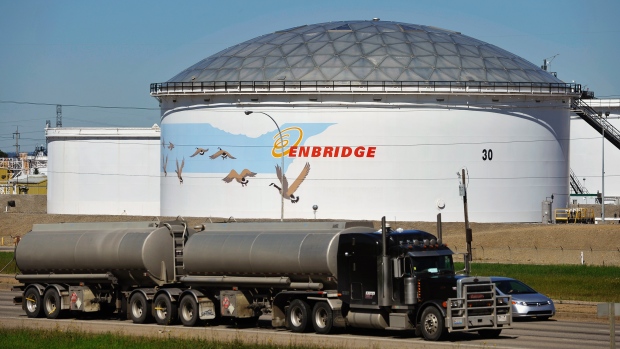
In the meantime Enbridge, TransCanada’s Canadian competitor, has begun surveying for an additional twin line to the existing Seaway pipeline near the DFW area.  Both Enbridge’s 36-year old repurposed Seaway pipeline and the new twin line will carry tar sands from Cushing to the coast.  The dual Enbridge lines are expected to exceed Keystone’s capacity with 850,000 barrels per day of tar sands crude.

Enbridge is currently responsible for the largest and most expensive onshore spill in history.  The Michigan spill occurred in July 2010 carrying tar sands crude through a 43-year old repurposed line.  Two years and more than $850 million later, the spill is still being cleaned up on the Kalamazoo River.

“Landowner fights such as that of the Crawford family with TransCanada have sparked a new battle on a whole new front with another Canadian company,” Beving concluded.  “Many of us are now getting calls from landowners now worried about Enbridge, which also plans to carry dangerous Dilbit crude through its pipelines from Cushing to the coast.”

Click here to read a copy of the brief.

Read Full Post »

Eight Tar Sands blockaders just climbed 80 feet into trees in the path of Keystone XL construction, and pledged not to come down until the pipeline is stopped for good. TransCanada workers are starting to arrive on the scene. The tar sands blockade folks will be tweeting and live blogging as today’s action unfolds so check for live updates throughout coming days…weeks?!

You shall not pass!

Read Full Post »

UPDATE 10/2/2012 -

The court in Beaumont has given TransCanada the right to begin building portions of the Keystone XL Pipeline through Johnson County.

County Court at Law Judge Tom Rugg Sr. did blocked access to one parcel of disputed land until the company meets legal requirements giving proper notice to all parties.

Earlier, Rugg made clear that he believes Texas law required him to grant a writ of possession to TransCanada to construct parts of the politically controversial pipeline to carry Canadian tar sands to Gulf Coast refineries. He added that technical issues needed to be resolved first that his further ruling determined that TransCanada file two necessary surety bonds required by law of $20,000. He ruled. “As those bonds have two sufficient sureties, the statutory requirements for the issuance of writs of possession are now met.”

In a central matter in the case, Rugg said a different court would need to determine whether TransCanada is a common carrier with the power to seize land under eminent domain law.

UPDATE:  While Judge Rugg expressed regret for the lack of clarity from the higher courts. “I’m left with no guidance from Denbury,” he said.  He, nevertheless promised to rule by Sept. 24th.  We will let you know as soon as we hear about the ruling.

KEYSTONE PIPELINE V. TEXAS RICE FARMERS SET FOR HEARING – Must TransCanada prove common carrier status before trenching begins?  That is the question Polly Hughes of the Texas Energy Report poses in the article reprinted below.

A battle over the right of pipelines to seize private land heads to court again Wednesday when the Texas Rice Land Partners challenge TransCanada’s use of Texas eminent domain law.

TransCanada has begun construction of the southern leg of the controversial Keystone XL Pipeline from Cushing, Okla., to Texas Gulf Coast refineries. The pipeline, which will carry oil sands, also referred to as tar sands, has stirred controversy with environmentalists who say a spill of the heavier diluted bitumen would be far more treacherous for waterways and aquifers than spills of ordinary crude oil.

“The Keystone XL crosses and exposes threats to water resources for the Carrizo- Wilcox Aquifer, which feeds and supplies water, drinking and agricultural resources for up to 10 million Texans,” Chris Wilson, an anti-tar sands activist opposing TransCanada’s pipeline told members of the Texas Railroad Commission Tuesday.

At issue in the Jefferson County Court at Law case in Beaumont is whether TransCanada has a right to take possession and begin trenching on land before the company proves its has eminent domain rights, according to the activist group known as TURF, Texans Uniting for Reform & Freedom.

The defendants in the case, James and David C. Holland and the Mike Latta Family, make up the Texas Rice Land Partners who sued the Denbury Green Pipeline Co. over its right to seize land under eminent domain law and won at the Texas Supreme Court. The courtunanimously ruled that before the company could seize private property and claim eminent domain rights, it needed to prove it was a common carrier serving a legitimate public use. Merely self-declaring common carrier status by checking a box on a one-page administrative form at the Railroad Commission was not enough.

Debra Medina, a former Republican gubernatorial candidate who has taken up the eminent domain battle with parties opposing TransCanada, said the defendants will ask the court to require the company to prove its common carrier status and right to use eminent domain before it grants a writ of possession allowing trenching to begin.

She said 60 pipelines cross the Holland Family’s land, but only two – Denbury Green and TransCanada – have resorted to using eminent domain law rather than reach a mutually satisfactory financial agreement with the family.

“This landowner wants a fair price,” she said, adding that she thinks the Texas Supreme Court’s ruling means the burden of proof is on TransCanada and not the landowner.

Ramrodded by veteran reporter Polly Hughes, the Texas Energy Report’s Energy Buzz specializes in what is happening on the ground in Texas energy ranging from dedicated coverage of the Texas regulatory agencies to battles in the Legislature that affect the future of the industry.

Copyright September 11, 2012, Harvey Kronberg, http://www.texasenergyreport.com, All rights are reserved.  Reposted by TexasVox.org with permission of the Texas Energy Report.

We will report on the outcome of this court case when it becomes available.

Read Full Post »

Wednesday evening, Lamar County Court at Law Judge Bill Harris sent an email from his iPhone (complete with new internet slang – MSJ and NEMSJ) ruling in favor of the controversial Keystone XL pipeline, allowing them to act as common carrier and giving them the right to condemn land for use by a pipeline.

Dear Counsel,
My rulings as follows:
Transcanada’s MSJ is GRANTED (that’s internet slang for Motion for Summary Judgment)
Transcanada’s NEMSJ is GRANTED (I don’t know what NEMSJ is)
Crawford’s Plea to the Jurisdiction is DENIED

“The Texas Supreme Court has ruled that taking private property for the private use by a pipeline company requires proof that it will serve some common good – and that can’t be accomplished by merely filling out a form. We believe the judge made a number of mistakes and we will appeal. The supreme court has said that if there is any doubt that a pipeline is a common carrier, the judge has to rule against the pipeline company and he failed to do that,” said Wendi Hammond, the attorney for the landowner.

I guess what this particular judge is trying to tell us is what’s good for oil and gas is good for Texas – period.

“We may have lost this battle here in Paris, Texas, but we are far from done,” said Julia Trigg Crawford, landowner. “I will continue to proudly stand up for my own personal rights, the property rights of my family and those of other Texans fighting to protect their land. The Crawfords, and those who bravely stand with us, have plenty of courage to continue this fight, no matter what it takes.”

Read Julia’s impassioned statement below:

Anyone following this case knows my family and I were in it to win, so of course we are incredibly disappointed in today’s ruling….Disappointed that Judge Harris wholly dismissed our entire case with a 15 word ruling sent from his iPhone…  Disheartened that Texas landowners must still challenge oil corporations in court on what should be State-level permitting issues….and Disturbed that a foreign corporation like TransCanada is allowed to hide behind the skirt of the Texas Railroad Commission and its Common Carrier rubber stamp.

It is absolutely unbelievable to me eminent domain abuse continues in Texas given the revelations made during our court case.   With every turn we found black holes of responsibility, endless loops of (non)accountability, and the cart miles in front of the horse.  The Texas Railroad Commission says they have no power over eminent domain, yet turns a blind eye when pipelines under their jurisdiction state they indeed get the power from the Commission.  The Texas Supreme Court ruled in Denbury Green that “once a landowner challenges…., the burden falls upon the pipeline company to establish its common-carrier bona fides if it wishes to exercise the power of eminent domain”.  So we asked TransCanada to produce their tariff rate schedule, a requirement of all Common Carriers and therefore part of proving the right of eminent domain. TransCanada’s attorney refused to provide anything, responding in court that tariffs will be provided “about the time it gets ready to transport product on the line”.  That means they can’t even produce this proof they qualify as a Common Carrier until after the land is seized and the pipeline built.  Furthermore, the Writ of Possession was granted by the Court and served on us before the ruling was even made on whether TransCanada can legally take our land. There is no question the process is riddled with loopholes and flaws, and Big Oil certainly wants to keep it this way.

Somehow, someway, things must change.  If the courts will not address the problem, we will use our voices and votes to bring about change, and we will champion the cause with those who create the laws. Fortunately the dialogue in Austin has already begun, and we are deeply involved.  As our more enlightened State leaders address the issues with open minds, they admit there are still problems with the eminent domain process.  Thankfully they have begun the steps to shepherd change.

We may have lost this one battle here in Paris, Texas, but we are far from done.  I will continue to proudly stand up for my own personal rights, the property rights of my family, and those of other Texans fighting to protect their land. Winston Churchill once said “Success is not final, failure is not fatal: it is the courage to continue that counts”.  The Crawfords, and those who bravely stand with us, have plenty of courage to continue this fight, no matter what it takes.

Julia Trigg Crawford
Farm Manager, Red’Arc Farm
Direct, Texas

Tea Party leaders and environmentalists alike, but for different reasons, share the Crawfords’ disappointment with this ruling.

“Judge’s Harris disappointing decision today further highlights the vulnerable and precarious position that Texas landowners are in,” said Debra Medina, former Republican candidate for Governor. “These cases are often argued in county courts that are poorly equipped to assess such weighty legal questions.  These courts lack the resources to properly consider the complex and voluminous evidence assembled by multibillion dollar corporations.”

“These are pipelines carrying poisons, not for oil independence in our country, but for export, from a foreign land, through our pipelines, to a port that’s going to ship them to foreign lands. These aren’t common carriers for the common good of Texans — this is a pipeline designed to speed oil through Texas. There are no on or off ramps to this pipeline in Texas and as a result it should not have been permitted, implying they had the use of eminent domain to condemn Texans’ lands,” said Tom “Smitty” Smith of Public Citizen.

“The Texas Supreme Court was clear in the Denbury ruling that private companies have to prove their project qualifies as a true ‘public use’ before it can exercise eminent domain. We’re disappointed in the Judge’s decision, but we’re confident that the Crawford family farm will eventually prevail. This decision puts the onus on the Texas legislature to remedy the outrageous eminent domain abuse taking place in our state,” said Terri Hall, Director of Texans Uniting for Reform and Freedom. “The time for talk is over. Texans are losing their land because of poor oversight and the legislature’s refusal to address the heart of the problem. Texans aren’t going to accept the crumbs we’ve been handed, cloaked as eminent domain reform. It’s time to get serious before irreparable harm is needlessly inflicted upon Texans.”

Recently, the Texas House Land and Resource Management Committee met at the Capitol to hear invited testimony from Crawford and other interested parties regarding the dilemma of industries self-proclaiming they are common carriers with no review from any state agency as to whether a company is truly a common carrier or not. The House Energy Management Committee has also held hearing on pipeline safety issues.

Linda Curtis, director of Independent Texans, noted, “Ms. Crawford’s case is emblematic of the continuing struggle of Texas landowners being tread upon by a private company taking land for private use, and foreign profit.  TransCanada has yet to provide any evidence that they have the legal authority to seize property in Texas.”

“TransCanada used the Commission’s T-4 permit as an authorization to take Texans’ land for a private for-profit, foreign pipeline project.  There was no vetting or review by the Commission of a pipeline company’s self-designation as a common carrier and the commission says that it has no control over eminent domain.  The legislature needs to fix this mess and assure that landowners’ rights and the environment are protected,” said Chris Wynnyk Wilson of the Stop Tar Sands Oil Pipelines (STOP).

Read Full Post »
According to TransCanada, they started construction on the southern leg of their highly controvertial tar sands pipeline on August 9th, even as a trial questioning their right to use eminent domain to take a Texas farmer’s land was scheduled to be held the following day.

At this time, Judge Bill Harris has not issued his final ruling but he did announced first thing the morning of the trial that there would not be a ruling in his courtroom on the pipeline’s status as a common carrier.  He did however, issue a writ of possession to the multinational company giving TransCanada legal possession of the Crawford family’s land and the right to begin trenching on that land at any point.  This emboldened TransCanada to issue a statement that was read on the Canadian National Broadcasting Network on Monday claiming that, “..On the issue of the common carrier status the ruling by Judge Harris reaffirms that TransCanada is a common carrier.” 

Seriously, no one has “verified” that they are a common carrier.  In fact, as far as we can tell, no one in the State of Texas takes ownership of the authority to determine if a pipeline company is a common carrier.

In Denbury Green vs. Texas Rice Land Farmers, the Texas Supreme Court recently upheld their ruling that a land owner has the legal right to challenge a pipeline company’s common carrier status. They also ruled that a pipeline company cannot conclusively acquire the right to condemn private property simply by checking the right boxes on a one-page form filed with the Railroad Commission.

Public Citizen’s Texas director, Tom ‘Smitty’ Smith, said “The answers we need may not lie ultimately in Judge Hill’s decision; the answer may be an appeals court. The final outcome will also be laid at the foot of the Texas legislature to do something about this kind of abuse. We have already begun the process of pointing out the grave inequities of companies being able to walk into the Railroad Commission saying ‘trust us, we’re a common carrier,’ and then seize eminent domain authority without the needed checks and balances or review by an authorized government agency. That needs to change with the next legislative session.”

For updates on the status of the trial and further legal action click here.

Back at the U.S. / Canadian Border

In the meantime TransCanada had to reapply for their presidential permit for a section of the planned Keystone XL pipeline from oil fields in Canada that would cross into the United States.  The earlier permit application was denied after lawmakers in Nebraska objected to original route plans that had the pipeline crossing through its environmentally sensitive sand hills region.  While Nebraska’s objection was the official reason for the permit denial, the initial process was fraught with other controversies that many are pushing to be addressed this go round.

The State Department recently announced on its website that it has chosen a new third-party contractor to conduct the next round of reviews for TransCanada’s controversial permit re-application.

The new contractor, Environmental Resources Management (ERM), replaces Cardno Entrix, a firm that was at the center of the scandal surrounding the State Department’s flawed Keystone XL review process last fall. However, while the department has hired a new contractor, it has also signaled that it will lean heavily on the flawed environmental impact statement largely prepared by Cardno Entrix on behalf of Keystone XL, a study that independent experts concluded grossly downplayed the harm the pipeline is likely to cause and failed to address the impacts on Nebraska’s environmentally sensitive sand hills region.

The State Department’s Environmental Impact Statement, largely prepared by Cardno Entrix and issued in August 2011, was widely criticized for failing to catalogue the tar sands oil pipeline’s full threats to the climate, drinking water and public health, as well as the unique and heightened spill risks of piping tar sands oil across America’s heartland.  As communities across the mid section of the country face an onslaught of extreme weather, the State Department’s review faces a key test: whether its new round of review fully considers these issues.  In the face of  a summer of unprecedented wildfires, droughts and storms, following on the heals of Texas’ unprecedented drought and heat in 2011, it is vital that climate impacts of dirty tar sands oil are taken into account and that the possibility of spills affecting water sources in areas that are prone to droughts be reviewed.

The State Department closed the public comment period for the scope of the new environmental review for the northern leg of the Keystone XL pipeline on July 30. More than 400,000 submitted comments to the agency in staunch opposition to the project.

A New York Times exposé revealed last November that the State Department had “flouted the intent of a federal law” by hiring Cardno Entrix and allowing it to drive the environmental review process while it simultaneously touted TransCanada as a “major client.” An investigation by the State Department inspector general subsequently confirmed that the department had failed to follow its own flawed contractor vetting processes. The investigation also raised fresh concerns about the department’s insufficient scientific expertise to review the pipeline’s likely impacts, adding weight to independent experts’ conclusions that the impacts study was grossly inadequate.

Read Full Post »

Statement of Trevor Lovell, Environmental Program Coordinator,  Public Citizen’s Texas Office

It is unfortunate that President Barack Obama has decided to ignore news stories in Business Week, the Wall Street Journal, Bloomberg News and Financial Post, among others, explaining in simple terms how the southern leg of the Keystone XL pipeline will raise gas prices for American consumers.

Public Citizen has long warned about Keystone’s health and safety risks, the environmental devastation associated with tar sands mining and its disproportionate impact on global climate change, and the unconscionable contributions to local air pollution in Port Arthur, Texas. Port Arthur is one of the Environmental Protection Agency’s (EPA) “Environmental Justice Showcase Communities” due to a concentration of environmental health risks that disproportionally burden minority communities.

But Keystone XL also poses another risk – a risk to U.S. consumers and the fragile economic recovery. Analysts and economists agree that building the southern leg of this pipeline will alleviate a glut of oil in Cushing, Okla., and allow more oil products to be exported to other countries, thereby reducing domestic supply and raising gas prices.

The southern leg of this pipeline does not bring oil into the country (a goal our organization does not endorse), but does create a clear path to get oil out to export markets. Since refined oil products are now the largest export commodity in the U.S., it is obvious that pushing more oil to the Gulf Coast will result in more export activity and less supply for Americans.

Today, Public Citizen renews its call for the president and relevant agencies to treat this pipeline as a tar sands pipeline. As construction has not yet begun, it would be imprudent to build the pipeline when we anticipate new findings from a congressionally mandated study on the unique dangers of tar sands pipelines, which may inform new regulations for this industry.

Texas may be an oil and gas state, but the health and safety of our citizens is no less important than it is anywhere else. Our water resources are threatened now more than ever, and this pipeline would cross the Carrizo-Wilcox Aquifer in East Texas, which serves 60 counties and as many as 12 million people. When the presidential permit was denied earlier this year, the inadequate study of threats to Nebraskan water resources was cited as a central concern. Apparently water resources in Texas do not require the same kind of thorough review. Texans deserve protection from our elected and appointed leaders, and today President Obama has shown he is ready to sacrifice that protection for election-year politics.

—————————————————————————————————————————

Below is a statement issued by Independent Texans by Julia Triggs Crawford

Response from Julia Trigg Crawford to President Obama’s support for TransCanada’s Keystone Pipeline Project

Julia Trigg Crawford, a Texas farmer who is challenging TransCanada’s use of eminent domain to take an easement across her property for TransCanada’s Keystone pipeline, issued the following statement in response to President Obama’s Thursday morning press conference in Cushing, OK:

“Today President Obama indicated he’s taking an “All of the Above” strategy to his energy policy, and in doing so will expedite the Cushing to Houston leg of TransCanada’s pipeline. While his decision was not unexpected, it is disappointing that this issue continues to be a political football during this election game.”

“Where I come from you’re only as good as your word, and I am proud to stand by my principles no matter the pressure that’s applied. And there’s no doubt about it, TransCanada’s applying pressure anywhere they can, from Washington D.C. to small towns along the proposed pipeline route, and not everyone can hold up.”

“I stand by my belief that TransCanada illegally asserts that its pipeline is a common carrier and is for the public good. My attorneys tell me we have a strong case and we are eagerly awaiting our day in court. Should we win, and I wouldn’t be in this fight if I didn’t think we would, I hope that our case will give strength to other landowners who are still fighting for their property, and to those being bullied by a company falsely wielding the club of eminent domain.”

“I’m just a farmer caring for a piece of good Texas earth, up against a foreign corporation with the power to bend the will of a President, so I’m under no delusion that this will be easy. I am reaching out to my fellow Americans and anyone who believes in an individual’s right to private property to help me in this fight. You can go to www.standwithjulia.com to take action and to contribute to our legal defense fund so that we can face TransCanada on an even playing field.”

“So here is my “All of the Above“ strategy. Stand by one’s principles, hold onto and protect those property rights afforded to every American by the United States Constitution, and never bow to pressure that runs contrary to the promises you’ve made”.

“Thank you and God bless.”
Julie Triggs Crawford

Read Full Post »

Rally in Paris Texas
Citizens gather on the steps of the Lamar County Courthouse in support of Julia Triggs Crawford before the TransCanada suit to dismiss her Temporary Restraining Order is heard.

Last week, local citizens from areas bordering the path of the proposed Texas leg of the TransCanada tar sands pipeline, rallied in front of the Lamar County Courthouse where a hearing was scheduled, pitting the Canadian corporation, TransCanada, against a local landowner, Julia Triggs Crawford. The crowd then packed the courtroom leaving standing room only.

Ms. Crawford had asked for a standstill order while in negotiation on her eminent domain case, but TransCanada’s representatives told her they wanted the right to start trenching on her property as early as March 1st.

On Monday, February 13th, Ms. Crawford obtained a restraining order against TransCanada to protect her property.  Within 24 hours, TransCanada in turn filed for the restraining order to be dissolved.  The hearing was held in the Lamar County courthouse  in Paris, Tx on Friday, Feb. 17 starting at 10 a.m. before Judge Bill Harris.

Rally in Paris, Texas on the steps of the Lamar County Courthouse (video by David McFatridge)

In the hearing on Friday, the attorneys for TransCanada displayed what many called an arrogance at the thought of one landowner and her rights, or even the archaeological significance of the property as a means of stopping their project, saying “We will not let one landowner stop this multi-billion dollar pipeline,” and again saying ““They can have their day in court, but they won’t stop this pipeline.”

In the end, Judge Harris handed the Paris area landowner a temporary victory in setting a date of April 30, 2012 for a jury trial to hear her case against TransCanada and their efforts to steal her land away from her for the Keystone Pipeline.

At a rally in Austin, in support of Ms. Crawford’s efforts, the organizations are Independent Texans, Texans for Accountable Government and Texans Uniting for Reform spoke up about the bullying tactics used by TransCanada.

“Everyone wants to know, by what authority or permit does this private, foreign company have the right to condemn property and start construction? We are going to tell TransCanada, don’t mess with Texans, don’t mess with our landowners,” commented Linda Curtis of Independent Texans.

TransCanada’s Keystone XL permit was denied by the president, so the groups and landowners question by what permit or authority does TransCanada take property or start any kind of tar sand pipeline construction?   TransCanada, despite the denial of a permit, continues to bully landowners and execute eminent domain condemnation proceedings. Groups are questioning this company’s right to take land via eminent domain.  The Railroad Commission has stated that it does not have the authority to grant the power of  eminent domain to TransCanada.  Ms. Crawford has also challenged the company’s common carrier status.

Ms. Crawford’s case is emblematic of the continuing struggle along with more than 80 cases in Texas where TransCanada, a foreign pipeline company, has condemned or threatened to condemn private property belonging to Texans.

“This is a private company taking land for private use and foreign profit.  They are cloaking themselves in common carrier regalia and exercising eminent domain against Texas citizens but there is no evidence that they have the legal authority to seize property in Texas,” noted Debra Medina former gubernatorial candidate and director of We Texans.

“We are telling this private, foreign company  ‘Don’t Mess with Texas’”,  “Don’t bully Texans, putting our land and our water at risk,” while this foreign company continues to masquerade as a common carrier.

This is the complete event video of protest and press conference by several Texas organizations representing landowners to show their support of Julia Trigg Crawford of Lamar County whose property has been condemned by TransCanada for their XL pipeline even though the federal permit has been denied.  The organizations are Independent Texans, Texans for Accountable Government and Texans Uniting for Reform

Click here to read the Texas Attorney General’s landowners bill of rights in any attempt by the government or a private entity to take your property.

Read Full Post »

Earlier this week, a new statewide coalition of groups and advocates for private property rights announced its support for landowners along the path of the Keystone XL pipeline in Texas. The groups charge that TransCanada, the company proposing to build the pipeline, has used eminent domain to bully landowners and condemn private property.

Despite a presidential permit denied to TransCanada for the Keystone XL project just weeks ago, the company continues to bully and pressure landowners along the Texas pipeline route.

The controversial Keystone XL pipeline would carry tar sands crude more than 1900 miles through six states including Montana, South Dakota, Nebraska, Kansas, Oklahoma and Texas.  In Texas, the pipeline crosses eighteen counties, from Paris to Pt. Arthur.  Groups with landowners near the cities of Paris, Winnsboro, and Wells joined in press events held in Dallas, Austin, San Antonio, and Houston to ask for support from agencies and officials on the continuing plight of landowners who would be impacted by the pipeline.

“Texas, we have an eminent domain problem,” said Terri Hall, director of Texans Uniting for Reform and Freedom (TURF). “There is absolutely zero oversight for pipeline companies that want to take private property from Texans – all you have to do is check the right box on a form and declare yourself a common carrier, no questions asked.”

The form Hall refers to is a T4 permit application filed with the Texas Railroad Commission. In a recent Texas Supreme Court case, Texas Rice Land Partners, Ltd. and Mike Latta vs. Denbury Green Pipeline-Texas LLC , the court effectively revoked the eminent domain authority of the pipeline builder, holding that “Private property cannot be imperiled… by checking a certain box on a one-page government form.”  In order to be a common carrier, a company needs to satisfy the question if it is purposed for public use.  The pipeline company in this case did not meet the criteria of “common carrier” , as it was merely a private company transporting product to one of its own subsidiaries, therefore, not meeting the criteria of operating for public use or the public good.  There is a real question as to whether the private entity TransCanada Keystone XL meets those same criteria.

The ruling has been hailed as a major victory for private property rights in Texas. Advocates like Hall and former Republican gubernatorial candidate Debra Medina say that conservative politicians have campaigned on the issue but have done too little for property owners.

“Texas politicians talk tough on eminent domain, but with Keystone we have a private pipeline company acting as a ‘common carrier’ and bludgeoning private property owners with eminent domain while many of our Republican leaders cheer from the sidelines,” said Medina who is also director of We Texans.

“Despite the fact that this permit has been denied and there technically is no permit for TransCanada, the company continues to bully and pressure Texas landowners,” Medina noted.  “And we would all like to ask, by what authority does this company have to continue insisting that landowners settle with them when there is no permit?”

Linda Curtis of Independent Texans, who helped coordinate groups in 2006 supporting Carole Strayhorn’s independent gubernatorial bid and the anti-Trans-Texas Corridor efforts said, “A similar statewide grassroots movement is waiting in the wings on this issue because the problems are way too familiar to east Texans who fought to stop the land grab for the TTC.”

Medina and Hall held press events in Houston and San Antonio respectively, standing with landowners who say they’ve been bullied by TransCanada. Former DISH, TX mayor Calvin Tillman hosted a similar event in Dallas, and in Austin, Independent Texans director Linda Curtis and Jessica Ellison of Texans for Accountable Government spoke.

Landowners attending the events have property condemned or are being pushed into negotiated settlements and claim their story has not been told. Landowners say theirs are among more than 80 cases in Texas where TransCanada, a private foreign pipeline company, condemned private property belonging to Texans.

“At this moment my property is condemned and legally TransCanada can lay that pipeline and pump undisclosed chemicals through it, even though we’ve never seen a judge,” said Julia Trigg Crawford of Lamar County. “I think most Texans would be stunned to find out that there is no process for challenging eminent domain use
in a pipeline case until after your land has already been condemned.”

Crawford is challenging TransCanada’s right to common carrier and eminent domain in her case.  TransCanada’s representatives indicate they want to settle with the Crawfords out of court.  However, they insist on retaining the right to begin construction/trenching as soon as March 1, 2012.

“We need our officials to stand up and help these landowners,” commented Calvin Tillman, former Mayor of Dish.  “Currently the Railroad Commission and other state agencies are passing the buck, claiming they have no authority over Keystone wanting to build a segment from Cushing to the Texas coast.  Where are our legislators?  Where are the authorities to protect Texas landowners from private companies like TransCanada?”

The group also pointed out that the company misled landowners in other situations, telling property owners the pipeline had all necessary permits and repeatedly telling individual landowners that they were the last holdouts, making the pipeline seem inevitable and securing more favorable terms for the company.

Read Full Post »

Foreign Pipeline Owners Find a Way to Get Around Federal Permit Process

TransCanada is attempting to outsmart the State Department and bypass federal blocks by using two existing pipelines of poison after the State Department and President Obama delayed approval of the Keystone XL Pipeline permit amidst concerns about bias, conflicts of interest, and environmental issues,  If implemented the pipeline of poison will pose serious threats to Texas water resources that supply 12 million in East Texas and the Dallas/Fort Worth and Houston metropolises, and our climate.  The groups are urging Texans to contact their local and state officials and ask them to stop the pipelines of poison.

“TransCanada is attempting to mislead the public and circumvent the regulatory mandates of Presidential approval, environmental review and public participation,” said Tom “Smitty” Smith, director of the Texas office of Public Citizen.  “They are now proposing to connect their Gulf Coast Segment (from Cushing, OK to Port Arthur and Houston, TX) into the end of their existing Keystone 1 pipeline.  Make that foreign tar sands corporations – 1: the United States – 0.”

“We also believe that Enbridge also plans to do the same by connecting their proposed Wrangler pipeline that runs from Cushing, OK to Houston TX to their existing Spearhead pipeline system that runs from Canada to Cushing, OK. It would be a serious mistake to allow these pipelines to carry toxic tar sands across Texas land,” continued Smith.

Threats to Texas Water Sources

These two pipelines of poison – TransCanada’s Gulf Coast Segment and Enbridge’s Wrangler – would pose serious threats to Texas water resources, including aquifers, drinking and agricultural water resources for up to 12 million Texans in Dallas, Houston and East Texas.

Tar Sands Pipeline Affected Texas WaterwaysTransCanada’s pipeline would cross the Carrizo-Wilcox Aquifer, the Trinity Aquifer and the Gulf Coast Aquifer.  It would traverse 16 large rivers several of which are listed as sensitive and protected, and cross over more than 130 designated floodplain areas in Texas.  These rivers and drainages feed 21 lakes and municipal reservoirs, including Pat Mayse Lake, Lake Tyler and Lake Cypress Springs.

“TransCanada’s Keystone 1 pipeline has already leaked 14 times in its first year,” said Chris Wilson, a chemical engineering consultant for opponents of the pipeline.  “How can we trust them to build it better and not endanger the waterways in Texas?”

In 2011, one of Enbridge’s pipelines leaked over 1 million gallons of tar sands into the Kalamazoo River in Michigan.  Clean-up efforts have cost over $700 million, it’s still not cleaned-up and people and animals are sick and communities are poisoned.

“Sadly, this is what happens when there are no federal pipeline safety regulations and effective cleanup procedure for toxic tar sands spills,” continued Ms. Wilson.  “Tar sands are not like crude oil which floats on water, they are heavier and they sink, making cleanup much more difficult if not impossible.  Congress should protect the public and put an immediate halt on all tar sands pipelines until studies are completed, safety regulations are enacted and effective spill remediation procedures are put in place.”

Other Threats to Texas

“Despite the fact that TransCanada and Enbridge imply that they might not have to undergo environmental review our analysis has identified several major environmental hazards and key red flags to the project that are cause for concern and require addressing,” said Karen Hadden, Executive Director of the Sustainable Energy and Economic Development (SEED) Coalition.  “These include:

  • Toxic spills that would threaten drinking and agricultural water resources for up to 12 million Texans in Dallas, Houston and East Texas;
  • Exposure to benzene, polycyclic aromatic hydrocarbons(PAH’S) and heavy metals;
  • Increases in toxic refinery emissions, greenhouse gases, climate change and associated Environmental Justice issues in the end of market refinery communities in Texas;
  • Increases in refinery wastewater toxicity, toxic solid waste volume and spent catalyst toxicity ;
  • Lack of federal safety pipeline standards and spill remediation standards for tar sands pipelines;
  • Drought and wildfire in Texas;
  • Lack of Emergency Response Plans for volunteer fire departments to address pipeline fires; and
  • Eminent domain abuses, threats and bullying of TX landowners.”

Threats to the Health of Texans

The crude oil that would flow through the pipeline is known as diluted bitumen, or dilbit.  Federal safety officials don’t know precisely which chemicals TransCanada mixes with bitumen to create dilbit, including the levels of benzene used in the diluents. And even industry groups can’t say exactly how corrosive dilbit is.

“The U.S. EPA raised serious health risks over benzene in the diluents in a June 2011 letter to the U.S. State Department based on ambient air data at the Kalamazoo river spill”, stated Dr. Neil Carman, Clean Air Program Director of the Sierra Club Lone Star Chapter.  “In a tar sands pipeline spill Benzene easily volatilizes into the air at ambient temperatures allowing inhalation exposure to occur, its toxicity results in immediate health effects in the low parts per billion range.  Benzene also poses a water contamination risk at low concentrations.”

“These characteristics make benzene the most dangerous chemical to human health in a tar sands pipeline spill because it is a known human carcinogenic agent,” Carman emphasized.  “Short-term benzene exposures may cause a variety of health effects, including nausea, vomiting, dizziness, narcosis, reduction in blood pressure, and central nervous system depression as reported in Michigan from the Kalamazoo tar sands spill in July 2010 where high levels (15,000 parts per billion) were measured in the air.”

Finally, Carman noted that, “Tar sands bitumen contains 11X more sulfur and nickel, 5X more lead, and higher levels of other toxic substances (arsenic, chromium, vanadium, boron, and zinc) compared to conventional crude oil.”  Carman concluded, “The higher toxicity of tar sands bitumen will result in increased toxic emissions in refinery communities already overburdened with too much air pollution where environmental justice issues have been ignored by the state and the oil firms.”

Threats to Air Quality and Climate Change

NASA’s James Hansen, a leading climate scientist who rang the first alarm bells nearly 30 years ago, has called the Keystone XL tar sands pipeline “game over” for the climate.

According to a recent US Environmental Protection Agency (EPA) assessment, tar sands emissions are approximately twice those of conventional oil, making tar sands well-to-tank emissions approximately 82% higher than conventional oil.

“Tar sands oil is far dirtier than conventional crude oil,” said Tom “Smitty” Smith, director of Public Citizen’s Texas office.  “This will significantly increase emissions from Houston and Beaumont refineries, which will further put the region beyond the ability to meet federal air quality standards.”

“The DFW area won’t fare much better as pumps are situated at 20- to 100-mile-intervals along the length of the pipeline to “push” the tar sands crude,” continued Smith. “Pipeline pumps may be powered by burning diesel or natural gas, or by using electricity (which may come from burning natural gas or coal at power plants that feed the area).  This will add to the emissions blowing into the DFW area.”

What Can Be Done If Foreign Corporations Circumvent U.S. Regulatory Process

Texans should contact their elected officials regarding their concerns about TransCanada’s Gulf Coast and Enbridge’s Wrangler proposed tar sands pipelines and they should ask their elected officials to join together to protect Texans from the dangers of toxic tar sands pipeline spills and impacts to end-of-market refinery communities.  The Texas Legislature needs to study tar sands, hold interim hearing about tar sands and work together with their constituents to assure that Texans water, air, land and health are not harmed by toxic tar sands.

Cites:

Read Full Post »

Public Citizen joins Texas pipeline opponents in applauding the Obama administration’s decision for a ”re-do” on the environmental impact statement and routing decisions for the proposed TransCanada tarsands pipeline.

This is a decision that came quickly on the heels of the U.S. State Department’s Inspector General’s announcement that they were launching an investigation into the alledged bias and conflict of interest citizen’s had complained about in the hearing process.  Click here to read our earlier blog.  At the hearing in Austin, after speakers who had been there for hours were cut off, one man was arrested for complaining about the process (Click here to read that blog post) and many at that hearing were questioning the facilitators about who they were and what exactly was their relationship to the State Department.

“The U.S. State Department’s contractor Cardno Entrix had severe conflicts of interests and their bias showed. They ignored the potential damages to our drinking water, air safety and climate in the Texas section of their environmental impact statement. The hearings they held on the plan were unfair and biased against opponents. Instead of fair hearings – opponents were cut off, the hearings were ended before the witnesses were heard, and those who objected were arrested,” said David Daniel, a land owner whose property lies along the pipeline route through Texas.

“Texas will be the state most endangered by leaks from the pipeline and the pollution from refining. We don’t need this pipeline or any additional proposed diluted bitumen pipeline, Texas refinery communities are already over-burdened by toxic refinery pollution and environmental justice concerns arise from further burdens to these end of market refinery communities in Texas,” said Chris Wilson, a chemical engineer working with Public Citizen in opposing the pipeline.

Ms. Wilson continued, “We don’t need this pipeline, and shouldn’t be running the risk for the temporary jobs it will create. This pause will allow us to rationally review the risks.”

Political experts are postulating that the Obama administration, the Canadian government and TransCanada made the mistake of glossing over the environmental issues in their haste to push this project through.

However, as the political pressure on his administration grew and consious that they didn’t want environmentalists staying home on election day, Obama himself acknowledged the health and environmental risks.

“Folks in Nebraska, like all across the country, aren’t going to say to themselves, ‘We’ll take a few thousand jobs if it means our kids are potentially drinking water that would damage their health,’” Obama said in Nov. 2 interview with Nebraska TV station KETV. “We don’t want, for example, aquifers to be adversely affected.

The delay is an opportunity for a more “sober” and“rigorous” assessment of the pipeline on all sides, outside of the politicized climate of a presidential election campaign and we think it needs to made clear here that that any costs this puts on TransCanada are their own fault for lobbying to diminish oversight and cut corners in the permitting process. They took a chance hoping it would reduce their costs and it ended up backfiring because the corner cutting was too egregious and caused thus delay.

The risks taken by TransCanada were not the government’s concern, the health and well being of its citizens are their concern. In free markets risks are sometimes punished and sometimes rewarded.

Read Full Post »

Austinites rally outside campaign headquarters in solidarity with 12,000 in DC

Protestors spell out their message. “SAY NO TO TARSANDS!” - Photo by Don Mason  (http://ow.ly/7nbjY)

AUSTIN, TX – Campaign staff and volunteers working for  President Obama’s re-election got an earful from environmentalists in Austin on  Monday, one day after 12,000 people encircled the White House in Washington DC to protest the proposed Keystone XL pipeline.

“He has given every indication that this decision is his to make,” said Hope Philips, one of the protestors at the rally. “So we’re here to  tell him to stick to his campaign promises and ‘end the tyranny of oil.’”

Many of the signs at both protests featured quotes from President Obama’s 2008 campaign when he made bold claims about reducing oil dependence to the delight of young voters and environmentalists.

Protestor holding the President to his own words

Between chants protestors celebrated signs their actions are making headway in the fight against the tar sands pipeline.

“Just today the inspector general of the US State Department agreed to investigate the environmental assessment process. The relationships between TransCanada and the State Department were too cozy resulting in a deeply flawed process,” said Chris Wilson, a retired chemical engineer who recently authored a report criticizing the State Department’s environmental  impact study.

The Austin protest drew out about 50 people who directed
their voices towards the campaign’s offices inside a small building on the  corner of East 6th and Navasota St. During the protest two representatives from the group were invited in to speak with Hector Nieto, Texas director of  Obama for America.

“It was a good conversation and I think the local and state leaders get why this is an important issue,” said Adam Hammick, one of the two representatives and a volunteer with 350.org. “They promised to take our message straight to the top of the campaign food chain, so we hope the message gets through to the President.”

Monday’s protest comes only a week after a widely reported “oil zombie” themed Halloween protest at City Hall, and organizers show no signs of slowing down. On Saturday November 12th they plan to join forces with Occupy Austin to hold a march on Citigroup who they accuse of helping to fund tar sands giant TransCanada. Then on November 28th they plan to return to the campaign headquarters along with organizers in all 50 states who will be demonstrating outside of local campaign offices.

Read Full Post »

Four environmental groups are preparing a lawsuit that alleges the Obama administration has not adequately studied how the proposed Keystone XL oil sands pipeline would affect several endangered species.

The Sierra Club, National Wildlife Federation, Natural Resources Defense Council and Nebraska Wildlife Federation sent a formal notice of intent to sue Thursday to the State Department – which is heading the federal review of the project – and several other agencies stating, “State and [the U.S. Fish and Wildlife Service] have failed to conduct formal consultation to consider the effects of the Keystone XL Pipeline project (Project) to the Whooping Crane, Interior Least Tern, Piping Plover, Western Prairie Fringed Orchid, Pallid Sturgeon, and Arkansas River Shiner.”

The State Department picked a company called Cardno Entrix to help carry out the environmental impact statement on the Keystone pipeline.  Cardno Entrix listed among its chief clients …TransCanada.  And this apparent conflict puts in question the final report that came out in late August, stating the pipeline would have “no significant impact” on the nearby land and water resources.  The State Department hopes to make a final decision by the end of the year and the letter of notice of intent to sue is designed to ensure the option to litigate if the permit is issued.

The groups, in the letter, allege the “biological assessment” prepared alongside the EIS and a subsequent “biological opinion” prepared by the U.S. Fish and Wildlife Service were shoddy in their analysis of the pipeline’s effect on the species and that the unduly narrow analysis omits impacts such as the effects of habitat fragmentation from the Pipeline’s pump sites, construction camps, and power lines.”

The planned lawsuit comes in addition to separate, ongoing litigation by three other groups: the Center for Biological Diversity, the Western Nebraska Resources Council and Friends of the Earth.

That litigation, filed in a Nebraska federal court, was expanded through an amended complaint this week that alleges the U.S. Fish and Wildlife Service “unreasonably and unlawfully concurred that the Pipeline is ‘not likely to adversely affect’ endangered and threatened species.”

Read Full Post »

Over 260,000 Americans have told the State Department that they do not want the Keystone XL Tar Sands pipeline to receive a permit. After two recent spills (and averaging one a month) on the 1 year old Keystone pipeline (Keystone XL would extend that pipeline into Texas) it seems obvious that Americans are waking up to just how bad this project is.

Check out KETK for their recent story on the spill and overview of the project.

The State Department will decide soon on whether or not to grant this project the necessary “presidential permit” it needs for construction from Canada down through the central US. The future of energy lies in renewable energy – and that is where we should be investing in new infrastructure. This pipeline takes us in exactly the opposite direction towards a dirtier and more destructive fossil fuel. Contact your congressman and ask them to pressure the White House and State Department not to grant this permit.

http://whoismyrepresentative.com/

Read Full Post »

Older Posts »

Follow

Get every new post delivered to your Inbox.

Join 3,177 other followers