Feeds:
Posts
Comments

This morning’s quake on the other side of the world has implications for nuclear plants here in the U.S.   The Nuclear Regulatory Commission (NRC), through its regional office in Arlington, TX, announced they are closely monitoring this situation – the Japanese earthquake and subsequent tsunami – as it unfolds with respect to nuclear facilities within the United States.

Earlier today the NRC issued a “notice of unusual event” (NOUE) at the Diablo Canyon Power Plant, located near San Luis Obispo, CA.  In addition to the Diablo Canyon plant, the NRC is also monitoring the San Onofre nuclear power plant, the Humboldt Bay spent fuel storage site and NRC-regulated nuclear materials sites in Hawaii and Alaska to name a few.

A push to build new nuclear facililties in the U.S. has catapulted the nation’s aging nuclear industry into the limelight and the NRC is being quick to assure the public that nuclear power plants are engineered to withstand environmental hazards, including earthquakes, tsunamis and other natural disasters.

The NRC claims plants are designed to take into account the most severe natural phenomena historically reported for the site and surrounding area.  Still, while the emergency situation at two Japanese plants is seemingly contained at this point, with one Texas plant situated on the hurricane prone Texas Gulf coast and the other in the middle of tornado alley, one has to wonder . . . what if we haven’t yet seen the most severe natural phenomena for those areas?

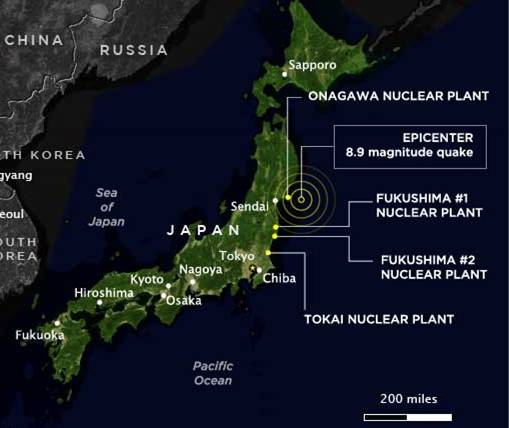
In the wake of the massive 8.9-magnitude earthquake and tsunami that hit Japan earlier today, the government has issued an evacuation order to thousands of residents near Fukushima No. 1 power plant in Onahama city, about 170 miles northeast of Tokyo, after its primary and emergency cooling systems failed (there are six nuclear units located at this facility run by Tohoku Electric Power Company’s (TEPCO) which is the Japanese power company that has expressed interest in investing in NRG’s expansion at South Texas (nuclear) Project). 

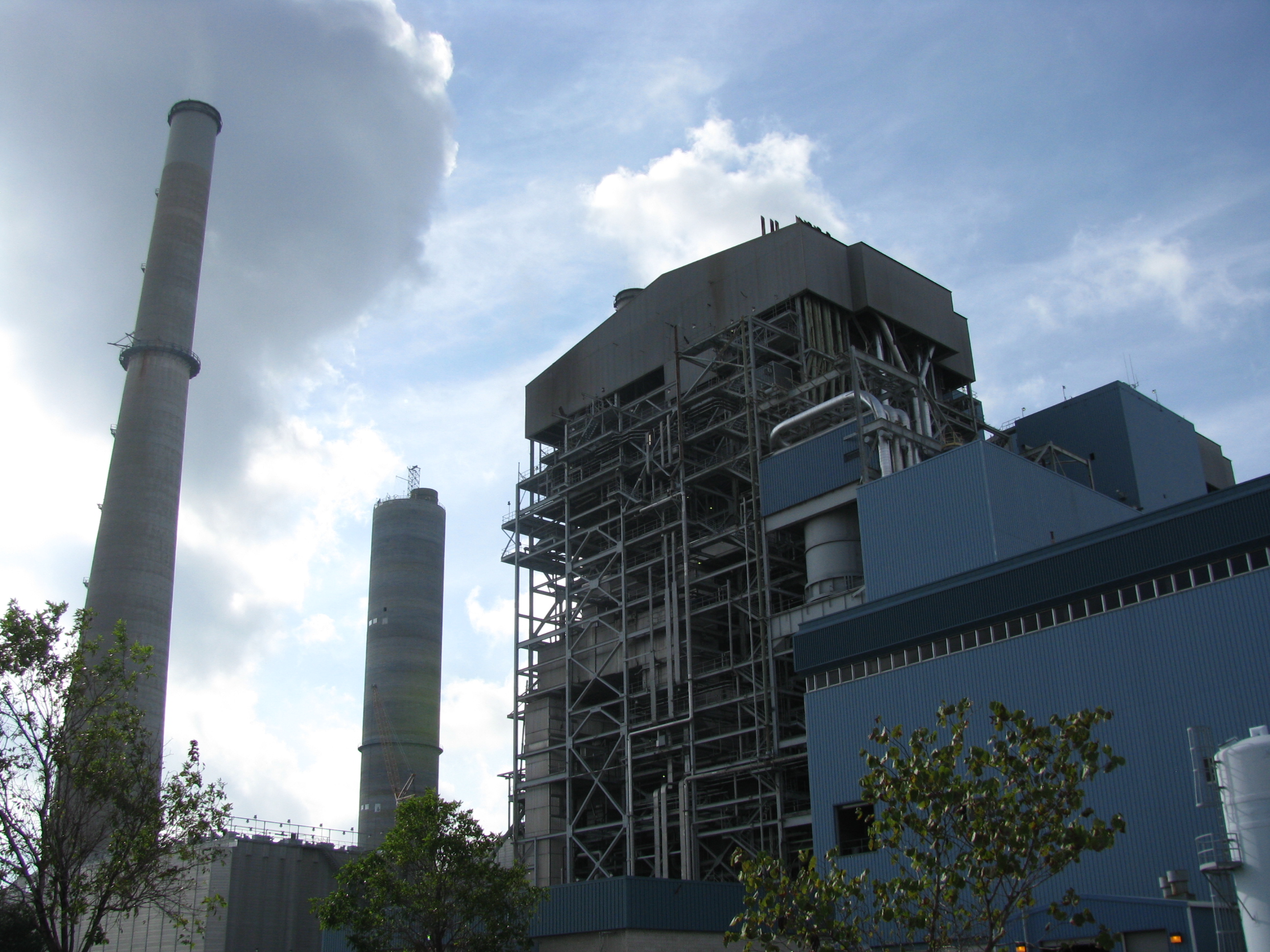
Fukushima Nuclear Plant

Japan’s nuclear safety agency said workers are currently scrambling to restore cooling water supply at the facility, but that there was no prospect for an immediate success.  So far there have been no reports of any radiation leaks.

UPDATE:  At 4:30 CT on Friday, March 11th all the U.S. news outlets were breaking news about radiation levels in the control room of the No. 1 reactor of the Fukushima nuclear power plant reaching around 1,000 times the normal level and that some radiation has also seeped outside the plant, prompting calls for further evacuations of the area.

Japan's nuclear plants near the earthquake epicenter from MSNBC (http://www.msnbc.msn.com/id/42025882/ns/world_news-asiapacific/)

The quake struck just under 250 miles northeast of Tokyo, the U.S. Geological Survey said.  It was followed by more than a dozen aftershocks, one as strong as 7.1, and eleven nuclear reactors were automatically shut down in the affected area, according to the Japanese government, but they haven’t confirmed any effects induced by radioactive materials outside the facilities.

In addition to the situation at the Fukushima plant, at the TEPCO’s nearby Onagawa facility, which is in the worst-hit Miyagi prefecture north of the Fukushima facility, a fire broke out at the plant following the quake. The blaze occurred in a turbine building, which is separate from the plant’s reactor, and was reported as being quickly extinguished.  However, there seems to be some concerns about the cooling system at this plant too and the the Japanese government has also declared a state of emergency at this facility.  Another unit at Onagawa is reported as experiencing a water leak, though it is unclear whether the incident is significant.

Obviously, we don’t know if any of these reports will lead to a serious nuclear event or not, but the isolated reports so far are worrisome.  

In this region, earthquakes are a design basis accident which nuclear plants are supposed to survive, but engineering, while it can take many factors into consideration and build in multiple backups, can only be  tested by an actual natural disaster.  The problem is, under such circumstances, if there is a failure, one can only assume that other systems (transportation, power availability, access to experts and technicians – all the ancillary things ones needs to deal with a containing a serious event) will also be disrupted.  So when a nuclear “expert” tell you that a plant is designed to withstand a massive hurricane, storm surge, tornado, or earthquake, keep that in mind.

Map of Texas highlighting counties served by t...

Texas counties served by AACOG

San Antonio, which sits just north of what many say is one of the largest oil and gas reserves in the country known as the Eagle Ford, is a heart beat away from violating federal air quality standards for ground-level ozone. It seems it is only a matter of time before the increased emissions from the Eagle Ford could drift up on prevailing winds, pushing the area out of compliance.

With drilling expected to increase over the next decade, those responsible for this region’s air quality say the increased pollution could make it difficult to remain under federal limits.  In the past decade, San Antonio’s ozone levels have decreased by 13 percent while its population has increased 13 percent, managing to stay just ahead of federal standards.  However, once a region falls out of compliance, efforts to get back in are time-consuming, politically unpopular and expensive.

It is going to be a tough contest for the environment to compete with the hype about the economic benefits (which always fail to take into account the economic costs to the region for these types of activities – increased health care costs, decreased quality of life costs, and the cost of coming back into compliance with federal air quality standards).

According to a study by the Center for Business Research at the University of Texas at San Antonio and commissioned by America’s Natural Gas Association:

Activity in the Eagle Ford in 2010 alone generated more than $2.9 billion in total revenue, supported roughly 12,600 full-time jobs and provided nearly $47.6 million in local government revenue.

Last year there were 72 active oil leases, some of which may have more than one well, and 158 producing gas wells.

However, the number of drilling permits issued by the Texas Railroad Commission, which regulates the state’s oil and gas industry, has reached 1,132 as of February. In just one year, the output of crude oil, condensate and other liquids nearly quadrupled to 3.9 million barrels.

And the boom has just begun; the UTSA study forecasts that 5,000 more wells could be drilled by 2020.

So far, no regulatory agency has begun comprehensive air monitoring in the Eagle Ford area, meaning there’s no baseline to measure any increased pollution.

Models for other regions of the country show drilling and related emissions can increase ground-level ozone significantly and the sheer volume of drilling that’s expected over the next decade, will require Alamo Area Council of Governments (AACOG) to add a new category, for drilling and recovery, into its air pollution forecasting models.

The San Antonio Express News writes about the area:

The Eagle Ford shale covers a swath roughly 50 miles wide and 400 miles long, from Maverick and Webb counties sweeping north and east up to Leon and Houston counties, but not including Bexar County. Unlike other large shale formations that have recently been tapped, the Eagle Ford includes a good deal of oil, mostly along the northern reach.

Because oil prices are high and natural gas prices low at the moment, there’s more activity in the oil region at this time, industry analysts say.

Drilling has occurred in South Texas for decades, but the oil and gas trapped in the deeper, dense rock layers once were too expensive to reach. Advances in drilling technology, most notably hydraulic fracturing and horizontal drilling, have allowed an unprecedented amount of hydrocarbons to be extracted.

“Fracking,” as it’s known, forces millions of gallons of water, mixed with sand and a variety of chemicals, into shale formations, forcing open fissures to allow the natural gas and oil to escape. Horizontal drilling allows for one hole to be drilled vertically, then one or more pipes to branch out into the shale.

Together, these techniques have spawned a natural gas boom in the country, with some industry experts estimating a 100-year supply of a fuel that burns more cleanly than coal and could help push the country toward energy independence.

In other parts of the country the boom is well under way, and as drilling has increased, so have complaints about its environmental impacts, most notably drinking water contamination.  While it remains unclear whether fracturing has contaminated drinking water, the EPA last month agreed to study the entire life cycle of the gas production process, to determine how it can affect drinking water supplies.

While water has gotten the lion’s share of the attention thus far, air quality concerns also are increasing and seem to be the area of most concern to San Antonio as they look toward increased drilling activities in the region.  Let’s hope they can stay ahead of this new boom.

The long-awaited Sunset Bill of the Railroad Commission was released late yesterday, and it’s mostly what we’d expected, but not everything we’d hoped for.

Highlights:

  • The Railroad Commission will be renamed the Texas Oil and Gas Commission
  • It will be headed by one commissioner  (down from 3) who will be elected every four years on the same cycle as Governor, Comptrollerm, Ag Commissioner, etc.
  • Campaign finance reform: Commissioners and candidates for the commission can only raise money one year before an election and 30 days after.
  • Moving contested hearings to the State Office of Administrative Hearings (SOAH).

These are needed reforms and the problems they attempt to correct are huge. For instance, the large influence campaign money has in the election of the Railroad Commission historically, as detailed in our report Drilling for Dollars. Among our findings was that nearly half of all campaign donations were being solicited and received in non-election years. Creating this fund-raising window will help keep at least the appearance of impropriety away from the new Oil and Gas Commissioner for at least 3 out of every 4 years, though we’re fairly certain the money will gush in all the same. This is why we proposed public financing for this important new office, but barring that, at least better disclosure of who is giving the money (specifically the occupation and employer of donors) and putting a cap on how much someone can give.

Unfortunately, this bill also does not offer any new guidance on regulation of fracking and natural gas drilling. Currently fracking regulation is in somewhat of a no man’s land, as Railroad Commission says they do not enforce our environmental laws, but TCEQ says they don’t regulate the operations of drillers. While it’s possible some of these reforms will come from the TCEQ sunset or from separate legislation, the bottom line is that we cannot allow our agencies to play hot potato with this issue.

So, what does this mean that we would get one new oil and gas commissioner from three current railroad commissioners? If passed in its current form, the railroad commission would be abolished- the railroad commissioners would be out of a job. Not a big deal for those like Michael Williams, who has said he will resign next month in order to pursue a run for Senate. Elizabeth Ames Jones has hinted she would do the same.  Upon creation of the new Oil and Gas Commission, the first commissioner would be appointed by Governor Perry, but s/he would only serve until 2012, when the first Oil and Gas Commissioner race in the history of Texas would take place. Whoever wins that race would serve for only two years, then be up for re-election in 2014, and then elections would take place every four years after that.

This is many steps forward from where we began, and we’re grateful that both the Sunset Commission staff and Committee members listened to our (the environmental and good government community’s) thoughtful proposals and adopted some of them into this reform package. It’s a testament to the power of people showing up and making their voices heard. But this is the beginning, not the end. So in the spirit of making our voices heard, please remember to join us Tuesday for ACT Lobby Day. This will be an opportunity for you and us to ask for even more needed reforms both at RRC and TCEQ.

###

By promoting cleaner energy, cleaner government, and cleaner air for all Texans, we hope to provide for a healthy place to live and prosper. We are Public Citizen Texas.


Senator Glenn Hegar (R-Katy)

Senator Glenn Hegar (R-Katy) filed a bill (SB 655) to abolish the Texas Railroad Commission and eliminate the three statewide elected positions that govern it and rename the agency the Texas Oil and Gas Commission to be run by a single elected officer who would serve a four-year term.

The bill has been referred to the Senate Government Organization Committee.

The Railroad Commission, a 121-year-old agency whose mission has changed dramatically over its lifespan, and which many have said has grown unwieldly and ineffective, has three elected commissioners who, with their separate staffs, often stumble over one another.  Still, whether a single commissioner would be preferable to three is likely to be the most contentious piece of energy-related Sunset legislation that lawmakers take up this session and even the three sitting commissioners are split on how the agency should be structured.

Hegar’s bill also contains language that would have the newly restructured agency adopt the model of the State Office of Hearing Examiners (SOAH) on rulemaking dispute-resolution matters. It also calls for establishing a $20 million oilfield cleanup fund to be financed by fees from various industry activities.

To see the Railroad Commission Sunset bill, click here.

Senator Joan Huffman (R-Southside Place)

Representative Wayne Smith (R-Baytown)

Meanwhile, Senator Joan Huffman (R-Southside Place/Houston) co-filed the Sunset bill (SB 657) to reauthorize the Texas Commission on Environmental Quality with Senator Glenn Hegar (R-Katy).  A companion bill was filed in the house (HB 2694) by Representative Wayne Smith (R-Baytown).

All of these legislators are from areas of Texas whose air quality is highly impacted by the decisions of the TCEQ and dominated by the oil and gas industry. 

To see the TCEQ bill SB 657, click here.  If you also want to follow the House companion bill HB 2694, click here.

Senator Robert Nichols (R-Jacksonville) said he plans to introduce the legislation affecting the Public Utility Commission and related agencies before the bill-filing deadline.

The House Business and Industry Committee will meet next Monday and one of the bills that they will be taking testimony on is HB 450 filed by Representative Eddie Lucio, III (D-San Benito) that addresses the regulation of solar energy devices by a property owners’ association.  If you are a homeowner who wants solar but your HOA rules prohibit the installation of solar panels, and you live in the district of one of the committee members, you might want to call your representative and let them know that you support this bill. 

Feeling really passionate about this and plan on being in Austin next Monday – stop by the capitol after 2pm, go to the hearing room-E2.016 and sign up to testify for this bill.

Below is a list of the House Business and Industry committee members and their capitol office phone numbers.

House Business and Industry

The Atomic Safety and Licensing Board (ASLB) will hear oral argument relating to the Victoria County Station Early Site Permit (ESP) proceeding on March 16-17 in Victoria, Texas.

The ASLB is the independent body within the NRC that presides over hearings where the public can challenge proposed licensing and enforcement actions.

Oral arguments will begin at 9 a.m. CDT on Wednesday, March 16, in the Theatre Victoria at the Leo J. Welder Center for the Performing Arts, 214 N. Main St. in Victoria. The session will continue at 9 a.m. CDT on March 17. The session is open for public observation, but participation will be limited to authorized representatives of the groups taking part in the proceeding (Texans for a Sound Energy Policy [TSEP], the applicant – Exelon Nuclear Texas Holdings – and NRC staff involved in the proceeding).

Early arrival is suggested to allow for security screening for all members of the public interested in attending. NRC policy prohibits signs, banners, posters or displays in the hearing room.

Exelon submitted an ESP application March 25, 2010, seeking approval of the Victoria County Station site, which is approximately 13 miles south of Victoria. The ASLB is considering whether to grant TSEP intervenor status. The group has submitted several objections, or contentions, challenging Exelon’s application. The ASLB will hear oral argument on whether TSEP’s contentions meet the NRC’s requirements to be admitted for hearing under the NRC’s jurisdiction.

Documents related to the Victoria County Station ESP application are available on the NRC Web site at: http://www.nrc.gov/reactors/new-reactors/esp/victoria.html .

Documents pertaining to the ASLB proceeding are available in the agency’s electronic hearing docket at: http://ehd1.nrc.gov/EHD .

More information about the ASLB can be found at: http://www.nrc.gov/about-nrc/organization/aslbpfuncdesc.html.

Submit a commentRepower America, wants to share an important piece of news with you.

The U.S. Environmental Protection Agency (EPA) is planning to limit global warming pollution from big fossil fuel industries like power plants and petroleum refineries. These industries alone account for about 40% of the global warming pollution in the U.S. — making them the two largest sources of emissions.

Here’s where you come in. The EPA is charged with developing rules called New Source Performance Standards (NSPS) that will protect public health, reduce the pollution that causes climate change, and send a signal to polluters that they need to invest in clean energy technologies.

It’s crucial that the EPA sticks to its schedule and develops strong rules. Between now and March 18, the EPA is accepting comments on their plans. They will definitely be receiving comments from the coal, gas and oil industries. Make sure they hear from you, too.

These rules are common sense. The EPA was created to understand our impact on our environment and protect the health of our people. An overwhelming majority of scientists are united in their understanding of the effects of global warming pollution and the EPA is charged with developing rules based on that science. Yet strong special interest groups are working to derail that process.

The EPA needs to hear that you support their efforts to limit global warming pollution from these industries. That’s why you need to encourage the EPA to issue strong New Source Performance Standards without delay.

The science is clear: Climate change is happening. Unfortunately, big polluters will make big profits if they mislead the American public about that fact. RePower America needs you to counteract and counterbalance their money and their voice by sending a comment to the EPA today.

Fill out the form by clicking here, and RePower America will deliver your comment to the EPA before the March 18 deadline:

Citizens spoke at Austin City Hall to let city leaders know that purchasing more nuclear power is unacceptable.  NRG, the energy company that is the major owner of South Texas (Nuclear) Project,  is scrambling for investors in its proposed expansion of the plant, especially since a messy court battle with partner CPS Energy last year that ended with San Antonio reducing their 50% share down to just over 7%.  Reactor development had been costing San Antonio $30 million a month. After spending $370 million, CPS Energy sued NRG for $32 billion, accused NRG of fraud and conspiracy and spent $6.1 million on litigation to determine how get out of the partnership

NRG now wants Austin to buy into nuclear power through a power purchase agreement instead of direct investment.  (Click here to read our earlier post on the letter sent by NRG to Austin Energy.)  “Considering this messy history and the fact that reactor costs have tripled, why should Austin Energy even be talking about a nuclear deal with NRG?” asked Karen Hadden, Director of the SEED Coalition.  Watch the press conference video to see how other concerned citizens are responding to this new NRG tact.

[vimeo 20811734]

Solar Si, Nuclear No! Press Conference
Speakers, in order of appearance:
Karen Hadden, SEED Coalition
Frank Cooksey, Former Mayor of Austin
Susan Dancer, South Texas Association for Responsible Energy
Susana Almanza, PODER
Roy Waley, Vice Chair, Austin Regional Group of the Sierra Club”

The power purchase agreement would raise electric bills 20% or more and would cost $13 – $20 billion over the life of the reactors. These billions of dollars could do so much more if used for safe, clean renewable energy and efficiency projects..

Frank Cooksey, who was the Mayor of Austin from 1985-1988 when Austin was hemoraging money during the construction of the first two units at STP as cost overruns and construction delays caused the existing reactors to balloon to six times the original budget estimate and come online eight years late, said “I was serving during the time when those costs were placed into our electric utility rate base, resulting in large increases in the utility bills of our citizens. The angriest and most difficult public hearing that I ever presided over was the one that addressed the increases in electric rates generated by the high costs of construction of the STNP (South Texas Nuclear Project).”

Austin Energy has been a leader on energy efficiency and in developing solar projects, and other clean energy efforts that benefit our local economy.  The recently approved Austin Generation Plan, developed by a citizen task force with input from Austin Energy and approved by the City Council, builds on that legacy and did not include a power purchase agreement  with a nuclear project that Austin already decided was too risky to buy into as a partner.

Nuclear reactors would consume vast quantities of Colorado River water at a time when regional drought is expected to increase. No other form of power comes with such high security and terrorism risks and creating more radioactive waste adds to a problem that has not been solved.

Austin should steer clear of more nuclear power and pursue a safe and clean energy path.

Former House Speaker Tom Craddick, R-Midland, collapsed in the Capitol this morning while laying out a bill before the House Transportation Committee. His office sent out a statement saying EMS does not consider the situation serious.  For updates, we suggest checking the Texas Tribune.

After residents report green and yellow-colored well water near an oilfield company’s operation in the spring of 2009, the U.S. Environmental Protection Agency (EPA) investigated and formally designated an area in Midland as a national Superfund site when the presence of the highly toxic solvent hexavalent chromium was found in groundwater supplies.  The Superfund list is made up of sites so contaminated that they require long-term, complex and expensive cleanups.

These reports from residents led to testing that found that 46 of the more than 230 wells in the area had levels of the toxin in them that were above safety limits. Filtration systems have been provided to the owners of the contaminated wells.

Breathing airborne hexavalent chromium may cause lung cancer, can irritate or damage the nose, throat and lungs, and can also damage eyes or skin. Exposure to hexavalent chromium in drinking water can lead to an increased risk of stomach tumors.

While Texas has been at war with the EPA over the last couple of years, cleaning up sites that pose such a major threat to public health is one of the most vital aspects of the agency’s mission, and I for one, would not like to see the agency hobbled so that they can no longer protect communities from dangers posed by chemical contamination.

The Texas Commission on Environmental Quality first confirmed hexavalent chromium at more than 50 times the acceptable federal levels in early April 2009 in a well near West County Road 112.

Since then, 234 water wells have been tested by the TCEQ; chromium was found at above safe levels in 34 of them. The plume extends 1.25 miles from the center of the site and it covers about 260 acres, according to the EPA.

UPDATE:

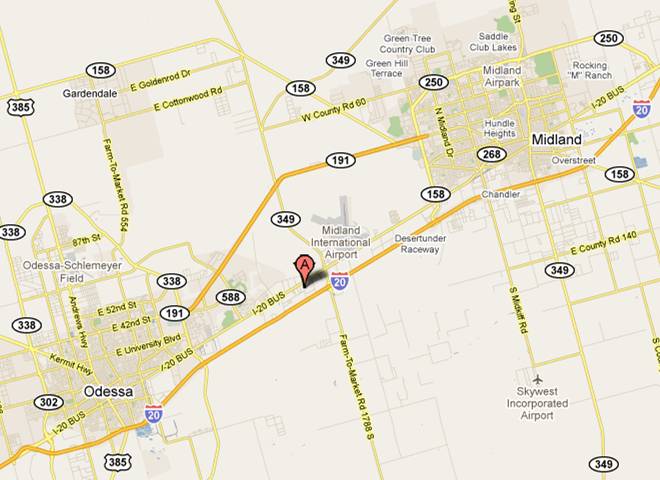
Using the EPA document's description, this is about where the superfund site is centered

According to an EPA document, the Site consists of a contaminated ground water plume originating from an unidentified source. The contaminant plume is located along County Road 1290, between Interstate 20 to the south, and Interstate Business 20 to the north. The Trinity and Ogallala aquifer is the only ground water source for drinking water in the site area. The water table has been reported at depths as shallow as 30 feet below the ground surface and the base of the aquifer is approximately 95 – 105 feet below ground surface. The Triassic red beds form the base of the aquifer. Ground water flow in the aquifer is expected to be generally to the south-southeast.

As part of the National Priorities List, the EPA will take the lead at the site and federal funds will be available for identifying the source of contamination and providing a method of cleanup.

Until a source of contamination is identified, EPA officials said in a release sent out Tuesday that the plume of contamination will continue to grow and affect additional water wells.

City of Midland officials have said, at this time, the city is unable to provide water to residents in that area. A group is working to put together a water district that would serve county residents, including those in the contaminated area, but a source of water has yet to be identified.

If a water source were available, EPA staff have said they could consider funding pipelines as part of the remediation process.

Related Articles

LCRA’s Fayette Power Project is under legal attack by three anti-pollution groups who filed a federal lawsuit on Monday against the coal-fired power plant located near La Grange, about 100 miles northwest of Houston.

The lawsuit was filed by the Environmental Integrity Project, Environment Texas and Texas Campaign for the Environment.

Claiming LCRA’s Fayette Power Project has violated the federal Clean Air Act thousands of times, the plaintiffs allege LCRA ramped up capacity and increased levels of dangerous particle pollution, which is not always visible to the eye but is linked to asthma and heart and lung disease.

In addition, the groups claim the company under-reported the amount of particulate matter emitted from the plant’s smokestacks, and therefore deprived the State of Texas of more than $500,000 in annual air pollution fees.  Click here to access details of the lawsuit.

In addition to the lawsuit, the Texas Pecan Alliance, Sierra Club, Public Citizen, and other community and environmental groups have been calling on Austin City Council to commit to the promises of clean energy in line with the Austin Energy Generation plan and have asked for the closure of this plant.

Texas Barnett Shale gas drilling rig

Texas Barnett Shale gas drilling rig -Wikipedia

According to hearing examiners for the Texas Railroad Commission, Range Resources was not responsible for contaminating two residential drinking water wells in Parker County.

The Fort Worth company was accused by the U.S. Environmental Protection Agency in December of allowing methane and other substances from its Barnett Shale hydraulic fracking operations into the wells.  But the hearing examiners findings are saying that the more likely sources of the contamination was the much shallower Strawn geological formation, which also contains natural gas deposits.

The full Railroad Commission will act on the hearing examiners’ findings at its March 22 public hearing.  If you would like to watch the hearing click here to access the streaming video live, or watched the archived video a few days later.

Public concern has been high and it is unknown yet, how the citizens of Parker, Hood and surrounding counties are responding to these findings.

To see the hearing examiners’ findings and supporting material, click here.

Are desperate school boards having to make decisions about the fiscal health of their districts now vs the long-term health of their charges in the future?

Mike Norman, the editorial director of the Star-Telegram/Arlington and Northeast Tarrant County, writes about the precarious lab rat position of citizens in the Barnett Shale.  Click here to read his editorial.

Senator Florence Shapiro (R-Plano)

A bill filed by Senator Florence Shapiro (R-Plano) – SB 468 – purports to promote “flexibility of the board of trustees of a school district in the management and operation of public schools in the district,” and makes several changes to the law, including class sizes and the repeal of Section 1951.212 of the Occupations Code, the section of state law entitled “Integrated Pest Management Programs for School Districts”.

In 1993, Texas became one of the first states to require schools to use the least toxic methods to control pests. Children are especially vulnerable to pesticide exposure as they take in more pesticides relative to their body weight than adults and have developing organ systems that are less able to detoxify toxic chemicals.

According to the group Beyond Pesticides, of the 40 most commonly used pesticides in schools, “28 can cause cancer, 14 are linked to endocrine disruption, 26 can adversely affect reproduction, 26 are nervous system poisons and 13 can cause birth defects.” Texas has been a leader in this area and is one of fifteen states to require least toxic methods (known as “integrated pest management”) at schools to protect our children from exposure to these chemicals.

It’s unclear what the motivation is behind this repeal. In a 2005 Texas AgriLife Extension survey of over 500 Integrated Pest Management (IPM) Coordinators, “53% felt that the IPM requirements had actually reduced long-term costs of pest management. Fifteen percent believed there was no change in cost to the district. Only 18% of districts said that they felt the school IPM regulations had increased the long-term costs of pest control to their district.” Furthermore, “schools were 75% more likely to be satisfied with their pest control program compared to 1993, before the law went into effect. In addition, the study found that 75% of school IPM coordinators believe that the state IPM requirements have resulted in more effective pest management in their districts.”

To read a copy of this bill, click here.  To read the section of the code this bill repeals, click here.  

This bill is expected to be heard in the Senate Education Committee tomorrow.  If you are concerned, please contact committee members to let them know of your concerns. 

Senate Education Committee