November 2, 2010 by Citizen Carol
As the Tom Delay trial got underway, the State’s first two witnesses were Craig McDonald, a former Public Citizen Texas director and now the executive director for Texans for Public Justice, and Austin attorney Fred Lewis, both of whom the defense characterized as being from the left end of the political spectrum which they attempted to capitalize upon. Twice the defense moved for a mistrial, claiming there was an effort by prosecutors to push political opinions on the jury. Both motions were ignored by Judge Priest.
Craig McDonald said he focused solely on campaign donations while with Public Citizen and that there were discrepancies between what Texas Republican Majority PAC (TRMPAC) reported to the Texas Ethics Commission in terms of its income and what Republican National State Election Committee (RNSEC) reported to the IRS.
The defense, in examining McDonald, reviewed 60 candidate names on Public Citizen’s website — only one of which was a Democrat (gubernatorial candidate, Bill White, and that was from a blog on yours truly, Texas Vox, which showed up on the site through an RSS feed). DeLay, however, was mentioned 100 or more times on the site. But McDonald maintained political neutrality in his testimony, noting that DeLay’s appearance on the website did not mean he was the only subject of Public Citizen’s research. Continue Reading »
Posted in Campaign Finance, Consumers, Good Government | Tagged money laundering, Public Citizen, public citizen texas, republican, texans for public justice, Texas, Texas Ethics Commission, Tom Delay, Travis County Texas |
November 1, 2010 by Citizen Carol
Jon Stewart explains what the Rally to Restore Sanity is about in his speech at the rally in DC.
I can’t control what people think this was. I can only tell you my intentions. This was not a rally to ridicule people of faith. Or people of activism or to look down our noses at the heartland or passionate argument or to suggest that times are not difficult and that we have nothing to fear. They are and we do. But we live now in hard times, not end times. And we can have animus and not be enemies.
Continue Reading »
Posted in Good Government | Tagged jon stewart, Public Citizen, Rally to Restore Sanity, Texas, transcript |
November 1, 2010 by Citizen Carol
 A jury for Tom DeLay‘s money laundering trial was selected quickly last week, but only after the prosecution challenged whether the defense was striking African American jurors without good cause.
The defense cut five African Americans from the jury because, in several instances, he said the would-be jurors appeared angry at him after he had criticized the lead prosecutor, who is black. Continue Reading »
Posted in Campaign Finance, Good Government | Tagged campaign contributions, democratic party, money laundering, republican, Texas, Tom Delay, Travis County Texas, trial |
October 31, 2010 by Citizen Carol
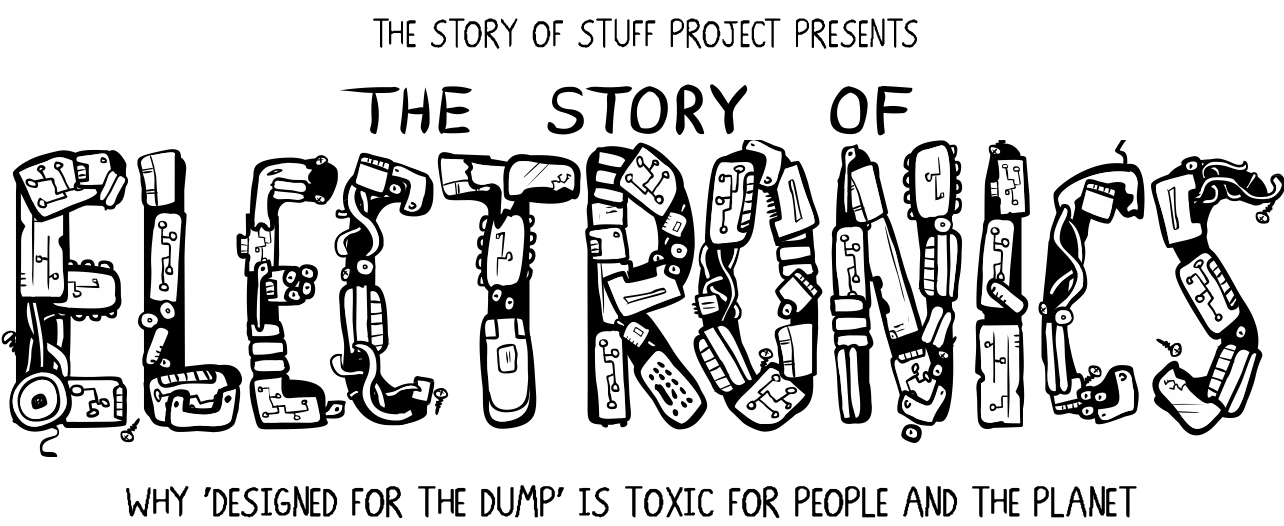
A new online film, the “Story of Electronics”, will be released on Tues, November 9. This is the newest in the series of the excellent, user-friendly Story of Stuff web-films about excessive consumerism and waste.
The Story of Electronics tells the story of how electronics are really “designed for the dump” and not made to last or made for recycling. View the trailer at: www.storyofelectronics.org
Posted in Consumers, Efficiency, Energy, Global Warming, green jobs, recycling, Toxics | Tagged Business, Electronic waste, Electronics, environment, recycling, Texas, The Story of Stuff, United States, Waste Management |
Come join us tomorrow, Saturday morning, for a satellite rally of John Stewart’s “Rally to Restore Sanity” which is happening in Washington D.C. The festivities start at 11am and go till 2pm (a march against the death penalty starts at 3). Continue Reading »
Posted in Global Warming, Good Government, Renewables | Tagged Austin, capitol, john stewart, Public Citizen, rally, restore, sanity, Texas |
October 29, 2010 by Citizen Carol

The No Coal Coalition brings their mascot, Pancho the Donkey, to the TCEQ hearing, but he is turned away. Photo by Susan Dancer
On Thursday, the TCEQ (Texas Commission of Environmental Quality) held a public meeting for the White Stallion Energy Center at the Bay City Civic Center to hear feedback on the plant’s application for a wastewater permit. Continue Reading »
Posted in Air Quality, Coal, Global Warming, Toxics | Tagged bay city, Coal, colorado river, Donkey, lower colorado river authority, Matagorda County Texas, Pancho the Donkey, Public Citizen, Sierra Club, TCEQ, Texas, Texas Commission on Environmental Quality, waste water, water, white stallion |
October 29, 2010 by Citizen Carol
With states scrambling to align their own rules with U.S. EPA‘s new regulations, which are set to take effect on Jan. 2, 2011 and require regulators to start issuing Clean Air Act permits next year for large stationary sources of greenhouse gas emissions, Texas is now the lone holdout, according to an analysis by the National Association of Clean Air Agencies (NACAA). Click here to see a copy of the analysis. Continue Reading »
Posted in Air Quality, Coal, Energy, Global Warming, natural gas, Renewables, TCEQ | Tagged clean air act, EPA, flex permits, fort worth star telegram, George W. Bush, greenhouse gas, greenhouse gases, Major stationary source, TCEQ, Texas, Texas Commission on Environmental Quality, United States Environmental Protection Agency |

Not your average swimming hole
From the New York Times:
Syncrude, the largest operator of oil sands projects in Canada, was ordered to pay $2.92 million on Friday for causing the deaths of 1,603 ducks.
The company was convicted in June by an Alberta court for failing to deploy scarecrows and loud cannons in April 2008 to prevent the migratory birds from landing on a tailings pond containing oily residue from one of its operations.
…
Mike Hudema, a climate and energy campaigner with Greenpeace, said the fine was “no more than a slap on the wrist” considering the size of Syncrude, which produces about 110 million barrels of oil a year. He acknowledged, however, that Syncrude had now been forced to improve its bird deterrence and monitoring.
This is just one of many incidents involving wildlife mistaking tar sands oil tailing ponds as safe natural places. Many of these lakes are enormous and pose great risk to wildlife as clearly shown in this massive bird kill. The most disturbing thing about this incident is Synacrude’s neglect. Tar sands operators aren’t taking care of their basic responsibilities and doubtless they are cutting corners elsewhere in order to maximize their profit at others expense. These fines will go to environmental charities, but Mike at Greenpeace has a point; $3 million doesn’t mean anything to a multi-billion dollar company and safety lapses will continue. While conditions have improved here, where else are bad deeds taking place that haven’t been corrected? Tailing ponds are one of hundred reasons why tar sands oil is the dirtiest massive energy project on the planet and why it can’t continue.
Posted in Global Warming, Tarsands, Toxics | Tagged greenpeace, Oil sands, Synacrude, tailing ponds, Texas, Texas Commission on Environmental Quality |
October 28, 2010 by Citizen Carol

Image via Wikipedia
Austin Energy hired a consultant to help determine how its rates compare to those of other utilities in preparation for its plan to substantially raise electricity rates in 2012. The work is ongoing, but an eye-opening statistic has already emerged. Estimates indicate that the average US household’s energy costs are equal to 7% of household income, but the study shows that on average, the poorest 5 percent of Travis County households spend about 45% of their incomes on electricity.
That is a staggering statistic and points out the need to provide more energy efficiency funding for low-income families. The short and long term benefits are economic relief and cost-effective home improvements. While assistance relieves pressure on individual households, the benefits also ripple into the community. With less money spent on energy, more money is available for other goods and services. If this money is spent locally, Austin captures this revenue, with further benefits rippling out from there.
Keep in mind, most low-income households are renters. There should be incentives put in place to encourage landlords to increase the energy efficiency of their properties. And don’t forget, there are environmental benefits to reducing our energy usage. This seems like a win win for our city.
Posted in Efficiency, Energy | Tagged Austin, Austin Energy, conservation, Efficient energy use, electricity, Energy, Energy Efficiency, Household, poverty, Technology, Texas |
From the Statesman:
A Travis County jury today found South Texas lawmaker Kino Flores guilty of multiple counts of tampering with a governmental record and perjury in connection with omissions Flores made on financial disclosure forms required to be filed by state elected officials.
Flores, a 14-year state representative, was convicted of five counts of misdemeanor tampering with a governmental record, four counts of felony tampering with a governmental record and two counts of misdemeanor perjury.
***“This verdict represents the public saying to public officials that they expect elected officials to maintain the highest ethical standards,” Travis County District Attorney Rosemary Lehmberg said. “That accurate and full public disclosure is an important part of public service and that the public will not accept excuses like ‘I was too busy’ or ‘I just didn’t know.’”
Flores was found guilty of two counts of tampering with government records with the intent to harm or defraud the state for failing to report on the forms income that he was accused of receiving from a list of businesses in 2002 and 2003. He was also found guilty of the felony tampering for failing to report his son’s job with the Capitol lobby firm HillCo Partners.
The jury found that he did not intend to harm or defraud by failing to report a list of properties he owned on financial disclosure firms, including a Guadalupe Street condominium. Because of that lack of intent, the jury found the tampering with a governmental record counts related to those charges are misdemeanors.
Flores’ lawyers argued that he did not intend to omit the properties on the forms and dismissed some of the omissions as clerical errors. They argued that he was not obligated under the law to report the income because he was working as a consultant.
What’s important here is not what he was convicted for, but what he was NOT convicted for. As the article says, this case basically amounted to “clerical errors” but this still stinks to high heaven. Unfortunately, (and probably by design) we have a State Ethics Commission which is relatively toothless and whose only major enforcement actions are for paperwork violations. Kind of like this:
[youtube=http://www.youtube.com/watch?v=RtWBlDC2-ss]
When lawmakers are given gifts or even campaign donations, there are obvious strings attached. We ought to ban all gift-giving from lobbyists, etc and move to a system of full public financing of elections so the public can be absolutely certain no favors are being traded.
Otherwise, we just have a system where as long as they’re telling us they’re taking bribes and fill out the proper paperwork, it’s ok.
###
By promoting cleaner energy, cleaner government, and cleaner air for all Texans, we hope to provide for a healthy place to live and prosper. We are Public Citizen Texas.
Posted in Campaign Finance, Good Government | Tagged Campaign Finance, District attorney, Jury, Kino Flores, Texas, Texas Ethics Commission, travis county, Travis County Texas |
Cross-posted from our mother blog at CitizenVox. We don’t normally cross-post much because we’d prefer you to read their blog just as much as ours, but if you’re not, please add them to your rss feed now!
Of the $176.1 million spent by outside groups using large, often undisclosed contributions to influence the current elections, just 10 groups are responsible for the bulk of the spending, according to a new analysis released today by Public Citizen.
What’s more, 59.9 percent of the money comes from undisclosed sources. Of those contributions that have been disclosed, nearly two-thirds has come from just 0.12 percent of the contributors. The analysis of data from Public Citizen’s Stealth PACs database shows that:
- Those groups have spent $176.1 million. Of that, $114.6 million, or 65 percent, was spent by only 10 groups.
- From the 10 groups, money spent on behalf of Republicans has outpaced money spent on behalf of Democrats $79.4 million to $28.5 million.
- Five groups have spent money on more than 35 races each. Eleven groups have spent money on more than 20 races each.
- Eighty groups have not disclosed any information about the sources of their money. These groups have spent $105.4 million of the $176.1 million total. Only $70.7 million of the spending – just 40.1 percent – has come from disclosed sources.
- Thirty groups have entered the fray for the first time in 2010 in the past two weeks.
“Outside group funding is shaking the foundations of our electoral democracy, but the situation is far worse than it seems at first blush,” said Robert Weissman, president of Public Citizen. “A tiny number of organizations, relying on a tiny number of corporate and fat cat contributors, are spending most of the money on the vicious attack ads dominating the airwaves. The vast majority of donors remain hidden behind a veil of secrecy, in many cases of doubtful legality. The biggest surge in funding will come in the next week. And this election cycle’s spending is merely a prelude to something far worse in 2012. The trigger for all this was the Supreme Court’s decision in Citizens United; the key to repairing our democracy is a constitutional amendment to undo the decision.”
The analysis includes charts identifying the groups spending the most to influence this year’s elections, the groups engaged in the most contests, the races that have been the subject of the most outside spending and the contests focused on by the independent groups that have sprung up in the past two weeks.
The Stealth PACs site allows users to search the expenditures and limited contribution data of independent groups that are intervening in this year’s elections using contributions of more than $5,000 or undisclosed contributions.
The site also enumerates the outside groups’ expenditures on each race, discloses the vendors and other recipients of expenditures of $1,000 or more, and provides links to the FEC filings on expenditure data.
###
By promoting cleaner energy, cleaner government, and cleaner air for all Texans, we hope to provide for a healthy place to live and prosper. We are Public Citizen Texas.
Posted in Campaign Finance, Good Government | Tagged citizens united, Citizens United v. Federal Election Commission, Democratic Party (United States), federal election commission, Public Citizen, republicans, Supreme Court of the United States, Texas, United States |
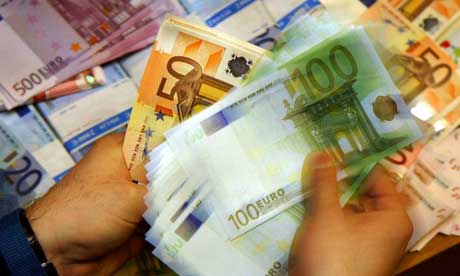
We were right when we said the Supreme Court ruling in the Citizens United case was going to have a negative impact on the political system in this country. The ruling has paved the way to make mid-term election campaigns the only growing industry in this economic crisis. The ruling has turned candidates’ focus from the policy to their pockets.
One of the issues that has fallen victim to the mid-term elections is the legislation to address climate change and regulate the energy industry. It was one of Obama’s main objectives on the campaign to cut emissions and provide incentives to renewable energy. But as election approached, Congress backed out of its commitment to this issue.
A European-based organization, Climate Action Network (CANE) released a report that shows European energy companies are paying contributions to Tea Party Candidates and other Congressional candidates who have denied climate-change is even occuring and have been outspoken against regulating the energy industry.
Remember Oklahoma’s Senator James Inhofe? He thinks Environmentalists are out there to scare people and proclaims that “Global warming is the greatest hoax ever perpetrated on the American people,” and because of this “special” remark, he qualified to be one of the recipients of campaign funds from Europe’s biggest emitters. Inhofe is not the only one, many others in Congress have made some similar funny comments that got them some money. Montana’s Roy Blunt is another skeptic. made a blunt comment discrediting science on climate change, “There isn’t any real science to say we are altering the climate path of the earth.” this is more ridiculous than Montana’s law which makes it illegal to “have a sheep in the cab of your truck without a chaperone” but despite that, Blunts comments has put him as one of the top ten recipients from two of these companies.
Those companies, Such as BP(who is responsible for the US worst Environmental disaster), BASF (which spent $50,500 to block cap-and-trade), and others generally have two objectives: one is to stall and block climate change/energy reform legislation in the United States, second is to use that as an excuse to tell the European countries not to introduce such legislation. The companies who are funding those climate-skeptic candidates are based in countries such as Germany, France, UK, and Belgium (so much for those candidates’ being anti-socialist).
In a time when the president has gone all the way to teaming up with Mythbusters to encourage American kids about math and science, our representatives are doing their best at discrediting them. Climate Change is one issue that should cross partisan lines. I think every human being can agree that we need continue our existence on this planet and maintain it for the next generations. Al Gore says that in order for clean-energy advocates to achieve climate-friendly and renewable energy legislation, they need to get into the lobbying business just as the dirty energy lobbyist.
I disagree.
I think we need to reform the relationship between lobbyist and Congress. We shouldn’t need to write serious checks in order to get things done in this country.
###
By promoting cleaner energy, cleaner government, and cleaner air for all Texans, we hope to provide for a healthy place to live and prosper. We are Public Citizen Texas.
Posted in Campaign Finance, Energy, Global Warming, Good Government, green jobs | Tagged bp, campaign donations, cap and trade, carbon policy, Carbon Policy Politics, energy bill, Koch Industries, midterm elections, politics, tea party, Texas |
October 27, 2010 by Citizen Carol
Supporters of a California law designed to battle climate change are pushing back against money from Texas oil and gas interests that’s helping to fund an initiative on the Nov. 2 ballot in the Golden State that would roll back some of the law’s provisions
[youtube=http://www.youtube.com/v/Wo1wNpza2rM?fs=1&hl=en_US”]
Starring David Arquette – Written & Directed by Matthew Cooke – Produced by Gabe Cowen – Executive Produced by Peter Glatzer and Adrian Grenier.
Posted in Campaign Finance, Energy, Global Warming, Good Government, green jobs, Renewables, solar | Tagged Adrian Grenier, California, California law, climate change, David Arquette, environment, Matthew Cooke, Texas |
October 26, 2010 by Citizen Carol
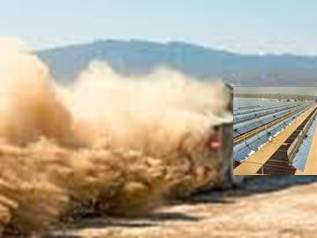
In spite of its many problems, California is leaving Texas in the dust in solar energy production.
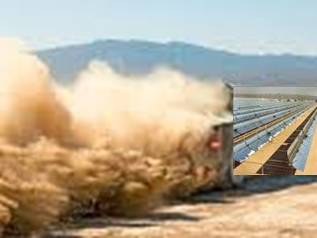 The Obama administration has approved the sixth solar venture authorized on federal lands within the last month for a project in the Mojave Desert near Blythe, Calif. All of the projects are on federally owned desert in the Southwest that the land management bureau opened in 2005 to solar development. Even with these six projects and a 7th expected in the next few weeks, solar energy will remain a tiny fraction of overall energy production on U.S. lands compared to the 74,000 oil and gas permits issued in the past two decades
This project will be the world’s largest concentrated solar power plant which will use a “parabolic trough” system where parabolic mirrors focus the sun’s energy onto collector tubes. The fluid in the tubes is then heated and sent to a boiler, which sends live steam to a turbine to produce electricity, producing enough electricity to more than double the U.S. solar output, power at least 300,000 homes, and generate 1,066 construction jobs and 295 permanent jobs.
Construction on the $6 billion plant is expected to start by the end of 2010, with production starting in 2013. Solar plants that begin construction before Dec. 31 qualify for a Treasury Department grant totaling 30 percent of a project’s cost, as part of last year’s economic stimulus package.
The project had run into opposition by some environmentalists due to wildlife concerns, but the project will now be required to “provide funding for more than 8,000 acres of desert tortoise, western burrowing owl, bighorn sheep and Mojave fringe-toed lizard habitat to mitigate the project’s impacts.”
The solar industry is touting the efforts made by the Obama administration and California Gov. Arnold Schwarzenegger to promote solar power, which are clearly beginning to pay off. Take a hint, Texas.
Posted in Energy, Global Warming, green jobs, Renewables, solar | Tagged Arnold Schwarzenegger, California, concentrating solar power, Mojave Desert, Mojave fringe-toed lizard, Obama administration, solar power, Texas |
October 26, 2010 by Citizen Carol
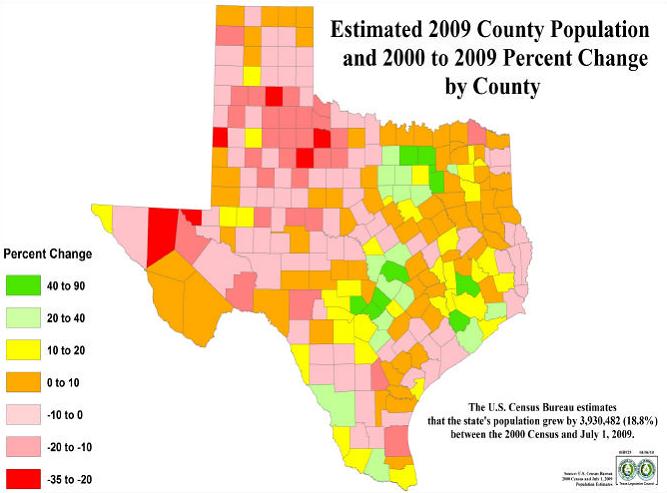
The House Committee on Redistricting, as a function of it’s procedural jurisdiction and as part of the 81st legislature’s interim charges, is conducting public hearings around the state regarding redistricting that will occur during the 82nd Legislature, which begins January 11, 2011.
The committee will be taking public testimony at these hearings and we would encourage you to attend a hearing in your area as the committee’s recommendations will help shape the districts for both the house and senate of the Texas legislature, Texas congressional districts, and districts for the election of judicial officers or of governing bodies or representatives of political subdivisions or state agencies as required by law, including state board of education districts for the next ten years.
Upcoming hearings include:
- ABILENE REDISTRICTING
October 27, 2010 at 12:00 P.M. at One AISD Center Board Room, 241 Pine Street, Abilene, TX 79601
- AUSTIN REDISTRICTING
November 17, 2010 at 10:00 A.M. at the Texas State Capitol, Underground Extension, Hearing Room E1.030, in Austin, TX
- HOUSTON REDISTRICTING
November 20, 2010 at 10:00 A.M. at University of Houston, Athletic/Alumni Center, O’Quinn Great Hall, 3100 Cullen Boulevard, Houston, TX, 77004
If you missed the hearing in your community, you can watch archived broadcasts of the hearing, just click on the link below.
| Date |
Time & Link |
Redistricting Hearing |
| 07/21/10 |
10:00 a.m. |
Corpus Christi Redistricting (part 1) |
| 07/21/10 |
1:25 p.m. |
Corpus Christi Redistricting (part 2) |
| 09/22/10 |
10:00 a.m. |
Dallas Redistricting |
| 09/20/10 |
12:00 p.m. |
Dallas Redistricting |
| 08/16/10 |
10:00 a.m. |
El Paso Redistricting |
| 06/02/10 |
11:07 a.m. |
Joint Hearing with the Committee on Judiciary and Civil Jurisprudence |
| 07/20/10 |
10:10 a.m. |
Laredo Redistricting |
| 08/18/10 |
12:00 p.m. |
Lubbock Redistricting |
| 10/20/10 |
11:00a.m. |
Marshall Redistricting |
| 07/19/10 |
12:06 p.m. |
McAllen Redistricting |
| 06/21/10 |
10:00 a.m. |
San Antonio Redistricting |
| 06/21/10 |
10:00 a.m. |
San Antonio Redistricting |
| 09/21/10 |
10:00 a.m. |
Tarrant County Redistricting |
Continue Reading »
Posted in Good Government | Tagged census, congressional districts, redistricting, state board of education district, Texas, texas legislative districts |
« Newer Posts - Older Posts »